Beyond the Brew: How Barrel-Aged Coffee Is Shaping Roastery Menus
Roasters are putting green coffee into spent spirits casks to build limited-run lots with layered flavor. Here is how the process works, what it means for café menus, and what a barrel actually costs.
By Finley Green4 min read
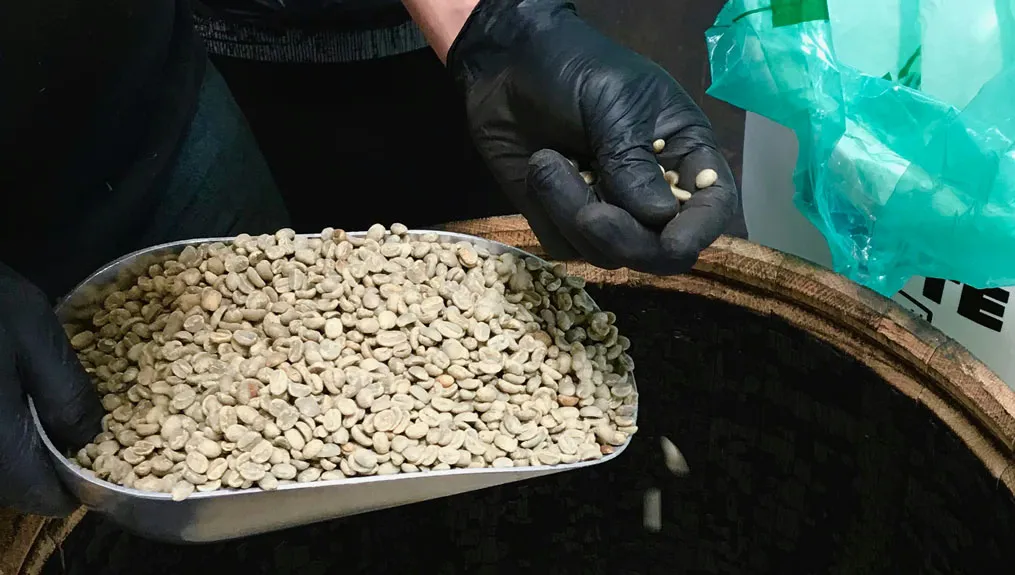
Marrying coffee with alcohol in a single drink is a long-standing tradition, and the pairing has only gained momentum in recent years. Today, baristas and bartenders across the map are exploring what that combination can do.
The freshest expression of that idea is barrel aging: tucking unroasted green coffee into casks that previously held whiskey, gin, rum, wine, or other spirits.
Such beans work for hot or cold brewing and can be enjoyed on their own. They also lend themselves to new cocktails, opening up deeper layers of distilled flavor.
Roasty Toasty: Making Barrel-Aged Coffee
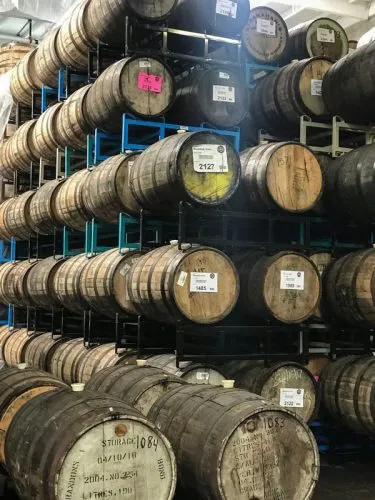
Putting barrel-aged coffee on a roastery's menu does more than draw customer attention—it hands roasters a creative puzzle. Which lot will hold up best inside the cask? How long should it rest there? Where does barrel character stop and the roast begin?
Some roasters launch barrel programs out of curiosity or practicality; others treat them as a deliberate partnership with a distillery.
Taking a cue from barrel-aged beer, Modern Times founder Jacob McKean and the company's original director of coffee, Amy Krone, started testing barrel-aged coffees. Since building out their roasting program in 2015, they have observed that aging coffee in barrels produces flavors that are distinctive and enjoyable.
“We source coffee explicitly for barrel aging,” says current director of coffee Bartleby Bloss. “Our team searches for coffees that will be able to stand up to the intense flavors of the barrels. We look for outstanding coffees, something that will be immensely complex with the added layer of barrel aging. Whether it is a barrel-aged bourbon natural Ethiopia espresso shot served in our café, or a freshly roasted bag of Pinot noir-aged Guatemala Huehuetenango, customers get excited over our releases.”
Simon Johnston of Ireland's Root & Branch puts the starting point first: “Choosing the right coffee in the first instance is more important than what you do with the coffee when you’ve chosen it.”
Should Barrel-Aged Coffee Join Your Roasted Lineup?
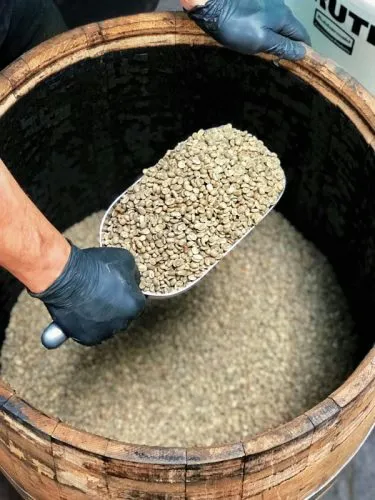
A distinctive offering like barrel-aged coffee nudges café customers away from their habitual order, deepens their connection to your brand, and hands your baristas something interesting to recommend—or upsell.
When Pacific Northwest-based Caffè Umbria ran its barrel-aged program as a test last August, the roasters had no way of knowing whether it would move, or even perform well. They took some end runs of their single-origin coffees and aged them for six weeks in a small 10-gallon cask.
“The flavors were exceptionally pronounced, almost overwhelming,” says Pete Maskiell, Umbria’s main roaster and production manager.
After some trial and error, their first 100-pound batch aged in a whiskey barrel sold well.
“The uniqueness is a big allure for customers,” says Maskiell. “It’s such a nice oddity, especially because it’s available in super-limited quantities.”
Novelty carries real selling power, particularly while the trend is still young. Customers may know barrel-aged beer, and may even have queued for it, yet coffee rested in whiskey or rum casks remains a fresh concept—and for plenty of customers, that alone is reason enough to give it a try.
About the Barrels
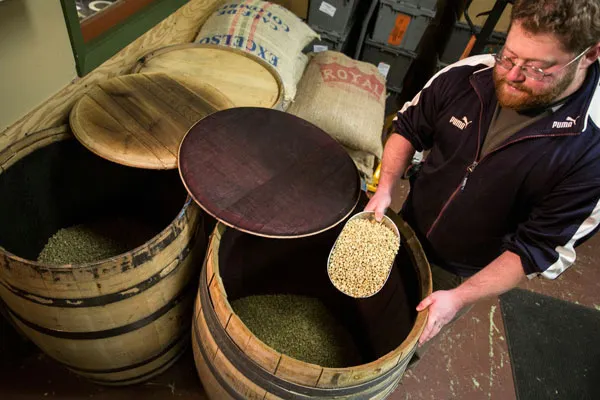
Casks are not cheap—typically $150–$300—and their quality is difficult to govern.
That price can look steep, but a skilled cooper needs roughly a week to build one by hand. Once assembled, the barrel is charred and then shipped to a distillery or winery.
After a cask has lent its flavor and aromatic compounds—those lovely vanilla or caramel impressions—to a spirit, the producer generally sets it aside for a new barrel before the next batch. For a brewery or coffee roastery, though, these spent casks are rich with character and highly sought after.
How Do Roasters Source Spirit-Soaked Barrels?
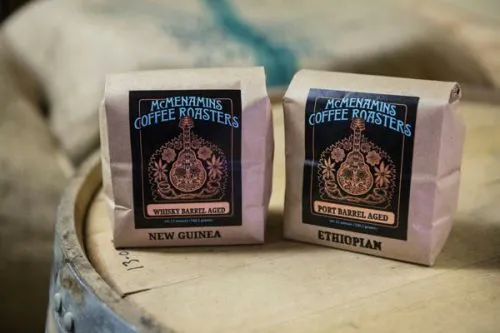
Portland, Oregon-based McMenamin's runs its own distillery, which gives it a steady supply of fresh casks. Most other coffee companies, by contrast, enter the barrel business through strategic partnerships.
Late last year, Root & Branch joined forces with Bushmills Irish Whiskey. The two worked side by side to identify the right coffee for the right barrel in pursuit of the ideal Irish Coffee. Bushmills gave the Belfast-based roaster special access to its distillery so the pair could see how coffee and an iconic whiskey might come together. With help from Natasha David of New York City's Nitecap cocktail bar, they created a recipe for a warming drink suited to St. Patrick's Day.
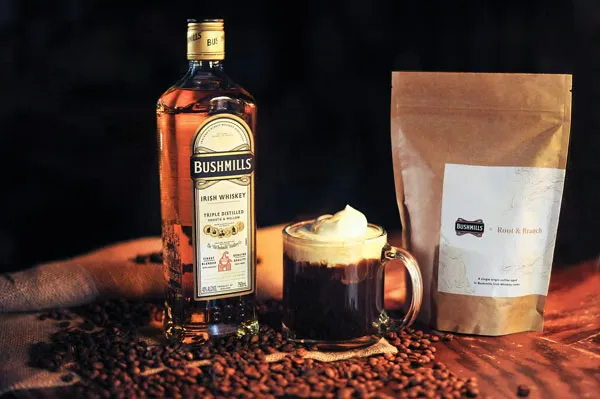
**Barrel-Aged Irish Coffee
**Recipe courtesy of Bushmills Irish Whiskey 2 ounces Bushmills Irish Whiskey ½ ounce brown sugar almond syrup* 6 ounces freshly brewed whiskey barrel-aged coffee
Add all ingredients in a warmed mug and mix well. Top with a dollop of vanilla-scented whipped cream. Garnish with freshly grated orange zest.
***Brown Sugar Almond Syrup
**2 cups raw sugar 1 cup water 1 teaspoon almond extract
In a blender, combine sugar and water, and blend until sugar is dissolved. Add extract and blend until incorporated.
Read our article about barrel-scented teas