A Midtown East Coffee Bar That Rethinks the Café Layout
Irving Farm Coffee Roasters partnered with Studio Vural on a Midtown East café whose brass-inlaid floors and white oak surfaces nod to the surrounding architecture, while a walled-off kitchen aims to ease the congestion common in coffee bars.
By Reese Scott3 min read
Irving Farm Coffee Roasters was among the first cafés in New York City to serve single-origin coffees and specialty blends, helping to establish the city's specialty coffee scene. The company opened its Gramercy Park shop in 1996 and has since added locations across Manhattan; its roasting operations now run out of Millerton, New York, roughly 100 miles north of the city.
While large corporate chains replicate identical designs from market to market, Irving Farm took a different route for its newest café, bringing in architect Selim Vural of Studio Vural, a New York–based design and architecture practice. The café occupies a classic pre-war building in the Midtown East neighborhood.
The site was chosen deliberately. Maura Hehir, who works on communications for Irving Farm, points to a shortage of places serving quality comfort food and drink in a warm, community-minded setting in that part of Manhattan. She describes the area as dense with hotels and office buildings, which she says gave the company a chance to, in effect, welcome the neighborhood home. According to Hehir, the goal is to strengthen residents' sense of community there and to give visitors and commuters the feeling of a home away from home.
Brandon Epting, the company's buildings director, shares that outlook. He describes the team as attentive to people and says it aims to make welcoming spaces. "We want to be part of a neighborhood—contributors—not just a retail space," Epting says.
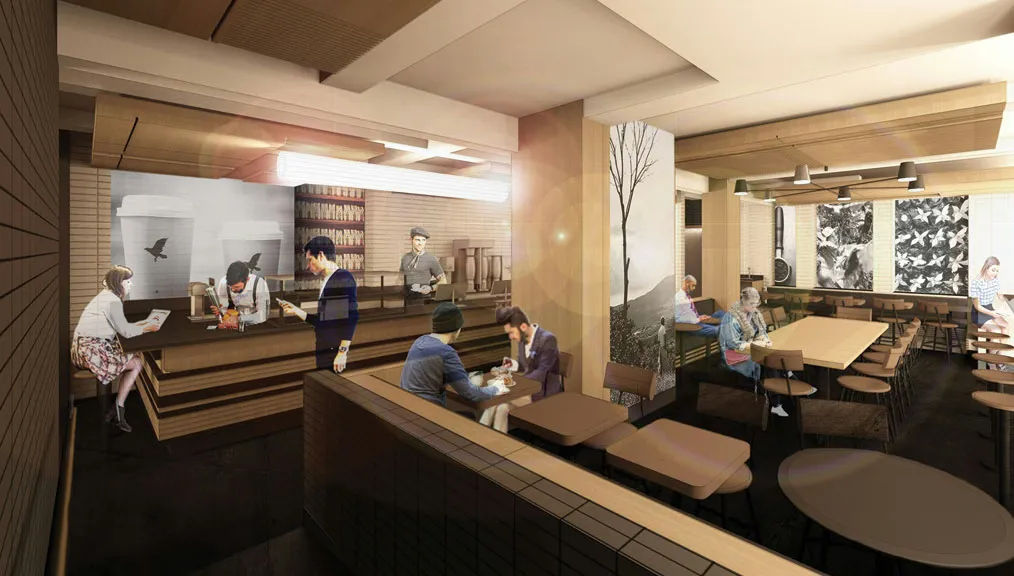
The café's black concrete floor carries brass inlays that echo part of the sidewalk down the block and the enduring shapes of nearby landmarks such as the Chrysler Building and the Waldorf Astoria. Epting notes that the blackened steel door and framed menu board, finished with burnished brass details, likewise reference New York's continual growth and construction.
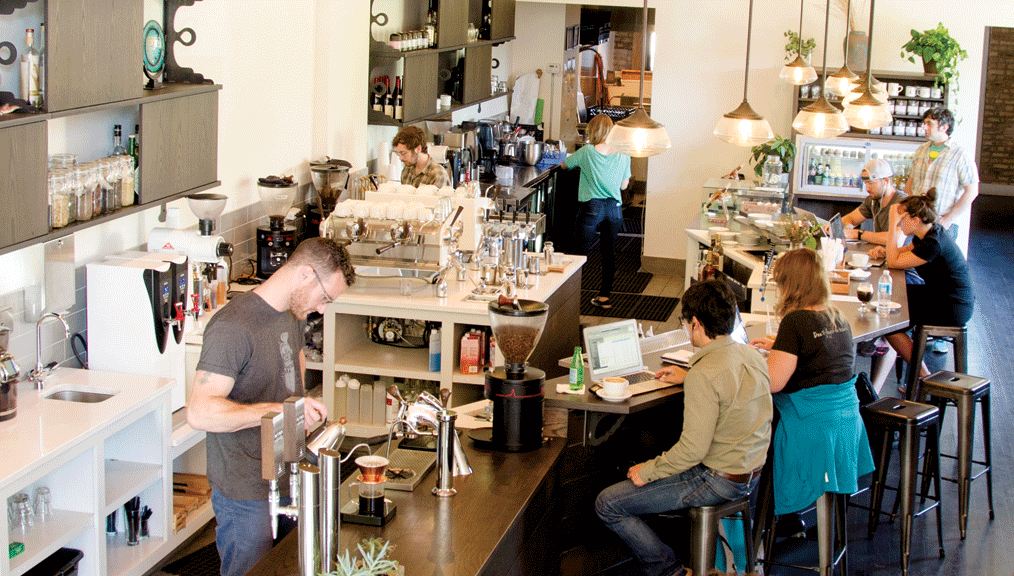
"We've maintained many of our staple textures and materials," Epting says. White oak tables and bar surfaces pay tribute to the company's farming and nature roots, while black fireslate countertops contrast with the lighter wood and draw customers toward the register.
"The simplicity of these textures and colors blends the history and style of the neighborhood with our personality as a coffee roaster, and allows us to have a few modern elements that stand out," Epting says.
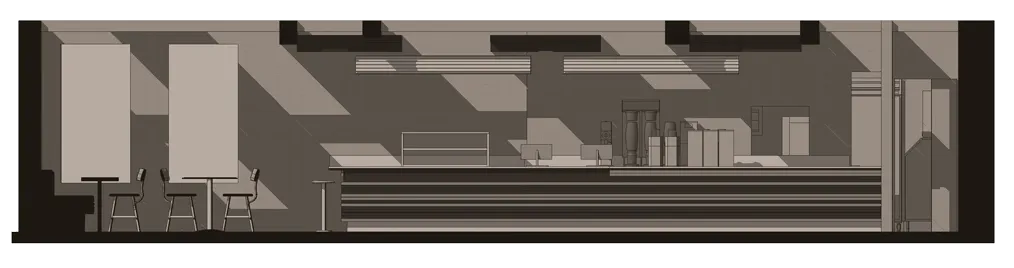
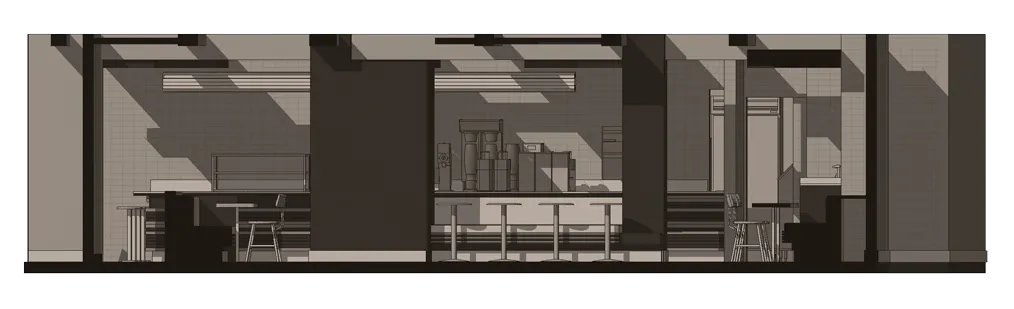
Eight-foot Castor fluorescent tube lights run above the bar, set within white oak ceiling boxes designed by Vural that also, conveniently, hide the HVAC system. A sleek church chandelier by Brendan Ravenhill hangs over the walnut communal table. Moroccan clay tiles cover the café wall; Vural picked them as an upgrade on the subway tile common in New York cafés. The tiles evoke raw brick walls and add a note of elegance, another nod to the area's luxury hotels.
The coffee bar and seating area are the most visible parts of the project, but Epting says kitchen efficiency mattered just as much—serving excellent coffee and food quickly without delays caused by the customer line is a challenge many cafés face.
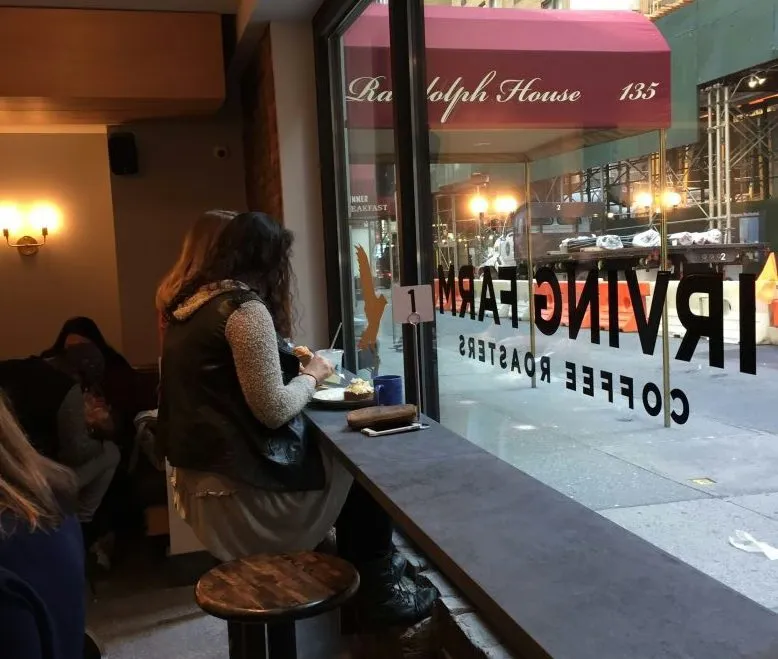
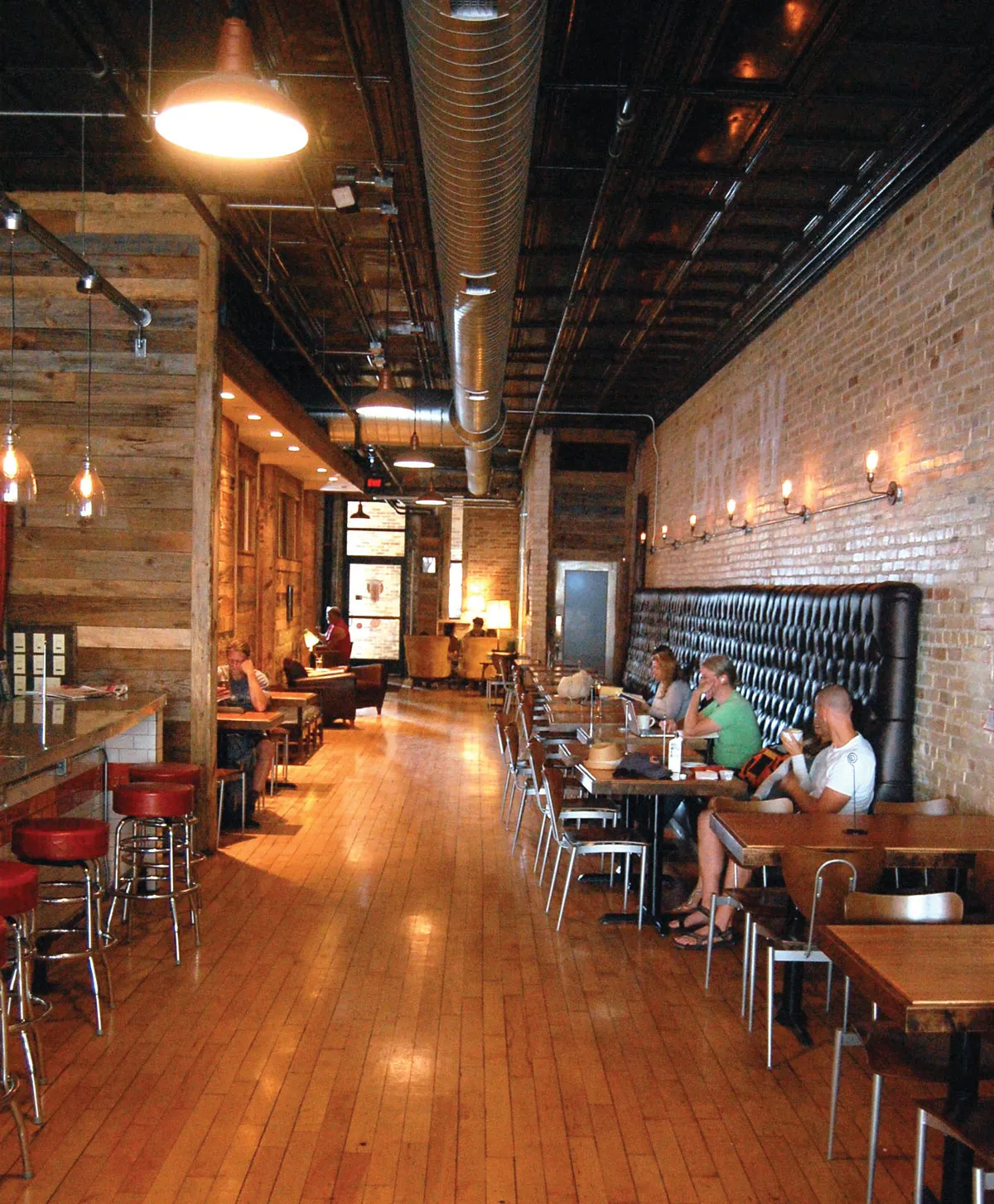
Inside the new location on East 50th.
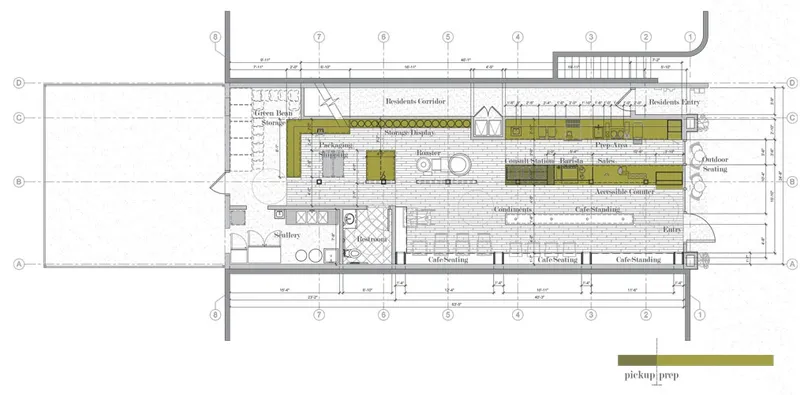
Epting explains that the company's kitchens have traditionally run along the customer queue, with window passes open to the public. That setup often creates bottlenecks, he says, because customers like to watch their food being prepared and often chime in about "less pickles, more ham." An open prep area also poses storage problems, since prep spaces must stay compact, leaving little room for backup ingredients or dish cleaning.
"For this location, we've placed the kitchen behind the bar as its own room," he says. "This provides ample space for ingredient storage, a full dish-cleaning area, ice machine, ventilation hood, etc." Keeping the kitchen separate also limits customer access, which means fewer interruptions, less food waste, lower cost of goods, and better efficiency producing quality meals.
The café feels warm and inviting while still introducing forward-looking design to the neighborhood. Vural stresses that inventive design need not come at the expense of comfort or connection. He hopes the new Irving Farm location can serve as an example—setting a standard for quality design that adds something to the community while fitting in harmoniously with the existing neighborhood.
Irving Farm's Midtown East café opened earlier this year.