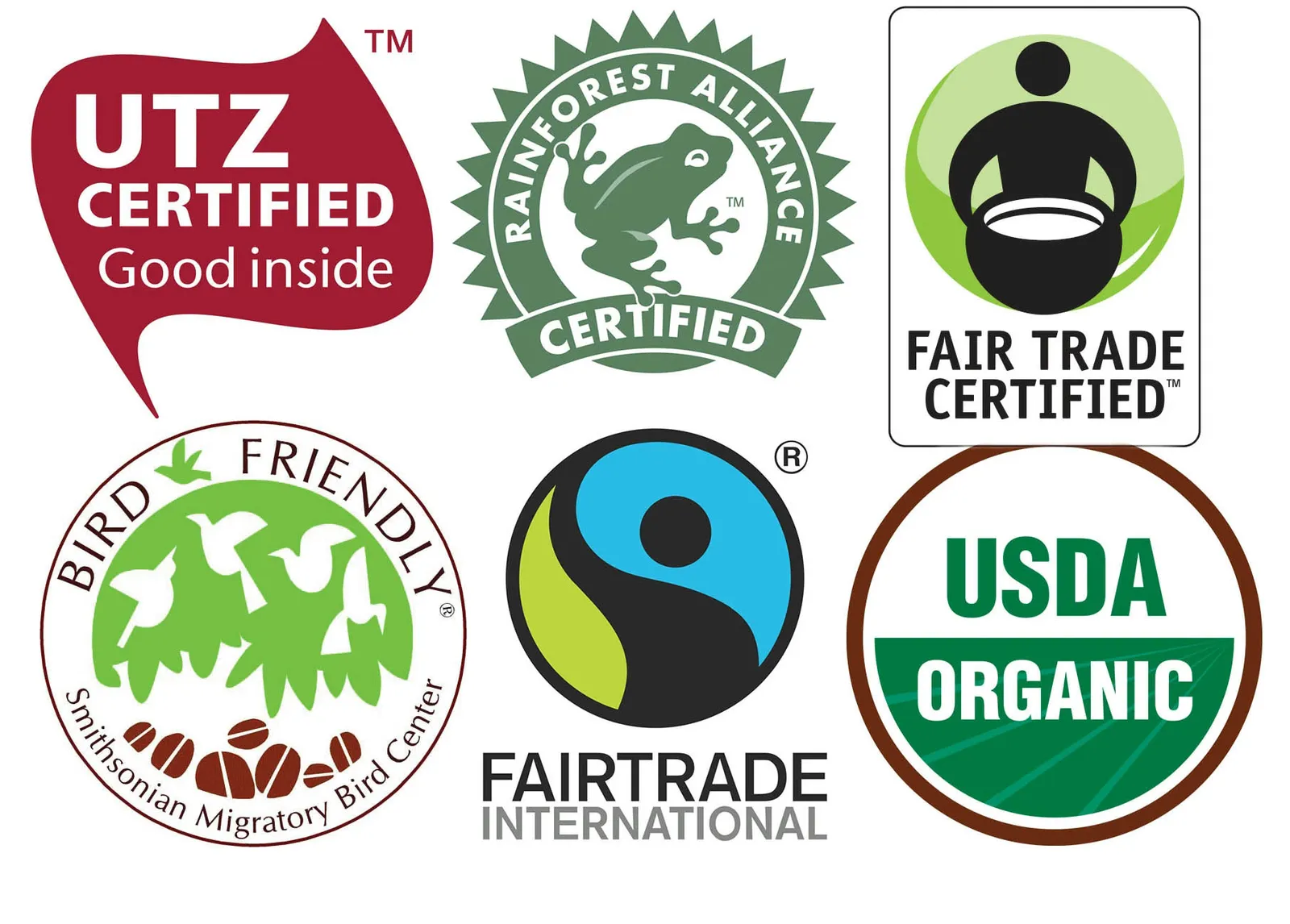
Decoding Coffee Certifications: What Those Little Logos Really Tell You
From organic to B Corp, certification seals on coffee bags promise transparency—but understanding their distinct aims and limitations is key to making informed choices.

As Houthi attacks disrupt a key shipping lane, the coffee sector focuses on logistics and costs, prompting questions about its ethical stance on the conflict that triggered the crisis.
A look back at the forces that reshaped the coffee trade: U.S. tariff policy, volatile futures markets, stalled retail prices, and the SCA's overhaul of quality assessment.
A guide to navigating trade transformation, tariff classification, and country-of-origin rules for coffee shipments into the United States.
Shoppers may glance past the seals on coffee bags, but the story behind those marks—and whether they sway purchases—is more complicated than it seems.
Digital ledger initiatives are being used to trace beans, connect farmers with buyers and lenders, and open up pricing data—though the technology alone does not ensure fairness.
A 74-page report commissioned by three sustainability groups examines how money moves through the coffee supply chain, revealing that extra consumer spending does not automatically reach producers and that family labor is often unaccounted for.
Chad Trewick and Peter W. Roberts discuss how they protect data donors' identities, the feedback loop with contributors, and the road ahead for their pricing transparency tool.
A survey of 13 U.S. coffee roasters reveals the tough choices they're making—from shrinking margins to tweaking blends—as green coffee costs surge and sales slow. Most are absorbing losses rather than risk losing customers.
The appeal and the real-world difficulties of sourcing coffee directly from farms.