Robusta, Reconsidered: A Bean That Can Lift a Blend
Once dismissed as commodity filler, Robusta is earning renewed attention for its quality potential — and for the structure, sweetness and body it can contribute to a blend.
By Quinn Hill2 min read
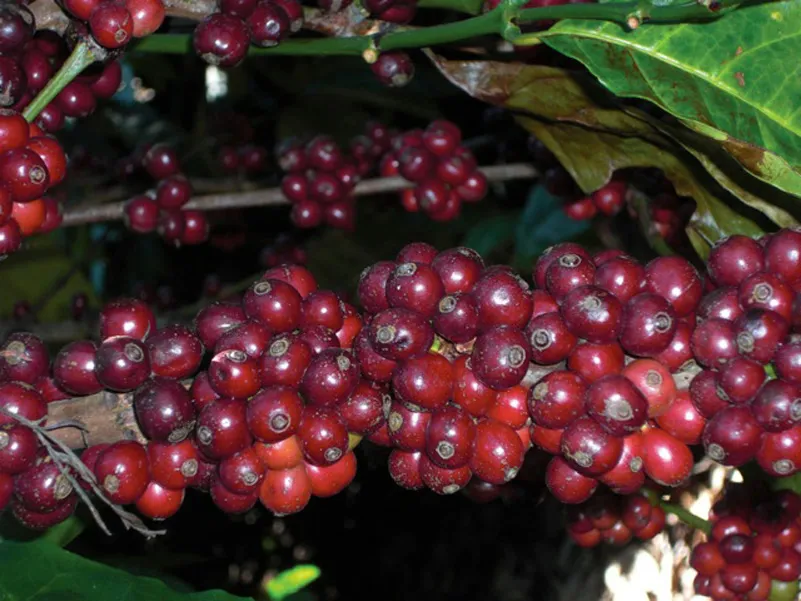
For years, Robusta has been treated as coffee's workhorse bean — the plain, mass-produced counterpart to specialty Arabica, rarely invited into a serious conversation about high-end coffee. That reputation was arguably harsh even when it took hold: not so long ago, Robusta represented around thirty percent of the world's coffee supply. Today, largely because of Vietnam's output, it accounts for roughly forty percent of all coffee produced. More volume could simply have meant more commodity-grade beans, but the increase has come alongside an improvement in quality for this often-maligned category.
Like Arabica, Robusta comes in many varieties and quality tiers. A well-grown Robusta can offer nut-butter, caramel and cedar notes. Others carry impressions of vegetable oil, rubber, peanut shell, grass or horsehair. Even the less appealing sort — the oily, grassy profile — can still contribute usefully to a blend. Typically, a Robusta of that character needs a chocolaty partner from Brazil, Peru or El Salvador to bring out its better qualities. The nuttiness and roundness of the Robusta will lift and draw forward the sweeter chocolate notes of those Central and South American coffees. I have had excellent results blending organic Robusta with Arabicas from Brazil and Ethiopia: the combination came across as chocolate-covered blueberry, with bite and a bold body.
In a fully washed and polished Robusta you will find subtlety and nuance, sweetness and notes of chocolate and cardamom with a much cleaner finish.
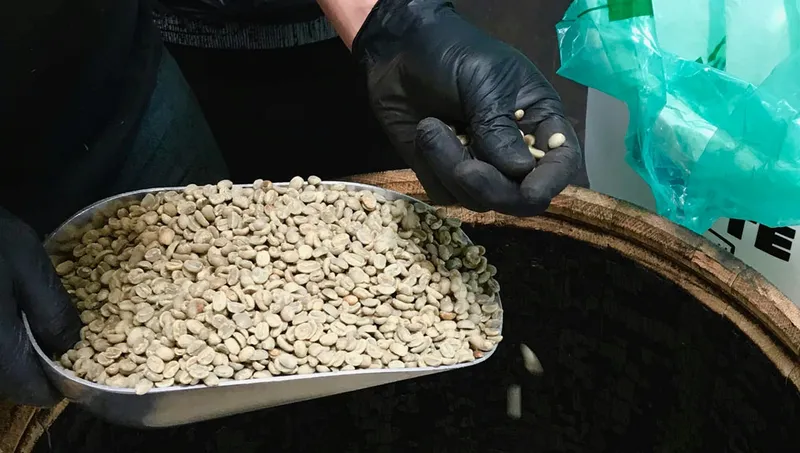
Robusta is commonly graded G1 and G2, then further classified by screen size. Grading scales differ by country — sometimes 0–4 or 0–6 — and are based on screen size and defect count. The better grades remain G1 and G2, though Robustas are also classified by process: washed, semi-washed or polished. The cup difference between, say, a Vietnamese G1 and a G2 at screen 13–15 is not especially large; both tend toward a somewhat wild flavor with a grassy, sour acidity. The more meaningful distinction appears with washed and polished Robustas. Those processing methods signal quality, because the more care a lot has received, the greater the likelihood it was rigorously sorted. In a fully washed and polished Robusta you will find subtlety and nuance, sweetness and notes of chocolate and cardamom with a much cleaner finish.
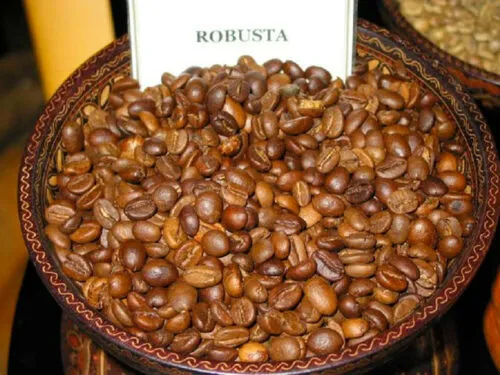 As with most coffees, grades are defined by screen size, altitude and bean density. Specialty buyers, however, may be unaccustomed to grading that weighs the percentage of black kernels, broken beans and foreign matter — factors that carry greater weight when purchasing Robusta.
Robusta will never deliver the acidity of an Arabica, but that is not its purpose. Its job is to offset Arabica's sharp acidity with round, earthy, nutty notes and sweetness, while contributing body and mouthfeel. I am consistently struck by how well Robustas work alongside other coffees.
There are, of course, special considerations when handling these beans. First, their lower bean density means they roast faster than SHB Arabica. Second, they call for a light hand in the blend: just as a potent, high-acid Ethiopian can dominate a blend, so can a G1 natural Robusta. Finally, they contain roughly twice the caffeine of most Arabicas, so a Robusta-only blend could be physically uncomfortable for someone unaccustomed to that much caffeine.
With producing countries working to replicate specialty Arabica's successes and with the growth of the R Grader curriculum, the improved growing, sorting and processing of today's Robustas means these beans can genuinely give a blend a boost.