Roasting Within Limits: What Green Coffee Can and Cannot Become
A green buyer's perspective on why the beans you choose set the boundaries for what a roast profile can achieve, and how to plan sourcing around that reality.
By Jordan Scott4 min read
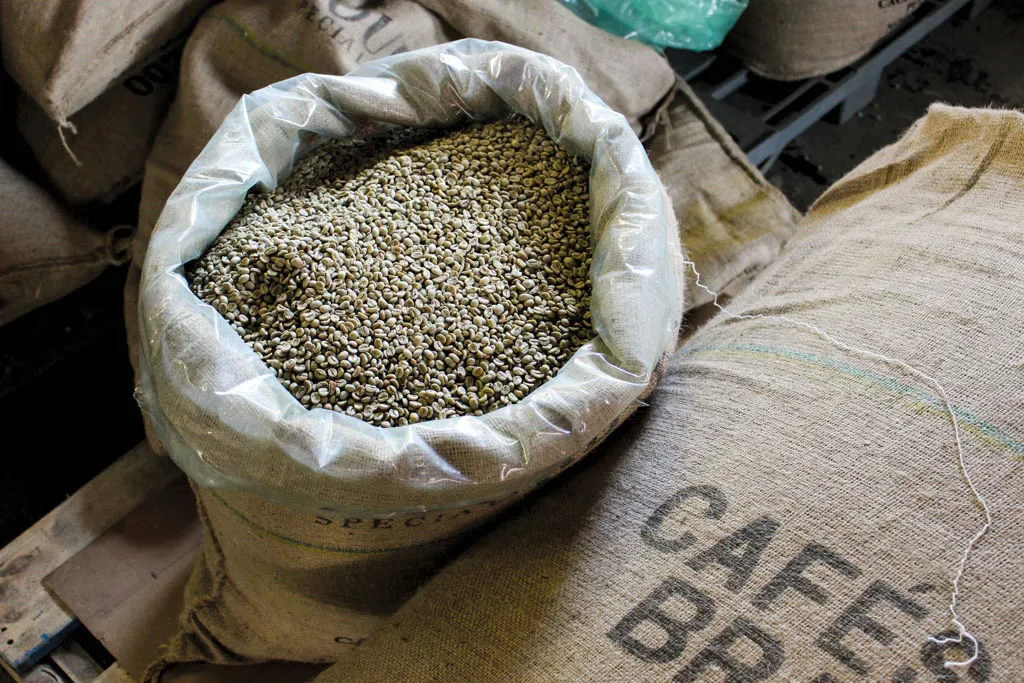
Sourcing green coffee opens up a nearly endless set of conversations. People ask about price structures, contract terms, ethical practice, cup quality, shipping and logistics, and on it goes. Lately my own attention has settled on how flavor develops in the cup when a roast profile is nudged slightly—or overhauled entirely. One qualifier is worth stating up front: when you try to steer the taste of a coffee, there are hard limits on what you can accomplish. Chief among them is the green coffee you decided to buy.
If we set out to catalog the variables that shape how a green coffee tastes, the list gets long quickly. The most intricate factor is terroir—the place where the coffee grew. Terroir itself responds to sun exposure, what the soil is made of, how much rain falls, elevation, temperature, and the broader geography. Beyond growing conditions, the cultivar matters. So does the way the seed is separated from fruit and parchment and then dried for shipment and storage. This is far from a complete inventory of factors, yet it already demonstrates how much complexity is baked into a single bean.
What has been genuinely stimulating in recent times is the way technology, easier communication, and greater openness on the production side have reshaped both expectations and flavor profiles worldwide. Cultivars are being tested in countries and climate zones that had never grown them. Methods of processing—down to fine details and small deviations—along with processing equipment and techniques, now travel between countries and regions at a pace without precedent. For anyone who roasts and cups, the practical result is that inherited assumptions about flavor and quality get overturned regularly. On top of that, the growing availability of micro-lots and single-farm lots adds still more departure from what a given coffee is "supposed" to taste like.
There comes a point where if you want a flavor disparate from what you’re getting, it’s time to source a different coffee.
To my mind, that is a thrilling state of affairs. It means each coffee we taste as buyers and roasters will carry its own signature. If you are the kind of buyer who wants something distinct from every lot, it is easy to feel enthusiastic about where things are heading. If your customers depend on a blend that holds a steady flavor profile, the same trend can feel either like an interesting problem or an intimidating one. Either way, a question I hear often from clients is: "How can I make this coffee taste like x."
The answer is coffee-specific. Some coffees and some roast profiles leave real room to move in the direction of the profile you have in mind. Others, or other profiles, leave none at all.
My preferred analogy is paint. Red is red—you can push red toward orange, or toward purple or pink, but red will never turn green. To get green, you would have to begin with blue, yellow, or green. Coffee works the same way. A coffee with a given flavor gives you space to play and shift that flavor somewhat, but at a certain point, if the flavor you want is fundamentally different from what you have, the answer is to source a different coffee.
One example I use concerns acidity. Say you buy a lovely washed Ethiopian Sidamo with clean, crisp citric acidity and abundant sucrose. That acidity might read as grapefruit, lime, lemon, Meyer lemon, orange, or even stone fruit. It will not taste of berries the way a natural-processed Ethiopian Sidamo can. If berries were the profile you wanted, the natural was the coffee to buy, not the washed.
That case is fairly plain, but the same principle plays out in subtler forms. If you have worked intelligently with the profile, pushed it to its edges, and still cannot locate the flavor you were after, there is a good chance it simply is not present in that coffee the way it was in coffees from other farms, other processing methods, other countries, or other harvest years. That is precisely why sourcing and cupping before you commit to a purchase matters so much: it gives you a preview of what the coffee can become.
The essential point: roasters hold considerable sway over the final flavor in the cup, but we can only transform what is already in front of us. Every coffee has a home—whether your shop or roastery is the right home for a particular flavor profile is a judgment only you can make. Build a sourcing plan that suits your style and your customers, and buy coffees that fit what you are trying to accomplish. Then apply your roasting craft to bring out the very qualities that led you to buy that coffee. The last step is to present it without hesitation to your customers and to the wider industry.