How Compact Digital Roasters Are Reshaping Coffee Roasting
Over the past half-decade, a notable shift has occurred in roasting equipment: smaller, compact digital roasters have gained significant traction, influencing both professional and home roasting practices.
By Blake Reed6 min read
Over the past five years, one area of roasting technology has advanced remarkably: the emergence of smaller, more compact digital roasters.
The proliferation of digital roasters—ranging from small home units to professional sample roasters to larger electric drum roasters—demonstrates how essential they have become to the professional coffee roasting industry. Earlier this year, the multinational giant Nestlé introduced the Roastelier, a counter-top roaster aimed at cafes and baristas. Nestlé describes it as “a compact coffee-roasting solution that will allow baristas to unlock and simplify the art of roasting in the shop.”
Nestlé’s Roastelier
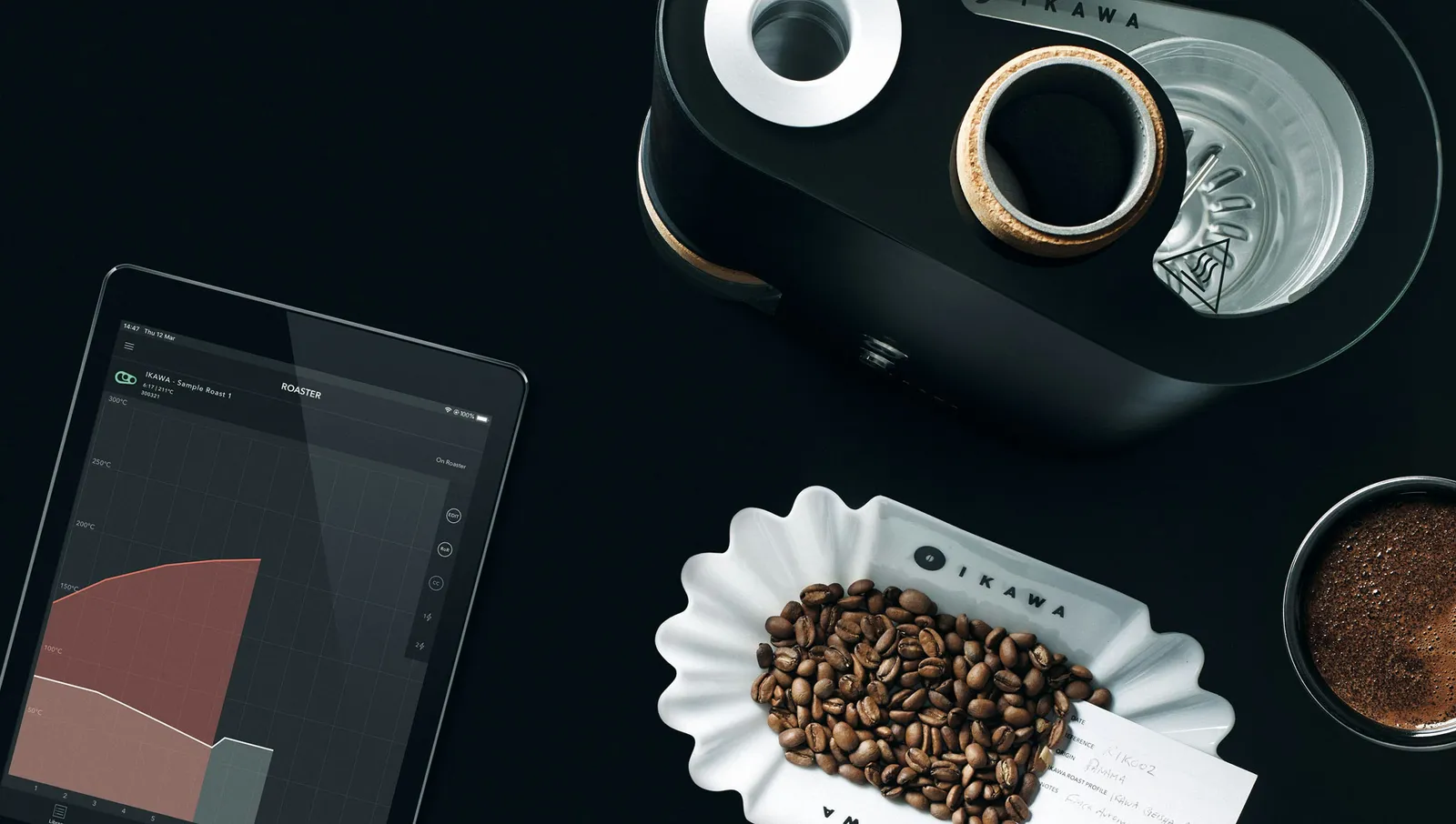
While home roasters such as the Sonofresco, Behmor, Hottop, and Fresh Roast have existed for years, the success of the IKAWA appears to have paved the way for this latest wave of digitization. The IKAWA was the first digital micro-sample roaster with the ability to control graphs and profiles from a phone—and this innovation has driven further developments in the market. Bellwether, an all-electric ventless roaster, recently secured $40 million in its Series B financing round, indicating that innovation is ongoing and that others are eager to participate.
Most of these digital roasters are intended for sample roasting, but they can also serve home roasters and baristas who want to roast coffee themselves.
How Digital Roasters Can Help Efficiency & Accessibility
As with most technology, the digitization of sample roasters arose from a need: achieving consistent, hands-free roasting of multiple samples or batches of coffee. Previously, a coffee roaster might have had to stand over a manual drum and monitor every step of the roasting process; now, anyone can select a profile, press a button, and step away. The key is efficiency—the ability to sample roast new coffees while simultaneously roasting coffee for production.
Geoff Woodley, head of marketing for IKAWA, also points out that digital roasters make sample roasting more accessible.
“It was a major gap in the sample roasting world for people to know what a good sample roast was and how to achieve it,” he says. “We encountered a lot of producers who thought they couldn’t roast. The IKAWA makes it really concise and really simple.”
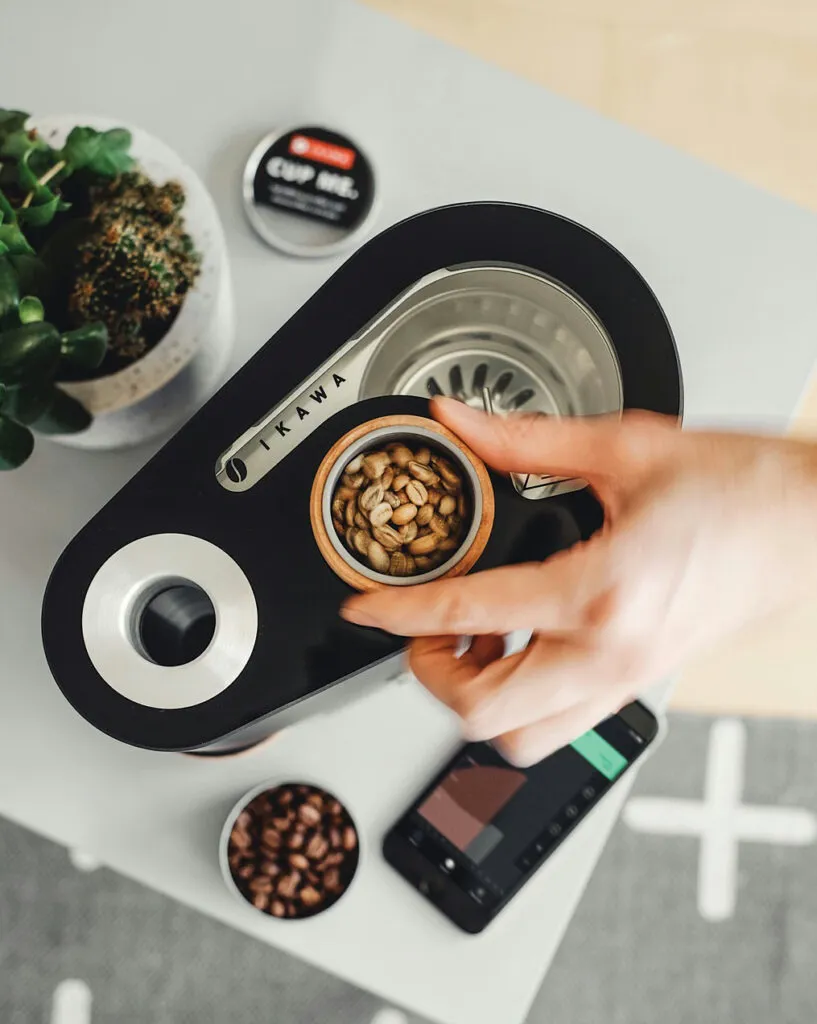
The IKAWA roaster.
Of course, other larger commercial roasters, such as the Loring, have been automated and digital for a few years, but not in a way that was accessible to non-professional roasters. Newer digital roasters are no longer just for “professional” roasters; coffee farmers and consumers can now roast with ease.
But digital roasters also offer an added benefit to professionals: it’s all about time and manual labor. With a digital roaster, one could roast just as quickly as with traditional roasters but manage multiple samples efficiently. Sample roasting—roasting small batches of coffee usually to inform purchasing decisions—can require a lot of monotonous hands-on time that a roaster could spend more productively.
But that’s not the only reason these machines were created.
Andrew Stordy, an engineer and industrial designer by trade, founded IKAWA while living abroad. As he traveled through coffee-producing countries like Burundi (the name IKAWA comes from the word for “coffee” in Kirundi, the official language of Burundi), he noticed a massive gap between coffee producers and coffee consumers: many producers were unable to drink the coffee they grew. These simple, compact digital roasters make it much easier for producers to roast and drink their coffee.
Not Just Air Roasters
Most of these new digital roasters are “air” or “fluid bed” roasters, using hot air to roast coffee, unlike more traditional “drum” roasters that hold coffee in a drum as it rotates over a heat source. Some companies, however, like Aillio and ROEST, are applying automated digital technology to both types of roasters.
Rob Hoos, Portland, Oregon-based author, roaster, and director of coffee at Nossa Familia Coffee, says they roast on a combination of sample roasting machines:
- Two IKAWAs (digital fluid bed)
- An Ambex 1 Kilo (manual drum)
- A U.S. Roaster Corp (manual drum)
He also teaches a class through the Specialty Coffee Association (SCA) on sample roasting using a home roaster, the Aillio Bullet R2 1 kilo (digital drum). Of the rise in digital roasting, he believes that it could be partially due to a dislike of the process of sample roasting.
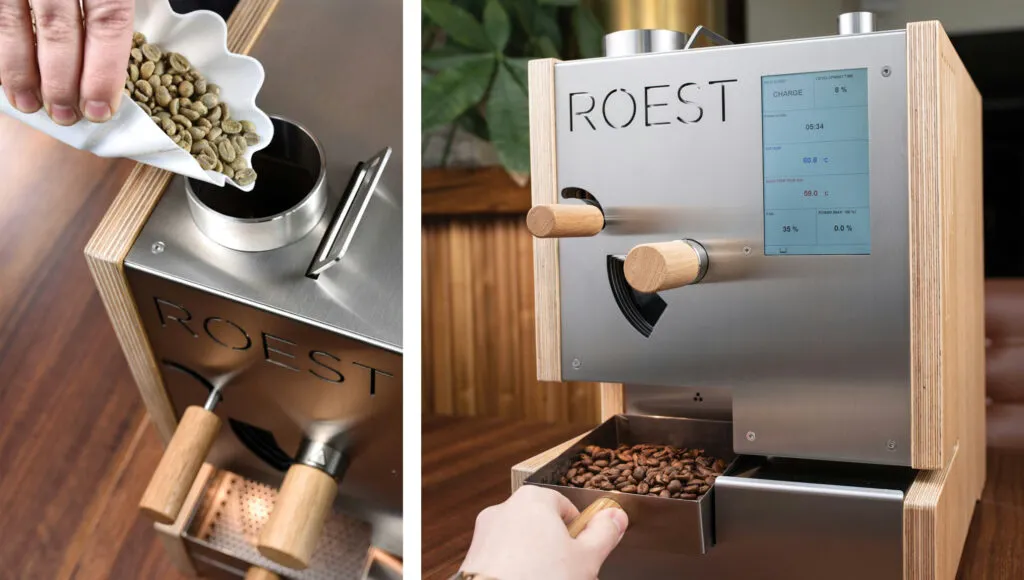
The ROEST digital sample roaster.
Norway-based ROEST combines the best of both roasting worlds: a small digital roaster utilizing a conventional drum design. “When we started, drum roasters were the baseline. They were durable and manual,” says ROEST CEO and cofounder Trond Simonsen.
“Consistency was, however, a problem,” he continues. “After IKAWA managed to open up the market for digitalization, everything has changed. Now we are first asked if we are digital, then if you can roast manual [using our machines]. A lot of our customers want the best from both worlds—and that’s been a key principle in our development.”
“We’re teaching our roasters to listen for the sound of first crack to take consistency and automation to the next level,” adds Trond’s brother, Sverre Simonsen, the engineer and cofounder of ROEST. He refers to a point in the coffee roasting process where heat causes beans to expand and make a notable “popping” sound.
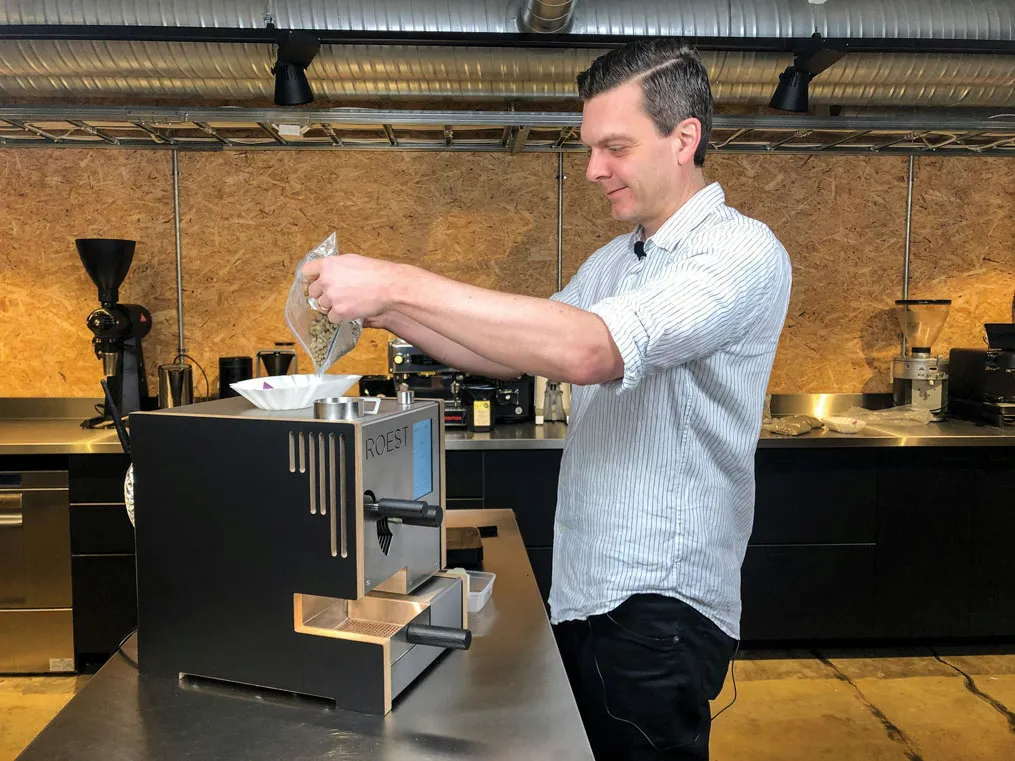
Tim Wendelboe has been using ROEST for quality control, sample roasting for buying, and roasting classes for the past year.
The Simonsen brothers say the ROEST is highly flexible. The machine can be used to roast manually, semi-automatically, or fully autonomously. They note that different companies employ its use differently. “ROEST is designed not only to complement a traditional drum roaster, but to replace it,” says Trond.
The Future of Traditional Roasters
The question remains: As digital roasters, which primarily use air roasting technology, become more popular, will air roasting replace drum roasting as the method of choice for sample roasting?
“I think it can,” says Marcus Young of Boot Coffee. “With more and more roasters using IKAWA sample roasters or Stronghold roasters, and even production roasting with Loring Roasters with their highly convective heat, fluid bed may be the way to go.”
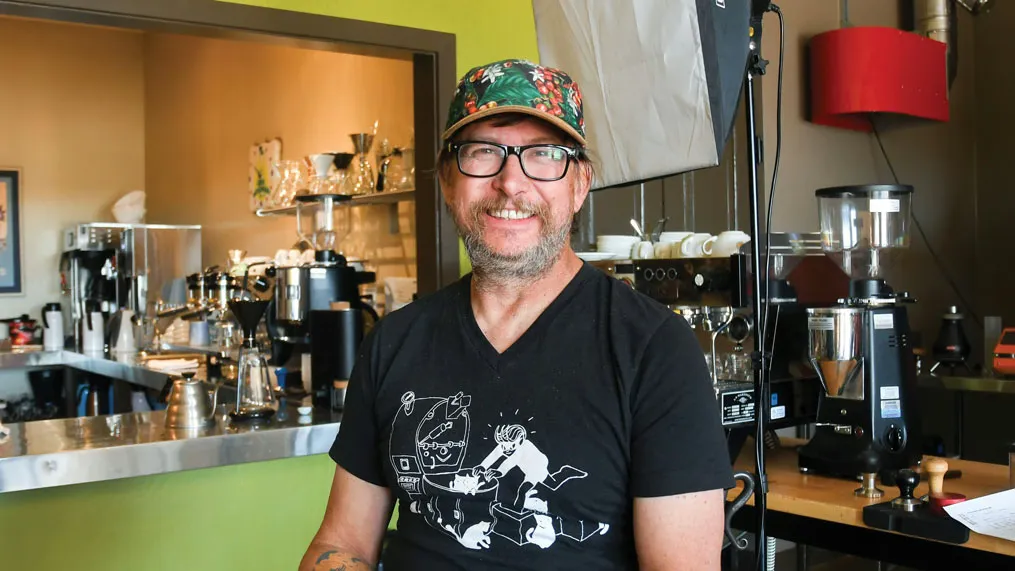
Marcus Young.
He also notes that roasters offer improved control over heat and airflow compared to traditional sample roasters. “With the IKAWA, I can send a profile to the roaster and have a lab assistant roasting samples with about ten minutes of training,” says Young. “I’ve also found the ability to develop and share profiles on fluid bed machines to be appreciated by my clients who operate roasting companies.”
But Phil Beattie of Dillanos Coffee Roasters in Sumner, Washington, disagrees.
“I do not think air roasting will replace drum sample roasters,” he says. “Air roasting imparts a very specific development of flavor in a way that favors certain core profiles. My experience is that air roasting requires additional roast variance to bring out the flavors of natural and honey processed coffees. This required variance for air roasting introduces new variables that are not necessarily present in drum roasting. Sample roasting aims to limit variables and create uniformity of sample assessment worldwide.”
Yimara Martinez Agudelo is a quality control specialist at Sustainable Harvest. Agudelo roasts on two IKAWAs and a Probat (a drum roaster) and has developed a profile similar to that of a drum roaster by cupping two roasts (one from the drum roaster and one from the IKAWA) side by side to achieve the same expression of flavor and smell for quality control purposes.
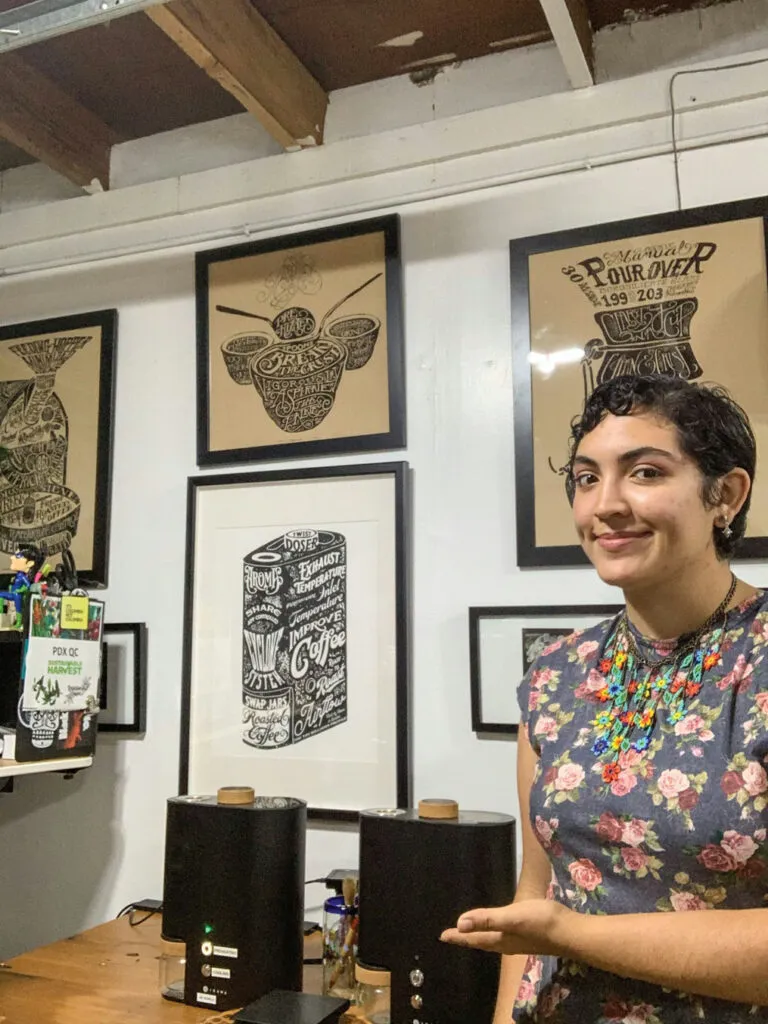
Yimara Martinez Agudelo with an IKAWA roaster.
Even if drum roasters remain the choice of importers and large companies, smaller digital roasters seem ideal for small- to medium-sized roasting companies in terms of both price and quality.
As digital roasting technology develops, that doesn’t mean there aren’t benefits to learning how to manually roast: what better way to get a feel for roasting coffee than a hands-on approach? “There are certain things I appreciate about manual roasting that are not easy to replace,” says Rob Hoos. “Like if you have the same person doing both sample roasting and production roasting, you get a better feel for the coffee.”
With that in mind, it is still too early to tell whether these digital machines will one day take over coffee roasting completely. But the future of coffee roasting, in general, is headed in this technical direction—a digital, autonomous frontier. As Trond says, “It’s about time.”
The machines are here to stay.
Cover photo courtesy of IKAWA