The Craft Behind Winter Coffee Blends: Roasters on Building Seasonal Cheer
Roasters from three specialty coffee companies explain how they design winter blends that capture the flavors of the season—from mulled wine and baked pie to chocolate and jammy fruit—and how careful sourcing and blending turn a simple bag of beans into a holiday tradition.
By Finley Campbell6 min read
As the weather turns cold—or, for those in warmer climes, as the dream of scarves and beanies accompanies poolside gift-opening—festive drinks return to coffee shop menus. Alongside them, holiday coffee blends reappear on cafe and grocery shelves: bags of beans that emerge in the final months of the year, adorned with wintery graphics and promising tasting notes that echo beloved seasonal flavors.
Peppermint mochas may claim much of the seasonal spotlight, but holiday blends sustain December workweeks and pair perfectly with holiday treats, whether a slice of pie or a plate of cookies. For roasters, these blends offer a way to build a coffee offering around the flavors of the season and to celebrate the time of year.
Yet creating a holiday—or winter—blend demands skill and precision. Many blends aim to evoke broadly appealing flavors like chocolate and cherry, but pinpointing specific “winter” notes is a challenge. Even so, holiday blends remain popular: customers anticipate their arrival on a favorite roaster’s menu because the festive flavors herald the season, and the bags make ideal gifts at holiday gatherings.
So what goes into a holiday blend? We spoke with the roasters behind some of the year’s most anticipated winter blends about how they bring cheer and light to their seasonal offerings.
Thoughtful Blends, Not Just Leftovers
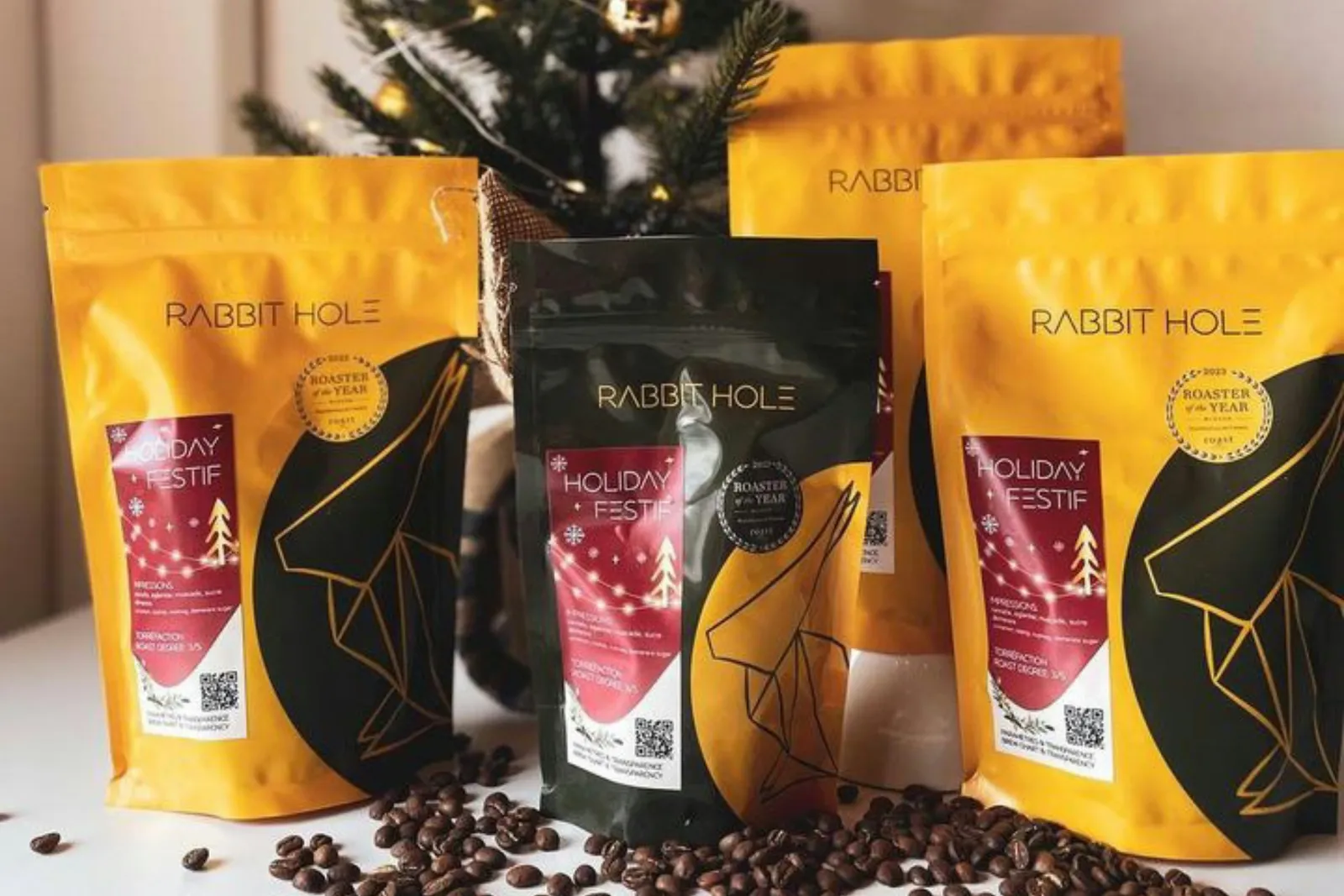
Rabbit Hole Roasters, based in Quebec, Canada, releases an annual winter blend called Holiday Festif. It combines three coffees: a naturally processed Ethiopian, a washed yellow Catuai from Guatemala, and an ethyl acetate decaf Pink Bourbon from Colombia.
“We always use a chocolate-forward coffee, usually from Guatemala, and a natural Ethiopian for the fruit jam aspect,” says David Lalonde, co-owner of Rabbit Hole. “Pretty straightforward. But what makes this blend come together so nicely has been the decaf from Colombia! This brings a very spicy tone to the blend, and it makes the brews taste like the warm wine that is served in European Christmas markets.” According to Rabbit Hole’s website, the coffee evokes flavors of “cinnamon, rosehip, nutmeg, demerara sugar” and “sipping on this coffee will instantly transport you to a Christmas Market or even make you believe in Santa again!”
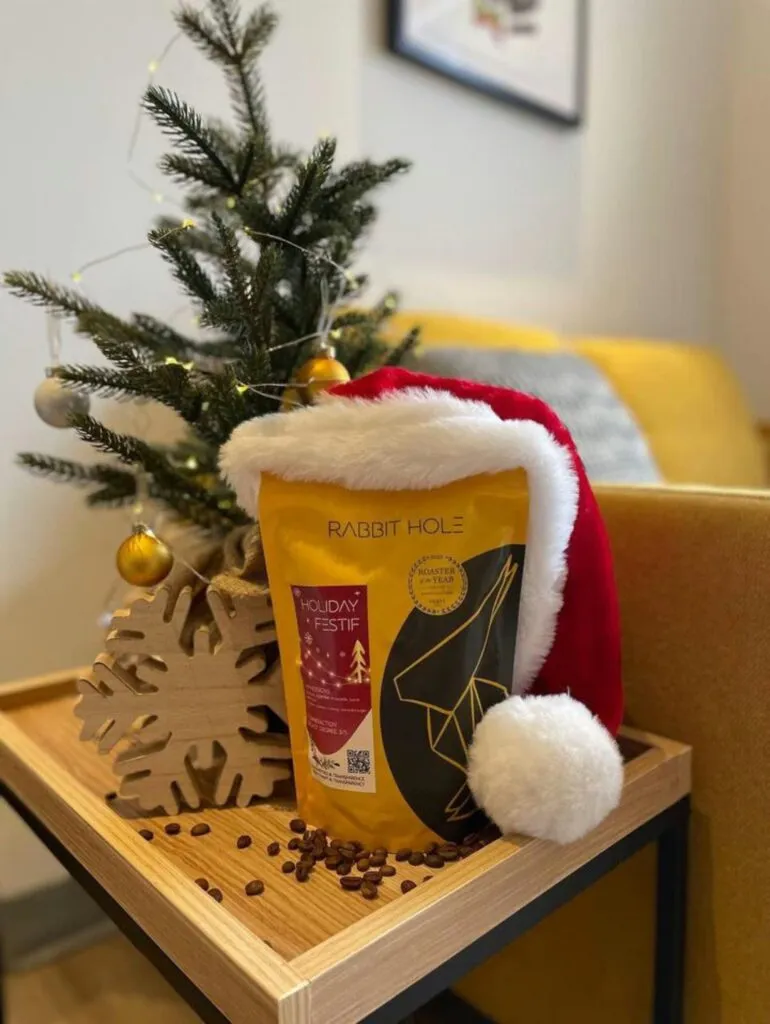
The blend uses coffees that Rabbit Hole already carries in its regular lineup. Lalonde says he buys from the same producers and regions every year, so farmers can count on Rabbit Hole’s orders and his team knows what to expect on the cupping table. The coffees are blended after roasting: each is roasted separately, then mixed to create the final holiday blend.
Holiday blends often summon a sense of togetherness, a feeling roasters try to capture in their winter offerings. “[The] important thing to remember for us is who we are making this coffee for,” says Matt Ferraro, head roaster at Black & White Roasters in North Carolina. “It is our friends, family, and those near us that we want to share something with this holiday. But it’s also for us, and it is something that we are proud of and want to enjoy ourselves.”
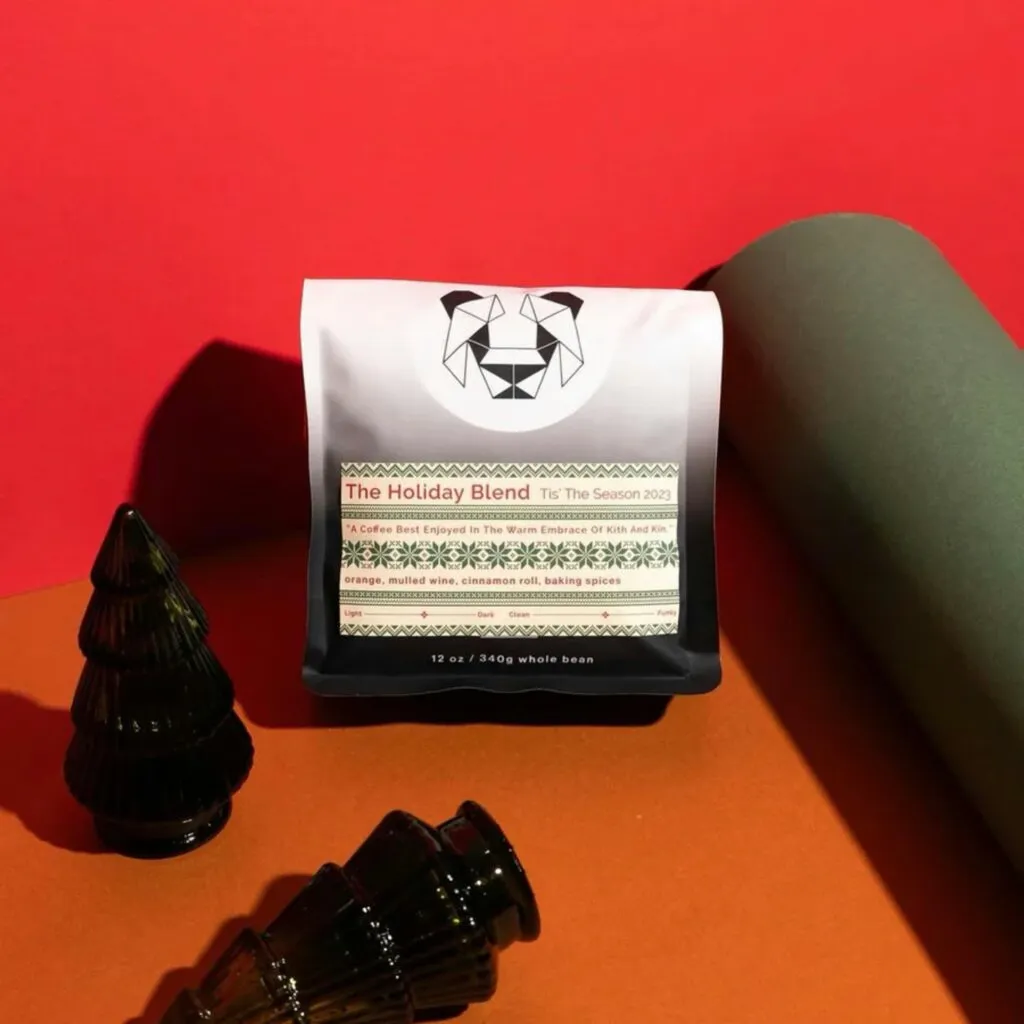
For ‘Tis The Season, Black & White’s 2023 holiday blend, “the idea is to create this effect of a ‘warm hug’ while providing the comfort of a mulled wine and/or baked pie alongside our friends and family—and ode to all our favorite things around the holiday,” says Ferraro. The blend is extremely popular, so sourcing enough coffee requires months of preparation: this year’s version features a cinnamon co-ferment anaerobic coffee from Estabon Zamora in Costa Rica, a Gamatui Hydro Honey from Uganda, and a Cabañas washed coffee from Honduras. Unlike Rabbit Hole, Ferraro says they roast all the coffees together. “We find the most cohesion of flavor in our Loring roaster when we pre-roast blend, and if it tastes best this way, who are we to argue?” he asks. “Don’t knock it till you try it!”
Deliberately crafting a thoughtful blend runs counter to the common notion that blends serve as a way to cycle through older, aging coffees. Jack Fleming and Aimee Biggerstaff of Recluse Roasting Project in Richmond, Virginia, use their winter blend, Sweater Season, to make a statement about keeping every offering intentional. “Sweater Season is a blend of two microlots, both relationship coffees. One is a honey process from Honduras [sourced from] Oscar Omar Alonzo from his farm Cual Bicicleta; [the other a] natural process Costa Rica—La Fila from the Urena family. The Honduran has a lot of chocolate and caramelized sugars, and the Costa Rican coffee gives it that fresh pop to excite,” says Fleming.
“We don’t typically do blends,” Biggerstaff clarifies. “So we thought it would be a fun way to end the year and allow folks to taste something different from us. In the industry, blends tend to be about moving old coffee or a blend of cheap coffee.” Sweater Season has become one of Recluse’s top sellers, and like Rabbit Hole, Fleming and Biggerstaff build the blend from beans supplied by producers they already work with, allowing them to buy more and support existing relationships.
Blending, Tasting, and Fine-Tuning
A winter blend takes months of planning to settle on the right coffees and the right proportions. For Holiday Festif, the Rabbit Hole team “start[ed] cupping in early November, and it usually takes three or four cupping bowls with different percentages of each coffee to find a winner.” says Lalonde.
“We always have an idea of what coffees will be fresh around that time of year, so that always gives us a starting point,” says Biggerstaff. “We cup a table of ten or so different blends at different ratios and narrow it down to our favorites. Then we cup those three or four favorites to find that year’s Sweater Season Blend.”
Once the final blend is set, it’s time to enjoy it. The Rabbit Hole team describes themselves as “classic coffee drinkers” who have been enjoying Holiday Festif at a 1:16 ratio on an Origami Dripper, but Lalonde also suggests trying it as espresso or pairing it with eggnog.
“This is a coffee that both our customers and employees look forward to each year, myself included,” says Ferraro. He has been enjoying ‘Tis The Season on batch brew at the roastery. Fleming and Biggerstaff have been sipping Sweater Season either on batch brew or via Biggerstaff’s “go-to” pour over method, the Kalita Wave.
A Season for Giving Back
Each year, Rabbit Hole directs a portion of Holiday Festif sales to a charitable cause. “For the third year in a row, we will donate to True North Aid, a Canadian nonprofit dedicated to improving the life of remote Indigenous communities. Our donations go towards their food security initiative,” says Lalonde.
Rabbit Hole sets aside $6 for every bag sold and will also use proceeds from Holiday Festif to donate to the Palestinian Youth Movement. “It’s the first time that we donated to more than one cause,” says Lalonde. “I’ve been engaged and learning about the Palestinian cause for years, and this year has been a catastrophe for Palestinian civilians. This is a cause that is very dear to my heart: I truly never imagined I would witness a genocide unfolding live on social media.”
“I am a firm believer that coffee, being a global and beloved beverage, can help change many facets of the world we live in, both in coffee origins and beyond,” Lalonde continues. “This blend is an embodiment of that philosophy. We aim to sell 333 bags and donate $1000 to both organizations.”
As holiday decorations come out of storage and coffee shops debut their winter lattes, roasteries are working to craft festive blends that evoke the spirit of the season, do good through their coffee choices, and serve a cheerful cup. Blending coffees to achieve the right balance of warming spices, jammy fruit, and mulled wine requires intentionality, attention, and care—and perhaps just a sprinkle of winter cheer.