A Roastery on Wheels: How One Couple Built a Mobile Coffee Operation
JT Peifer explains how he fit a commercial roaster into a high-mileage Ford van, how he keeps it running through freezing winters, and how earlier ventures in Texas and Kenya led to Feisty Goat Coffee.
By Hayden Kelly4 min read
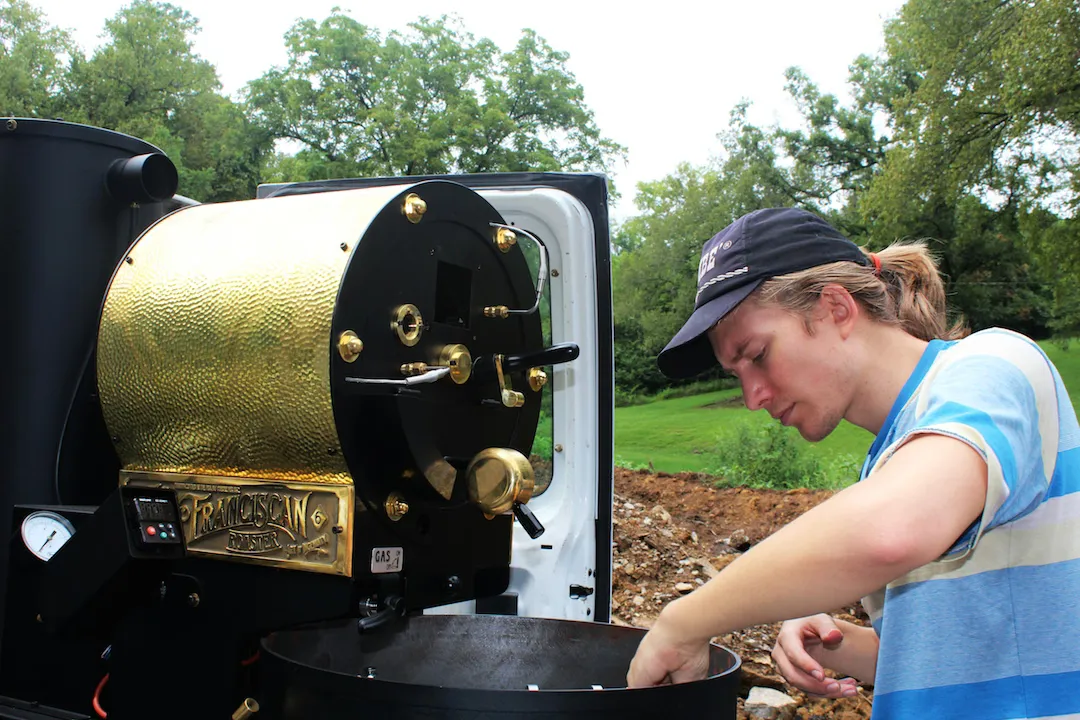
Tall, with long blond hair tied back tightly from an intense face, JT Peifer comes across as someone willing to attempt almost anything and—given enough planning and a bit of luck—pull it off. His history backs that up: as a ten-year-old in Texas he ran a dog-waste removal business that brought in what he calls an obscene amount of money; in Kenya he launched a working basement coffeehouse equipped with a single electrical outlet and no running water or refrigeration; and now he operates a warehouse and coffee roastery that fits entirely inside a van.
Yes, Peifer roasts coffee in his van. He recently took time to explain what it takes to install a 325-pound San Franciscan roaster in a Ford utility van, what roasting outdoors at twenty degrees Fahrenheit is like, and why his earlier experiences make Feisty Goat Coffee—a venture he shares with his wife—a fitting business for him.
Where did the idea for Feisty Goat come from?
Peifer says he and his wife had been developing the concept for years. Because she was finishing her PhD and would need to relocate for her internship and afterward, they wanted a business they could move with them. They were matched to Vanderbilt in Tennessee. By then they were ready to launch, so they ran their Kickstarter campaign in Charlottesville, where they had a strong support network. In what he describes as a crazy timeline, they completed the crowdfunding, placed the roaster order, drove the van down, outfitted it in August, and began roasting in the stifling heat of late August.
The obvious question: how did the roaster get into the van?
Peifer laughs. They built out an old van with a commercial drawer, he explains. The people at Coffee PER, Inc. made a shorter base for the roaster, and tension bolts secure that base to the drawer. Clearance is roughly half an inch, and every time he packs up he has to fully disassemble the roaster—down to the hopper, fan, and cooling sweep.
The van, he says, has been long-suffering. He found it on Craigslist, and it has around 180,000 miles on it. The first problem: he measured the interior space rather than the door clearance, and he didn't realize the mistake until the roaster arrived. That made for quite a summer. The day he discovered the error, his van was parked across town, so he biked over with his toolbox and started measuring feverishly. They reduced this, knocked that down, and by sheer dumb luck it worked—barely.
JT Peifer roasting out of his van.
What about roasting and the outdoor temperature?
Summers there are really hot, Peifer says, but that doesn't matter much. Winter is the difficult season. The strangest problem they encountered was that the outside of the roaster wasn't warming up quickly enough, so the drum would rub and blow fuses. He ended up buying a welder's blanket and a sleeping bag and building an A-frame shelter over the roaster's flue so some of the thermal heat isn't lost during heating. He also relies heavily on the damper and air flow control to help it heat up. He made a lot of calls to the San Franciscan team, searched online for topics like grilling during the winter, and talked with his uncle, a fluid dynamic engineer in Minnesota. Heating now takes only thirty minutes. Once the San Franciscan SF-6 reaches temperature, he says, it is super consistent.
Were there problems with the local health department?
Not really, according to Peifer. They told him he could do everything outside as long as he packaged it in a commissary kitchen. So he roasts on his street and then brings the coffee to a nearby kitchen where he rents space. At first he was nervous that neighbors would object, but he handed out flyers describing what he was doing in a humorous way, and everyone has been really supportive.
Where is the coffee sold now?
Sales are a mix of wholesale and retail, Peifer says, with a lot of online business—which suits the mobile side of the operation. He still has dedicated customers in Virginia and around the country, and he is building a following in Nashville. The coffee is sold in some small boutiques, and they are looking at bed-and-breakfasts. The best part, though, is events: art crawls, gallery openings, parties, weddings. Essentially they run a pop-up shop with coffee brewing, and they keep explaining that this isn't a food truck—it's more like a mobile warehouse and production facility.
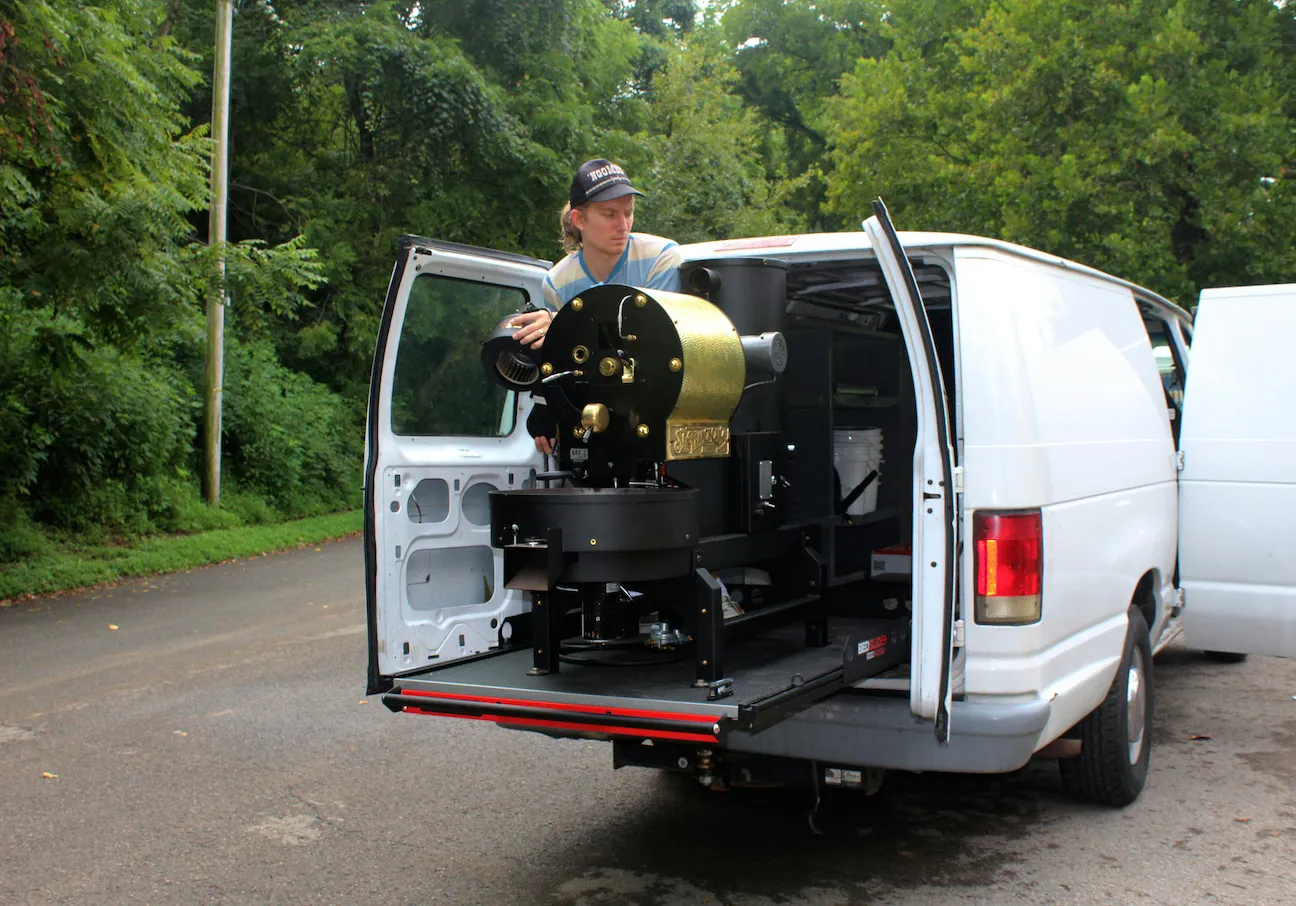
The roaster on the van's BedSlide.
His background includes unusual businesses and a long history in coffee, doesn't it?
Yes. His first business was in Texas. At ten, he ran around picking up people's dog waste for a ton of money—nobody wanted to get out in the heat. Then he moved to Kenya for ten years with his family. There he started a coffeeshop in the basement of the admin building where he went to school. It had one 110 outlet, no refrigeration, intermittent electricity, and no running water. They had a low-end home espresso machine—something like a Krups—and had to get water from surrounding houses and bring ice in with a cooler. It was a blast, he says. He ran it for two years in high school before selling it. After that he managed the student-run coffeeshop at his university, and then the downtown Mudhouse coffeeshop in Charlottesville.
Where does Peifer see Feisty Goat in the future?
Eventually they want a roastery and a shop, but they don't plan to do that immediately. They have figured out how to make the current setup work financially, and it's a lot of fun. Weird, he says, but a lot of fun.