From Garage Hobby to Quonset Hut Roastery: How Two Artisans Built a Missoula Coffee Destination
Wine and cheese backgrounds led Matt McQuilkin and Jim Chapman to launch a Missoula roastery in 2010, now operating from a 5,000-square-foot Quonset hut with a focus on organic beans and craft methods.
By Reese Scott4 min read
A Missoula Coffee Idea, Born at a Party
Matt McQuilkin and Jim Chapman first crossed paths at a mutual friend’s gathering, where they spotted a gap in Missoula’s coffee offerings and began discussing a joint roasting venture. “It was one of the few plans made over beers that actually comes to fruition,” McQuilkin recalls.
Chapman had long been sourcing coffee from outside the city. “I always pulled coffee from out of town because I couldn’t find what I wanted in town,” he says. “I knew I wanted to have a part in the flavor development and not just sell what other people did.”
The two set their plan in motion in autumn 2009, and by the next summer Black Coffee Roasting Company had opened, bringing organic coffees to Missoula’s growing community of coffee enthusiasts. The city has strong potential for a quality coffee scene: it is a liberal, artsy, outdoorsy university town of 60,000 people, set in a Rocky Mountain valley. Streets are lined with Subarus and Toyotas bearing bumper stickers like “Keep Missoula Weird” and “Know Your Farmer.” Some joke that Missoula isn’t really part of Montana at all.
From Wine and Cheese to Roasting
Although both were new to coffee, they had honed their enthusiasm for roasting through other artisanal trades—wine and cheese. Before Black Coffee, Chapman worked in wine sales and McQuilkin as a cheesemonger. “We’re both drawn to Old World trades,” McQuilkin says. “The hands-on making of a craft product that people have been making for centuries.”
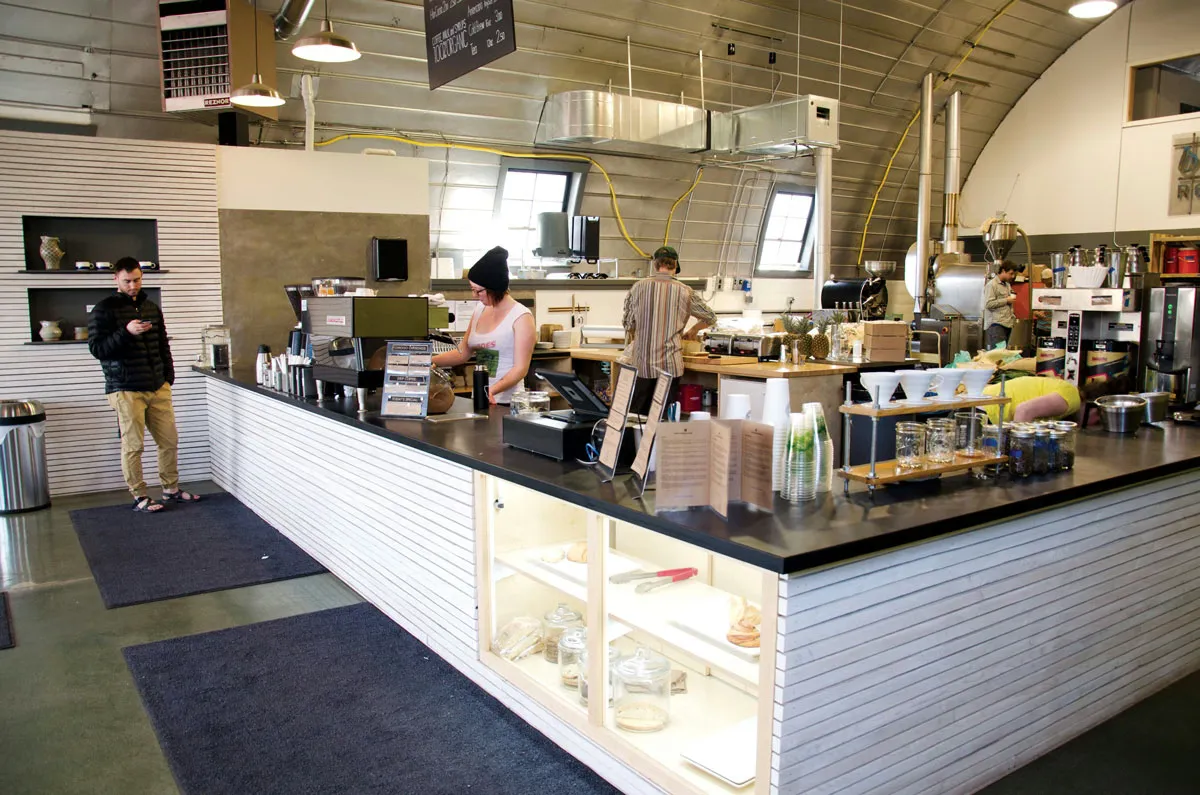
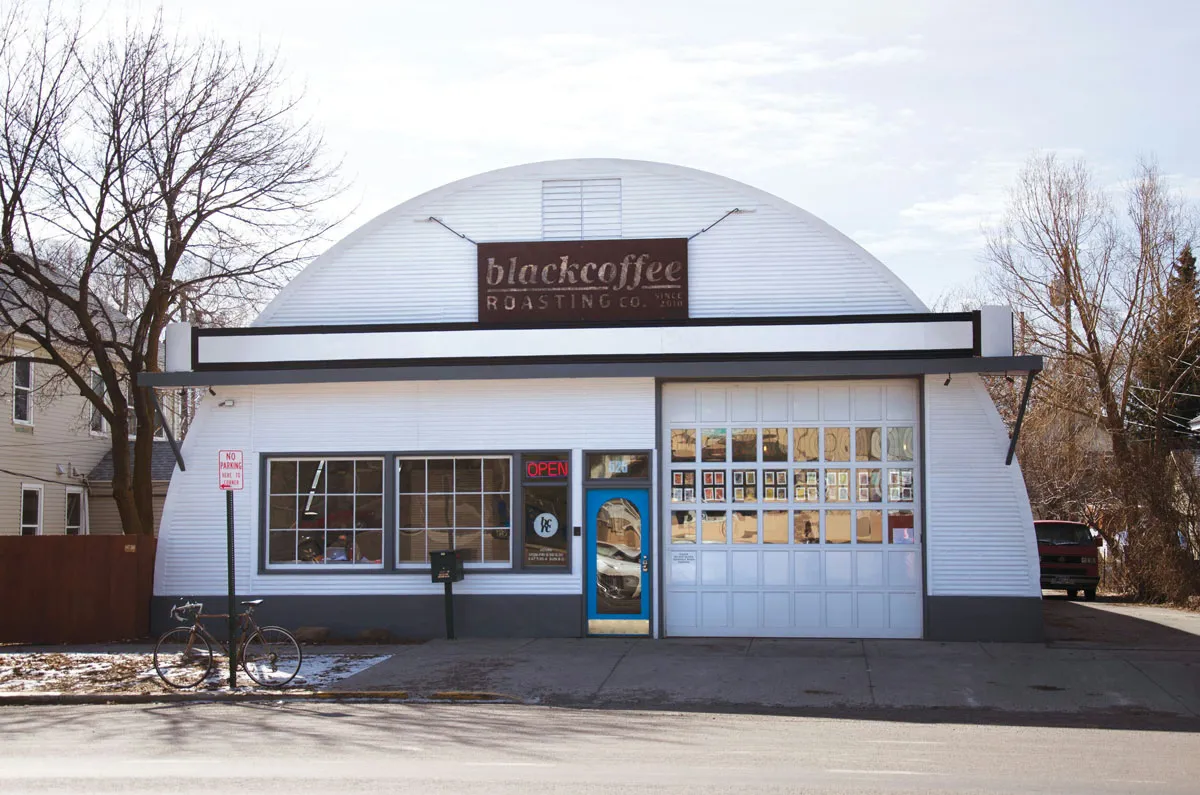
They started in a garage with a small roaster, working evenings, and eventually moved to their first location—a corner of a building that also housed a store selling recycled construction materials. Last fall they outgrew that space and relocated to a much larger 5,000-square-foot Quonset hut at the intersection of Missoula’s upscale Rattlesnake and the more modest Northside neighborhoods. “We need industrial but we also need proximity,” McQuilkin says of the spot. Unlike the old location, the new one is just a five-minute walk from downtown Missoula, where most of the city’s top restaurants, bars, and cafés are clustered.
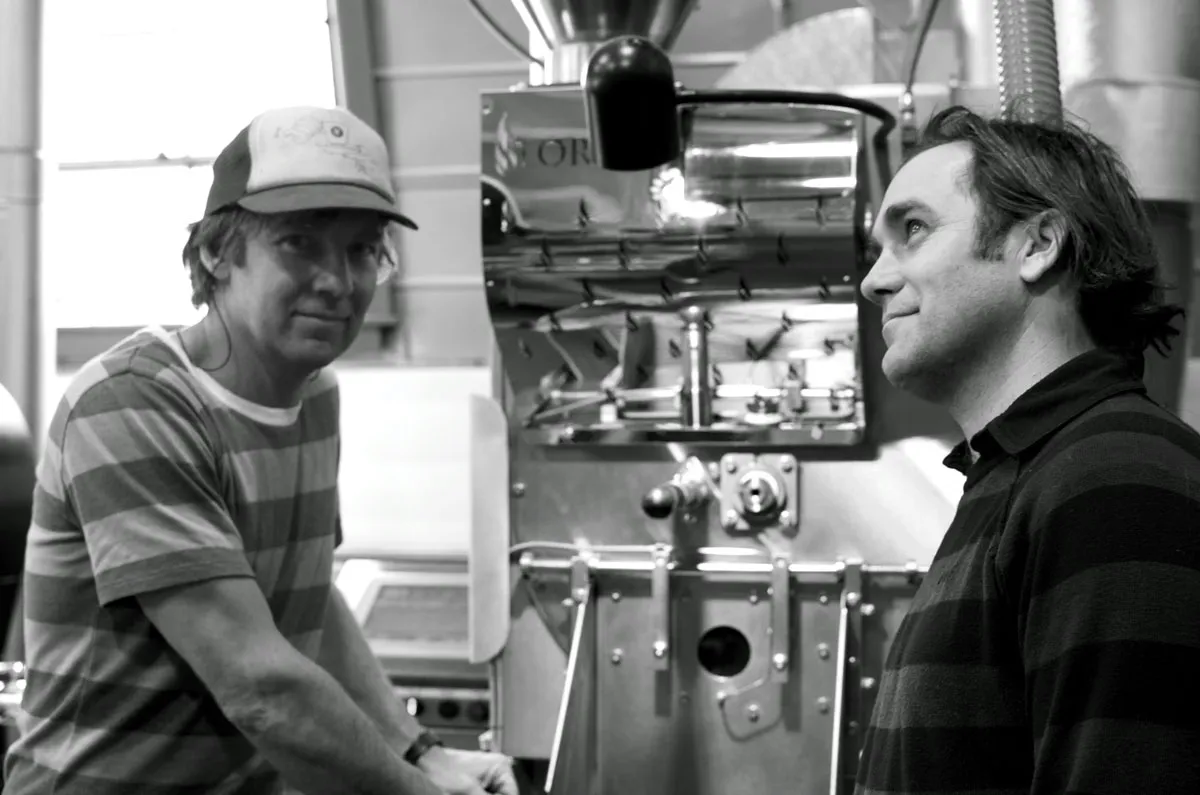
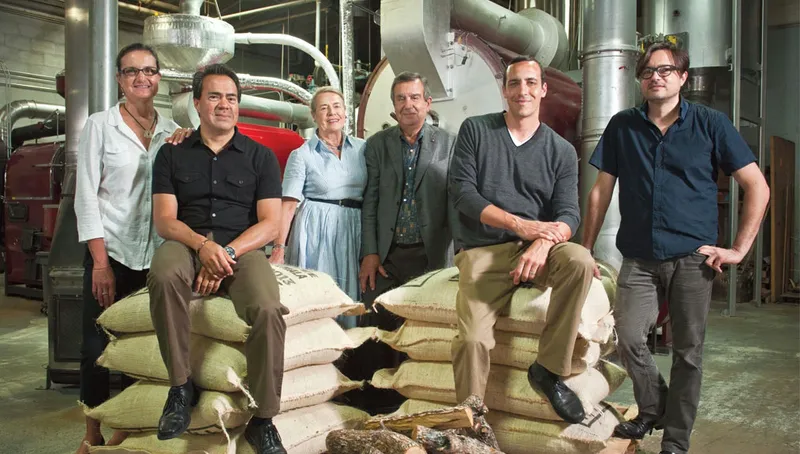
Black Coffee Roasting Company owners Jim Chapman and Matt McQuilkin.
Designing a Space That Feels Warm
When planning the new location, they chose to make the most of the building’s scale. “We really wanted to draw attention to the fact that it is this large space, but make it feel warm at the same time,” McQuilkin explains. A garage door now made entirely of windows lets in abundant natural light. The furniture is minimal and modern—metal and wood—and from your seat you can see all the way to the back, where huge bags of green beans sit on pallets awaiting roasting. The counter includes a pour-over bar with four white Hario V60 drip cones and taps for cold-brew, shrubs, and kombucha. For better or worse, and unlike most contemporary cafés, Black Coffee has no WiFi—so you may want to bring a book, or a friend.
Chapman and McQuilkin are the only roasters at Black Coffee, and at least one of them can be found roasting on almost any day of the week.
Roasting Bean by Bean
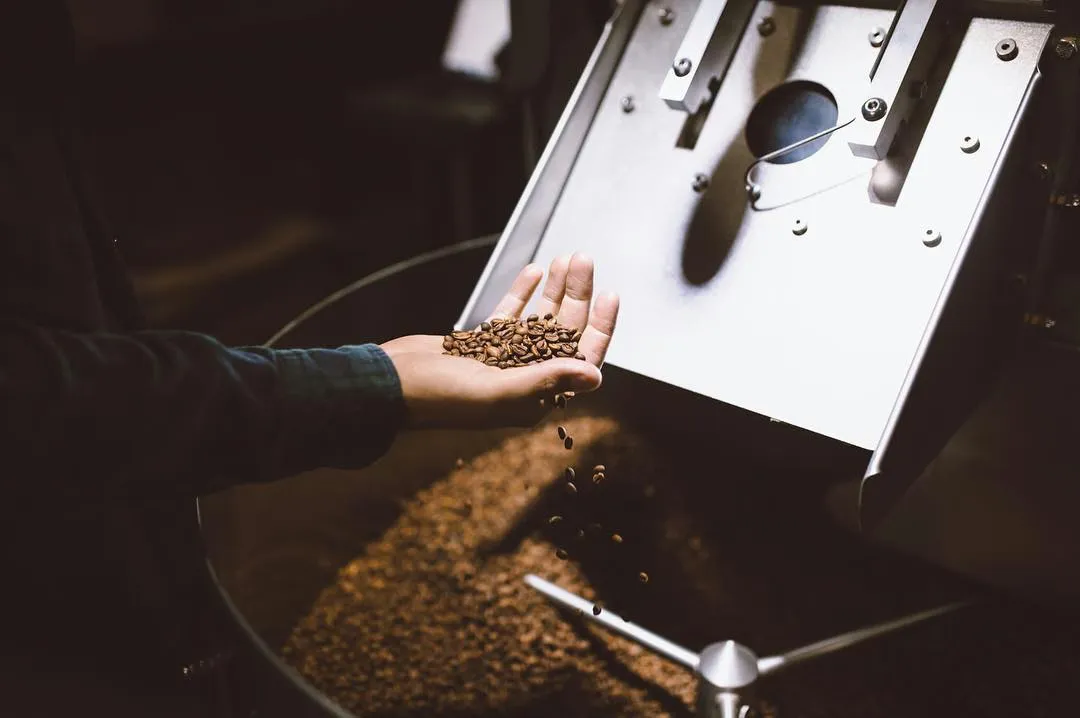
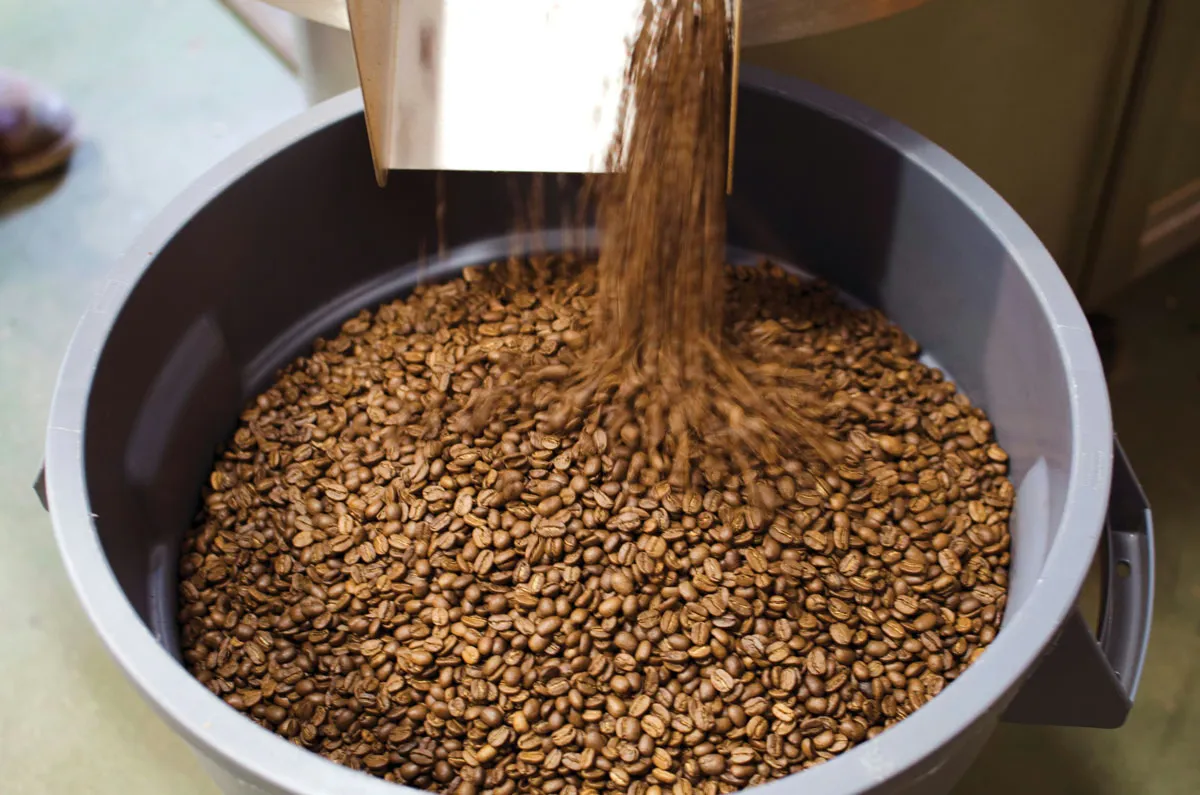
“We approach every bean separately,” Chapman explains. He likens coffee roasting to winemaking. They post-mix their blends, the way a vintner would with wine. Even coffees from the same region are handled individually, and whenever a new batch arrives, the search for the ideal roast begins anew. “We take the time with each bean to roast it to make it taste as good as it possibly can,” McQuilkin says.
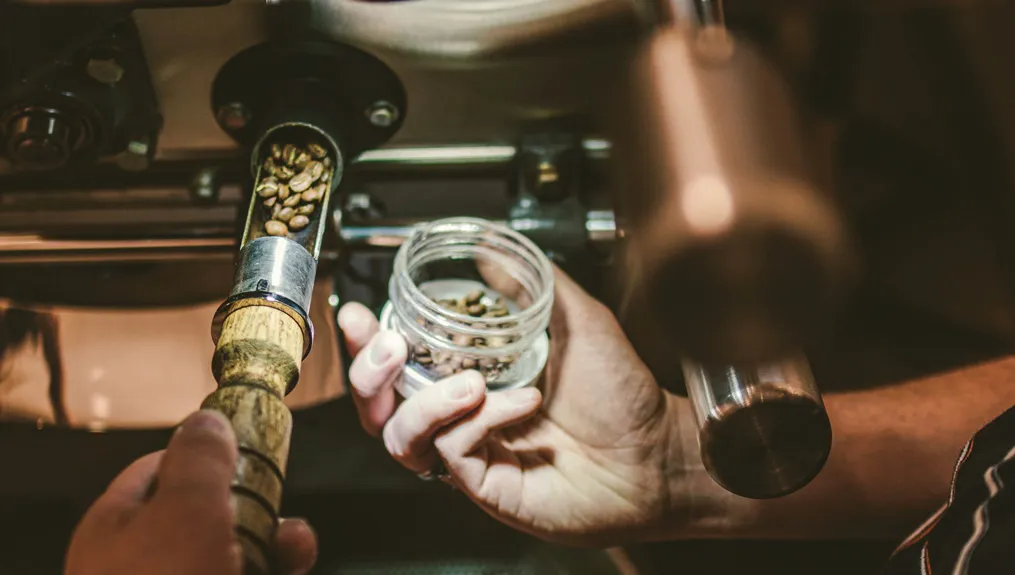
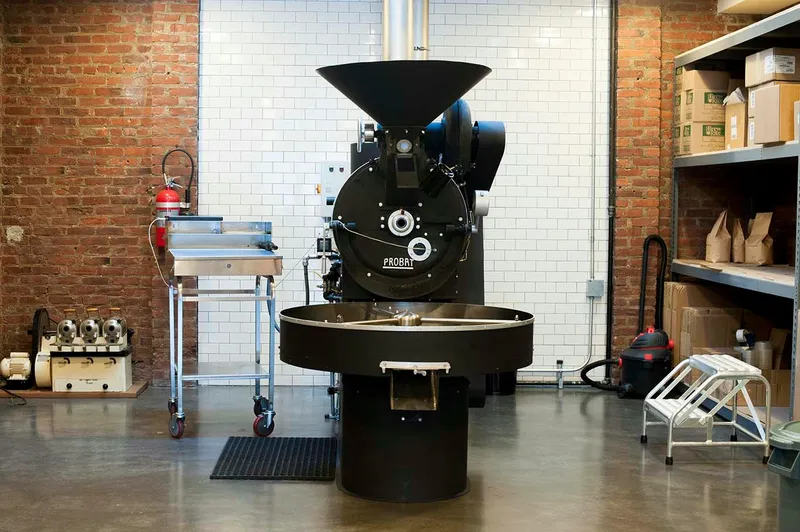
Black Coffee uses two roasting machines: a twelve-kilo Diedrich from nearby Sandpoint, Idaho, used mainly for testing new beans and determining optimal times and temperatures, and a thirty-five-kilo Loring roaster. Coffee sold at their location has typically been roasted only one to three days earlier.
Behind the Bar
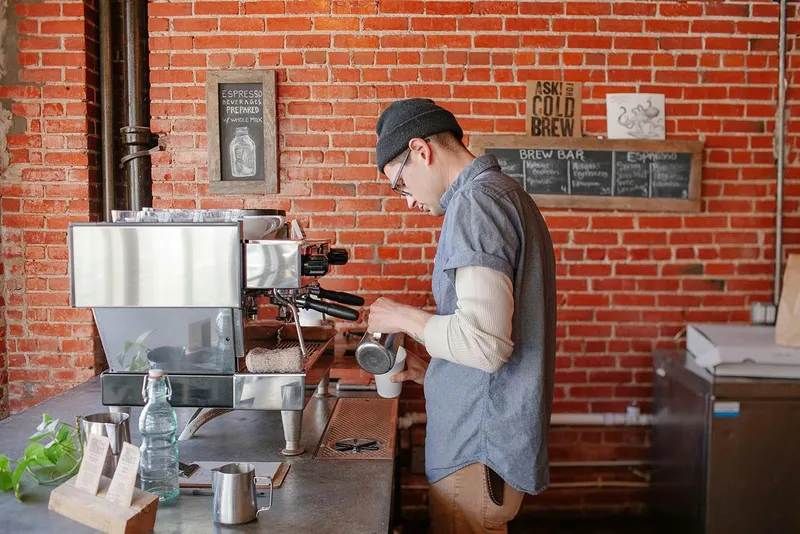
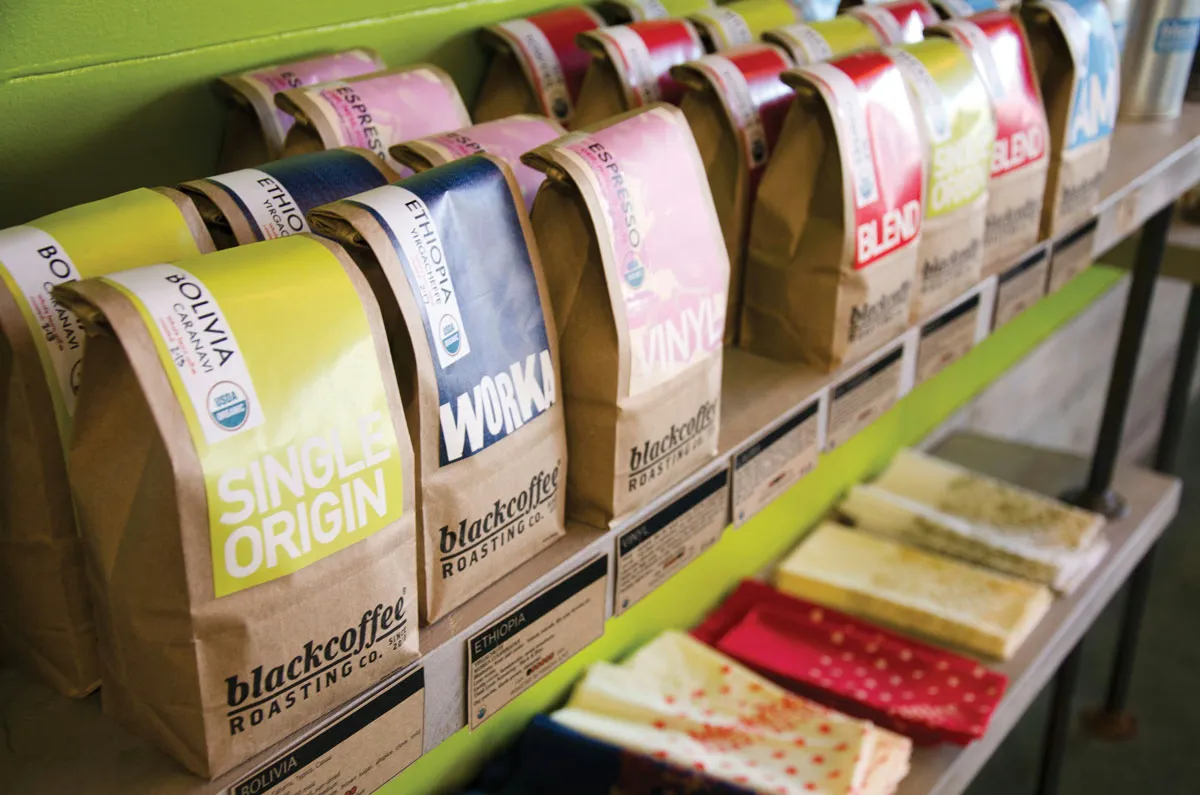
Once their single-origin and blended coffees are roasted to their liking, the baristas take over—friendly and knowledgeable, happy to answer even the most basic coffee questions. When you order a latte or mocha, they offer a rotating selection of four blends or single-origin beans from their range, plus a decaf option. You might choose a Peruvian americano, a Vinyl cappuccino, or an AM Blend latte, all pulled on their La Marzocco Linea.
Beyond coffee drinks, Black Coffee serves teas and shrubs—a cordial made from fermented produce and vinegar—and for food offers pastries plus thick slices of locally baked toast they call “slabs,” with toppings such as avocado, coconut oil and cracked pepper, or Nutella. “We wanted to add something that wasn’t a sweet treat,” Chapman says. “Everything we add we want it to not take away from the coffee, but we also realize some people don’t drink coffee.”
In the nearly five years since Black Coffee began, McQuilkin and Chapman have seen demand for good coffee rise. “Coffee’s not just coffee anymore,” Chapman says. Their menu reflects that shift.