Small-Batch Green Coffee Buying Gets a Rethink
New packaging formats and ordering platforms are reshaping how smaller coffee roasting operations secure green coffee, with an emphasis on lower volumes, direct origin access, and simplified purchasing.
By Reese Hayes4 min read
For specialty coffee roasters, obtaining high-quality green coffee is arguably the lifeblood of the business. Two central concerns govern that supply: quality and logistics. A roaster’s ability to reconcile these two factors ultimately shapes how well it can keep pace with a fast-evolving industry.
Micro-roasters encounter distinct hurdles when sourcing coffee. Running day-to-day operations leaves little time or money for hunting down the best coffees or making trips to origin. For a smaller roaster—one that roasts less than a full container annually—insufficient volumes and distance from a green coffee supplier can translate into higher per-pound shipping costs than larger operations pay.
More recently, the import and export segments of the coffee supply chain have been developing approaches to level the playing field for these smaller, emerging roasters. These efforts speak to the ethos of micro-roasters, who prize quality but also information and the relationships that link them directly to origin. That same ethos embraces a new kind of efficiency in sourcing, one in which buying less can actually deliver more.
Smaller Packaging for Smaller Roasters
Based in Brazil’s Minas Gerais state, Carmo Coffees is an exporting company that has spent years supplying importers and roasters worldwide with some of Brazil’s top specialty coffees. Its coffees have been roasted by established businesses such as Intelligentsia Coffee as well as smaller local favorites like the Aussie Bean in Old Town Orange, California.
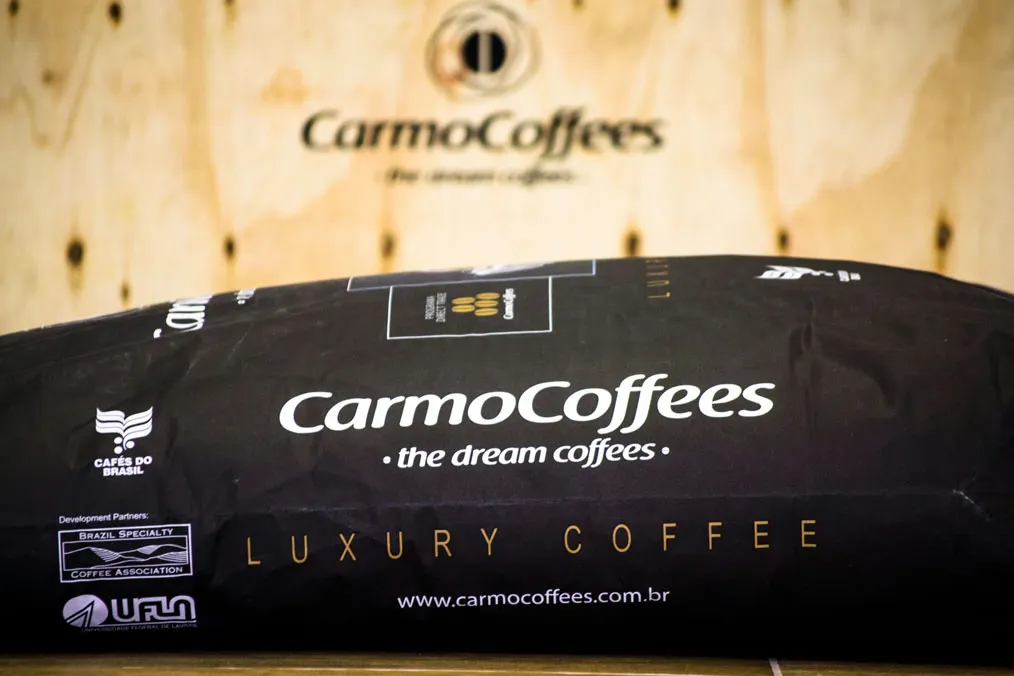
In recent years, Carmo has collaborated with Professor Flavio Borém of Lavras Federal University and others to investigate how packaging affects coffee quality. Their research led to a new, smaller packaging format: multiple layers of paper combined with high-barrier plastic, holding only thirty kilograms of green coffee.
“These packages offer good resistance to mechanical forces and avoids the interaction with air or humidity,” says João Carvalho, director of marketing for Carmo Coffees. “The research also shows that it allows the beans to keep almost 100 percent of their attributes for up to eighteen months of storage.”
Carmo Coffees ships these thirty-kilogram bags in container-sized volumes, but the company also offers them in small quantities directly to roasters, packing two at a time into palletized wooden crates and sending them by air freight.
“Our goal is to reach our traditional importers as well as coffee roasters themselves—particularly in the case of small roasteries that cannot afford to buy full containers, but want to receive exclusive micro-lots,” Carvalho says. “We chose to work with thirty kilogram bags, to keep up with the global tendencies of shipping and storing fewer quantities inside each bag.”
Carmo’s new packaging enables roasters to secure small amounts of micro-lot coffees and ship straight from origin to their roasting facilities. It costs more than conventional container shipments, but delivery is considerably faster. For a small roaster weighing competition coffees or simply wanting a particular origin sooner than rivals, the extra few dollars per pound for a highly specialized coffee with faster delivery can play to a competitive advantage and sharply shorten the distance between origin and roaster.
Streamlining the Ordering Process
In Minneapolis, Minnesota, specialty coffee importer Cafe Imports has been developing its own concept.
While working with a broad range of roasters, Cafe Imports observed added difficulties and inefficiencies confronting new and emerging roasters who wish to source high-quality coffee but may lack the financial wherewithal to buy full pallets or even full bags. The company set out to provide these emerging roasters with the same quality of coffee and service, supporting the growth of a new era.
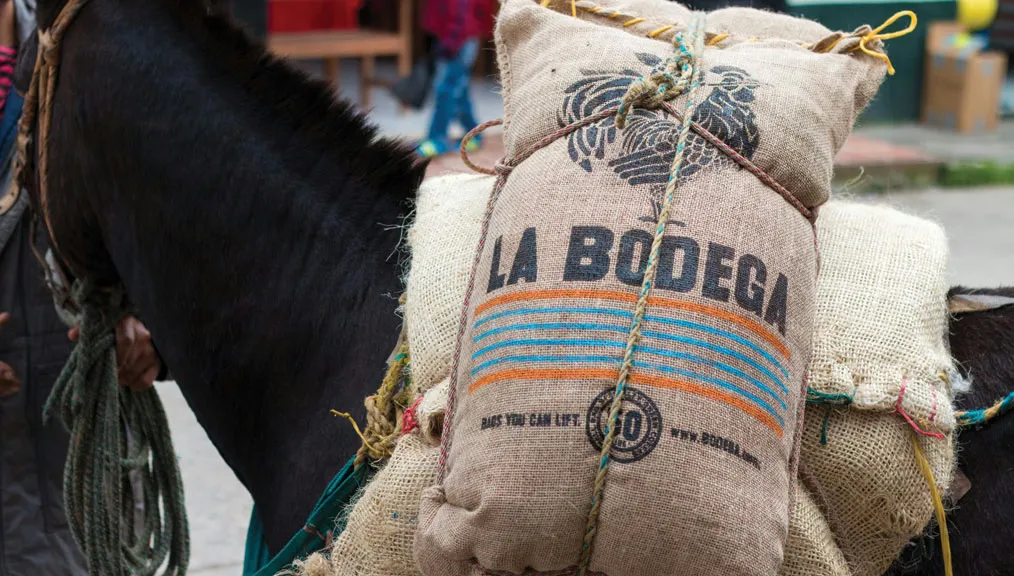
The outcome was La Bodega: small-bag specialty green coffee sold in fifty-pound quantities, featuring selected offerings from unique coffee origins and shipped free to anywhere in the United States.
“The coffee buying process can seem daunting, and inaccessible,” said Omar Herrera, director of La Bodega. “Our goal was to get ahead of those challenges, and allow this new type of emerging roaster to feel confident to dive in.”
Through La Bodega, roasters can view the full list of offerings online, with information on the coffee, producer, cupping scores, taste profile, and pricing—as well as access to various certifications for individual coffees. Armed with these tools, roasters can ultimately order and manage their weekly or monthly green coffee needs from a smartphone.
“We want to allow roasters to work within their means,” Herrera says. “We wanted a product that provided ease, convenience, accessibility, and that was inlusive.”
GrainPro for every coffee, transparent pricing, free shipping, and no lift gate costs all simplify the number of questions a roaster must consider before purchasing a coffee, reducing the added costs that might otherwise persuade them to purchase excess coffee in order to balance shipping costs. In an industry that continues to grow, La Bodega distinguishes itself by offering free shipping.
“More and more people are seeing coffee as this thing that they want to be a part of,” says Herrera. “We want to lower the barriers of entry, and open up quality coffee for new types of roasters to be a part of the experience of what Cafe Imports is at origin.”
For La Bodega and Carmo Coffees, their impact on the world of specialty coffee is something they both humbly leave for time to tell. For me, however, there’s no question about their potential, not only to find success, but to offer a path from origin to roaster with the fewest roadblocks, and guarantee this new and emerging segment of coffee roasters the absolute most from every purchasing decision they make.
–Michael Kaiser trades coffee for Bodhi Leaf Coffee Traders in Orange, California.