Luke Waite on Building a Profitable Roastery: Pricing, Sales, and the Core 7
Coffee consultant Luke Waite, founder of Pomelo Coffee Consulting, joins a podcast to unpack roaster profitability in 2026—from the net margin threshold that should trigger a rethink to why price hikes rarely cost you the accounts that matter.
By Jordan Scott4 min read
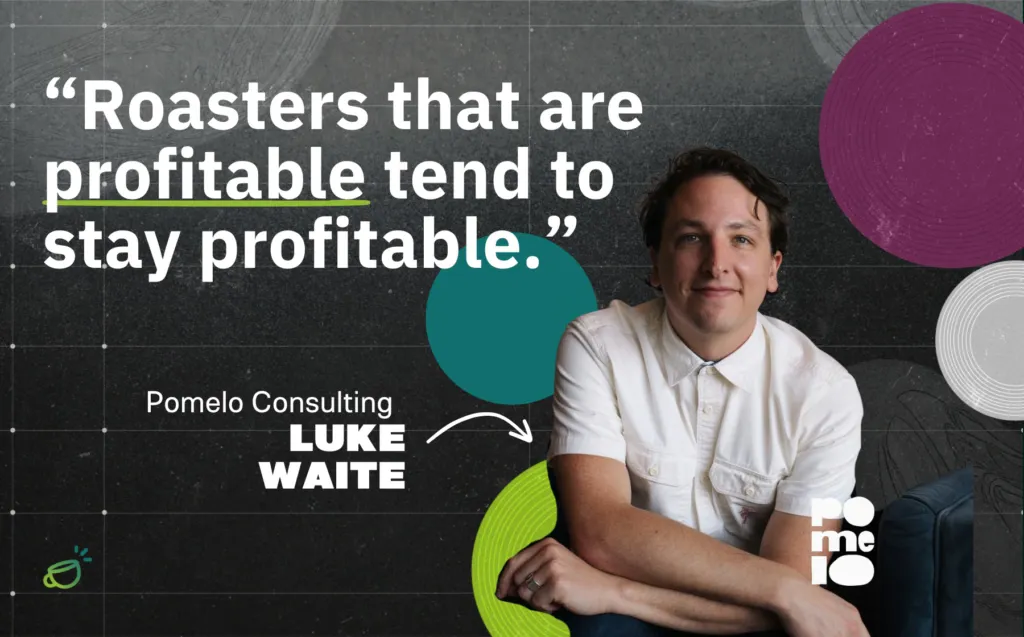
Operating a coffee roasting company demands far more than roasting skill. In recent years, green coffee, equipment, and labor costs have climbed steeply, pushing many owners to reconsider how they set prices so that the underlying numbers still work.
Luke Waite has seen that pressure from the inside. For four years he ran operations and sales at well-regarded Chicago specialty roasters, among them Metric Coffee and Passion House, before launching Pomelo Coffee Consulting, where he advises roasters on personnel, workflow, and financial management. He is also the author of a newly released book, “The Owner’s Manual: A Guide to Sustaining a Coffee Roaster,” which lays out the complete framework he applies with clients.
Waite appeared on the Coffee Think Tank Podcast to discuss where roaster profitability stands in 2026. The conversation covers the reluctance many roasters still feel about raising prices (and why that reluctance may be misplaced), what building a wholesale sales program genuinely involves, and how customers’ expectations around coffee have shifted in fundamental ways over recent years.
Topics Covered:
- The reasons roasters are earning less, plus the signals to watch for on your profit and loss statement
- Where Waite draws the line on financial risk for a roastery—and the steps to take if you find yourself there
- Why price increases tend to sting less than operators fear, and how to explain them to customers
- Setting sales targets and processes before bringing on your first sales hire
- Shifts in how coffee is bought over the past few years and what they mean for a wholesale strategy
- How Waite developed his “Core 7” framework for a healthy, stable, and profitable roastery
- What led Waite to write “The Owner’s Manual,” his new book for coffee roasters
Key Takeaways:
A Net Profit Below 10% Signals It’s Time for Changes
Over the past year, I’ve encountered plenty of accounts of roasters absorbing higher costs for coffee, labor, and tariffs. In a survey conducted through our RoasterLink program, just one roaster in 15 reported raising prices in step with those rising costs [you can read some of their responses here]. “1 in 15—that is terrifying,” Waite said.
Absorbing costs indefinitely cannot go on, and Waite’s view is that insufficient profit is a signal to take a hard look at how to get the business back on course.
“If you’re below 10% net [profit] as a roastery, I’m getting pretty nervous,” Waite said. “It’s probably time to reevaluate your pricing, your wholesale structure, and how you’re communicating with your accounts: ‘Hey, this is what’s happening in the industry, and this is what we have to do to stay alive, so that we can keep selling you coffee.’”
Waite observed that many roasters resist raising prices strongly, driven by a fear of losing customers. They are reluctant to let down partners and communities, or to seem greedy. Yet in the end, Waite advised, “You have to say: I either don’t have a business, or I make money.”
Raising Prices Is Less Frightening Than It Seems
Waite has guided multiple roasters through price increases and has coached clients through the same process. When relationships with accounts are solid, he said, few of them walk away over a price change.
That said, Waite acknowledged that many roasters hold accounts that are not fully aligned on values or quality and that remain only because they receive preferential pricing as early customers or friends of friends. Those accounts are at risk of leaving when prices go up, he admitted, but that is not necessarily bad news—particularly since they tend to be the least profitable for roasters. In such cases, “You’re paying to sell them coffee,” he said.
Communication is the crux. Waite recommends phoning accounts, laying out the situation, being transparent about market conditions, and even walking them through how to adjust their own pricing.
“Rip the Band-Aid off,” Waite said. Once you have determined the figure you need to keep margins healthy, that is the number, he said. Own it, communicate it well, and trust that the accounts that value what you do will stay.
Build the Sales Car Before You Hire the Driver
Waite described roasters who hired salespeople, gave them vague direction, then stepped back without ongoing support—only to discover later that those hires had never been positioned to succeed.
“A lot of times, owners of roasters don’t consider themselves salespeople,” Waite said. “But I’m willing to bet that you, as an owner … actually do know how to do sales. You know how to handle objections.”
Waite recommends establishing guidelines for salespeople before making your first hire.
One essential step, he said, is to clearly document your wholesale capabilities and product offerings. It sounds obvious, but many roasters fail to properly advertise what they have to offer: “If you have a product for sale but it’s underneath the counter in an area you can’t go into, you’re probably not going to buy that product,” he noted.
Another helpful step is defining your target customers, so that any salespeople can clearly identify which prospective partners are a good fit. “These are the types of buyers, this is the size we need them to be at, these are their needs, this is how we’re anticipating the ways that they grow, and this is how we can support that growth,” Waite said of how to approach this process. “Now we’re starting to build a sales car.”
Where To Find Luke Waite:
- Pomelo Coffee Consulting website
- “The Owner’s Manual” (book)