The Case for Warehouse Coffee: Why Spot Doesn't Mean Second-Rate
Purchasing green coffee from a warehouse on an as-needed basis carries a reputation problem. Importers and traders explain where that perception came from, what has shifted, and why buying landed coffee is a legitimate way to operate.
By Alex Martin5 min read
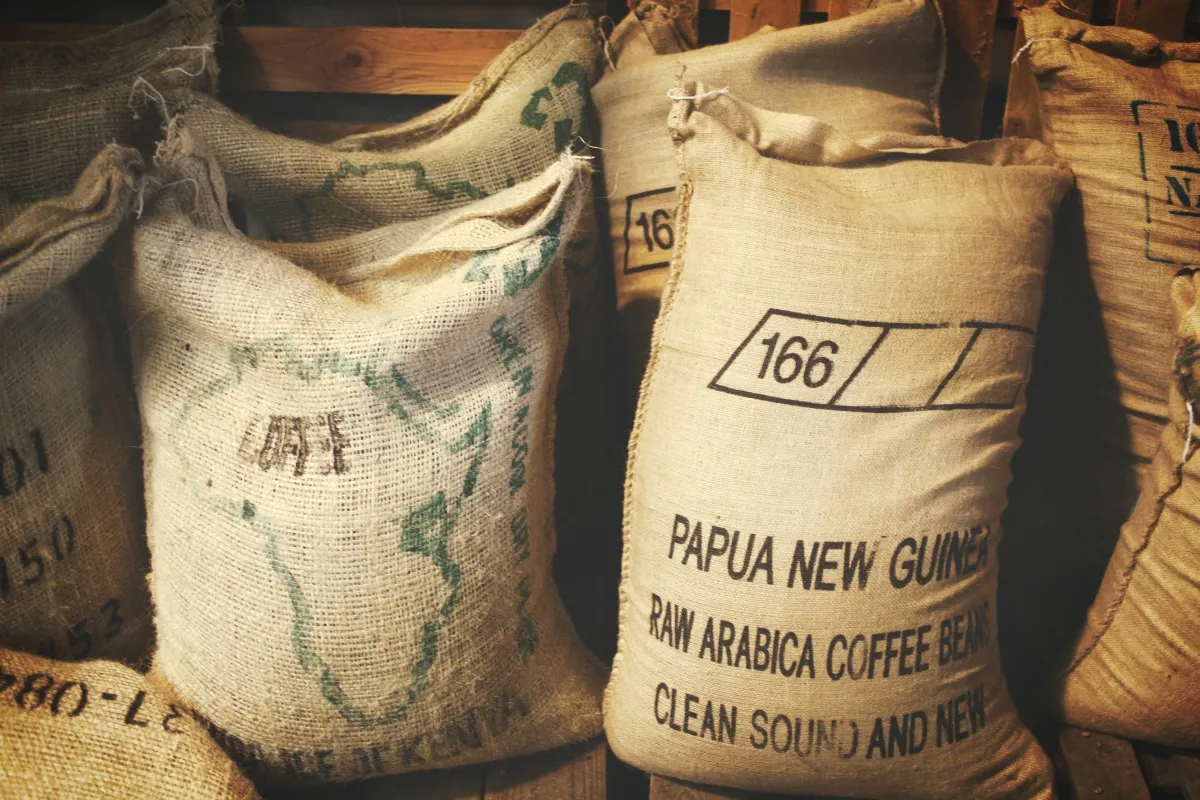
As independent specialty roasters with a quality-first mindset keep multiplying, a familiar refrain keeps surfacing: once the business is established, the plan is to move away from warehouse purchasing toward forward contracts.
The assumption behind that shift is that spot coffee—green beans bought out of a warehouse, typically when the need arises, rather than weeks or months ahead of harvest—is somehow lesser, or suited only to small operators, or both. Is that assumption warranted? Where did it originate, and why has it spread so widely?
We recently put those questions to several people who sell green coffee. What came back was a picture of a trade being remade by its newest entrants, and doing so faster than the old categories can keep up with.
Does Buying Spot Signal Lower Quality?
Jen Apodaca, director of roasting at Royal Coffee, a Roasters Guild vice-chair member, and Coffee Head Judge at the Good Food Awards, rejects the premise outright. "Spot is sometimes associated with low quality or past crop coffee—but that's just not the case," she says. "Any good trade house will tell you how long a coffee's been sitting in their warehouse and when it was harvested. Several exceptional coffees are listed as spot."
The ability to buy coffee according to need carries real value, Apodaca adds. "One of the most common mistakes new roasters make is overbuying coffee. All your cash goes into your green, and you have no liquidity," she explains. "Plus, there's less of a quality risk when you buy spot—it's already here, and you can be certain of the flavor profile, unlike a pre-shipment sample not matching your arrival sample. You'll also save money and space by buying only what you need and shipping it as you need it."
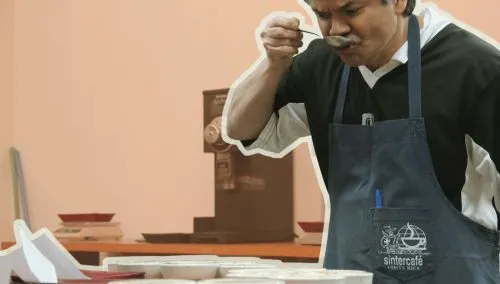
Greivin Mesén cups at Volcafe's San Diego Mill in Costa Rica
Meister, content specialist at Café Imports, notes that over the past ten years green coffee importers have revised how they handle spot, largely to appeal to smaller clients and those wary of risk.
"Having a robust spot position is good for our customer base, but it's also risky. It's a real nail-biter when you're watching a coffee die on your offering list—demand is very difficult to predict," Meister says. "But for roasters, spot buying can be exciting and open up a range of products that might be new or new to them."
At Atlas Coffee, director of trading Jennifer Roberts says contracting is the right call for particular coffees in particular markets.
"If you know you need a Sumatra or anything that has a hard-to-sub flavor profile in your blend, you might want to book it out, even if it's only five bags over the year," Roberts says. "But I recommend spot for people with new roasting businesses or less predictable usages—or for people who don't love paperwork! Keeping track of contracts and releases so as not to incur fees can be a real headache."
Roberts says Atlas works to stock spot coffees it expects customers will enjoy and keep booking across the year.
"This is a service to our customers. It's an opportunity for them to try something new without having to commit before it ships," Roberts says. "We say, 'It's here, we tried it, it's really good.' It's like a safe adventure."
What Fed the Stigma Around Spot?
"Maybe it's wrapped up in the mystique of being a green buyer," Roberts says. "Some people have the misconception that buying spot isn't as legitimate as participating in the purchase process at origin."
Marketing has certainly tipped the scales—deliberately or not—in defining what professional green buying is supposed to look like. Social media feeds do not exactly fill up with images of seasoned green buyers scoring an outstanding spot lot. Yet that sale matters enormously to the producers who made the coffee, whether or not a roaster makes the trip to shake their hands and pose for pictures.
Meister also points to how guarded the coffee trade can be, particularly about green coffee information.
"The whole industry could do a better job of making more resources available to buyers so that they understand that buying spot coffee doesn't have to be like shopping at the grocery store," Meister says. "As a whole, we can all better define terms and processes to empower buyers to buy however is best for their businesses."
Teresa von Fuchs, former head of sales and marketing at Genuine Origin, agrees that the market has not been especially forthcoming.
"One of the things we set out to do for roasters, in addition to introducing full transparency to origin, was to redefine the standards of spot coffee," von Fuchs says. "Rather than treating spot as the leftover dregs, we want to take the risk out of the relationship by offering quality coffees on-demand, at prices that don't fluctuate with the C-price."
Is Spot Only for Small Operators?
Brian Speckman, a trader and vice president at InterAmerican Coffee, says the new market keeps forcing his company to revisit its supply chain. "It can't just be story. It's in the cup. If you're going to have a lot of spot, this stuff has to speak to compete."
Gerra Harrigan, a senior trader at InterAmerican, says that holds across the board.
"There's so much more quality in almost everyone's spot lineup now. That's from better processing and handling techniques to the use of GrainPro," Harrigan says, referring to the heavy-duty plastic bags used to ship green coffee and maintain its integrity. "GrainPro has changed the game."
Spot, and the buyers who favor it, have also pushed importers toward far greater specificity.
"It used to be that coffees with a consistent origin, grade, or quality were interchangeable. Whereas now, people are particular," Harrigan explains. "That's forced us to know more about our coffees, and what that's revealed in our own house is really valuable."
In other words, the change is a major one.
"The job of the import/export house should be to mitigate risk for roasters and producers," von Fuchs says. "Buying landed coffee, whether you buy only what you need for the week or month or order into the future and secure coffee forward, it's all about mitigating your risks. Which is a completely valid way to participate in the supply chain."
Speckman points to what may be the clearest signal of an industry in flux. "We're seeing more producers coming here to host cuppings, rather than relying on buyers to travel to origin," he says. "Spot has changed with the industry's demand."