Coffee, Community, and Creative Space in the West Texas Desert
How two Bay Area artists opened a specialty café in a small high-desert town and found a community eager for a gathering place.
By Morgan Bailey4 min read
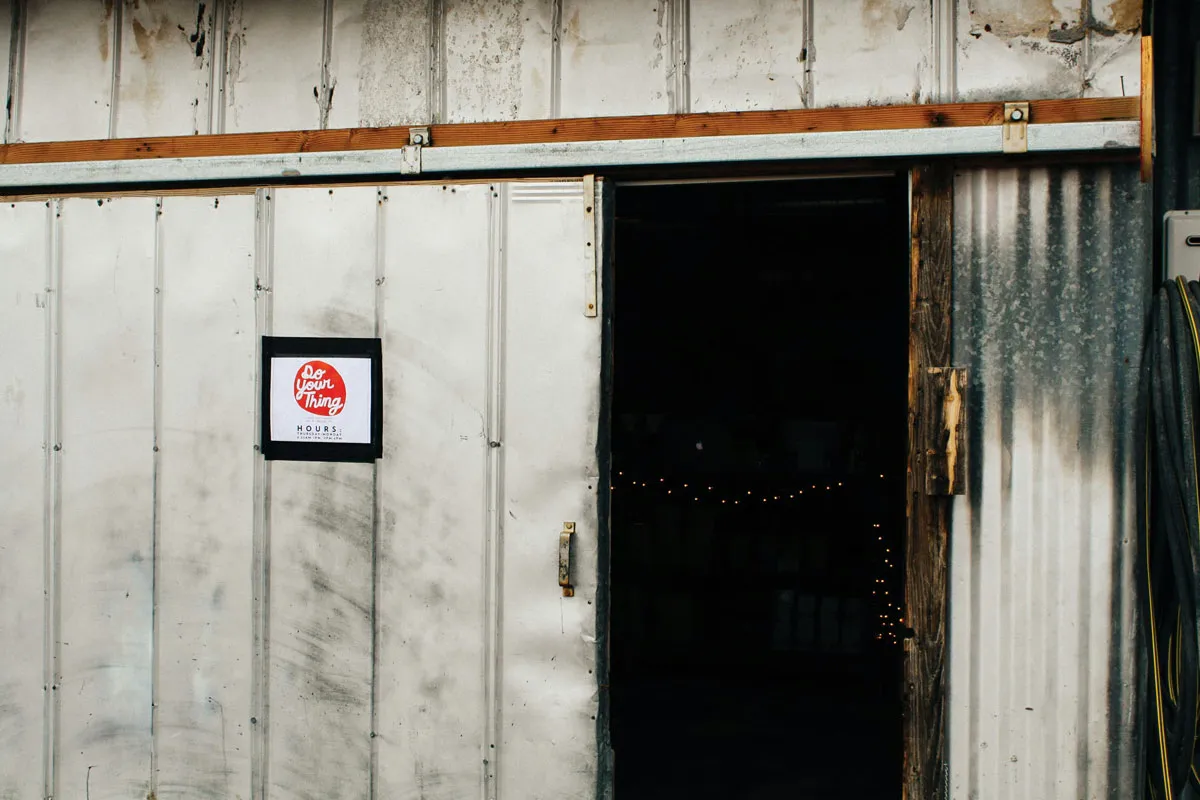
A Desert Town Unlike Any Other
Marfa, a high-desert city in West Texas, stands out in a number of ways. Start with the strange: the town is known as a place to watch for a mysterious nighttime phenomenon of bright, orb-like lights appearing in the remote desert—an occurrence some credit to the thrilling unknown and others to cars far away. Each year the city holds a festival celebrating the Marfa Lights.
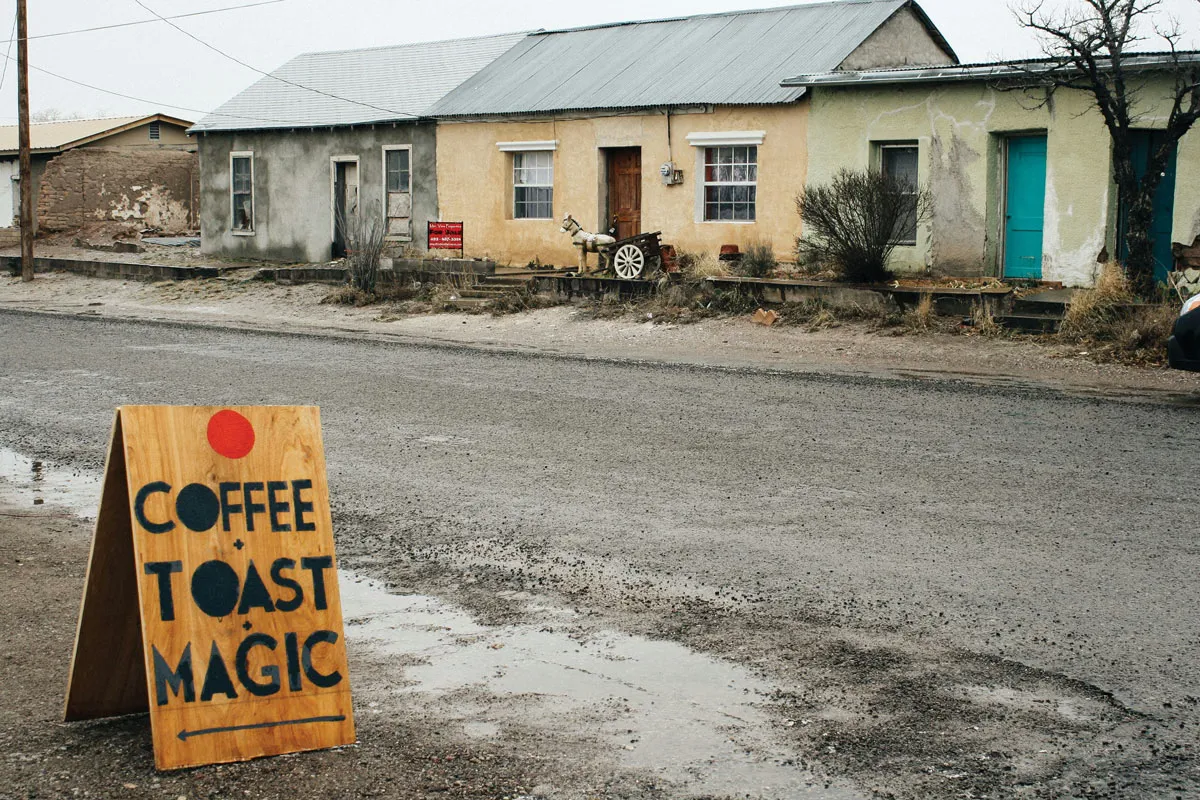
Those puzzling lights aside, Marfa remains far from ordinary. In 1971, minimalist artist Donald Judd relocated there from New York City, drawn by the desert's open space, and started installing large-scale artworks. Judd's practice and the idea of the desert as a canvas resonated with the era's avant-garde, and Marfa soon drew artists from around the world. These days the town has galleries, art education centers, Judd's 340-acre Chinanti Foundation, and a landscape dotted with mesmerizing structures built into the desert. Year-round, artist-in-residence programs and tourism drive Marfa's economy. In a remote border city, it makes for an oddly harmonious pairing—between old Marfa, a ranch town with a single stoplight, and new Marfa, a cultural destination on the world map.
Two Musicians Look for a Third Place
It was this dreamy atmosphere that drew Bay Area musicians and designers Simone Rubi and Robert Gungor, much as it had drawn artists before them. After spending time in Marfa recording an album, the two packed up their lives in California, swapping city life for the room to create. Yet the former baristas, happy as new residents, quickly noticed that something essential was absent.
"Marfa's such a small town," says Robert. "There was no real third space."
Recognizing a demand for specialty coffee, the pair contacted Blue Bottle Coffee in Oakland and asked for permission to serve its coffee in a Marfa café. The roaster said yes; Simone and Robert flew back for training, and in June they opened Do Your Thing—Marfa's only specialty café, a welcoming community spot that immediately pulled the town's creative crowd in like under-caffeinated moths to a flame.
"When we first opened I had a lady come behind the bar, hug me, and say, 'Thank you,'" says Robert.
"In a lot of cities its sort of dime a dozen these days with specialty coffee, but since it's never been here, people are so enthusiastic and happy," says Simone. "And it keeps us inspired to have that response."
A Little San Francisco, a Little Wild West
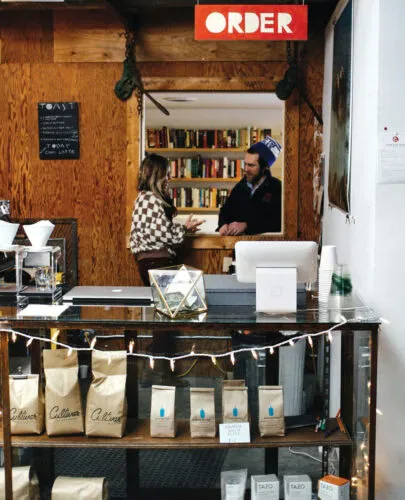
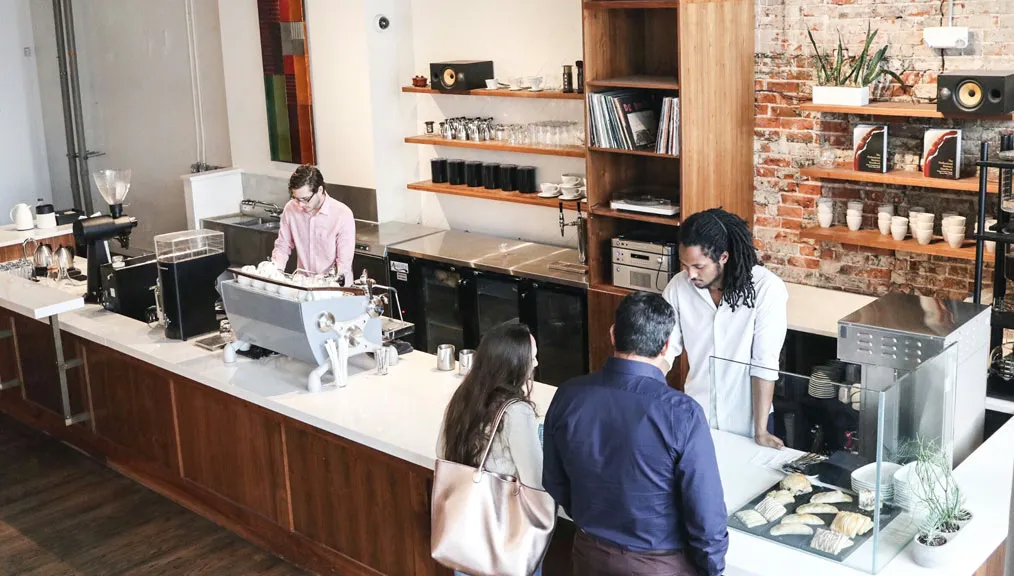
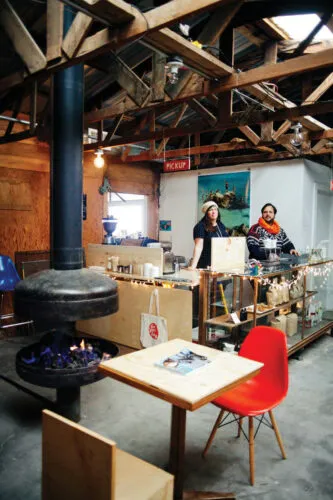
Blending the town's mystique with the couple's design sensibility, Do Your Thing feels partly San Francisco and partly Wild West. It sits inside The Lumberyard, a minimalist-industrial lumberyard turned community hub, alongside an art gallery, a modern loft apartment (available to rent by the night), The Marfa Book Company, and metal-work sheds converted into artist spaces. The snug shop greets visitors with warm lighting, a central fireplace built from an old propane tank, hearty organic porridge, thick slabs of sweet and savory Texas toast, and, naturally, excellent coffee.
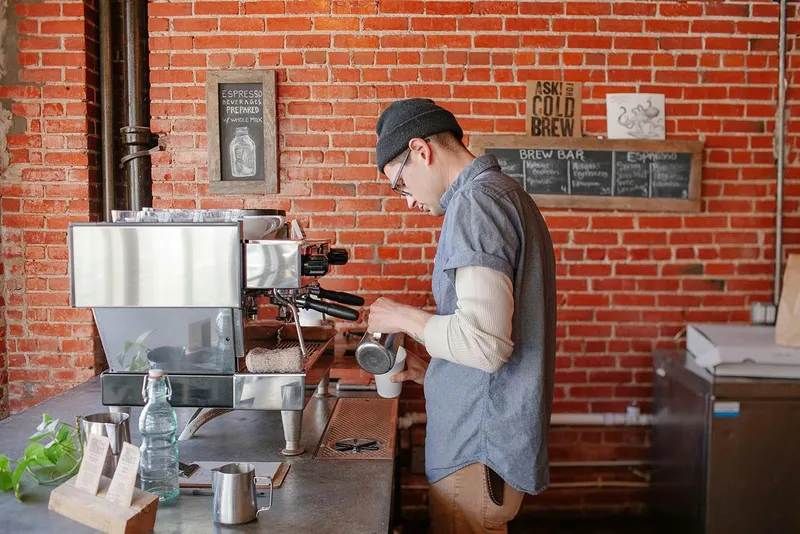
The room is small—roughly eighteen people can sit comfortably at once—and is usually full. Locals and travelers alike drink Blue Bottle espresso and pour-overs made with beans from Dallas' Cultivar Coffee Roasters, eating organic breakfast and lunch prepared by Simone and a rotating lineup of guest chefs from out of town. Each morning, fresh baked goods are laid out behind the hardware store's original glass case and snapped up fast.
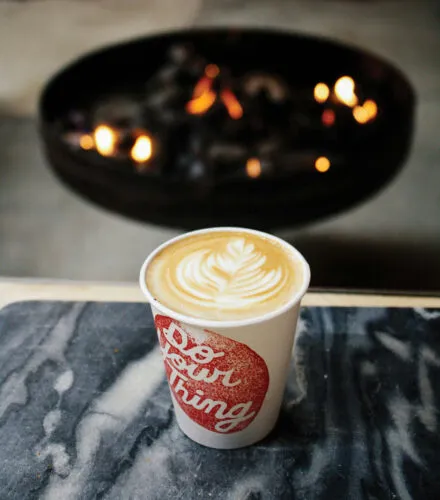
The "modern"—half espresso, half steamed milk in a four-ounce Heath Ceramics cup—pays tribute to the Bay Area roaster that backed the project, while the dressed-up toasts nod to San Francisco's Trouble Coffee Company. On any given day you might see three ranchers in Stetsons sipping coffee, an LA musician pulling shots on the single-group La Spaziale S1 Vivaldi II, or Frances McDormand stopping by after browsing the bookstore next door.
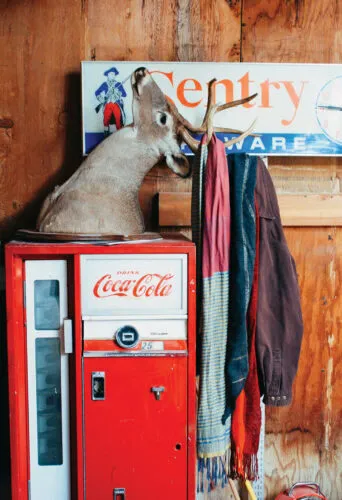
"It's such an art destination, you feel like you're in a cultural center," says Simone. With its organic growth, artistic bent, and reused space, Do Your Thing fits neatly into Marfa's cultural identity. Visiting artists' photography hangs on the walls, typically vivid images of beaches and green scenery that contrast with the barren landscape outside. Patches of bright red, the shop's signature color, brighten the rustic interior. Simone and Robert even created a barista-in-residence program: artists can move to Marfa, stay in the couple's guestroom, work four shifts a week at the shop, and devote time to creative work.
Unassuming by Nature
If this sounds like a town leaning toward the pretentious and ultra-hip, Simone and Robert insist that it is an unassuming character that makes Marfa so special. The isolated town of just over 2,000 people, three hours from the nearest city, has only one corporate business: a Dairy Queen. Other businesses sit quietly, with little signage. From the outside, galleries blend into the landscape's grays and tans, and only indoors do the senses begin to stir. The same minimalist charm that brought Judd to Marfa in the seventies, and filmmakers for projects like No Country for Old Men and There Will Be Blood, keeps Marfa a cultural oddity today. It is a small, simple town where you can do your thing (Simone and Robert call it "the modern day carpe diem"), cross paths with the art world's elite, and still live quietly and humbly. And now, with city-style coffee.