Beyond the Cup: How the Coffee Supply Chain Is Turning Waste Into Value
The coffee industry is finding new revenue and reducing environmental harm by transforming cherry pulp, grounds, and other byproducts into flour, biofuels, inks, and compostable materials.
By Elliot Bailey7 min read
In specialty coffee, customers often go to considerable lengths to shrink the footprint of their daily habit—bringing reusable cups, choosing digital receipts, and backing direct-trade farms. Yet a ceramic mug filled with directly traded coffee can still leave a big part of production unaddressed: coffee waste.
Across the supply chain, much of the original coffee cherry never reaches the cup. Research from Almacafe in Colombia indicates that after processing, just 6 percent of the original cherry remains in a cup of coffee.
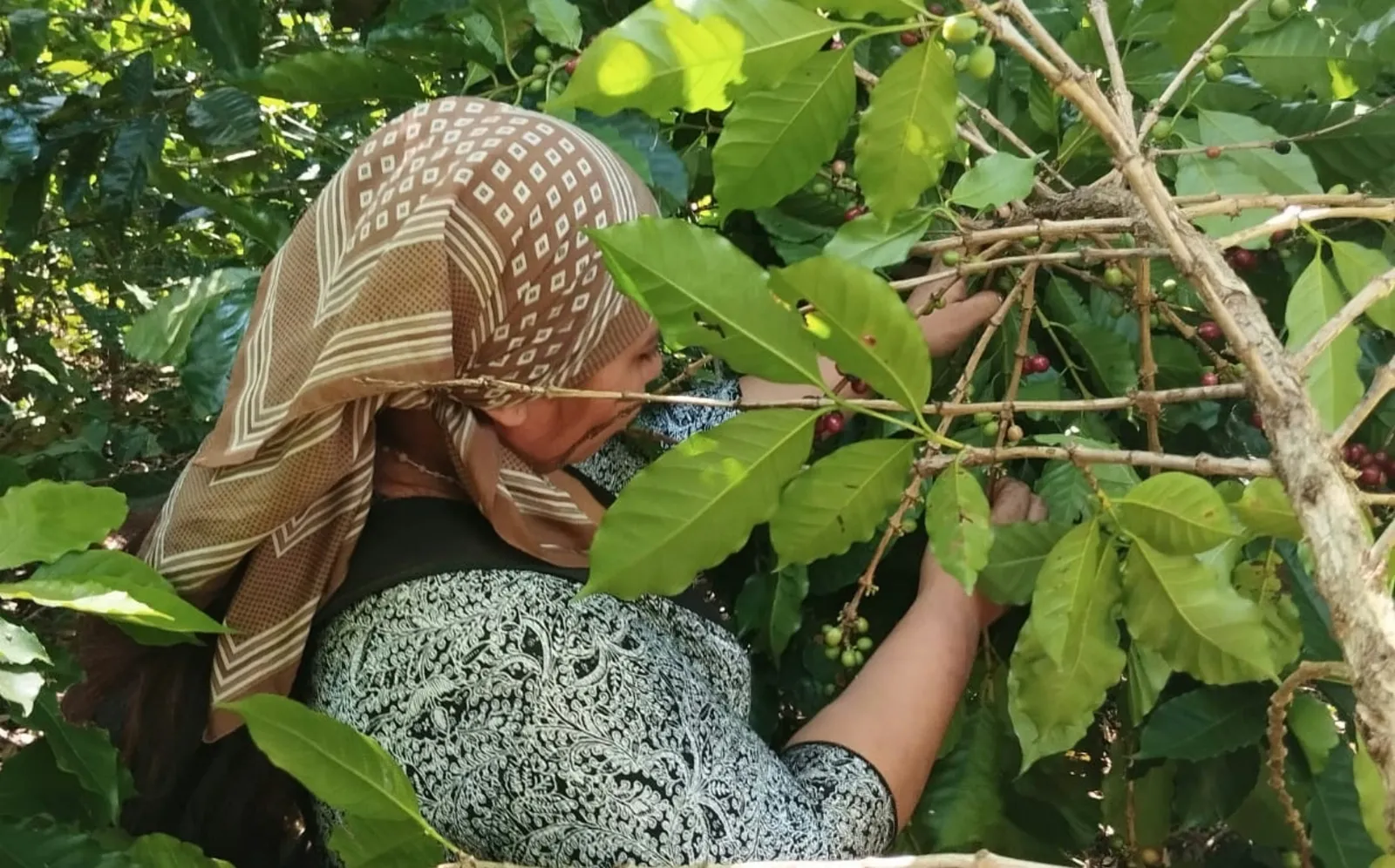
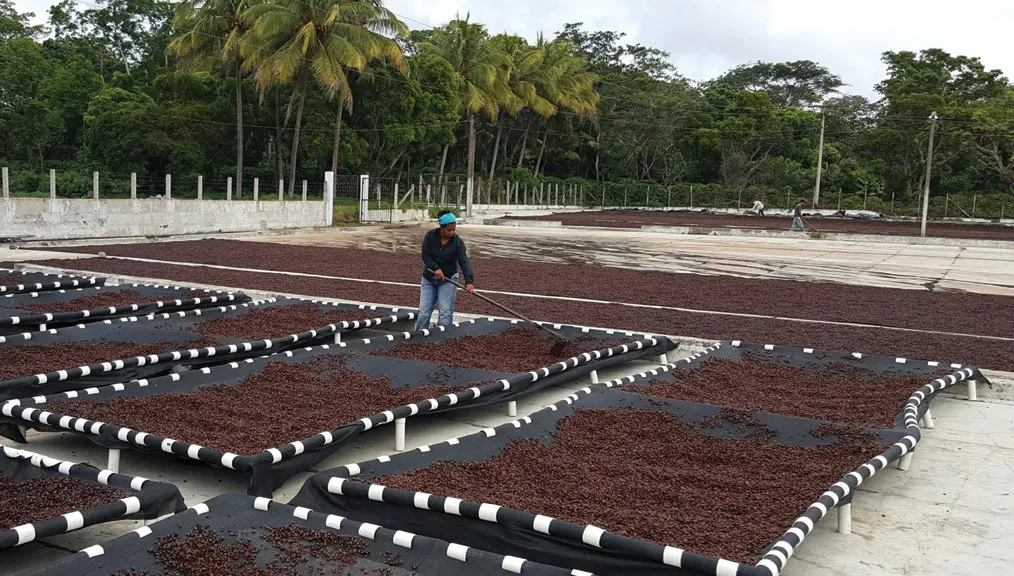
Coffee waste is a significant problem at both ends of the chain—at the point of production, where untreated processing waste can pollute water, and at the brew bar, where spent grounds sent to landfill release millions of tons of methane. In the wet processing of coffee beans, for instance, 1,000 kilograms of fresh berry yields roughly 400 kilograms of wet waste pulp. If that pulp is not handled properly, it can easily find its way into nearby water sources and cause pollution.
As awareness grows worldwide of the real cost of food waste, the coffee sector has taken notice. Innovative companies are working to address waste throughout the supply chain, and many of those efforts center on finding uses for excess coffee fruit.
Rethinking What Counts as a Resource
Handling waste from coffee cherry processing is not a new challenge, as Dan Belliveau, CEO and founder of CoffeeFlour, notes. “Coffee waste is actually something that has been on coffee growers’ minds for as long as coffee has been commercialized,” Belliveau says. “The coffee cherry waste stream has historically been something that ‘had to be dealt with,’ as it takes a significant amount of property to store coffee cherry pulp throughout harvest time and then requires extra labor to dispose of the pulp after harvest.”
Launched in 2015, CoffeeFlour addresses cherry waste by turning it into flour. The pulp becomes a gluten-free flour whose flavor recalls roasted fruit.
So far, the company has converted between five and six million pounds of coffee cherry pulp into CoffeeFlour, and it aims to be able to turn pulp into more than three billion pounds of flour, keeping that material out of the waste stream. Beyond creating a new product—a “found food,” in Belliveau’s words—this also opens an additional revenue source for farmers. “We hope to share the technology in the future, as our goal is waste reduction and the improvement of farmers’ lives,” Belliveau says. If it succeeds, the project could convert between five and six billion pounds of coffee pulp each year.
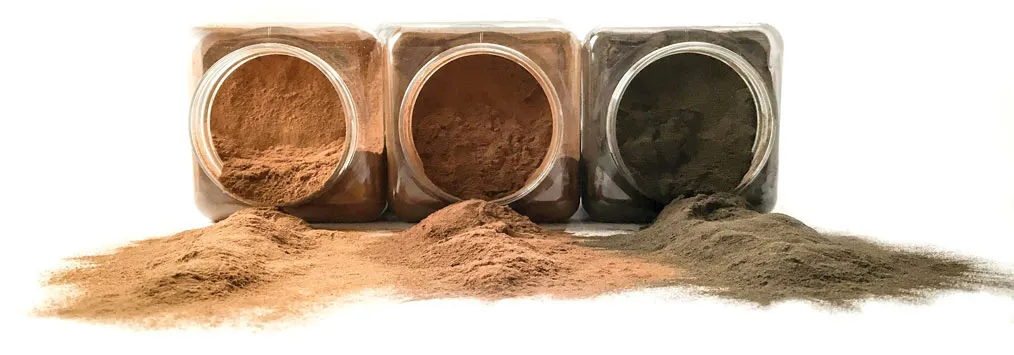
Coffee cherry pulp is converted into a gluten-free flour with a taste reminiscent of dark, rich, roasted fruits. Photo above and cover photo courtesy of CoffeeFlour.
Coffee cherry pulp becomes a gluten-free flour with a taste reminiscent of dark, rich, roasted fruits. (Photos: courtesy of CoffeeFlour.)
CoffeeFlour’s core aims—cutting waste and improving farmers’ lives—sit at the heart of discussions about the economic effects of coffee production. James Hoffmann of Square Mile Coffee Roasters shares that view. “We need to find new revenue streams for farmers; we need to reduce waste wherever we can because doing nothing has seen climate change accelerate in a devastating and horrifying way,” Hoffmann says. “Ultimately, it’s also good business.”
Earlier in 2016, at the London Coffee Festival, Hoffmann presented a range of products at the Square Mile Coffee Roasters’ pop-up. Among them was chocolate made with cascara, the dried skins of coffee cherries. Hoffmann sees cascara, a coffee production byproduct, as having ample potential—not only to use a waste product but to create new culinary concoctions full of flavor. “I think there are tons of possibilities. I believe it could be added into all sorts of things as a component rather than the main flavor pillar you’d build a product around,” Hoffmann says. “I think it could make great ice cream or sorbet, great kombucha or kefir, great cocktails or soda.”
A Different Way of Seeing Potential
The varied possibilities of coffee waste point to one crucial consideration: we need to think about it differently—not as waste, but as potential. “Waste is simply resources in the wrong place,” says Daniel Crockett, head of communications at UK-based Bio-Bean. Bio-Bean works on the consumer side of the coffee supply chain and is the first company to industrialize the process of recycling waste coffee grounds into biofuels.
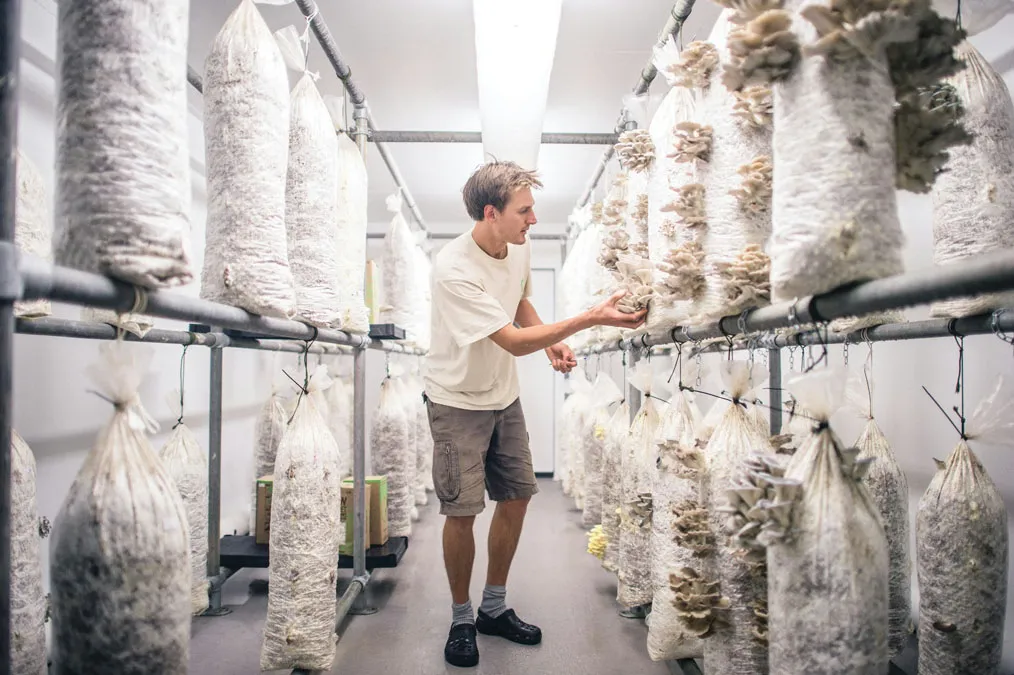
Adam Sayner of GroCycle using coffee waste to grow mushrooms.
“Bio-Bean is a pioneer in the circular economy, turning waste into resources and the challenges of urbanization into great opportunities,” Crockett says. That reflects a broader business trend Crockett sees unfolding—in coffee and other industries. “Increasingly, businesses recognize the impact of adopting circular economy thinking, not just on the environment but on their bottom line,” he says.
Converting coffee grounds to biofuels at industrial scale has led Bio-Bean to develop a wide range of partnerships—from airports to train stations to hospitals—all looking to use biofuels within their operations. The company also serves businesses within the coffee industry, collecting used grounds from cafés. Sometimes the loop closes completely, as with 918 Coffee Co., which supplies spent grounds to Bio-Bean and fuels its roaster with the resulting Bio-Bean fuel.
The varied possibilities of coffee waste point to one crucial consideration: we need to think about it differently—not as waste, but as potential.
Grounds can do more than fuel; they also have applications in construction, as Australian engineer Arul Arulrajah has shown through research into using coffee grounds to pave roads. One project combined 70 percent dried coffee grounds with 30 percent slag, a waste product from steel manufacturing; the mixture was bound with a liquid alkaline solution and then compressed into cylindrical blocks. Testing showed the resulting material was strong enough to serve as a road substrate, as documented in Arulrajah’s study, published in Construction and Building Materials this year.
Coffee’s Second Life as Compost
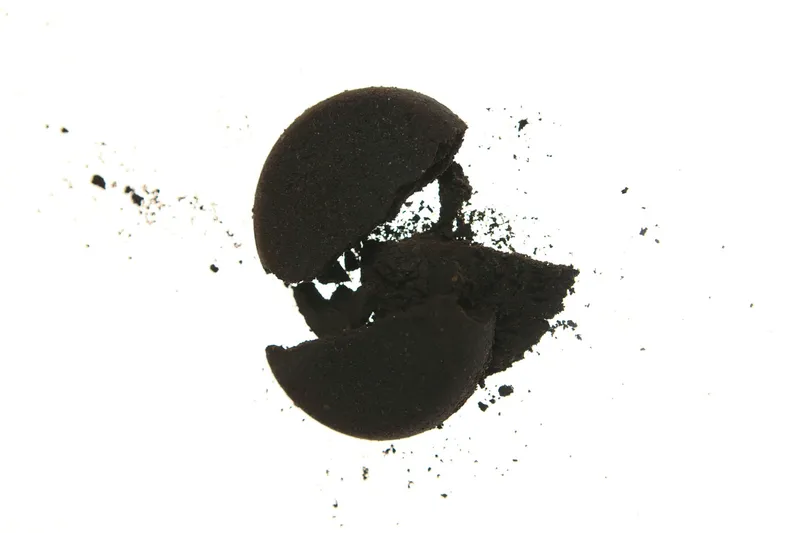
When composted, coffee becomes a remarkable organic resource rich in phosphorus, potassium, magnesium, and nitrogen—the last of which is an important plant nutrient. The nutrition supplied by composted coffee has inspired initiatives such as Ground to Ground in Austin, Texas, and Melbourne’s Reground. Both projects source used coffee grounds from cafés and compost them, rescuing the grounds from landfills.
Beyond compost, coffee grounds can also be used to grow food—specifically mushrooms. Eric Jong co-founded GroCycle, a company that harvests unused nutrients from coffee fruit waste. Jong explains that only a very small percentage of the original coffee biomass ends up in the beverage consumed, leaving the rest of the fruit packed with potential. “Think about it—it’s a bean that needs to kickstart the growth of a whole new tree,” Jong says. “The mycelium feasts on these nutrients, and the result is lovely abundant mushrooms instead of more waste.”
Jong and his partner Adam Sayner turned an unused office building into an urban mushroom farm in Exeter in southwest England. “We have an aim of spreading this wonderful concept to cities far and wide,” Jong says. “The idea is being picked up all over the world now, which is great to see. We have trained hundreds of people from every continent, and some have gone on to set up farms of their own. There should be at least one in every city on the planet.”
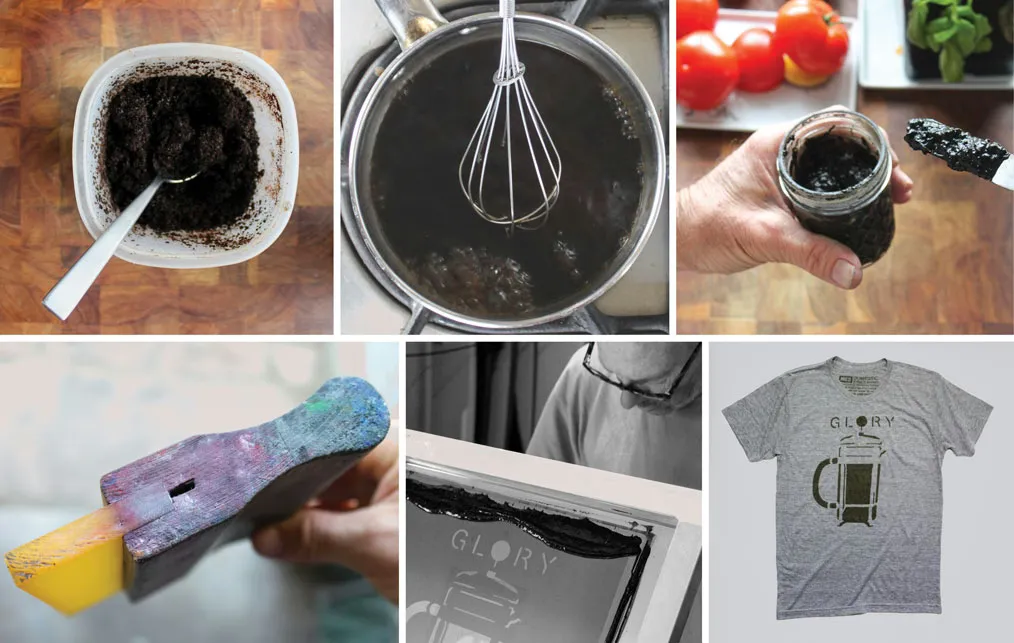
San Diego’s Domestic Stencilworks utilizes spent coffee grounds to produce dyes for screenprinting.
Like other businesses that see potential in what most people regard as waste, GroCycle is not only operating differently but rethinking its entire business model. “An enormous part of our current economy is based on take, make, and then discard model,” Jong says. “We are inspired by the concept of the circular economy where, by design and thought, you produce no waste. Initiatives like the Ellen MacArthur Foundation and Gunter Pauli’s Blue Economy are leading the way in making these concepts mainstream.”
In San Diego, California, a screenprinting studio developed an innovative use for spent coffee grounds: turning them into ink. “This stuff has a lot of pigment, and it has the ability to stain fabric, we thought how far can we take that?” says Alex White of Domestic Stencilworks. He and his team use the ink to print on both paper and fabric.
White also sees the value in thinking about a waste product in a new way. “We love sustainability,” White says, “but we also think it’s just a great way to run your business, using something that people throw away. The idea of reusing something is brilliant to me because there’s so much waste.” Partnering with local cafés to source grounds—all within walking distance of their studio—the company even prints café t-shirts using the recovered grounds from each respective café.
For White, StencilWorks is not merely producing a trendy garment—it is rethinking how to approach resources. “I was raised by my grandma; she was Depression era . . . it was just what you did, you reused stuff,” White says. For him, working with a waste product is a step back. “It’s about being resourceful and using what’s around you before you go out and buy new stuff.” One gallon of spent coffee grounds, easily produced in a day at a café, is enough to print fifty t-shirts.
Keeping a few gallons of coffee grounds out of the waste stream may not be a huge number, particularly given the large volume of grounds produced daily. Still, White, like all his counterparts working to rethink waste products, is considering the broader picture.
All of these businesses directly affect the waste stream, but more importantly, they affect our overall culture of business. As they inspire other companies to turn waste into profit, diversify revenue streams for farmers and producers, rethink how we use resources, and consider waste materials instead of virgin ones, we can hope to see a business culture focused on more than just “take, make, discard.”