Building a More Equitable Coffee Trade: Industry Leaders Confront Race
How coffee professionals responded to calls for racial justice, from an open letter that led to a new coalition to roasteries pledging anti-racism and a Brooklyn collaboration supporting businesses owned by people of color.
By Alex Martin4 min read
An Open Letter Sets the Industry Agenda
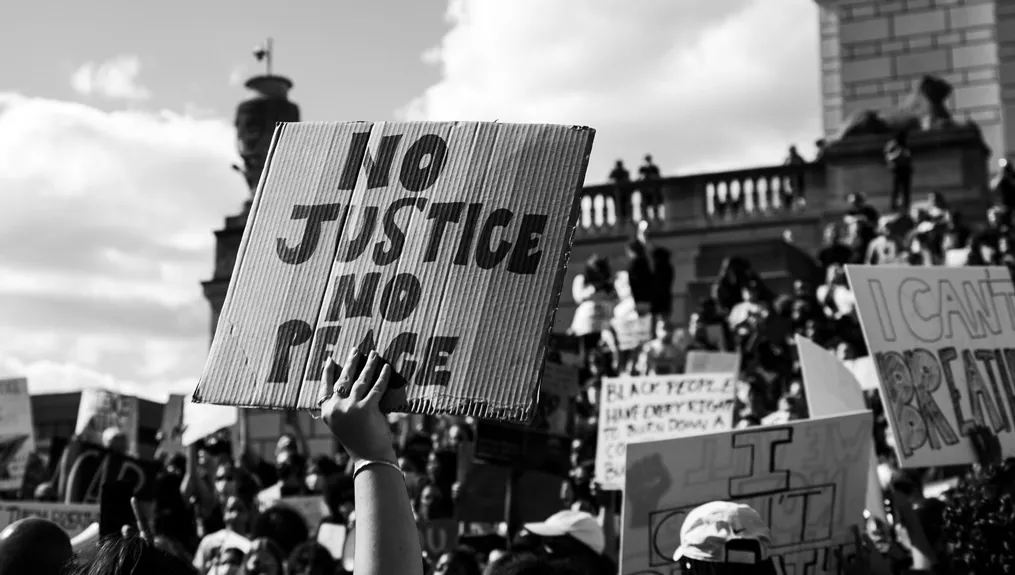
In June, as protests against systemic racial injustice spread across the United States and beyond—sparked by the deaths of George Floyd, Breonna Taylor, Ahmaud Arbery, and others—Phyllis Johnson, cofounder and president of BD Imports, published an open letter addressed to the U.S. coffee sector.
The message pulled no punches: "Racism and police brutality towards Black Americans are our reality. We cannot wish it away; nor can we continue to avoid the necessary work required to build a more equitable and just society," she wrote.
Johnson, who has long championed women's equity in the global coffee trade, called on colleagues to direct their attention to racial equality as well. "NOW is our opportunity for building partnerships to combat racism," she continued, closing with an invitation for others to join her.
That letter led Johnson to create the Coffee Coalition for Racial Equity (CCRE), which formally launched in October.
"When you're focused on the survival of a business, what happens is, sustainability issues and racial equity issues can sometimes get sidelined," she says. "I realized there needed to be an organization whose mission was focused solely on [racial justice in the coffee industry] all day, every day."
CCRE's leadership is deliberately varied: its 16-member board draws from Kenya, Rwanda, Brazil, Canada, the U.S., and elsewhere, and spans small coffee entrepreneurs as well as larger industry companies. Many of those board members contacted Johnson after reading the open letter to ask how they could contribute.
"Our board looks how it should look to be representative of a global issue," Johnson says.
The coalition plans to confront directly the part race has played in coffee.
"As an industry, it's sometimes hard for us to face how racial inequality completely follows the line of how coffee is traded and where the biggest value ends up," she says. "It's hard for us to accept that, but it's as true as true can be."
Among CCRE's early priorities is opening new routes for Black people to enter the industry—through mentorships, for instance, and entrepreneurial program partnerships with students at historically Black colleges and universities.
Another aim is to reframe coffee's history so it "present[s] it in a way that offers empowerment and respect to people who have never been given real respect for their contributions to the industry," Johnson says. "[In the past] we have given respect to the colonizers and missionaries who carried the bean from here or there, but CCRE will embrace a history of coffee that recognizes the people, the growers and farmers, who were the most vulnerable—yet also most important part—of its story."
Companies Commit to Equity
After tens of thousands of demonstrators filled the streets during the summer of 2020, coffee companies including California-based Bird Rock Coffee Roasters and Kansas-based PT's Coffee Roasting Co., together with many others around the country, publicly promised to oppose racism and pursue greater social equity.
"Racism, racial injustice and discrimination have absolutely no place in our society or our company," Bird Rock Coffee Roasters stated on a new "Anti-Racism" section of its website, which also expresses a commitment to "equality, justice and treating each other with dignity and respect."
Brooklyn Roasting Company in New York has embraced the same mission.
Founder Jim Munson recently teamed up with syndicated radio host Angela Yee and Brew 112—the roaster's new coffee start-up led by people of color—to introduce CUP (Coffee Uplifts People), a coffee line that promotes equity, inclusion, and diversity.
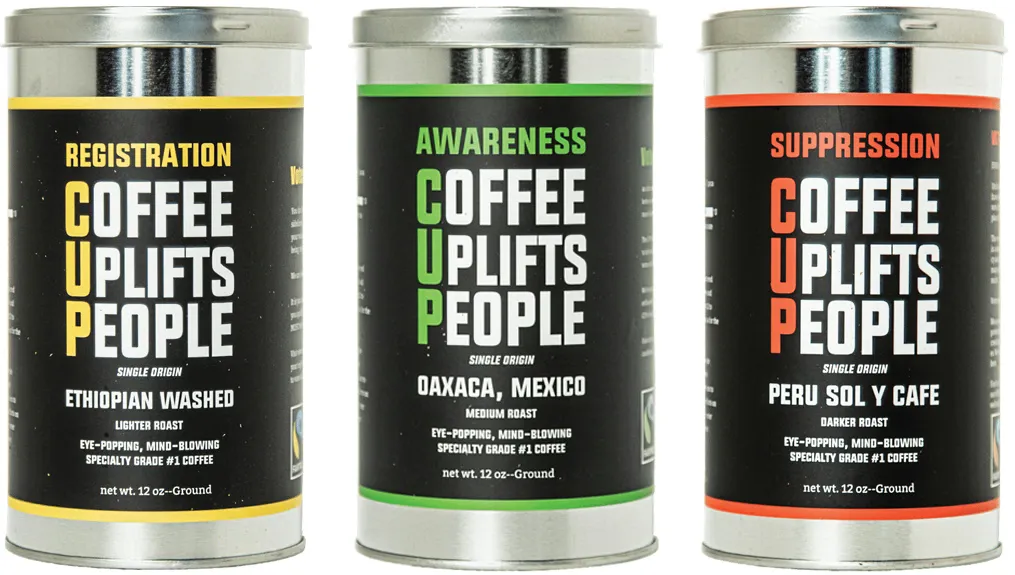
Part of the proceeds from the new line goes to Yee's nonprofit, WellRead.org, supporting voter registration and voter awareness efforts ahead of the upcoming presidential election. Amplifying BIPOC voters' voices is the collaboration's first objective, but as the partnership grows, Munson hopes it will help "empower the development of new Black- and women-owned coffee businesses," he says.
"In the wake of the enlightenment that's happening now to recognize the disparities and inequalities and prejudices that have historically singled out people of color, we wanted to partner and help in an effort to erase some of those inequalities and inequities," he adds.
Brew 112's plans are still taking shape (its name nods to the Brooklyn zip code prefix 112), and Munson hopes the venture may secure storefront space by next year. In the meantime, Brooklyn Roasting Company has been running a series of Tuesday pop-up events at its cafés where Brooklyn businesses owned by people of color can showcase their products. Recent participants include Flatbush Granola Company, Shaquanda's Hot Pepper Sauce, Sofia & Grace Cookie Co., Island Pops, and The Bakery on Bergen.
"It's products that pair well with coffees, but it also seeks to put the spotlight on businesses that have been disenfranchised," Munson says.
With the COVID-19 pandemic still limiting Brooklyn Roasting Company to 25% dine-in capacity under social distancing guidelines, arranging pop-up partnerships with nearby BIPOC-owned businesses has taken deliberate effort. Even so, Munson considers the work worthwhile.
"This work is important and it's ambitious," he says. "We're trying to accept the challenge that's floating in the air around the country to address critical issues of race and inequality by working directly with people in the Black- and minority-owned businesses community."