From Barista to Roastery Owner: How Andy Sprenger Turned Competition Wins into a Colorado Coffee Hub
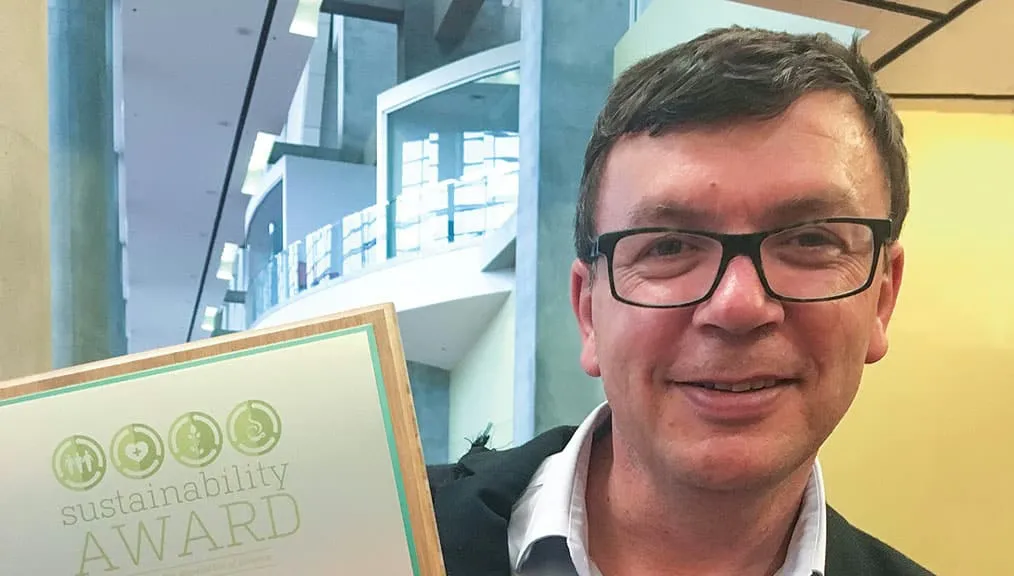
Sprenger, a US Aeropress and two-time US Brewers Cup champion, opened Sweet Bloom Coffee Roasters in Lakewood, Colorado, in December 2013 after more than two decades away from his home state.
By Taylor Hill6 min read
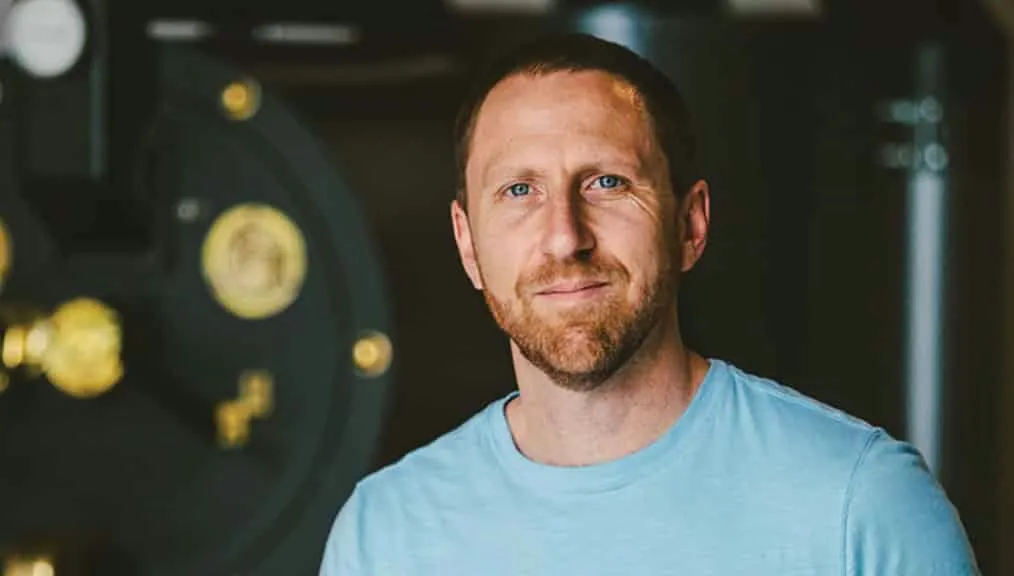
Before he ever started roasting coffee commercially, Andy Sprenger had already assembled a notable string of competition results. He won the US Aeropress championship and took the US Brewers Cup title twice; he also finished second at the World Brewers Cup and in the US Tasters Cup. Sprenger traces his competitive streak to growing up with older brothers.
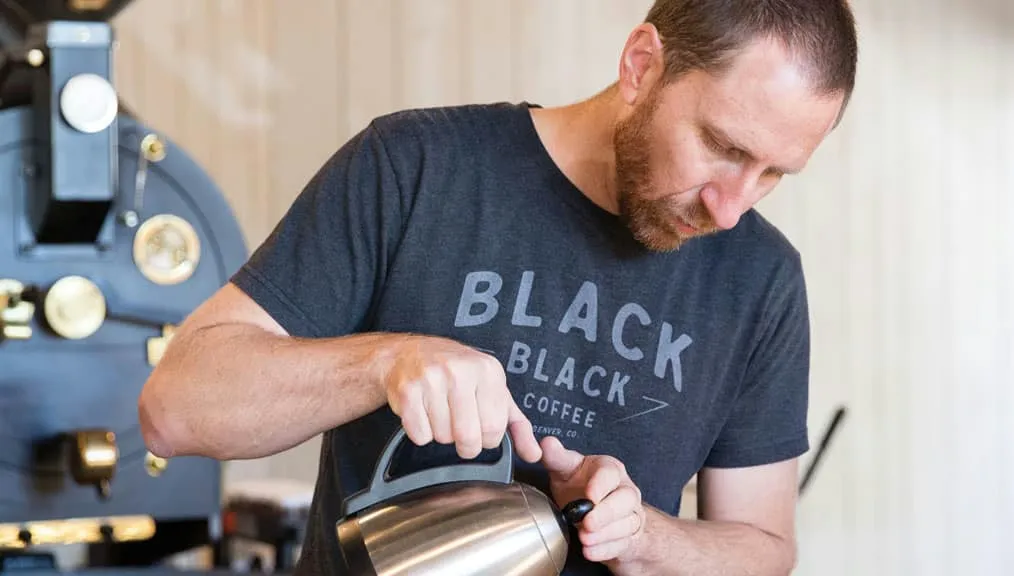
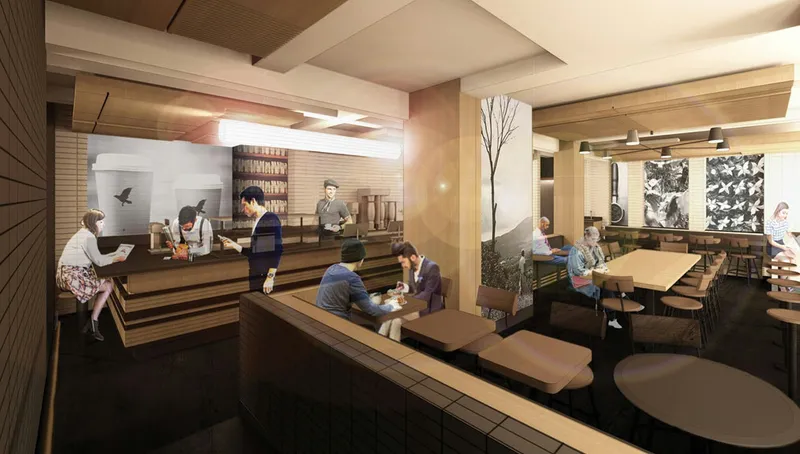
Building on that competitive momentum, Sprenger opened Sweet Bloom Coffee Roasters in December 2013. The roastery sits in a residential part of Lakewood, Colorado, the Denver suburb where Sprenger was raised. He had intended the business to be wholesale-only, but the city zoning committee pushed him to add a retail café alongside the roastery. That café has become a community gathering place for Lakewood residents and a tasting room for potential wholesale customers.
This interview has been edited for clarity and space.
How long had you been away from Colorado before you came back to start Sweet Bloom?
We had been gone for twenty-two years. I attended college in Canada, where I met my wife. After we married, we moved to Michigan, and I worked as head cook for an environmental institute. Next we spent a year in England while I did theological studies, then three years in Lebanon doing environmental conservation—we worked on protecting wetlands in the Bekaa Valley. Birds are my other great passion besides coffee. We helped protect a wetland that was a key stopover for birds migrating between Africa and Europe. When the Iraq War began, conditions became less safe for Americans, then steadily worse, and eventually we left. Back in the US, my wife became pregnant around that time, so we decided to settle down in the States. We moved to Maryland, where the organization we had worked for in Lebanon had a base. My wife took an administrator role, but there was no job for me, so I found work in coffee, thinking it would just be a holdover until I could find a conservation job.
And then you got hooked!
I got hooked. I fell in love with it, to make a long story short. It quickly became a passion, and I realized I maybe had a natural gift for sensory skills that helped me. The company where I found work was then Caffe Pronto, now Ceremony Coffee. I joined a year after Vince, my former boss, had started the business, so it was a great opportunity to come in and grow with the company.
What was your role when you started?
Barista. I began as a barista, then did a lot of different jobs. I bagged coffee, spent time as the delivery driver, did whatever was needed. About two and a half years in, I started showing interest in roasting. Vince was handling all the roasting, so once I began taking that over, the transition to head roaster came pretty quickly.
When did you start competing?
I have always been competitive. Growing up with two very athletic brothers made me interested in anything that involved competition. So when I discovered coffee competitions, I thought, ‘Oh my gosh, there are coffee competitions!’ I think the first one I entered was back when coffee syrups were all the rage. It was a Monin contest, and I made some crazy coconut chocolate frozen drink. After that I did roasting competitions, then the first year they held the Tasters Cup I competed and think I took second place. Then I started competing in the Brewers Cup. Fortunately I won it, and then won it again the second year. The year after that I competed in the Aeropress competition and won that.
You came to win!
Looking back, I wonder, ‘How did all that happen?’ It was a nice way to express my passion. Being on a roaster day in and day out can be very mundane and repetitive at times. I loved it, and I loved the cupping lab, but competitions let me express my passion—my passion and desire for quality, and the company’s as well. But I still look back and just think, ‘How did that all come about?’
I imagine leaving the competitive circuit with that level of success helped establish your credibility as a coffee professional.
For sure, it gave me a lot of credibility. I think it helped Ceremony gain more recognition, and it certainly helped build my name for whenever I would eventually do my own thing. Without those competition wins, I think it would have been much harder to get established as a roaster and start Sweet Bloom.
When did you decide to come back and start Sweet Bloom?
It was a mix of ‘What’s next for me?’ and a strong feeling that we needed to be close to my parents, who live in Colorado, along with the momentum from those competitions—all of it coming together made me realize, ‘We need to move back to Colorado.’ We decided to go for it and moved out here in April 2013. It took us about six months to open the doors.
Were there any major setbacks or surprises in getting the roastery up and running?
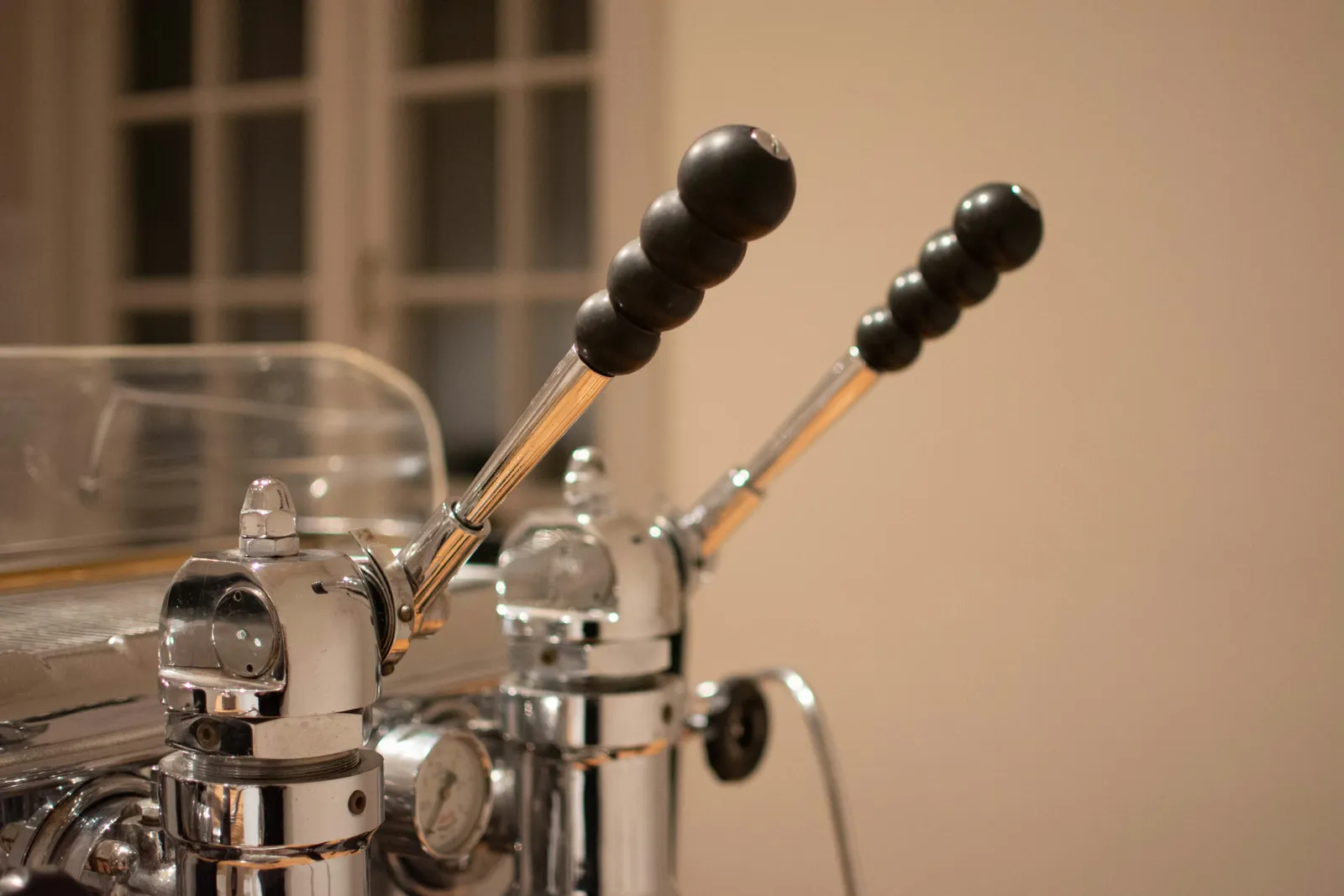
We found this space that we’re in, and I hadn’t planned on doing retail. Then about three weeks into the paperwork, the zoning department contacted us and told us we had to do retail if we wanted the space. I couldn’t believe it. But we felt strongly that this was the right space for us and decided to move forward. At first we were just going to do a pour-over bar and keep it super simple. Then I thought about all the people who would walk in and ask for a latte and figured we might as well have an espresso machine.
Looking back, are you glad the zoning committee pressured you to open a retail café?
Pretty early on we realized it’s actually a really good part of our business. It gives our company a face, people can see who we are, and it’s all open so you can see the roasting happening. And for wholesale customers who might be interested in us, they have a place to visit and taste our coffees on proper espresso machines.
That’s huge. And you have a place to connect with your hometown community.
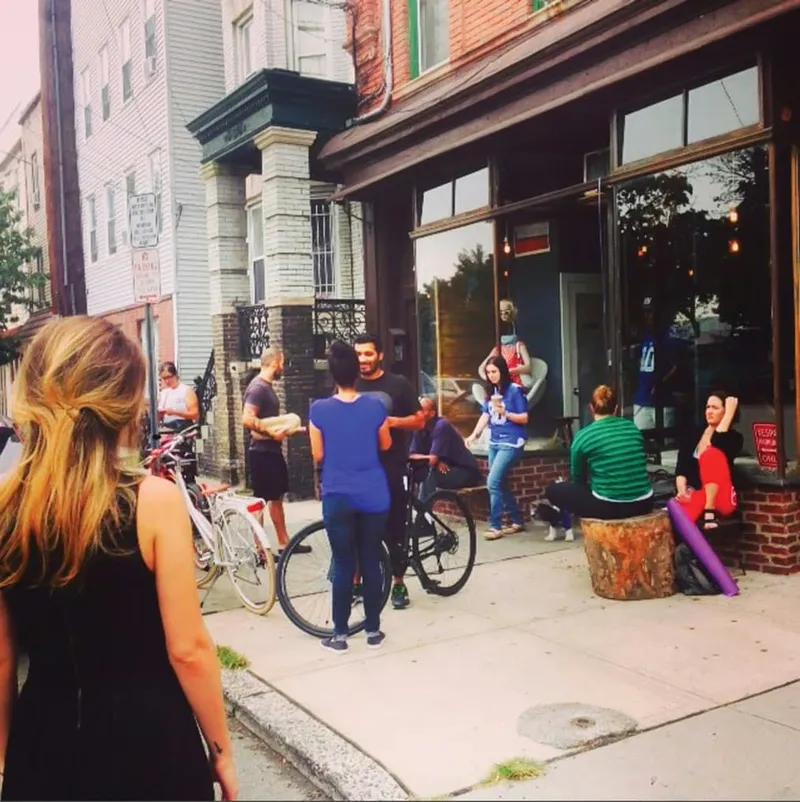
That’s something I really loved when I first got into coffee. I fell in love with the community aspect. Now to have it here, to have a busy café and just to hear conversation and people enjoying themselves. We have a group of guys who meet every Saturday. We don’t serve a lot of pastries, so one of the guys brings scones. And every Saturday they’re here. Just to have those things happening here, and people doing business meetings, friends hanging out—it’s been a great aspect that I’m really glad is part of what Sweet Bloom is.
It seems to fit your experience in coffee. Extending that into your hometown community is a cool, full-circle sort of thing.
Definitely. Coming back, I could have started in Denver proper, or Littleton, or Inglewood, or any of these other suburbs. Finding this space was special—it’s the city I grew up in.
Tell me more about how you’re bringing in coffee.
Part of our philosophy or mission is to actually bring producers here to Sweet Bloom. It’s been really cool. You write a new business plan and think it’s a great idea and hope it can work someday. If I have money to travel to a country, why not use that money to bring a producer here and potentially make a more significant impact? I can go down and talk to a farmer, then come back and tell about my experience, and I’m not sure that’s very impactful at the end of the day. To be able to have a producer come here—first, for them to see where their coffee is being brewed, to see the end result of their hard work. To see the cafés, visit the people who are serving their coffee, and to see that come to fruition. We’ve done it twice now, and my hope is that it’s always about fifty-fifty: as much as I’m traveling, I’m bringing producers.