How Wicked Joe Grew a Two-Million-Pound Roastery Without Shedding Its Values
A look inside the Topsham, Maine, operation where solar arrays, automated silos and efficient roasters support a national wholesale and grocery business—and where staying in touch with farmers remains part of the plan.
By Quinn Hill6 min read
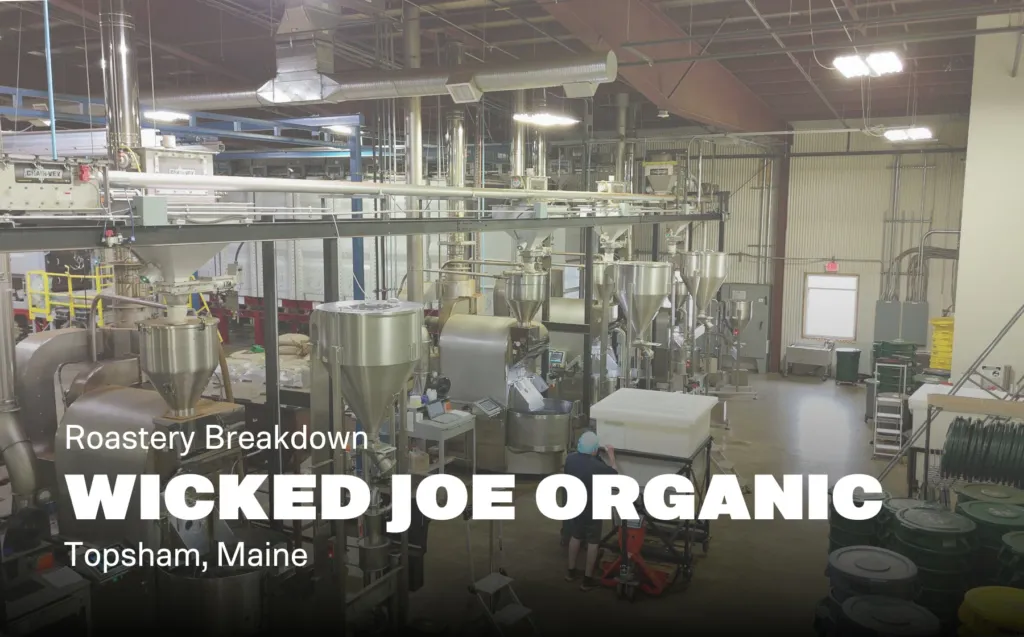
This roastery profile series is produced in partnership with Loring.
Wicked Joe Organic Coffees got its start in Topsham, Maine, in 2003, when Bob and Carmen Garver set out to build a coffee business grounded in two ideas: sustainability and community. Such phrases are repeated so often in the coffee world that they have lost much of their meaning, but the people behind Wicked Joe understand how difficult it is to keep those promises as a company expands.
Garver's introduction to coffee came during his military service in Turkey. John Rohn, Wicked Joe's chief operating officer and integrator, says Garver spent "a lot of time out in the community and coffee, as a ritual, was a big part of his experience there."
Back in his hometown of Santa Cruz, California, Garver launched a coffee company and ran it for a decade. After he and Carmen started a family, they wanted to be nearer relatives on the East Coast, and that is how Wicked Joe came to be.
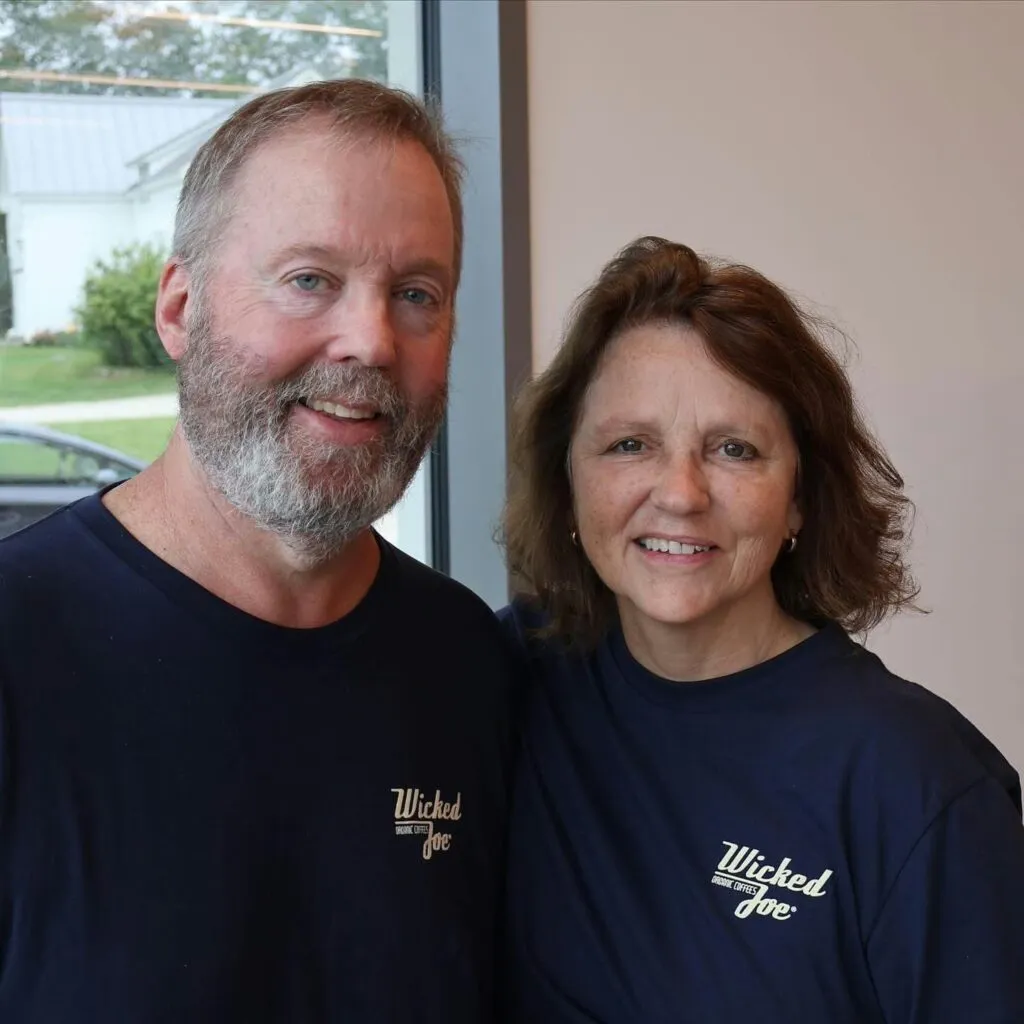
Bob and Carmen Garver.
Two decades later, the company occupies a campus of three buildings. It supplies wholesale accounts and local cafes, and its products sit on shelves in more than 8,000 grocery stores nationwide, among them Publix and Sprouts.
Through that expansion, the company has held to the principles it was founded on. Rohn says sustainability has "always been front and center" in the way Wicked Joe does business.
Pursuing Sustainability at High Volume
Wicked Joe's output reached 2 million pounds last year, which means hitting its sustainability targets requires a broad strategy. Solar technology supplies power and heat across the campus. The roastery's solar array, a set of panels that produce electricity, covers peak-time power demand for the tea production area and the headquarters building, for instance.
"Being up here in Maine, one of our largest expenses and consumers of natural gas would be heating that building, and so [solar] offsets the heating requirements," Rohn says.
The company's environmental commitments also shape which roasting machines it buys. Most production runs on three S70 Peregrine Loring roasters plus one S35 Kestrel. A S7 Nighthawk handles test roasts and limited microlot coffees.
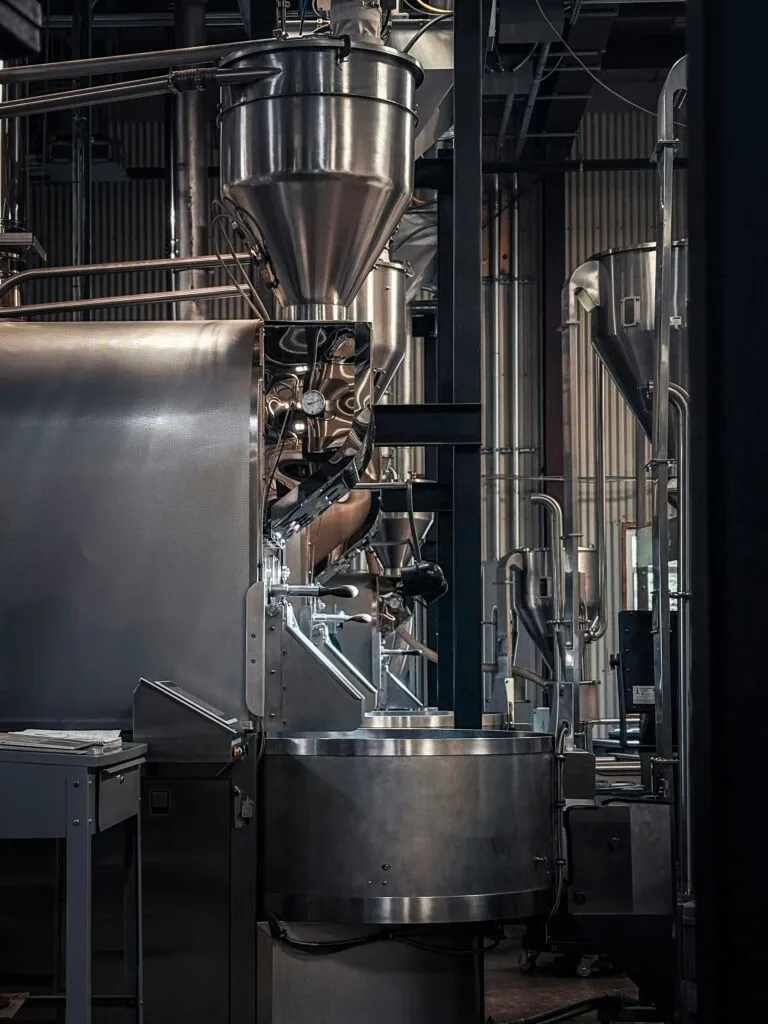
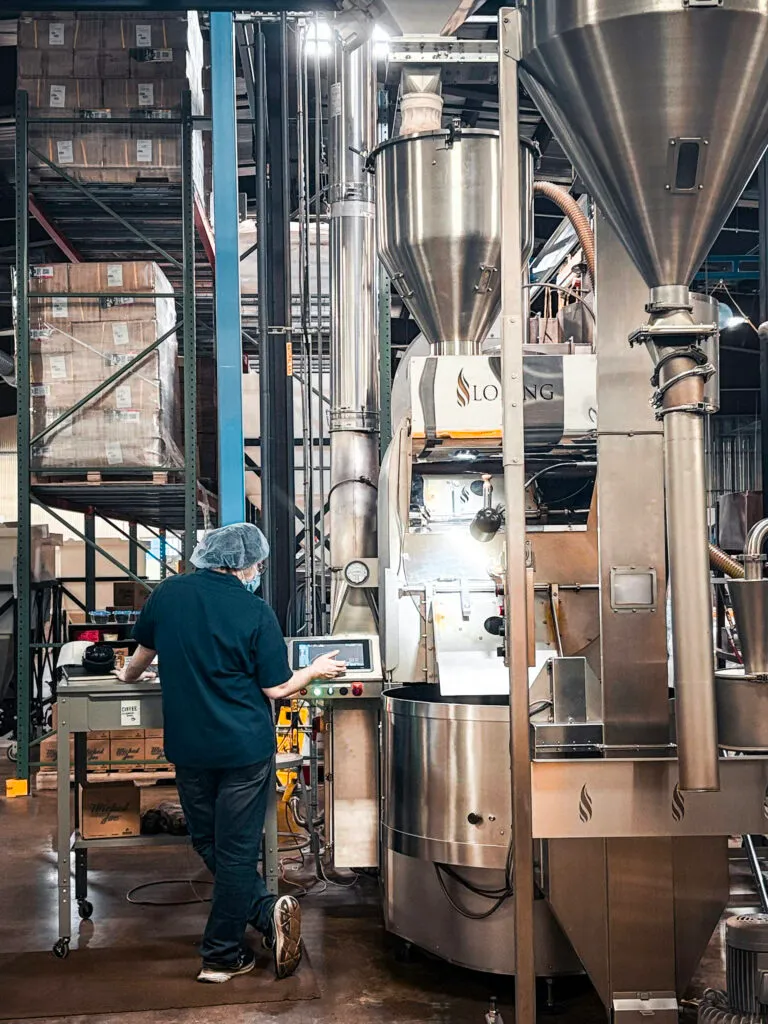
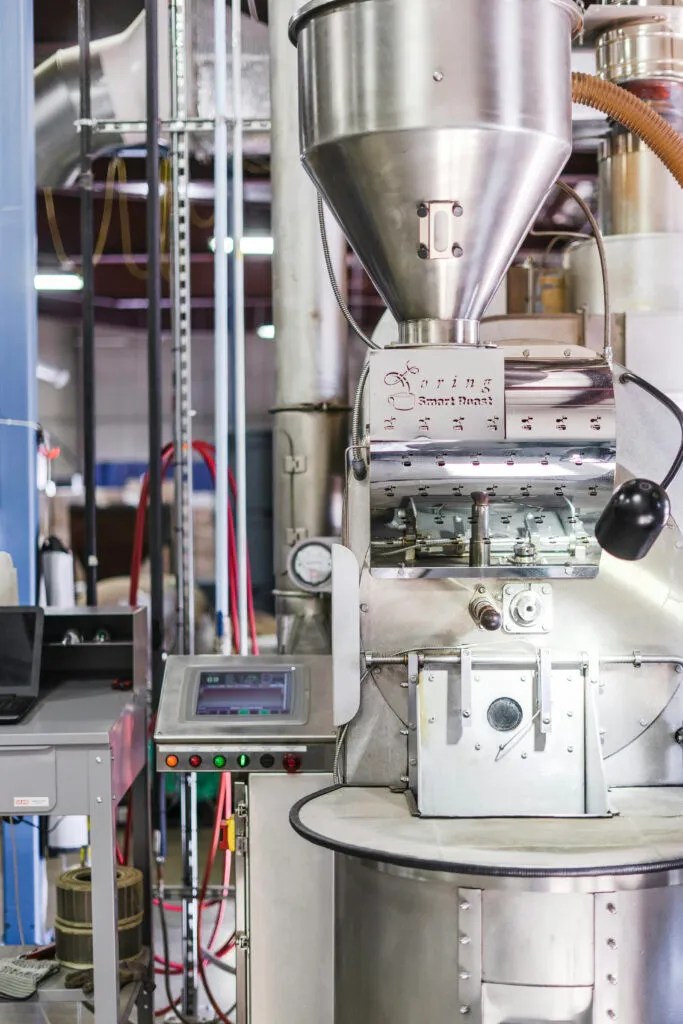
Loring roasters are often chosen for their energy efficiency, and Wicked Joe ran its own tests before committing, to check whether the machines matched its sustainability goals. "The claim is that they use 80% less fossil fuels," Rohn says. "We did some studies early on and that seemed to line up."
Traditional roasters frequently rely on natural gas for both the roaster and afterburners, whereas Rohn points out that Loring machines use an enclosed smoke system that combusts smoke during the roast without an afterburner. In his view, those features have been a "tremendous advantage when it comes to reducing our natural gas consumption."
Key Figures
Roastery location: Topsham, Maine
Roasting capacity: 2 million pounds per year
Retail and/or wholesale roasting: Both
Inside the Equipment
Coffee silos: Wicked Joe stores green coffee in silos—unlike the Swiss roastery ViCAFE, previously featured in this series, which uses a silo for roasted coffee.
"We have 10 large silos and a couple split-bin smaller ones that hold 10,000 pounds of coffee," Rohn says. When a pallet of green coffee bags reaches the roastery, the beans pass through cleaning equipment and destoners before being routed to an assigned silo.
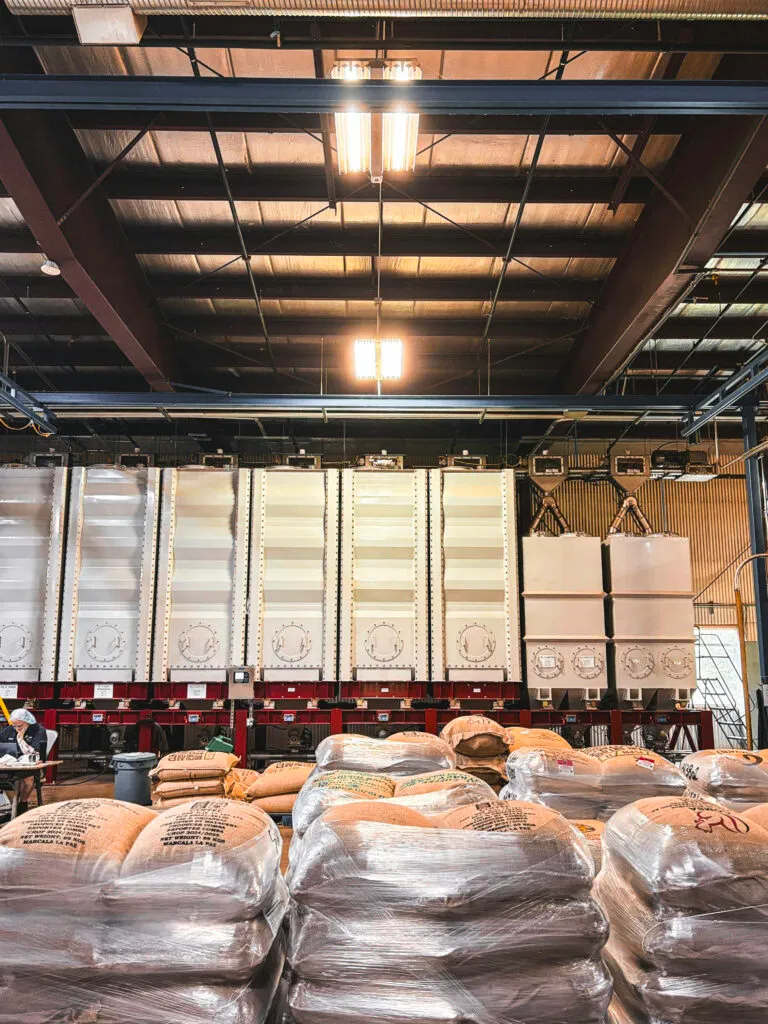
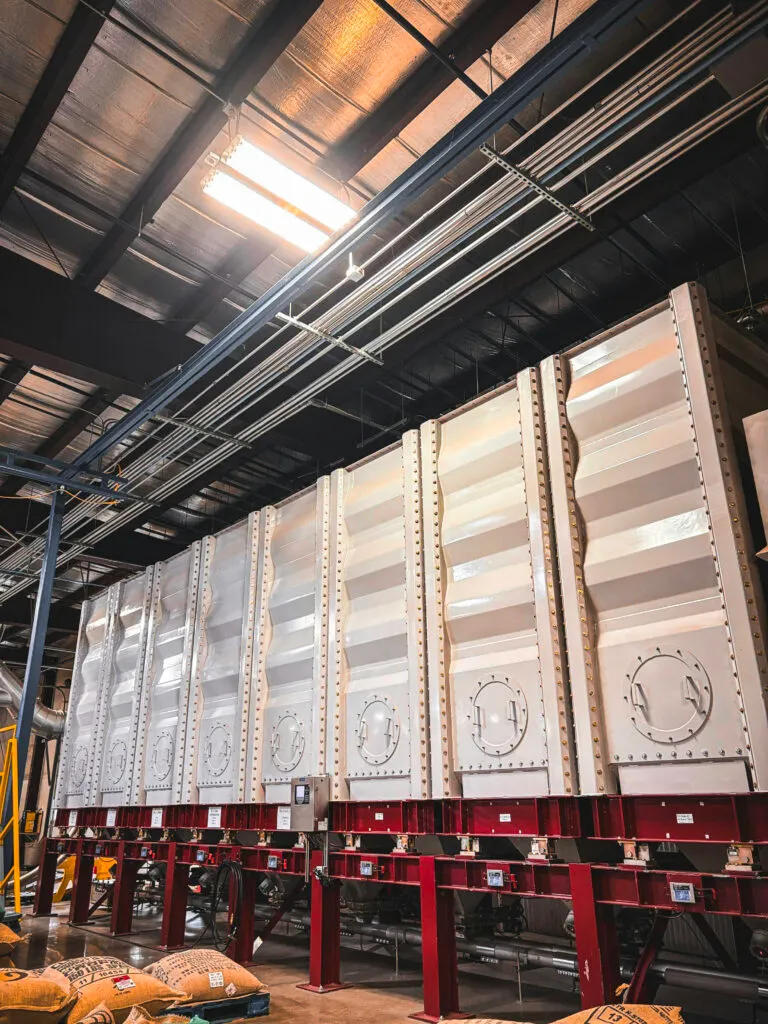
The silos carry technology that lets the roasting team track inventory to the pound. "So, we know how much coffee we put in there, we know how much coffee is in there at any given time, and we can weigh the coffee coming back out," Rohn explains.
As at ViCAFE, Wicked Joe's silo system is wired directly to its Loring roasters. "We set the production schedule for the day," Rohn says. "The silo system will deliver [the correct coffees] to a hopper above each roaster … in the correct proportions for our pre-roast blends. When the operator at the roaster is ready, they basically just have to push a button." The silo then readies the next coffee in line for roasting.
Silo systems represent a significant outlay for any roastery, whatever its size. Before installing them, Wicked Joe relied on an overhead crane setup modeled on one Garver had seen at a granite operation. As the business expanded, however, preventing injuries—from repetitive strain or accidents—became a pressing concern. Management concluded it needed a system that was both more efficient and safer for workers.
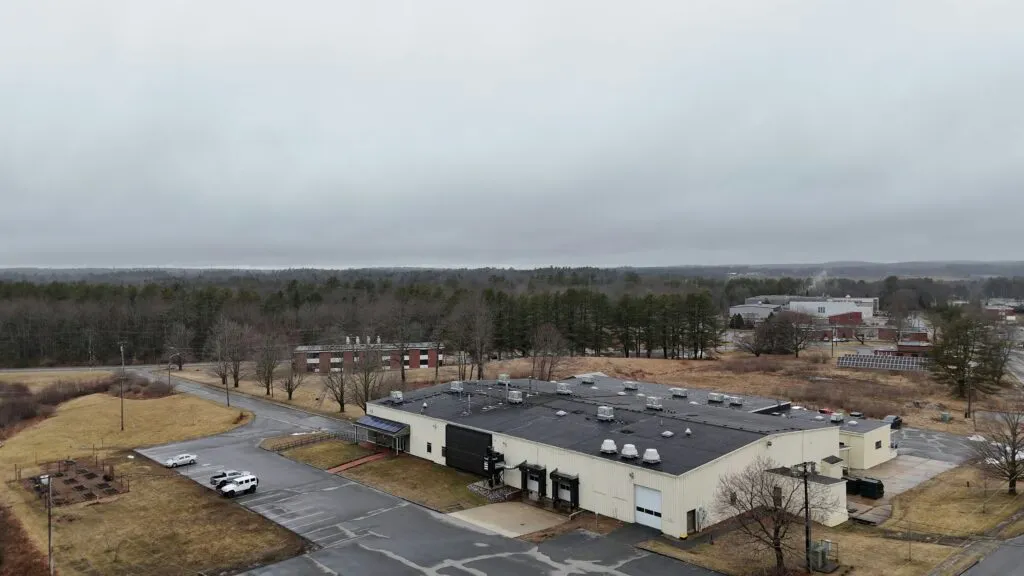
The Wicked Joe campus in Topsham, Maine.
"We … knew that the crane system was preventing us from hiring the best people, and restricting us to hiring the strong people that could maneuver those sacks all day," Rohn says.
JACKY Bins Most roasteries store coffee in 32-gallon plastic bins, but Wicked Joe required something larger for its highest-volume coffees. JACKY Bins fit the bill. The white, wheeled bins hold roughly 600 pounds of coffee each, can be moved around the roastery, lifted into the silo system, or used when packing roasted coffee.
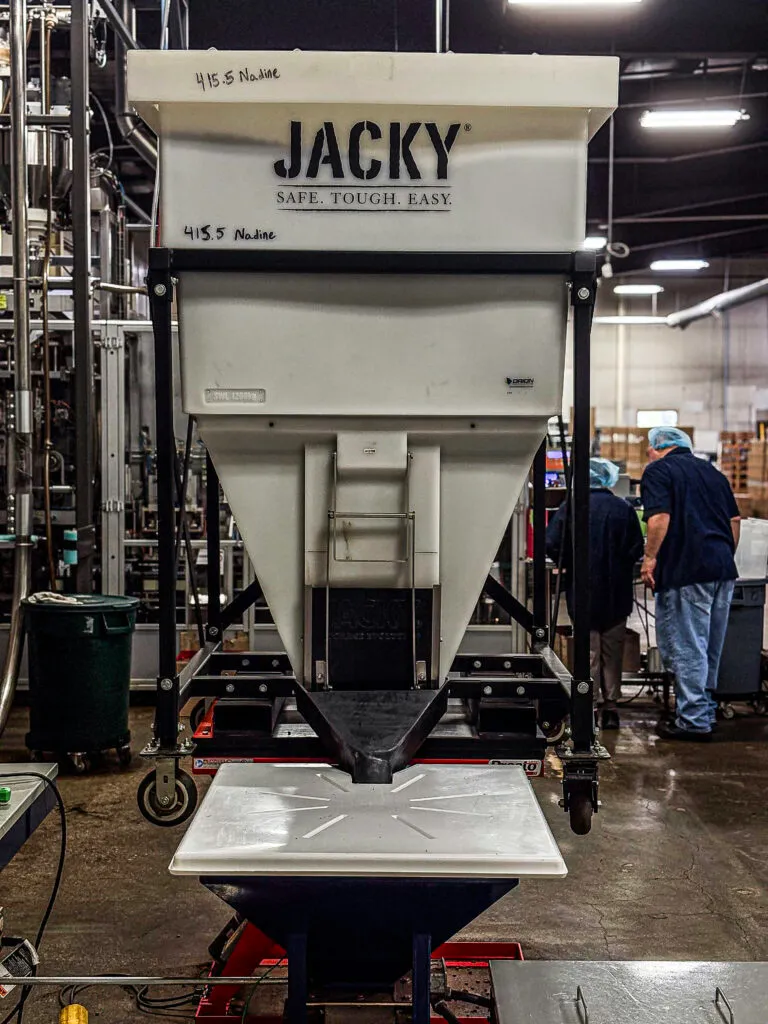
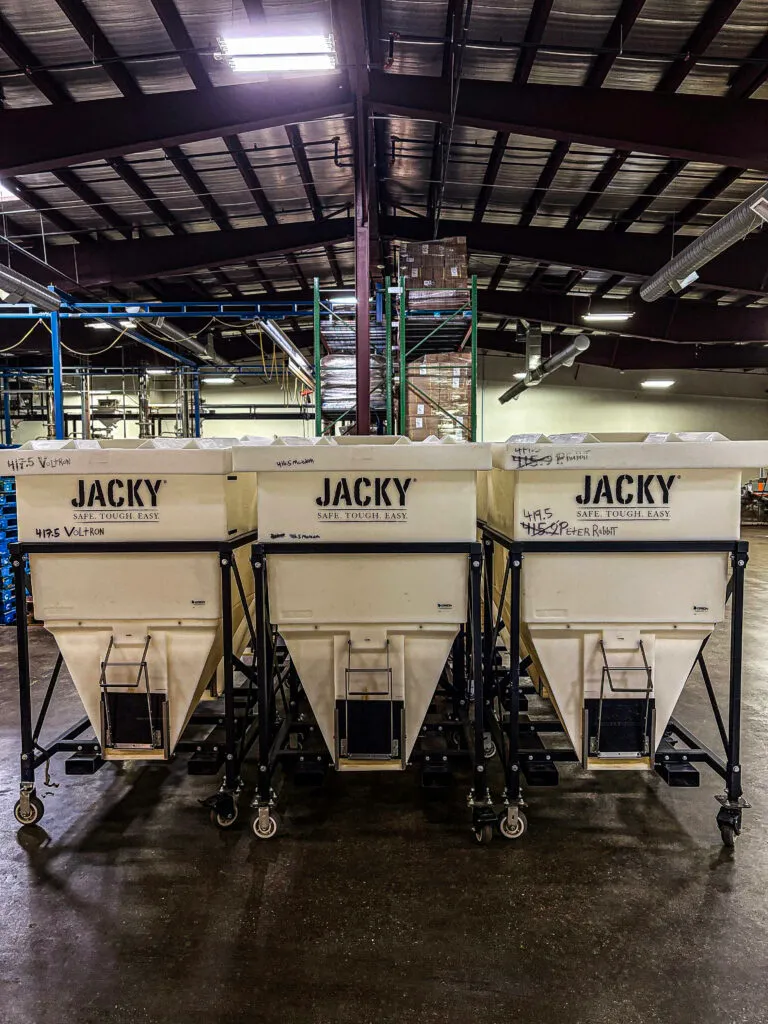
Rohn says the JACKY Bins "can replace basically 10 buckets with one bin. We have two departments in particular where we do enough volume that we can roll over multiple JACKY Bins."
Fres-co Machine Rather than buying blank bags, labeling them and filling them by hand, Wicked Joe runs a Fres-co Machine that forms bags from large rolls of packaging material, fills them with coffee and seals them.
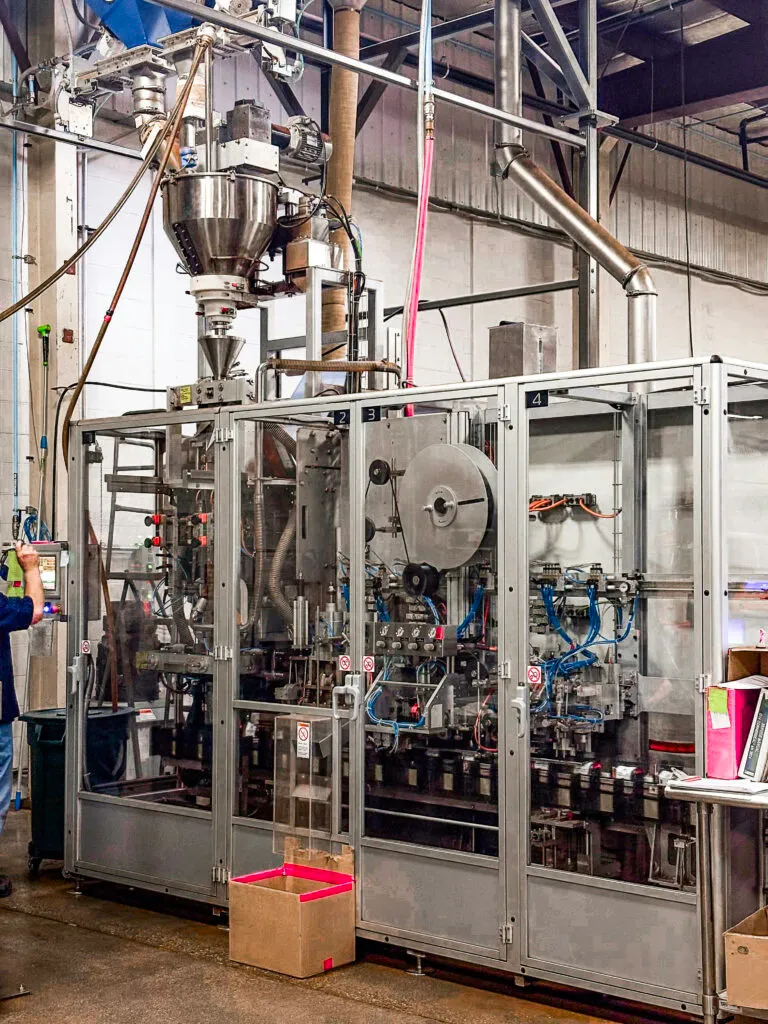
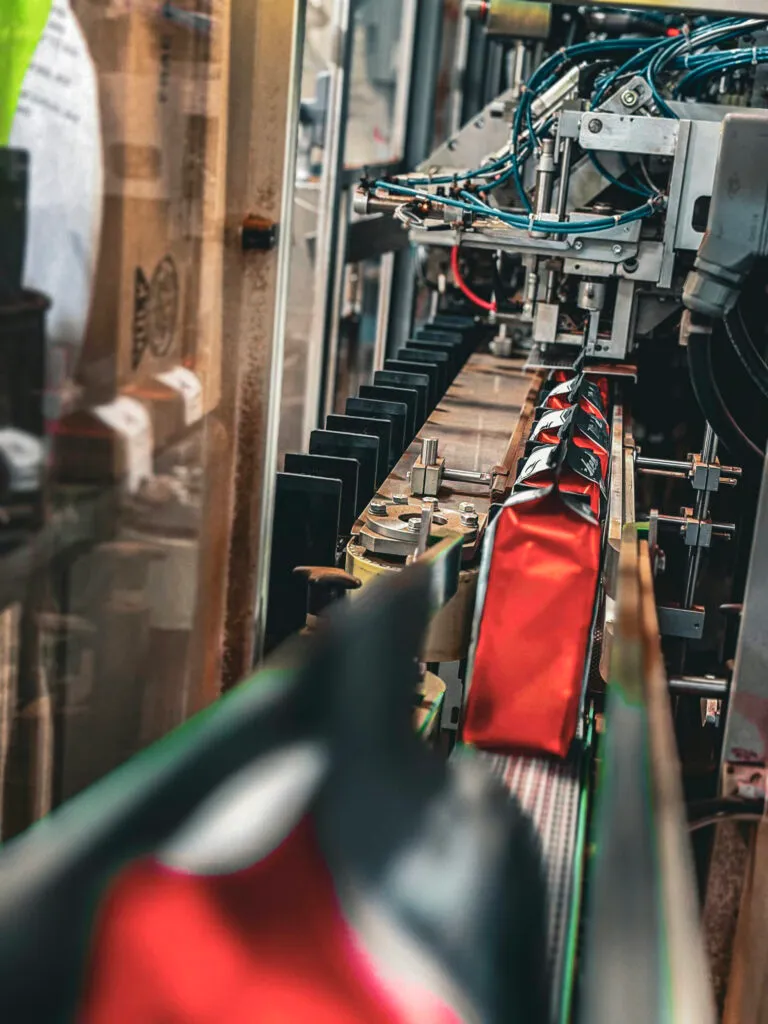
The finished bags come out ready for sale. "It takes three people [to operate the Fres-co], but … a team of three over there might be able to do a few hundred cases," Rohn says. Compared with manual bag filling, that makes the Fres-co "orders of magnitude … more efficient."
Keeping Ties From Farm to Roastery
Buying coffee for a large company is demanding work, but Rohn cares about relationships with everyone in the supply chain. The team does this by investing attention not only in the farmers it buys from but also in others along the way, such as the importers of its coffee.
"There's a lot of baselines that exist," Rohn said, describing two decades of working with and buying from the same people. "They know what our expectations are, so we know that when we get something from them [or] if they want to recommend something to us, they aren't going to recommend something to us that they know we're not going to like. They already understand how we operate."
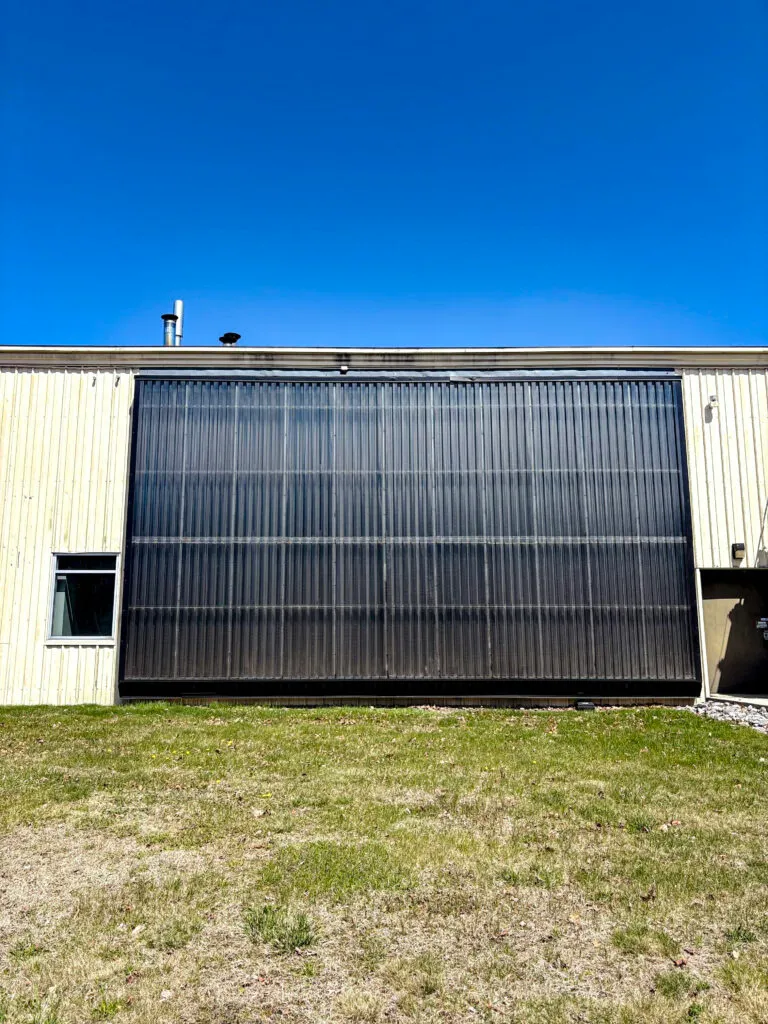
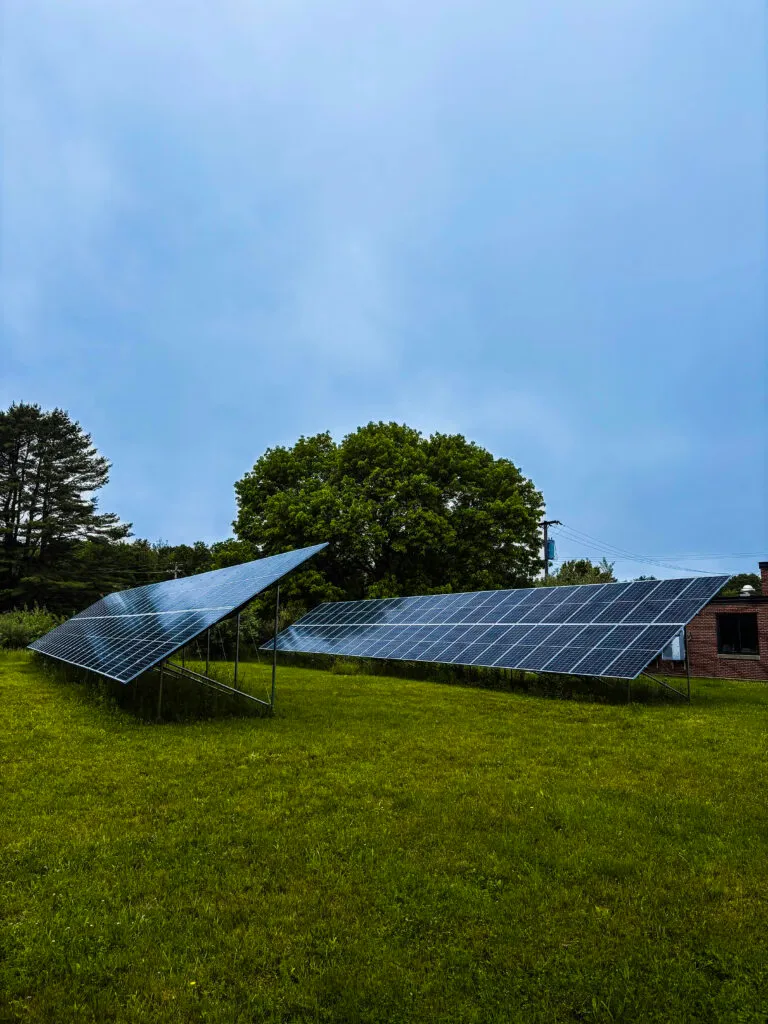
Wicked Joe harnesses solar power with a panel on their building (left) and a solar array (right).
Regular visits to coffee partners are another way Wicked Joe maintains those connections. "We try to travel every year to origin," Rohn says—in January, he visited coffee farms and co-ops in Honduras. "We don't always get to go everywhere every year, but we try to make multiple origin trips to be present and check how things are going for them."
Travel, Rohn says, is essential to grasping what farmers face. "It gives you a different level of insight into what's happening, being on the ground versus what you are reading in the newspaper or online," he says.
Maine may not spring to mind as a coffee hub, yet Wicked Joe shows that clear intentions and firm principles can be enough to build a major coffee destination. More than 20 years ago, the Garvers set out to create a company that roasted excellent coffee and also did what Rohn calls "a very California thing"—keeping sustainability at the heart of its mission. Even after growing into a large-scale operation, Wicked Joe has used energy-saving technology to keep that mission alive.