The Inventor Behind the Countertop Grinder That Cafés Rely On
Kyle Anderson's path from super-automatic espresso pioneer to the creator of a beloved café grinder shows how customer-driven ideas reshaped his company's focus.
By Rowan Hayes4 min read
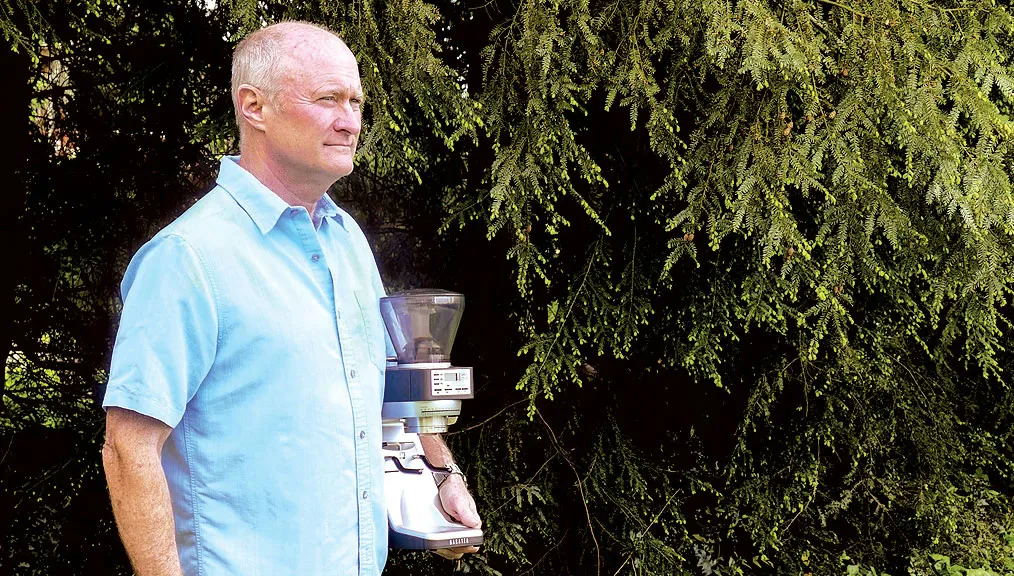
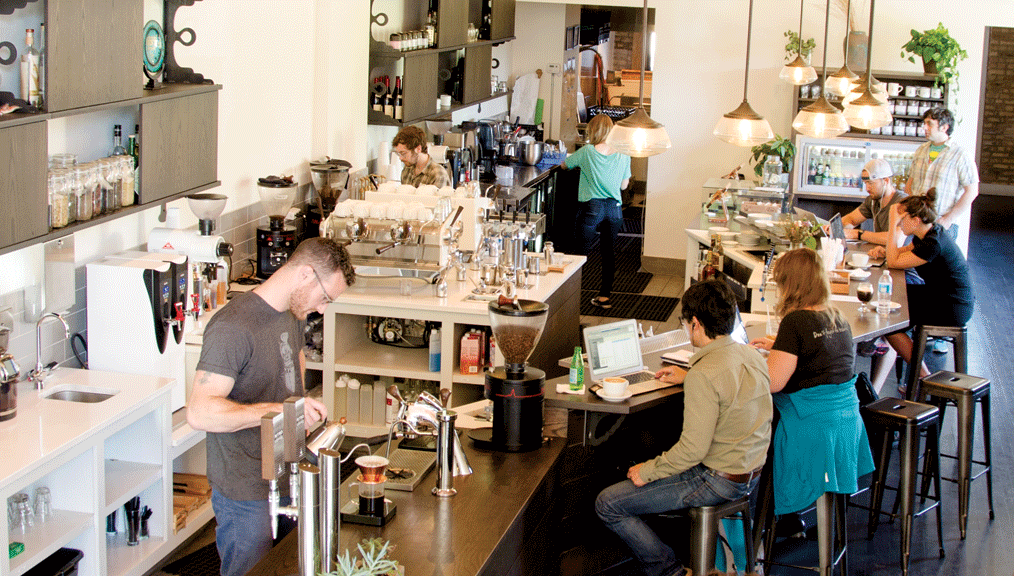
A Baratza grinder often looks like the odd one out on a café counter. It's a compact unit next to much taller grinders—sometimes tucked into a recessed counter and entirely hidden from view. An airpot of coffee outweighs it. In coffee equipment terms, it brings to mind Muggsy Bogues: undersized yet capable of competing with the best. And it does, frequently.
That outcome wasn't what Kyle Anderson envisioned when he founded Baratza with Kyra Kennedy. Their original plan was to import and sell home espresso machines. A licensed grinder, however, became a major hit and revealed strong demand for a higher-quality home grinder. That success led Anderson—an inventor with a significant innovation already to his name—to build Baratza's first grinder. The goal was a great home grinder; the industry had other ideas.
This summer, the company's newest grinder line, the Sette, will appear on café bars. It features a conical burr with an rotating outer ring and a built-in Acaia scale, making it a striking grinder with an elegant design. Impressive as the machine is, I was mainly interested in learning more about the person behind it.
Right away, I learned that aside from Kaldi himself, Anderson may have the best possible answer to the simplest question in the coffee business.
This interview has been edited for clarity and space.
How did you get started in coffee?
In 1989, working with my tennis partner, I invented the world's first super-automatic espresso latte machine. Calling it disruptive would be an understatement. I started that company in the basement of my house. We grew quickly and brought espresso to 7-Eleven, McDonald's, Washington State Ferries, and corporate cafeterias. The company was called Acorto. These were strictly commercial machines: 300 pounds, $17,000 each. It was a big deal. It had built-in refrigeration, two grinders, and a huge Italian brewing mechanism. It was something of a paradigm shift—you could push a button and make really good espresso or espresso-based drinks. That's how I got into coffee, and I was only on the commercial side.
You left Acorto, now Concordia, in 1999. Why not stay in espresso machines?
Kyra and I started this company with a specific intent (I had a non-compete when I left Acorto) not to compete on the commercial side. Initially we set out to bring in small automatic home espresso machines. About a year into that business, we found that Solis also had a small coffee grinder. We were amazed at how it sold. We decided to create our own grinder, so we created the Maestro in 2001. We did some innovative things with the Maestro and it was quite the success. In 2004, we decided to sell the espresso machine side of the business and dedicate ourselves to coffee grinders. That was the year we introduced the Virtuoso, which was our grinder through and through.
The Sette, particularly the one with the Acaia scale, is a culmination of a lot of the innovations you've brought to grinders. Where have those ideas come from?
All of our best ideas have come from customers. Weight-based grinding came from Jared Rennie at Noble Coffee down in Oregon. He was using our Virtuoso on their coffee bar. He said, "Have you ever thought about incorporating a scale in your grinder?" And I said, "No!" I got out a napkin, this was at the SCAA show in Anaheim, and I just sketched a quick idea and he said, "Yeah! That would be perfect!"
That's amazing.
And we did it. That's where weight-based grinding came from. It really kind of shook the world up.
I find it surprising that a guy who invented the super-automatic is the guy who makes the grinder for pour-overs, the most hands-on way of making coffee.
Yes and no. There's a common thread here. We took a look at what people were doing at the beginning of this third-wave thing, and looked at all these little tins sitting around being stacked up in the café, with baristas in the morning pulling individual beans out to get as close as they can to a couple tenths of a gram. And we took a look at that, and it just harkened back to my days at Acorto, and I said, "This is stupid." Talk about wasteful in terms of time. We strive to make our grinders a tool that helps you make better coffee. And a tool makes the work you have to do easier. And though it is part of, you're right, manual brewing, we're trying to take dialing in of the right grind and getting the right dose, we're trying to eliminate those two variables so you can nail it. We're still using a machine to do what could be done some other way, but to make it really easy. In that way, it's consistent with where I started.