Coffee Culture Converges: A Look Inside the 2019 London Coffee Festival
The 2019 London Coffee Festival brought together industry professionals and enthusiasts for a four-day celebration of coffee. Key themes included sustainability and waste reduction, with innovations in compostable packaging and pods, alongside the artistry of coffee cocktails and latte art.
By Taylor Hayes4 min read
A Caffeine-Fueled Extravaganza in East London
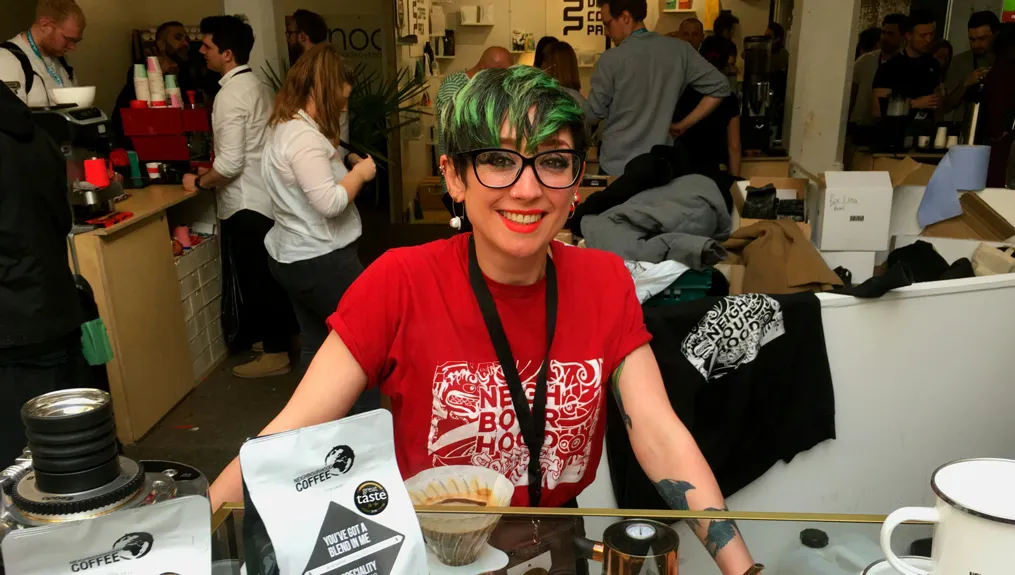
House music pulsing. Edgy haircuts everywhere. And, of course, an abundance of coffee. Set in the industrial-chic Old Truman Brewery in East London, the London Coffee Festival is a four-day event dedicated to all things caffeine. In its seventh year, the festival spans four floors and covers everything from beans to packaging, masterclasses to competitions, cementing its status as a key date on the coffee calendar.
The scale of participation makes the festival a useful barometer for the coffee industry. In 2019, waste and sustainability took center stage. Agnieszka Rojewska, the 2018 World Barista Champion, who was judging competitions and speaking on panels, emphasized that the industry must take responsibility for its waste.
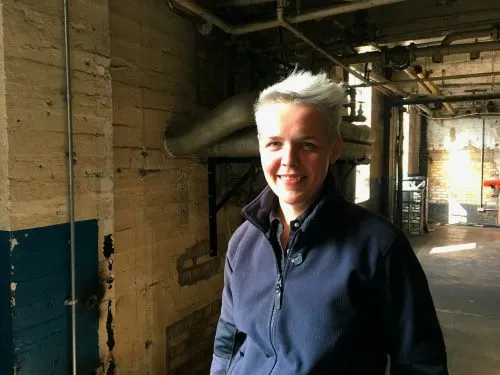
“We produce the most trash in the restaurant industry…coffee bags, coffee cups, lids. There are already recyclable cups, but roasteries could do the same with bags,” she said. “We also need to look at the coffee grounds—they can be used in soil and in skin cream but those solutions need to start higher up.”
Education is also crucial, according to Rojewska.
“We need to show people that small steps make a difference,” she said. “People often think in a global way and believe that what they do as individuals won’t change things. We need to change that attitude so I think zero waste will continue to be a huge trend but everything depends on the customers and how they behave.”
Making Sustainability Simple
Environmental responsibility is increasingly good for business. Tony Small, of Decent Packaging, believes his company is well-positioned to capitalize on the growing backlash against single-use paper cups. Standard cups are lined with plastic, making them hard and costly to recycle. In contrast, Small’s cups use paper from managed plantations, are printed with water-based ink, and have an inner lining made from plant starch. He argues this simplifies the choice for consumers.
“We find that to have any impact we have to simplify sustainability and the best way to do that is to make packaging from plants which you can compost along with food waste,” he said.
Even the lids are fully compostable. Demand is evident: Decent Packaging, which started in New Zealand five and a half years ago, has sold over 100 million cups and is now expanding into the U.K.
Pods Without Guilt
Single-use cups aren’t the only issue. Coffee pods, popular for convenience, are also problematic due to recycling challenges. While large manufacturers like Nespresso offer recycling schemes, startup Halo has developed what it claims is the first fully compostable pod. Founder David Foster says his philosophy is simple: “We want to eliminate waste.”
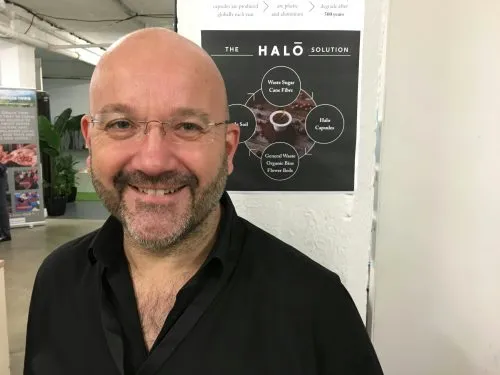
“Coffee pods,” he continued, “can be made of a huge variety of materials—aluminum, plastic, bio-plastic, compostable bio-plastics—and it’s confusing for consumers. So we decided to make the world’s first capsule that’s completely compostable at home. You can throw it in any waste stream and be guilt-free.”
Foster explained that the capsules are made from waste sugarcane, which breaks down in four weeks when wet. Everything around the capsule—label, lid, box, ink, and outer laminate—is compostable. However, these environmental credentials come at a cost: about $1.30 per capsule for a box of 10.
Coffee Cocktails with a Conscience
The festival also showcased coffee’s glamorous side, especially cocktails. Stephanie Rainbow, a barista and mixologist serving as an ambassador for the Tia Maria Coffee Project, shared her expertise before leading workshops.
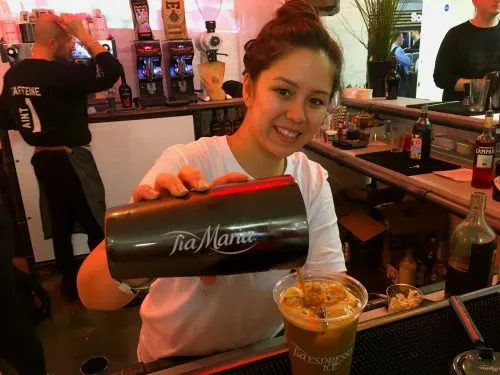
“The iced popcorn frappé is definitely the most photogenic thing on the menu,” she said. “It made a list of the 10 most Instagrammed drinks in London recently.”
Rainbow’s drink was sweet, slightly salty, and featured popcorn syrup—a crowd-pleaser. But she stressed that coffee should be treated as a key ingredient, not just a generic shot.
“You should treat coffee like a key ingredient, not just a generic shot of espresso,” she said. “You get bartenders who make their own tonic, for example, because they want to get the right balance of sweetness and bitterness, but then you could order a coffee cocktail and they’d use instant coffee.”
She teaches which coffees suit which cocktails: espresso for an espresso martini (though some bars use cold brew, which she says should be called a cold brew martini), and filter coffee for Irish coffee to achieve the right mouthfeel. “So we always teach people about the viscosity, the particles, the oils, and which coffee goes with which cocktail.”
Latte Art as Self-Promotion
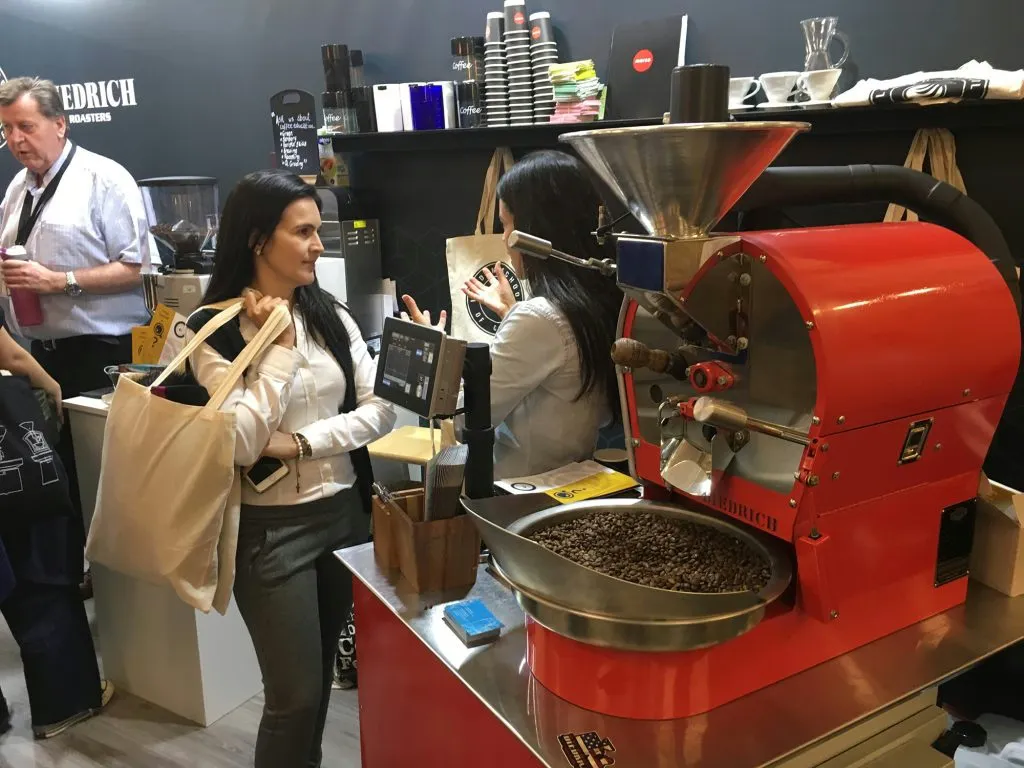
Rainbow’s creations are eye-catching, but latte art is the epitome of flamboyant coffee creativity. Ben Lewis, in his early 20s, is a relative newcomer to specialty coffee but has made waves with his technicolor latte art.
“I wanted to incorporate etching and drawing into my coffee but there’s also a more practical reason: I use the art to promote myself and other businesses,” he said. “A lot of companies want their logo on coffee, especially when they want to spread the word through social media.”
Lewis uses food dye and colored milk to create mini artworks, including an etched Sonic the Hedgehog. When asked if painting is cheating, he replied: “This is just another element to what I do. I can also free pour, I’ve entered the big competitions which I’ve done well in. Coffee’s coffee, and you should enjoy every aspect of it.”
That philosophy seems to capture the London Coffee Festival itself—in all its loud, ostentatious glory.