Building Hybrid Events That Serve Both Rooms and Screens
A practical framework for organizers who want remote participants to feel like genuine guests rather than spectators, covering goal-setting, parallel content and sensory programming, social connection, and accessibility commitments.
By Dakota Young5 min read
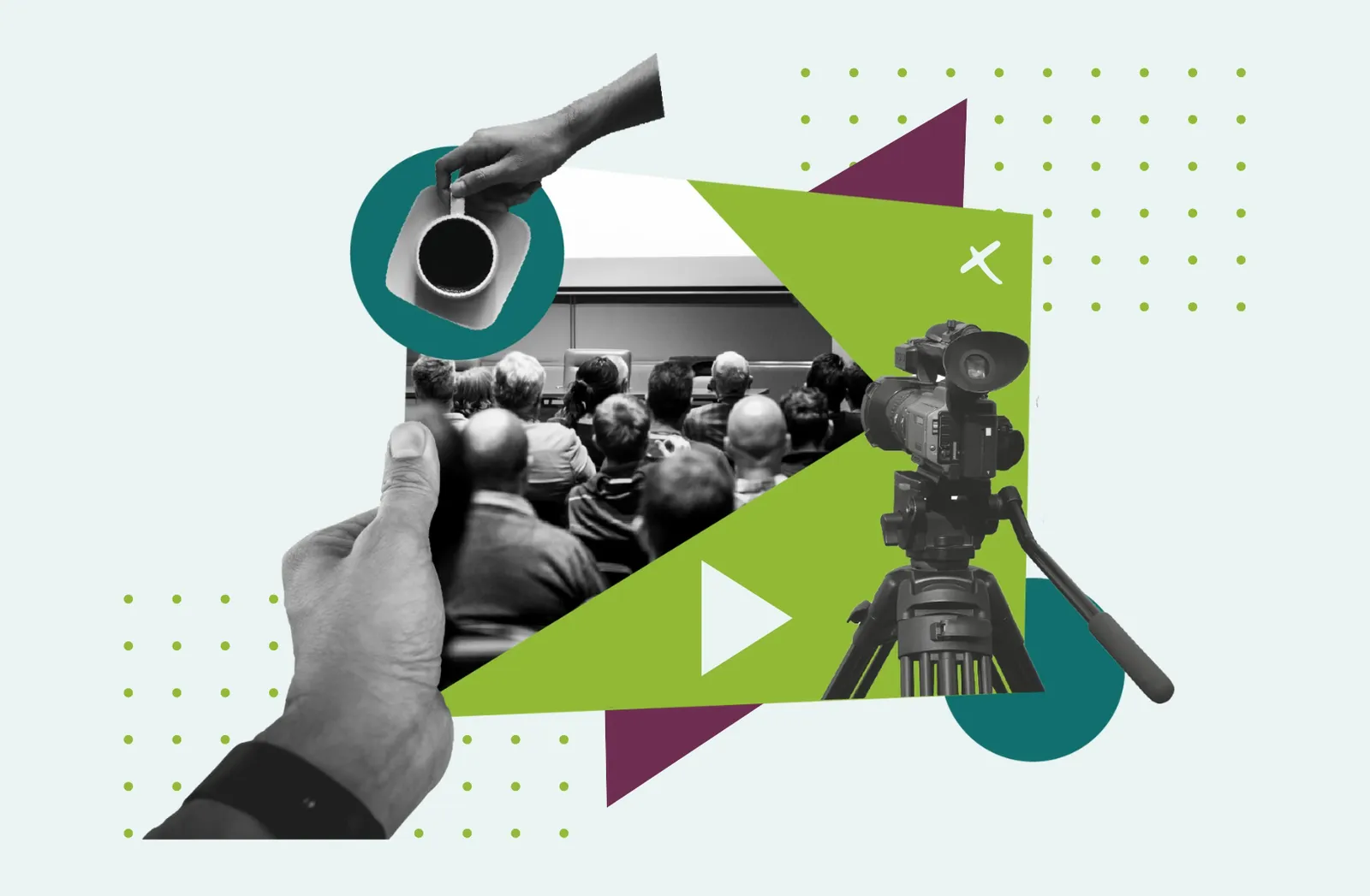
A strong event does not have to be fully remote to be reachable by a wide audience. Well-designed hybrid formats pair live, in-person programming with virtual experiences that complement it. Such events help organizers work within pandemic-related constraints, but they also widen participation beyond what any single venue could hold.
When I asked people in my online circles about hybrid events they had attended, the replies were discouraging. Numerous respondents had never encountered a well-run hybrid event; some had never attended one in any form. A handful pointed to informal social contact as something in-person gatherings provide and nothing replaces. Others mentioned that sensory programming arranged for the room—tastings, shared meals, happy hours—had no counterpart on the remote side.
No single design will suit every participant, yet organizers have many options for building a hybrid event that gives everyone involved something worthwhile.
Start With the Experience You Want to Create
Goal-setting comes first when you plan a hybrid event.
Ask what kind of experience you want attendees to have. Is the program purely content-driven, built around talks and discussion? Does it include sensory moments such as tastings or food pairings? Do you want social features—optional mingling between sessions, group meals, or happy hours?
Your answers define the experience you are designing. From there, consider how to deliver it to two separate groups: people in the room and people participating remotely.
The virtual and hybrid events platform Communiqué—founded in 2001, which shows that digital and hybrid formats existed well before COVID-19—describes the distinguishing feature of hybrid events this way: they are structured “around delivering a unique, yet consistent, experience to each attendee type. This is not the same as sharing videos on demand after the event or prioritizing your live audience over your remote audience.”
Arielle Rebekah Gordon, founder of Trans and Caffeinated, has seen the remote side of hybrid events treated as secondary. “The virtual component has often felt like an afterthought,” they say. “There also aren’t as many opportunities for networking, which is one of the most important and beneficial functions of industry events.”
Given that neither group can be given a replica of the other’s experience, the practical question becomes: which two experiences do you intend to build?
Designing Parallel Tracks for Two Audiences
Once your goals are clear, work out how in-person and remote participants can each get a comparable experience. The examples below show how a hybrid design might take shape.
Content-driven elements can be hybridized in several ways:
- When a speaker addresses a large room, organizers can stream the talk through an interactive platform and assign one person in the room to collect questions, comments, and feedback from remote participants.
- Polls that both audiences complete on their phones are another way to add interaction beyond Q&A.
- Alternatively, the lecture itself can be delivered remotely and shown to both the live audience and virtual attendees.
- For discussion-heavy formats such as a class or book club, putting virtual participants at the center can help, since fast-moving room conversations tend to push them out. One approach: the instructor leads from a computer so that the people in the room and the remote group have equal access.
Bringing remote attendees into sensory elements takes more effort but is achievable:
- For a tasting, ship kits to virtual attendees ahead of time along with instructions for preparation.
- For a meal-centered experience, consider whether a shared takeout option lets remote participants join in from home.
The social dimension is the hardest in-person component to replicate. Some options:
- Optional mingling between sessions cannot be copied directly, but open virtual social rooms give remote attendees a place to connect and compare notes between sessions.
- Just as with a shared meal, could you set up a shared virtual space where remote attendees eat together? Not everyone enjoys being on camera while eating (I count myself among them), but many people miss the shared-meal aspect of events and may want to take part.
- The same question applies to happy hours: can an in-person and a virtual happy hour run at the same time?
These examples are starting points for thinking through your goals and your audiences.
While planning, you can also survey virtual attendees before locking in late-stage details such as food and drink plans, to learn what interests them and what does not. Remote participants may propose engagement ideas you had not considered.
Access Is More Than a Login Link
Gordon points out that holding a hybrid event is not sufficient on its own. Being able to join remotely is itself a significant accessibility gain, but they found that many other accessibility fundamentals were missing.
“Ironically (since the main point of maintaining a virtual component is to increase access), most of the hybrid events I’ve attended have missed the mark regarding accessibility,” they say.
The list below may look demanding (and it is not exhaustive), but each step toward accessibility raises the general standard. As the saying goes, don’t let perfect be the enemy of good.
Gordon shared these ideas:
- Hire ASL and Black ASL interpreters.
- Enable captioning for all programming.
- Encourage speakers to speak slowly.
- Include visual descriptions for those who can’t see (e.g., what presenters are wearing, any text on the screen, and any pictures shown).
- Allow for plenty of breaks.
- Allow access to small breakout rooms. Gordon describes further: “some focused on folks who just need a break from programming, others focused on specific networking needs (e.g., queer/trans barista connect, non-man roaster connects, BIPOC coffee person connects, disabled/neurodivergent coffee person connects).”
“Also,” they recommend, “as events move towards hybrid models, one or multiple event planners need to be committed to attending the virtual component instead of the in-person one—that way, someone who had a hand in shaping the event actually has a stake in the virtual component being good. Heavy preference that this person has at least some knowledge of disability justice.”
Tailor the Format to Your Community
What sets a premium hybrid experience apart is the attention paid to what remote participants may be missing. A one-to-one match with the in-person experience may not be achievable, but thoughtful, deliberate hybrid programming shows care for those who cannot be in the room.
That way, everyone with something valuable to contribute to our industry gets the chance to contribute—an outcome that serves all of us.
For more on hosting virtual or hybrid events, see these profiles on Go Fund Bean, Leaderboard Coffee, and Glitter Cat.