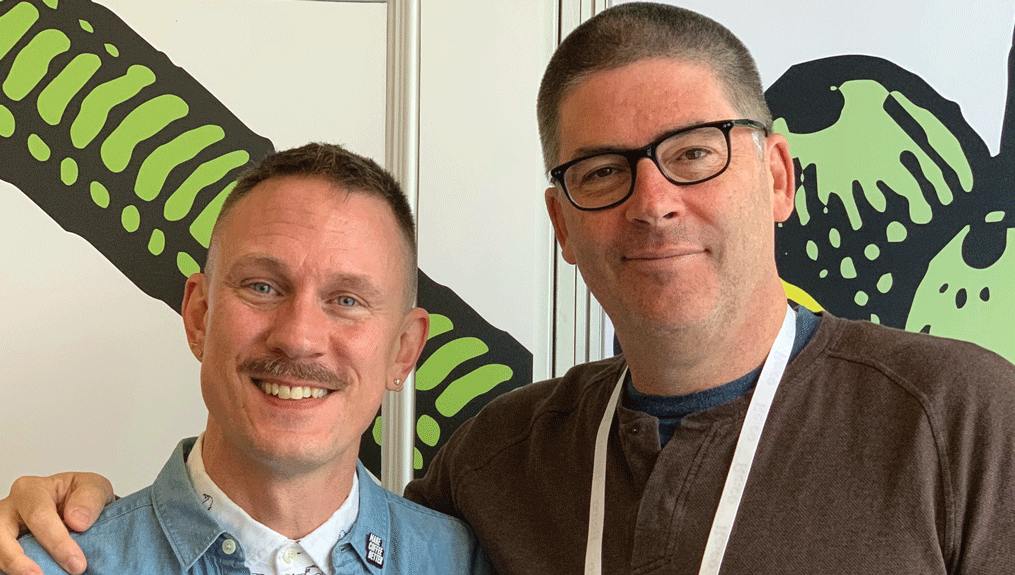
Debating Coffee's Big Questions with Erin Meister and Joe Marrocco
A conversation with the hosts of a coffee-industry podcast that stages structured debates on topics ranging from consumer education to coffee varieties.
By Taylor Foster4 min read
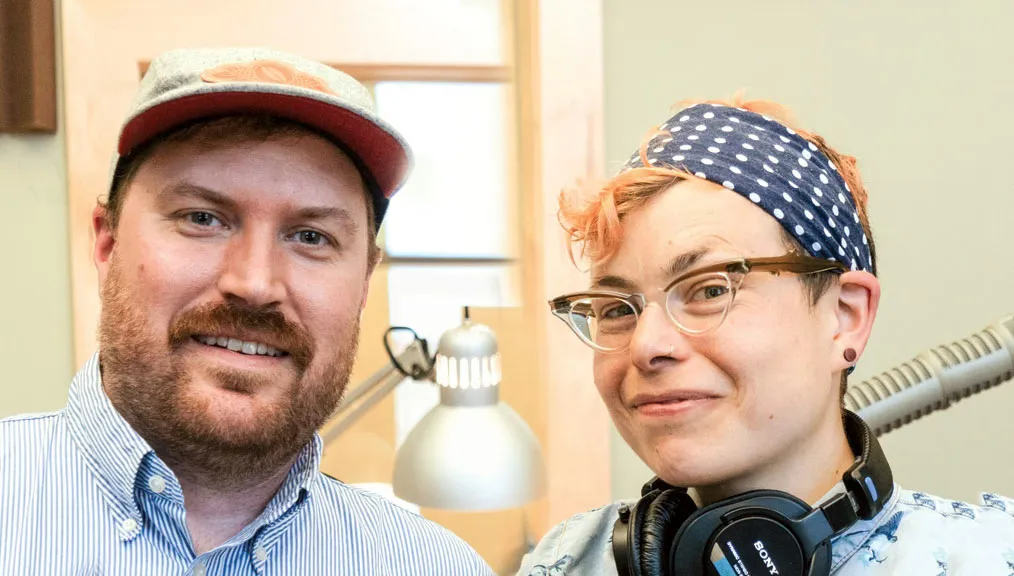
Two Voices for the Industry
It’s a rare asset for any coffee business to employ someone whose charm extends beyond the company to the wider coffee world. Cafe Imports counts two such people: Erin Meister and Joe Marrocco. While the company may have other advocates, these two are behind a podcast that digs into the industry’s pressing questions.
A Debate, With Rules
Launched in March, Opposites Extract pits a guest against either Meister or Marrocco in a formal debate—complete with rules and timers. A coin toss assigns each side’s stance. In one installment, Marrocco found himself defending the position that we should stop breeding new coffee tree varieties and let nature take its course; he argued it effectively. Then, in the discussion that followed the debate, he made an even more persuasive case for the opposite view.
That’s the show’s strength: it reveals how thoughtful coffee professionals reason about their field. Guests have included a formidable lineup of industry figures, and topics have ranged from consumer education and latte art to traceability and service—essentially anything that matters to people in the trade.
Since listeners come to know Meister and Marrocco through their voices, here’s how Opposites Extract came to be.
This interview has been edited for clarity and length.
What led to the podcast?
Meister: I was inspired by arguments I’d seen among coffee people, especially on social media. Our passion is why we’re in this industry, and we care deeply about our work, the belief systems we’ve built, and the culture we’ve created around specialty coffee. But I think we get stuck in our own opinions. We talk into an echo chamber, listening to ourselves or to those who agree with us. I loved the idea of putting yourself out there. A forced debate is one of the most empathetic exercises there is. That’s where the format came from. And Joe is one of the most persuasive arguers around. I saw us as strong foils for each other.
Marrocco: Many of the people doing the best work in coffee don’t have time to debate on social media. Others avoid arguments, so they don’t join those discussions, even though they’re just as passionate. We wanted a space where passion can surface, where expertise can be heard at length and actually tested, and where we can add a little compassion to the passion. It’s a safe place where I can say something completely ridiculous and untrue—something people out there might be thinking—without anyone coming at me and saying, “Well, you said this one time.”
Is the podcast aimed at newcomers or at veterans?
Meister: That’s the great thing about podcasts: you can see a topic and decide it’s not for you. We aim for a mix of topics that won’t appeal to everyone all the time but will appeal to many at different points, depending on where they are in their journey.
Marrocco: We try to break it up within each episode. We start with a generous opening—talking about the topic from 30,000 feet so everyone understands where we’re coming from—and then we go deep pretty quickly.
What role do these debates play in the industry?
Meister: I think we recognize as a field that those struggles are what make us better. They allow us to tackle new ideas and new conflicts. But I do think that on social media, it can be very fraught.
Marrocco: A lot of debate on social media is two sides pitted against each other, with the goal of winning. Our goal is to have two sides that aren’t pitted against each other. They’re on the same team, pursuing the same goal: a clearer understanding of the topic. The coffee world as we know it is growing very fast, and in the next twenty years we’re going to face some major obstacles. By practicing how to reach agreements and conclusions and debate in a concise, friendly, compassionate, empathetic manner, I think we can set the tone for how we handle many of those major issues.
You often leave the debates unresolved. But are we at a point where we need to break down some of the myths and assumptions about coffee and set some hard answers?
Meister: I can’t wait to hear your answer to this.
Marrocco: I think there are some areas that are black and white in coffee. And those black-and-white areas are exposed. What we’re doing is bringing light to the subject, so the contrast of the subject can be more visible to people who are listening. We don’t have to be an authority on a subject, but through the exercise of debate we can illuminate that topic. Then I don’t have to sign off by saying, “And so, we have learned . . .” If you draw your own conclusion, you own that conclusion and you act on that conclusion.
Meister: One of the greatest myths in coffee is that there are any truths in coffee.