Inside Ipsento 606: How a Chicago Café Turns Limited Space into a Multi-Use Hub
Tim Taylor's second Chicago café, Ipsento 606, trades bottlenecks for breathing room while packing in a slow bar, a dual Slayer espresso setup, beer taps, and a basement utility system.
By Robin Ross3 min read
When Tim Taylor set out to open his second Ipsento café in Chicago, he had one main requirement: more space. The original shop, which he bought from a church that had inherited it from a parishioner, was shaped—at least in terms of flow—by its bottlenecks. Staff crowded into a tight bar area. Customers queued at the milk-and-sugar station, then jammed up again on their way out the door. Taylor and his team streamlined where they could, but with a small footprint and a large following, there was only so much they could fix.
That constraint was front of mind when he searched for a second location.
“I made sure we had a location with enough space to do what I wanted to do,” he says.
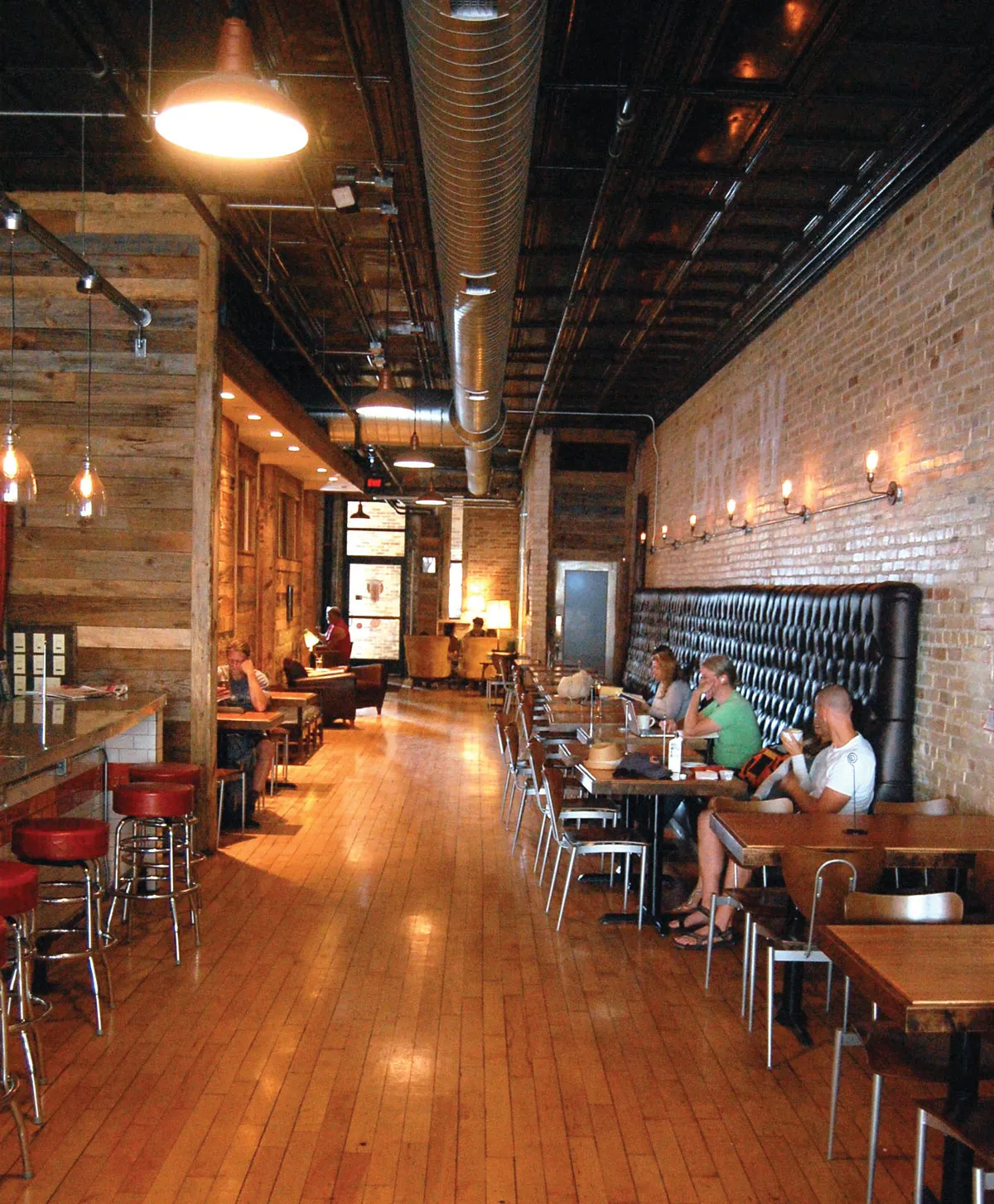
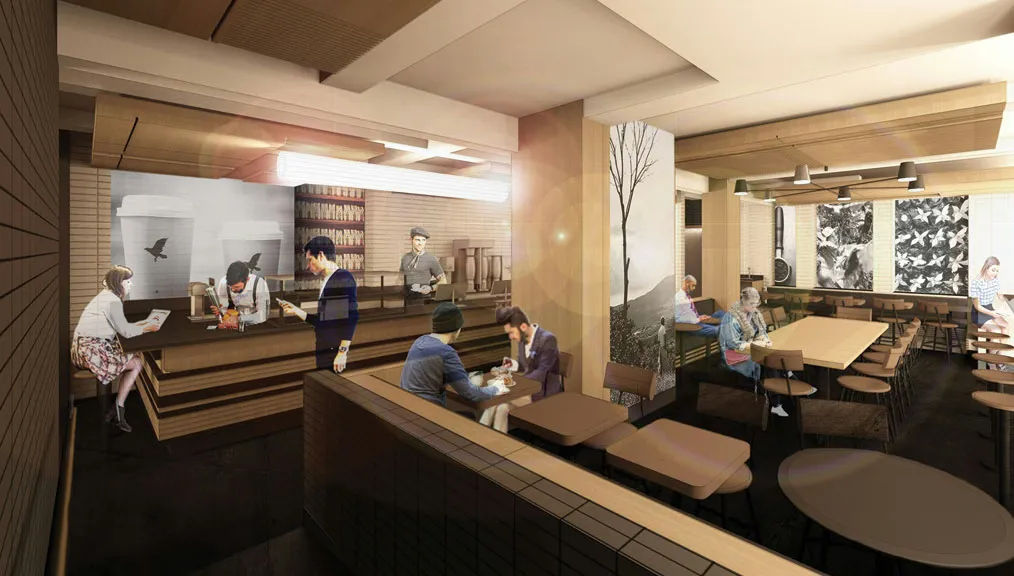
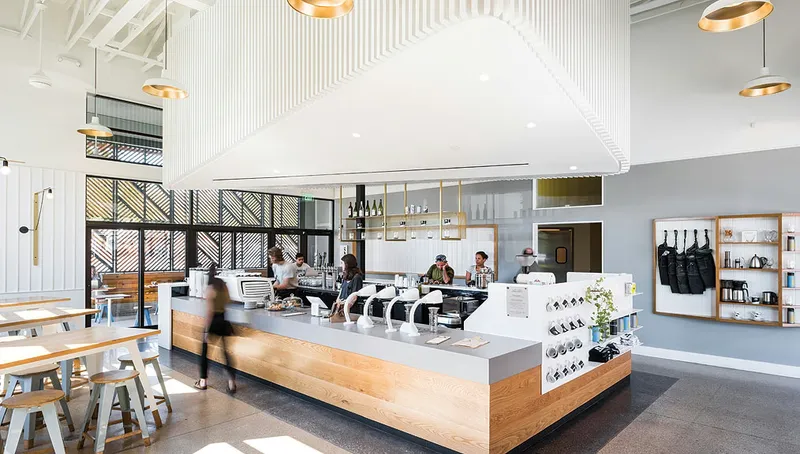
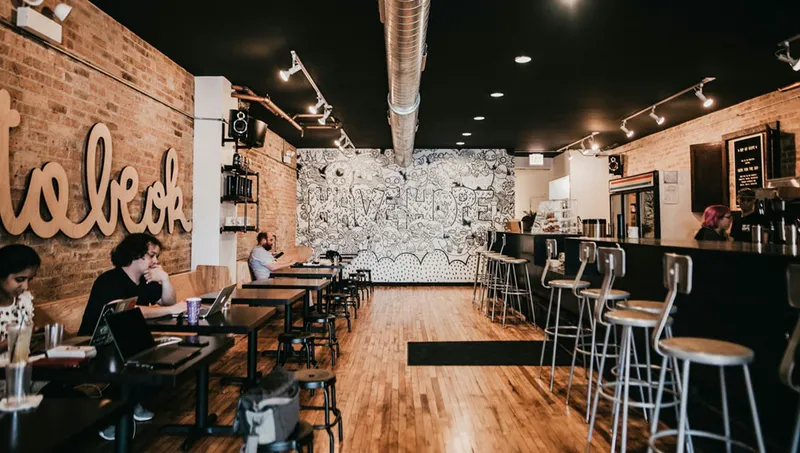
Ipsento 606—named for a nearby park built on a repurposed elevated train track—has room to spare, yet it doesn’t feel cavernous or underused. Taylor has a clear vision for every part of the space, and he puts it to work in multiple ways.
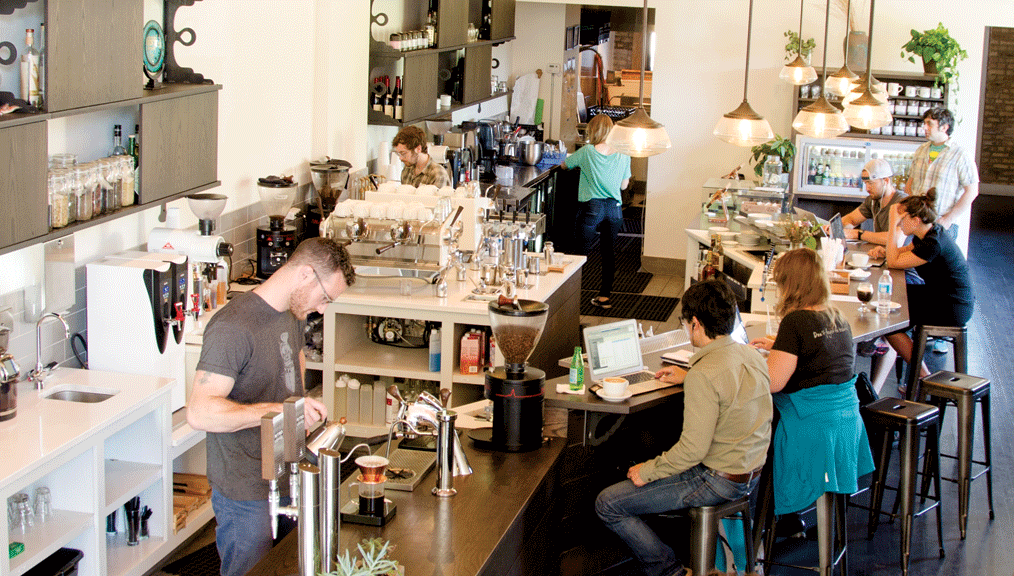
Guests walking in first encounter a pour-over bar featuring a single-group Modbar that offers a limited menu of single-origin espresso drinks. “The slow-bar approach is not sustainable by itself, but it’s something I still want to have because there is a growing interest,” Taylor says. Most customers won’t order from this station; they’ll continue to the far end of the bar for drip coffee and a broader selection of espresso and milk drinks. Even so, Taylor says, “We want them to see the craft.”
That arrangement is unusual enough on its own, but at first glance the front section of the bar looks even stranger—seemingly unused. With espresso machines and batch brewers on the back counter, what purpose does the front counter serve besides seating? It’s actually a pair of cocktail bars with a row of ten beer taps between them, extending service into the evening.
There’s room behind the bar, room for customers arriving, leaving, and lingering. Most surprising of all is the space below—far below—in the basement, where lines connect beer, milk, and even garbage cans to the bar above. Having learned to make do in tight quarters, Taylor knows how to use space when he finally has it.
A Breakdown of Ipsento’s Coffee Gear and Bar Workflows
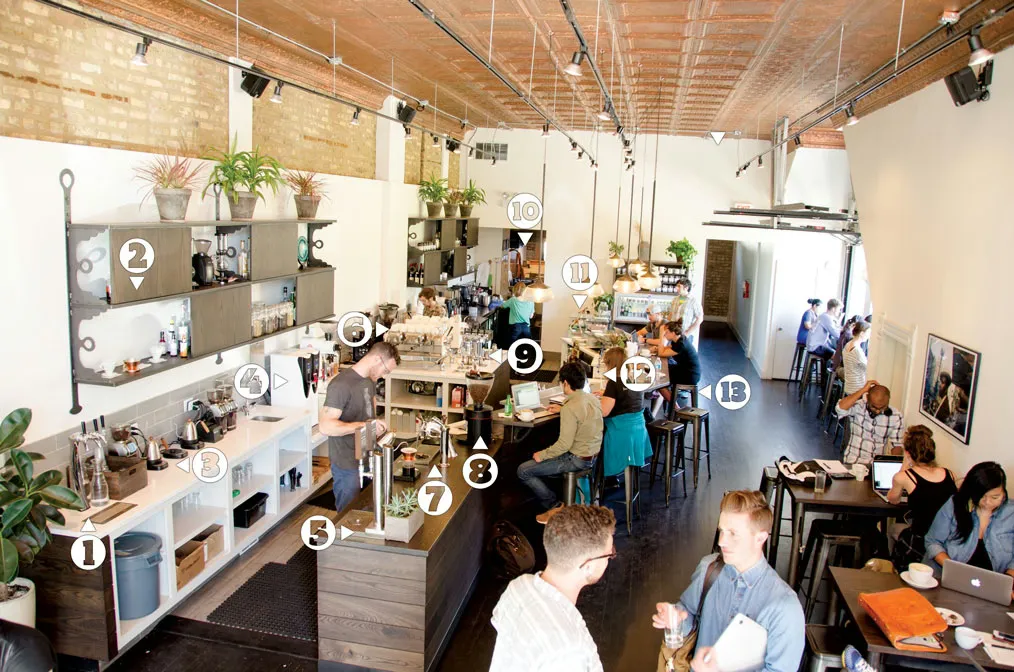
1) Three Taps: The self-serve water station offers cold still, room-temperature still, and sparkling water. All water consumed at Ipsento passes through an RO system.
2) Sliding Identity: These cabinet doors slide open to reveal cocktail equipment when bar service shifts to adult beverages in the afternoon.
3) Three For Slow: Baratza Forte grinders support the slow bar’s rotating pour-over menu. The kettles are Diguo variable-temperature goosenecks.
4) Tea Time: Two Bunn H5X hot water towers supply the tea program and fill the pour-over kettles.
5) Dual Nitro: A rotating single-origin and the Cascade blend run on nitro lines connected to kegs in the basement.
6) Espresso Peninsula: Two two-group Slayer machines stand back-to-back at the center of the bar. Each is paired with a Mahlkönig Peak grinder for Ipsento’s Cascade blend, and one also has a decaf grinder. Both stations include warm honey dispensers plus vanilla and cardamom-rose syrup.
7) Single Group: The pour-over bar includes a Modbar grouphead and a Peak grinder loaded with a single-origin coffee. Customers headed to order pass this station first.
8) Batch Brew: An EK 43 grinds beans for the Fetco 2152-XTS double brewer. Another Bunn water tower serves americanos.
9) Milk Taps: Each Slayer has four milk taps dispensing whole, skim, coconut, and a whole-coconut blend (for their Ipsento latte). “The milk on tap has in some ways been awesome, and in some ways a lot of work,” says owner Tim Taylor.
10) Donut Kitchen: In the small kitchen, mini-donuts are made from flour milled in the basement.
11) Farside POS: The point-of-sale sits at the far end of the bar alongside a pastry display case.
12) Beer: Ten taps fill the center of the bar, with lines running to the basement to join the cold-brew and milk in a fridge.
13) Cocktail Wings: The two wings of the central bar are for cocktail service starting at 4 p.m.