From Corporate Ambitions to Coffee Rows: A Daughter's Unexpected Path
A father's removal from the United States pushed his daughter into a role she had never planned on: running his Big Island coffee operation. Six years on, she has reshaped it and speaks openly about the immigrant workers who sustain American agriculture.
By Hayden Hall6 min read
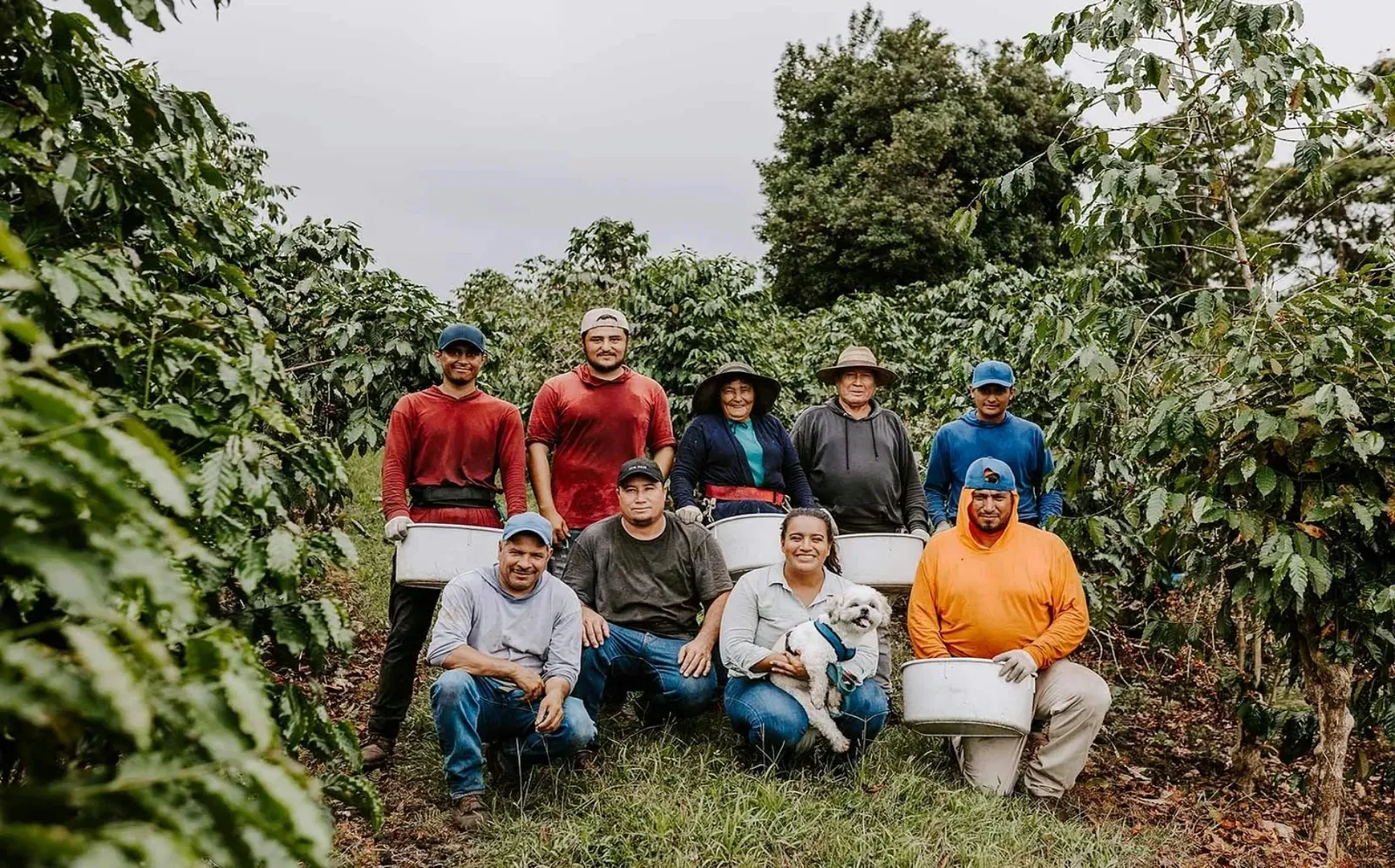
Victoria Magaña Ledesma had mapped out a different life. While studying Business Administration and Sociology at the University of Hawaii, she set her sights on the management training program at the local Four Seasons Hotel and a future in hospitality. “I was going to climb the American corporate ladder,” she recalls.
Her father, a coffee farmer in Hawaii, hoped she would join him in the industry, but “it didn’t excite me,” Magaña Ledesma says. She told him so—then her father's conflict with the US immigration system intervened, and a single decision reshaped both of their lives.
A Removal the Court Called Inhumane
In 2017, Andres Magaña Ortiz was deported after three decades in the United States. During that time he had earned respect as a coffee farmer on Hawaii’s Big Island and become a well-liked member of his community. He had been contesting removal since 2011, when the Obama administration began deportation proceedings against him; under the harsher Trump immigration policy, his appeal was ultimately rejected.
His case drew wide attention. Judge Stephen Reinhardt of the 9th US Circuit Court of Appeals, who oversaw the matter, described the order as “inhumane” and “contrary to the values of the country and its legal system,” while noting he lacked authority to block it. “The government’s decision to remove Magaña Ortiz diminishes not only our country but our courts, which are supposedly dedicated to the pursuit of justice,” Judge Reinhardt wrote. “It is difficult to see how the government’s decision to expel him is consistent with the President’s promise of an immigration system with ‘a lot of heart’.” Magaña Ortiz was deported shortly afterward.
Beyond his standing in the community, he was a father and the family’s sole earner. With two younger siblings and a stepmother unable to work, Magaña Ledesma—then a college junior—stepped in to run the operation together with her father’s farm crew.
“It’s not as neat as that; I mean, for the first season, the workers themselves were doing all the work—I would just come on Fridays and sign the checks,” she says of those early days. “I had to multitask. I didn’t want to stop my college career. I would go to school Monday through Thursday, come back Friday through Sunday, and work out here. I would make sure the mill was running. I was depositing checks. You know, it was just a whole blur.”
A Respected Name in Hawaiian Coffee
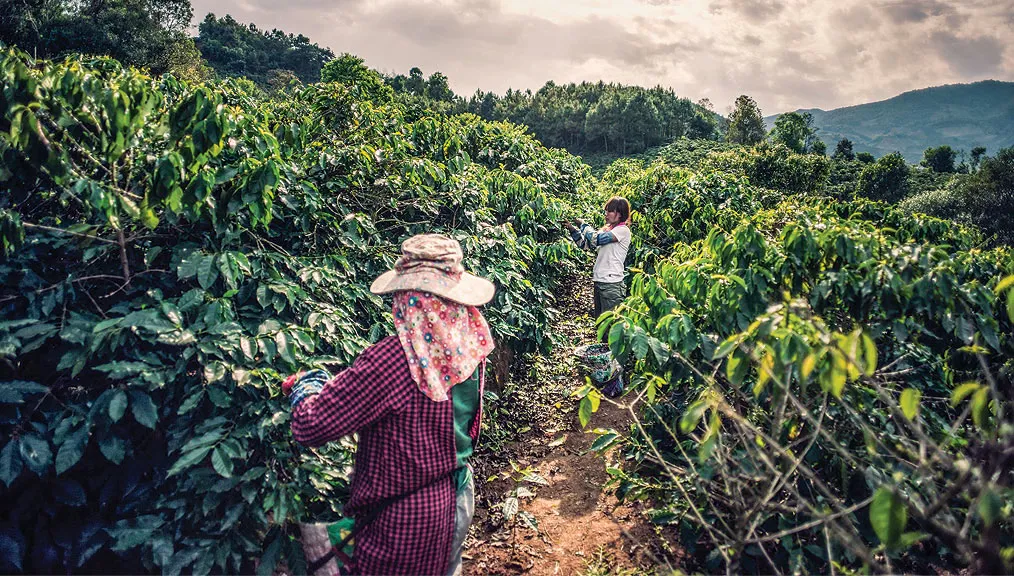
Magaña Ortiz had left Mexico at 15 and been smuggled across the border to join his mother. He found work in California’s citrus fields before eventually reaching Hawaii. “I grew up here on the Big Island; my entire life, I grew up in the coffee fields,” Magaña Ledesma says. “My parents are Mexican immigrants. They migrated from Mexico to California and then to Hawaii in the 90s because it paid better to pick coffee. My dad thought it was a better move.”
He began as a coffee picker and rose to farm manager, a job he held for more than 15 years. When the farm was sold and the new owners demanded documentation he did not have, he lost that position. He went on to buy a farm and a run-down mill, renovated the mill, and began processing harvests for other small growers.
“It wasn’t just him. His crew followed him when he was let go,” Magaña Ledesma explains. “It was a couple of guys who were loyal to him, and they really followed him through a tough time because, you know, money wasn’t exactly coming in steadily.”
In time, Magaña Ortiz built a company that managed other small farms and accepted coffee cherries for processing. “Because that was ultimately the dream, right? Not to work for anybody else but to have something sustainable for himself,” says Magaña Ledesma. “And it’s hard to get it done—Hawaii was more lenient than the mainland, as we call it, but it is still difficult for undocumented immigrants to find jobs and find fair wages.”
The business thrived, and Magaña Ortiz became a familiar and respected figure in the Hawaii coffee industry, at one point overseeing 15 other farms and gaining recognition for his work against the coffee berry borer beetle. Then a random inspection stop led the US government to launch removal proceedings against him. The case stretched on for years through temporary stays and appeals until he was ordered to leave in 2017.
The deportation order arrived 30 days before his daughter’s 21st birthday. “There are still people who ask me, ‘When is he coming back? We needed him for a farm,’ and that’s just the type of impact that he had on people,” Magaña Ledesma says. “He loves coffee. He was obsessed with it, and he loved doing his craft at the mill and at the farm.”
Taking the Reins and Building Something New
After college, Magaña Ledesma formally assumed control of her father’s business. She kept the farm management and milling side going while adding her own venture, Misma Lani Farms. The name blends Spanish and Hawaiian to mean “same sky,” which she has described as a way of marking the bond she shares with her father despite the distance between them.
“I just kind of settled into figuring out how the company ran, and his crew was amazing,” she says of the first months running things full-time. “They knew how to maintain the farms, which was the main thing. I had helped my dad with QuickBooks and all those things, but I didn’t really know how to process coffee.”
She scaled back the management operation and turned toward retail, where margins are wider than in wholesaling. “That was essentially what my dad was doing all the time; he was just wholesaling his green or his parchment, and that requires a lot of volume in order to stay afloat and a lot more work.”
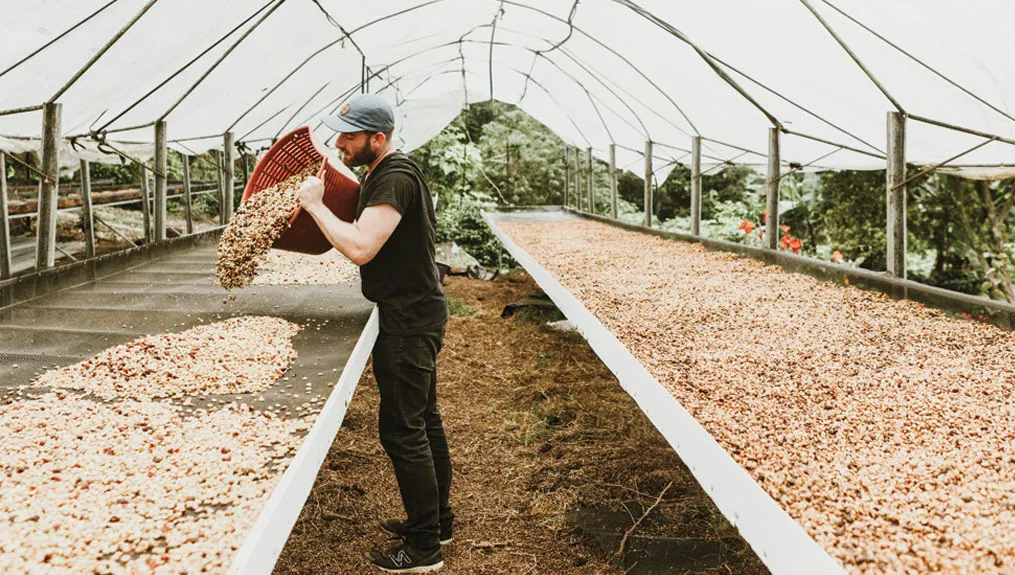
She also began experimenting with processing, fermentation, and roasting coffee from Misma Lani’s farms. The operation does grow specialty-grade coffee, she explains, but “where I consider us specialty is in our processing. I’ve only done it for about three years, but now I’m getting better at it with honey processing, learning about the different techniques, and I’m hoping to get into fermentation. Right now, we offer the honey processed, and then we do a natural process.”
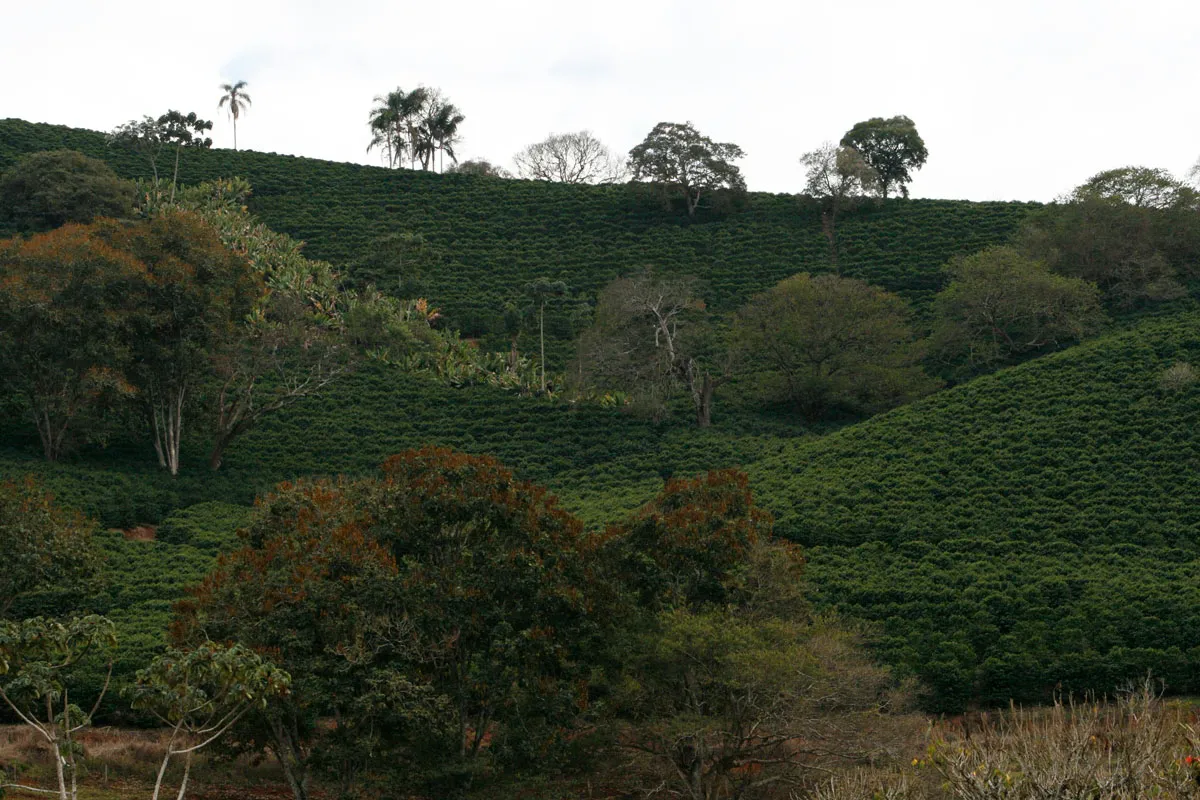
Most Hawaiian coffee is washed, which Magaña Ledesma attributes to the humidity and rainfall. “You have to be very careful with how you process because of mold.” Unlike most farms on the islands, Misma Lani is also beginning to grow gesha and bourbon varieties. “They’re really picking up in popularity but so are the specialty processes because coffee is kind of going in that direction,” she says.
Six Years On
Six years have passed since her father’s deportation. Does the business now feel like hers, or is the arrangement temporary, pending his return?
“That was a really difficult part for me because I went through a space where I wasn’t really sure what I was doing,” she says. “But I think when my dad does come back, he will take the part that was his back, and I will take Misma Lani in a different direction.”
Looking back on her family’s experience has convinced Magaña Ledesma of how important it is to tell their story. “Now that this whole thing has happened, it’s really made me realize how important it is to advocate for my community,” she says. “It’s painful to grow up with that stigma around you and to always kind of be hiding your parents or your grandparents or whatever it is, and I didn’t want anything to do with it.”
She is no longer hiding. “This entire experience made me realize that I want to be a voice, and I want Misma Lani to advocate for this community of undocumented immigrants. Undocumented immigrants are so active within the US agricultural industry, and we rarely see people taking their products to the end. My dad was doing the farming and the wet milling, and then he was wholesaling because he didn’t have the documentation to take his business to the next level. So for me to be able to take Misma Lani forward—I do call it my baby, I believe that that part is mine. And I do want to create something around it that really advocates for my community of Latino immigrants.”