Less Choice, More Drinkers: Rethinking the Tea Menu
A tea seller argues that narrow selections and restrained detail help newcomers feel at home, while the industry still lacks the mass education that coffee once received.
By Taylor Hayes4 min read
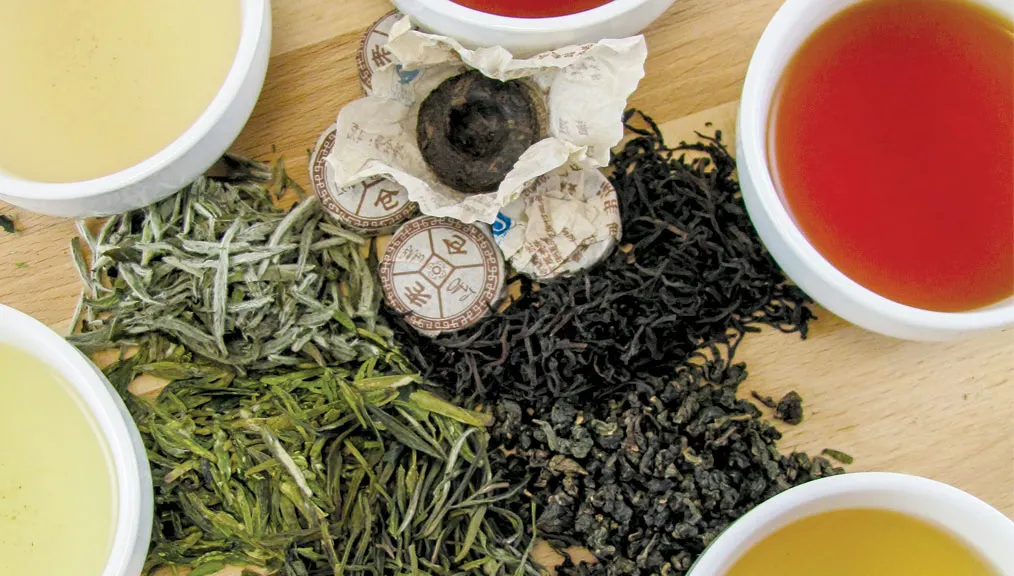
Tea's appeal lies partly in how much ground it covers. Within pu-erh alone—the category I hold dearest—flavors and experiences seem to go on without end, and anyone setting out to study it faces an ocean of material. For those of us who have turned tea from a passion into a livelihood, the instinct is to give customers every possible chance to meet something new and thrilling. Walk into a teahouse, physically or online, and you are met with dozens upon dozens of lovely teas. Surely the right one is in there somewhere.
It isn't.
Hand an average visitor a menu running several pages, whether in a shop or on a tea retailer's website, and the reaction is overwhelm: a blur of unfamiliar names, lengthy tasting notes, and details meant to convey transparency that instead produce confusion.
The loose-leaf market in the United States is a narrow niche. Only a few thousand consumers have enough knowledge to request a pu-erh or a high-mountain oolong—much less a specific one. Not many people can walk into a shop, see a list of a hundred or more teas, and come away unfazed. And that slice of the tea-drinking public is not expanding as quickly as the competition for its business.
This is why I favor keeping the number of teas small and limiting how much we say about each one.
At my company, Teabook, we offer only twelve teas, yet most of our customers do not realize the range is that wide. Many assume we carry just white, green, oolong, and red—and that suits them fine. They are happy with what they drink, and I suspect part of that pleasure comes from how uncomplicated the experience is.
Tea businesses ought to concentrate on raising up modern tea drinkers. I picture these customers as people who want more than what the supermarket offers but have no appetite for fine detail—and there is enormous room to bring far more of them into the fold. Smaller menus mean fewer friction points, those small obstacles that make a purchase decision harder, and I believe that would grow the specialty tea industry, which is what most of us are after.
I once made the mistake of thinking I should give customers as much as possible. I assumed they wanted a wide array of teas and all the information they could get to make informed choices about what they drank. That assumption was wrong.
Why do most people start drinking loose-leaf tea? For health reasons. Terroir, history, and the other remarkable particulars that make tea so treasured by those of us with a stake in specialty—all of that reads as alien to a new drinker.
Most people need only a little information, because their decisions are made in an instant (largely on price), and anything extra has to connect to daily life. At Teabook, the most detail we give is the city, province, and country each tea comes from, and we offer that only because customers can pass it along when they share a pot with friends. How it was grown, how it was processed, who the farmer is? Too much. What we have learned is that customers care about the genre of tea (oolong, green, and so on) and whether it is pesticide free—but the tea has to be affordable before they show further interest.
My view runs against the direction of many other food industries. Restaurant menus name the rancher who raised the cattle, and in this month's Whole Bean, Rachel Northrop makes the case for making deep, deep information available to coffee drinkers (see page thirty). That is admirable, and I want tea to get there—but it hasn't yet. Tea never had a Starbucks, no industry trailblazer planted thousands of teahouses on corners across the US and taught people about tea. That base layer of understanding, that foundation of education, was never built in America. We went from crush, tear, curl straight to specialty tea, and most Americans were left behind.
If you are American, you think of tea as something in a teabag from the grocery store, brewed into sun tea. That is tea. You do not know there is a 3,500-year history, that plantations cover the world, that soil matters, that it can be more complicated than wine. For that person, a wonderful oolong and a beautiful white tea could be eye-opening and inspiring. Telling them it was a bai hao and a bai mu dan could break the spell.
Make tea simple, easy, and welcoming. Turn those consumers into committed clients, and over time you can educate them slowly. I believe the goal should be converting 10 to 20 percent of them into advanced tea drinkers. If we can do that on a large scale, our industry will thrive.
Jeffrey McIntosh is the owner of Teabook.