Getting Your Café Ready for the Chilly Months
A guide to preparing your coffee shop for the holiday season with gift packages, special events, seasonal pastries, and inventive drinks.
By Elliot Bailey8 min read

Planning for the holiday season while the leaves are still green may feel premature. Developing warm winter beverages when the pool is still inviting, or ordering spiced pear cakes while cherries are still in season, can seem like jumping the gun. Yet while it’s perfectly fine to postpone gift shopping, failing to prepare for the busy cold months before the winter rush hits is a missed opportunity. As the chaos of summer schedules subsides—managers back from vacations and student staff settled into a new semester—it’s an ideal moment to gather your team and get ready for the holidays. Here are some ideas to get you started.
Gift Packages
Coffee, tea, and the gear to brew them make excellent gifts, but assembling a proper brewing setup requires more than a casual interest in coffee. (For an empathy exercise, imagine putting together a useful carpentry, painting, photography, or fishing kit.) Rather than figuring out all the bits of equipment to buy and which filters go with what, a gift box means your customer has it literally gift-wrapped for them.
Gift packages can be as complete as Verve Coffee Roaster’s Aeropress kit, which includes a scale, Hario grinder, Bonavita half-liter kettle, metal mug, Able brewing disk, a bag of beans, and, of course, the Aeropress. That’s everything a traveler needs for a long weekend. A similar tea setup could include a kettle, a teaspoon, tea, and a cup with a filter and lid-cum-saucer.
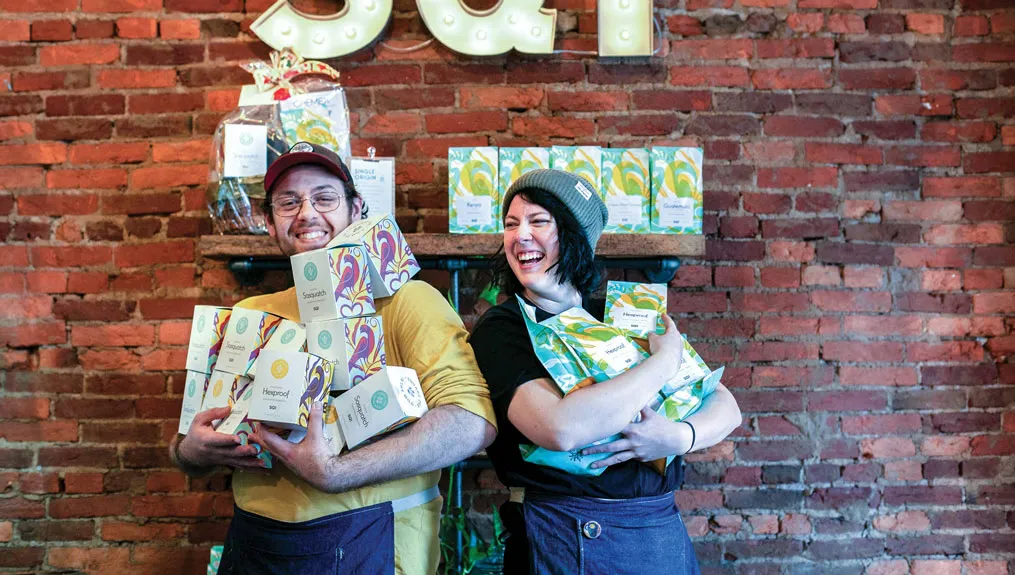
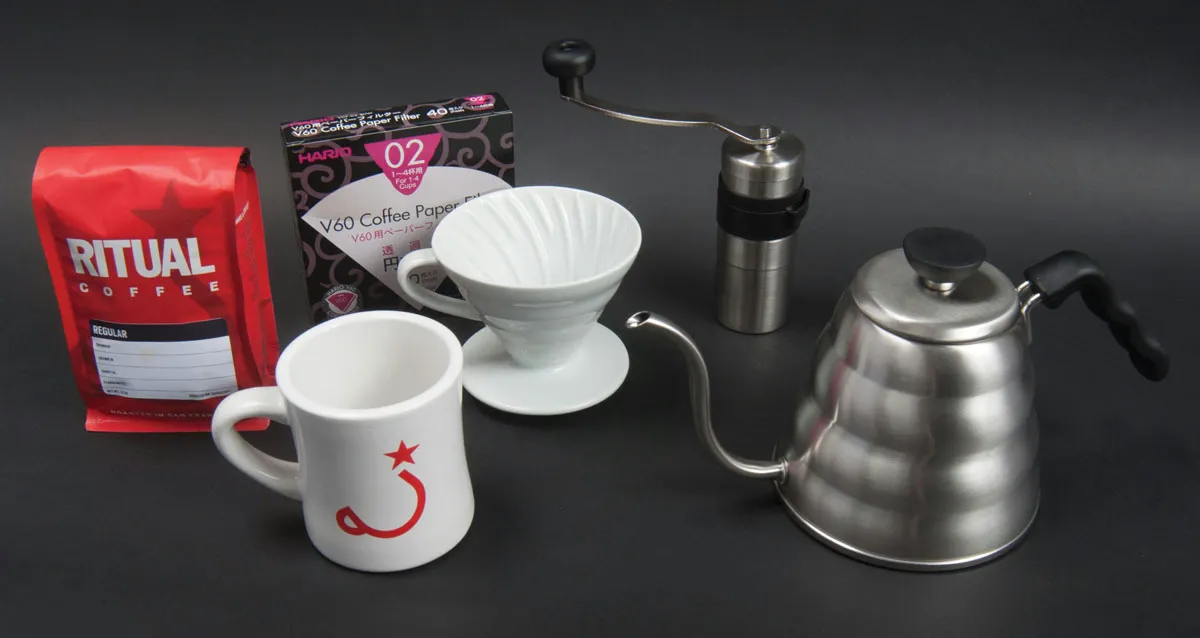
Ritual Coffee Roasters built a line of gift boxes, starting with a mug and bag of beans, then adding a V60 and filters, then a grinder, then a gooseneck kettle. The boxes range from $25 to $130, covering most price points in between. In London, Square Mile Coffee Roasters nestles its V60 set—including a grinder, mug, and filters—into custom-cut foam inside a beautiful, fully branded box.
If you’re not inclined to commit to that level and variety of merchandise, simply place a bag of beans or a canister of tea with your shop’s mug into a gift bag or box with crinkle packaging paper. JP’s Coffee in Holland, Michigan, has had great success with simple offerings like this. They sell a variety of gifts across price points. A typical gift basket might include a JP’s mug, a pound of coffee, a gift card, and coffee caramels. That alone gives customers a no-hassle gift for a holiday party.
Small Gifts
The holidays are a time for gifts—so why not give one to your customer? Serving a demitasse of coffee or tea before customers order their main drink can be a balm on a hard day of shopping. If you feature a holiday blend, serve that. It can be a gift that gives back when they purchase a bag or tin.
Special Events
When the holidays arrive, there’s always a flurry of parties, get-togethers, visiting family, and group excursions. Family visits increase during these months, and finding things for out-of-towners to do (or sending them off to) can be a priority. Offering small events like cuppings at your café can be a great way to bring in new customers and move a bit of merchandise.
In San Diego, Bird Rock Coffee Roasters expands its weekly cupping class to twice a week, with one session on Saturday. The classes seat only four preregistered people—the perfect size for those trying to escape a packed house. Bird Rock often releases special coffees, like Geshas, over the winter, so those rare coffees are included in the tastings to make them a bit more special.
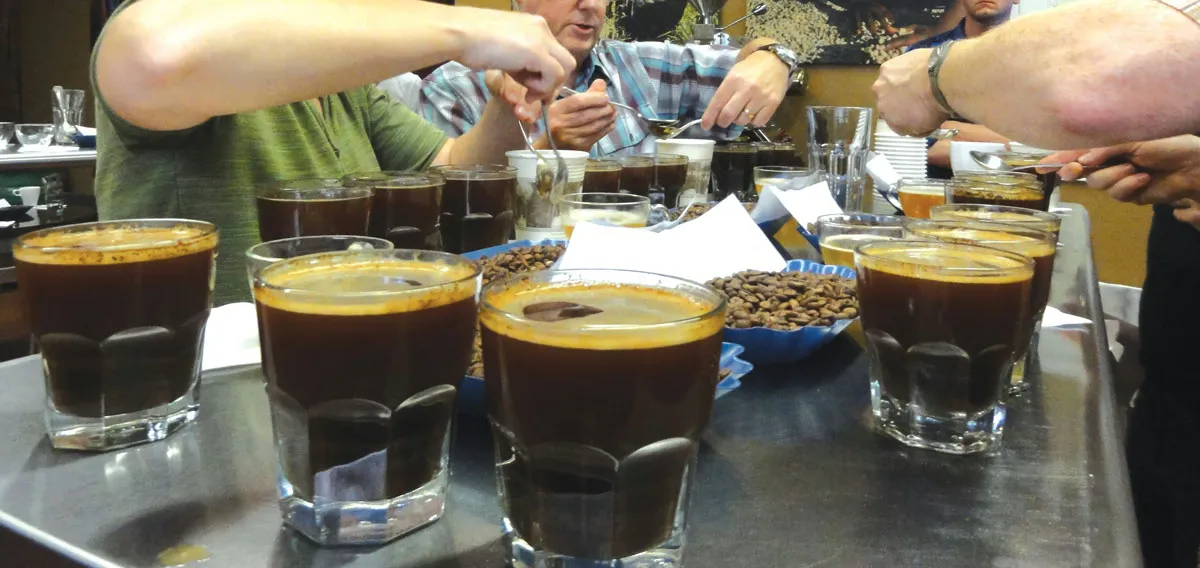
Holiday parties require a lot of coffee, and for hosts who want to put on a good brew, brushing up on their coffee-making skills couldn’t hurt. The folks at Ritual Coffee Roasters oblige by offering several brewing classes over the season. The eight- to ten-student classes are simple affairs, held in-store at off-peak hours and led by a Ritual coffee educator. Ritual’s owner, Eileen Hassi Rinaldi, says the classes cover a range of brewing techniques so customers will be prepared for a small gathering or a large party.
Ritual charges $20 for the class, but that’s mainly to ensure attendance. Customers get a bag of beans. As a bonus for Ritual, many students buy brewing merchandise to use with their newfound knowledge.
Wintry Pastries
Festivities should extend to the pastry case, too. Pies, scones, muffins, and cakes are malleable to the seasons, and in-season baked goods made with local ingredients are difficult to top. At Brooklyn-based Café Grumpy Bakery, pastry chef Kate Brown loves winter baking for a variety of reasons, not least of which are the gallons of East Coast maple syrup that arrive at the bakery every February.
Brown says that local winter fruits like apples and pears paired with hearty spices stand up better to booze than summer flavors. Café Grumpy’s Guinness gingerbread was a hit last winter. Brown and the other bakers make jams from seasonal fruits to fill tarts and bake into tea cakes and bundts. During Christmastime, they bake traditional Italian panettone—a sweet bread with dried fruits—into muffin-sized portions for pairing with coffee. They even make Thanksgiving pies for dozens of customers across the city.
Brown says that local winter fruits like apples and pears paired with hearty spices stand up better to booze than summer flavors. Café Grumpy’s Guinness gingerbread was a hit last winter.
Brown says by using local seasonal ingredients, cafés get more flavor out of their baked goods and can actually save money. “It’s fresher. It hasn’t been sitting in storage or rolling around on a truck for days, getting shipped across the country,” she says. “For the same reasons, it’s actually cheaper. The food storage and shipping methods that let you eat, say, strawberries in January add a lot of cost to the fruit.” If you’re lucky enough to have room to bake, find out what is in season which months and plan recipes that highlight those flavors. If you purchase goods from a bakery, inquire ahead of time about their holiday offerings. Know when the menu will change so you can get customers excited about fall and winter’s pastries, and plan drinks that will pair well with heartier, spicier baked goods.
Seasonal Drinks
Every August, café owner Jimmy Curran sits down with the lead baristas at Seattle’s Bustle Caffe—a scratch bakery and craft coffee bar—and brainstorms about flavor. The team imagines Seattle’s sunless days and perpetual drizzle returning, and tries to conjure drinks that will complement the transition. They focus on what will be in season, consider coffee and non-coffee drinkers alike, consult their in-house flavor specialist, and test as many combinations as needed before settling on a winter drink menu that will work from October through the holidays and into the end of the season, when they will go back to the drawing board with sunny days in mind.
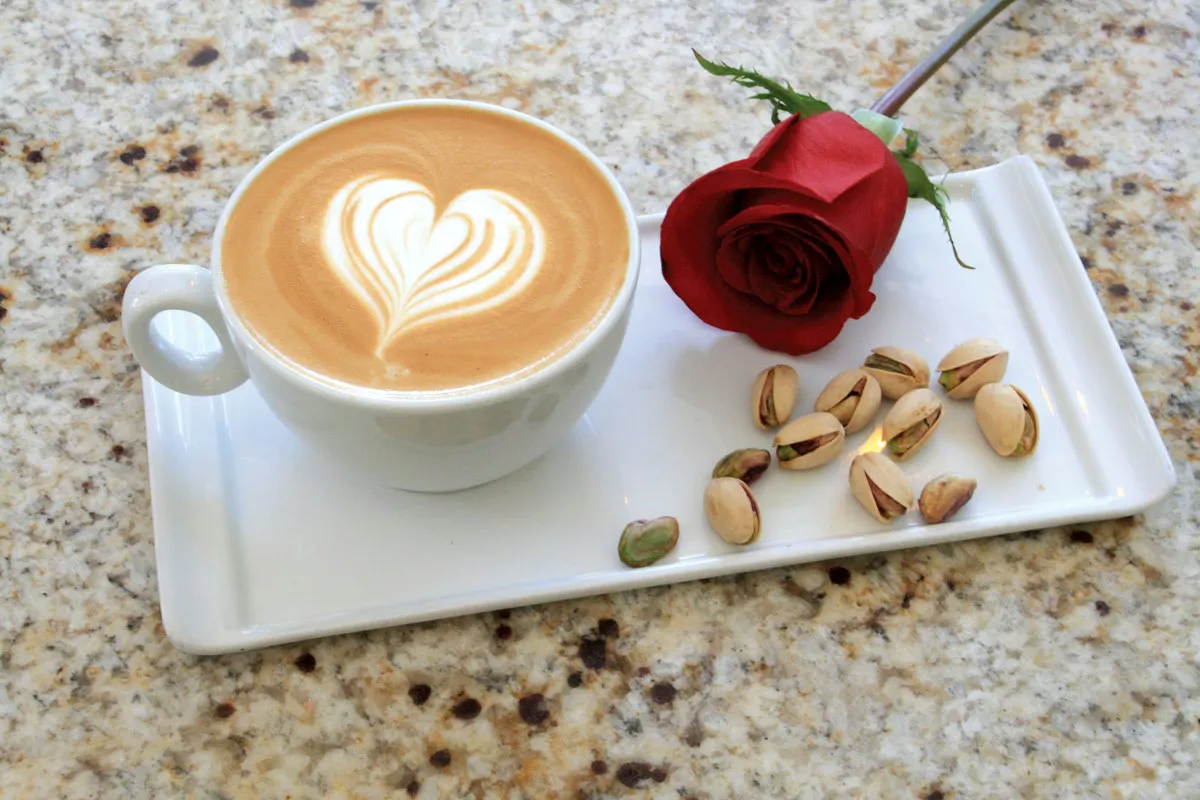
Pistachio rose latte. (Café Demitasse.)
Finding ways to satisfy customers’ tastes for festive flavors without relying on tired standbys like peppermint and pumpkin can be tricky. Creative sessions like those Curran conducts with his staff are crucial to making a holiday menu exciting, as is knowing your customer base and what has worked before. At The Wormhole in Chicago, one of last season’s winter drinks—a curry and ginger latte—was such a hit that a reincarnation, with a few simplifications, was just added to The Wormhole’s year-round, 1980s-themed menu. Formerly the Tim Curry, the Cool But Rude spins an old-school holiday drink—the gingerbread latte—into a balanced seasonal drink with fresh spices, a sensible amount of sugar, and a hint of something different (the curry). The iced Cool But Rude kills it in Chicago’s summer heat.
The Cool But Rude Syrup: 54 grams curry; 404 grams ginger; 24 grams vanilla; 2 tsp. cinnamon; 6 cups sugar; 6 cups hot water; finely chop the ginger and boil with water and sugar for twenty minutes, then add all other ingredients and let simmer for three to five minutes. Once this syrup is cooled and bottled, use one ounce with a quarter ounce of honey. Pour the espresso over the syrups, mix with a bar whisk, and pour in the steamed milk, or cold milk if finishing with ice.
According to Curran, the ideal seasonal drinks “need to be able to bring a new flavor profile to the palate without masking the flavor of the coffee itself, but rather complement it in an interesting way.” The keyword is interesting. Curry fits the bill as unexpected. Bustle’s recently compiled holiday drink menu includes an espresso with maple allspice-infused whipped cream (Dickens) and a cider drink spiced with chai (Chider), while cayenne pepper heats up an iced salted honey espresso (El Capitan). Familiar flavors like pumpkin and caramel get spiked with bourbon to surprise the palate. At Café Demitasse in Los Angeles’ Little Tokyo neighborhood, owner Bobby Roshan drew from his heritage to create a Pistachio-Rose latte that is rich and floral. “We use a pistachio paste, a splash of rose water and some honey to make a thick paste that we latte-fy,” says Roshan. “My family is from Iran, so pistachios are huge in our diet, as is rose water.”
Pistachio-Rose Latte: 1 oz. pistachio paste; 1.5 oz. honey syrup; .25 oz. rose water; use one ounce of syrup for two shots of espresso, craft as a latte.
More cafés are testing their customers’ palates with signature drinks that surprise as well as delight. Nut flavors are great in winter, but opting for pistachio instead of almond or hazelnut gives you an uncommon specialty. Instead of cinnamon, cafés are trying cardamom. A hot chocolate becomes a hazelnut hot chocolate with the addition of Nutella. Cayenne, black pepper, and curry are warming spices that play well with sugar and milk, but they are more commonly found in savory dishes. The culinary approach to coffee makes such ingredients not just accepted but celebrated. Experimentation pays off.
Syrup bases are easy enough to make (see recipe), though ingredients like citrus zest, freshly ground spices, and seasonal whipped cream should be prepared on the spot. It’s important that whatever the recipe, it’s doable. “We loved the Tim Curry but needed something that was easier to replicate,” says Stevie Baka at the Wormhole. “Often after a season we realize all the things we could change about drinks to make them easier on the bar.” Make sure drinks aren’t too labor intensive, and baristas can still keep up with demand for your new concoctions.