Rethinking the Tip Jar: Is It Time for a Fixed Wage in Coffee Service?
Many baristas depend on customer tips to make ends meet—but should earning a living hinge on gratuity?
By Riley Carter4 min read
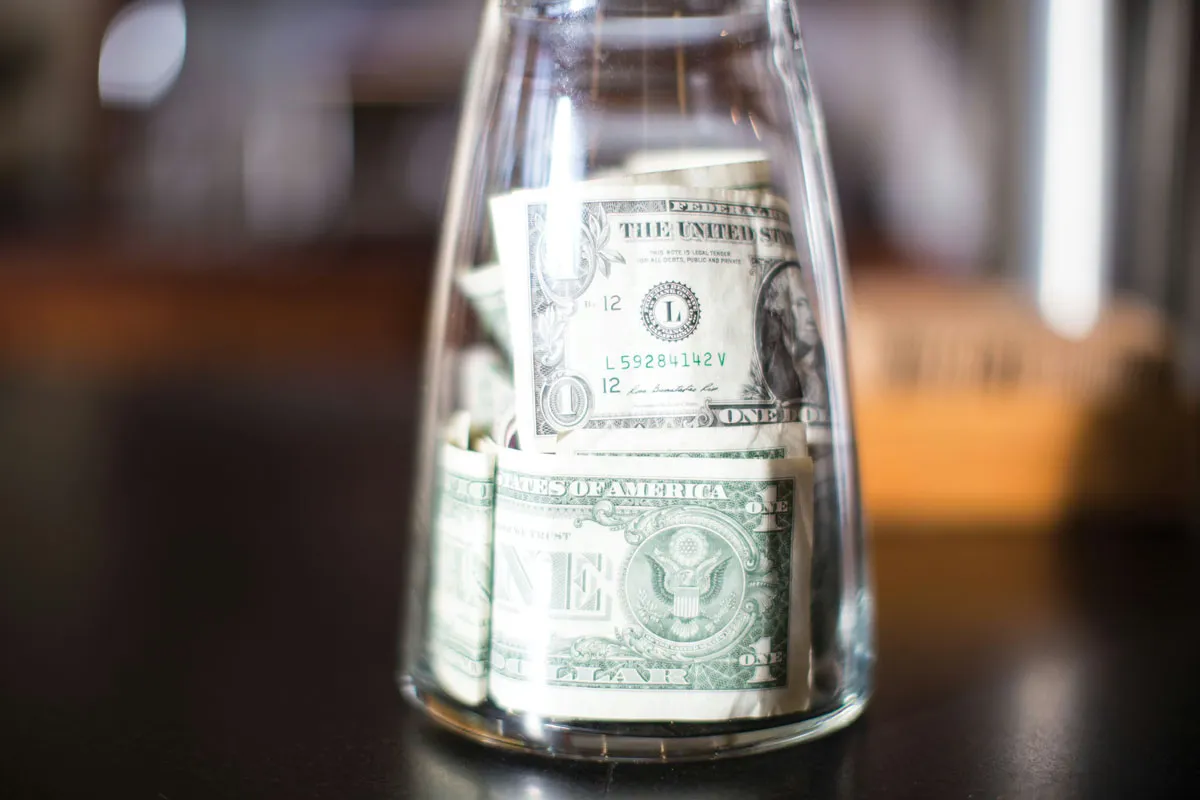
At a traditional pub in Sheffield, I sat with friends, pint in hand, and asked what turned out to be a baffling question: “What’s a good tip here?” My table erupted in laughter at the clueless American before one friend finally said, “Anything!” I pressed: “So a quid a dollar fifty is a decent tip?” Eyes widened, and a friend replied, “Mate. You just made his week.”
The exchange was instructive for everyone involved. The notion that service workers might earn a steady salary and live off their base pay was new to me. To my English friends, the idea that customers should supply a large share—perhaps the majority—of a server’s take-home income was as alien as American football.
As U.S. coffee professionals have adopted European cup sizes and roasting preferences, it may be unsurprising that some prominent voices in the coffee world are now reexamining how baristas are paid.
Should baristas in the United States be able to support themselves on standard wages alone, or is dependence on customer generosity a practice worth preserving?
Does Tipping Really Drive Better Service?
Alex Bernson, former editor of a widely read coffee industry website, puts it plainly: “In a nutshell, I don’t think your ability to pay rent should be dependent on a stranger’s review of your job performance.” While Bernson acknowledges that most baristas enjoy leaving a shift with extra cash, he calls tips “an unreliable source of income.” Because of that unreliability, he argues that employers should provide baristas with a set, liveable wage.
The usual rationale for tipping is that the promise of financial reward encourages better service. Customers tip when service meets their standards, and they give more for an exceptional experience. Some have even suggested that tipping fosters a more personal bond between barista and customer.
Bernson, however, is unconvinced. “I think there are other ways to incentivize good service,” he says.
Although Bernson concedes most baristas like leaving a shift with extra cash in their pocket, he says, “It’s an unreliable source of income.”
Robbie Melton, manager of coffee quality at Barista Parlor in Nashville, shares that doubt. Tipping “is not really my motivator for working harder,” Melton says. “It’s the customer’s experience.”
In the pandemic era, using tips as leverage to push baristas toward better customer experiences may backfire as staff grow weary of feeling that their professional worth depends entirely on how a customer feels—and tips—on any given day. That kind of resentment is one factor feeding the Great Resignation across foodservice.
The Dark Side of Tipping
Since 2010, a series of studies has pointed to the same broad conclusion: tipping culture has a racism problem. One striking analysis from Eater showed that in restaurant settings:
- White servers average $7.06 per hour in tips
- Latino servers average $6.08 per hour
- Black servers average $5.57 per hour
- Asian servers average $4.77 per hour
Tips are also vulnerable to employer error or misconduct, with unclear or deceptive distribution policies prompting frequent posts on open forums about wage theft. Complaints of this kind surface periodically in coffee industry groups as well.
Is America Ready for a Different System?
Melton doubts that America is prepared to abandon tipping. “When I see these conversations, I agree with the overall premise. But I do think that it’s so ingrained in our culture I don’t know if it would be possible to eliminate it,” he says. “If my total income could be achieved in a more consistent and reliable fashion that would be more favorable. But if I can get paid six to eight dollars more an hour, I’ll take it.”
Bernson, by contrast, is hopeful that change is possible. Eliminating tipping has gained momentum in the service industry for several years. Restaurants as respected as New York’s Per Se and Napa Valley’s the French Laundry, both owned by Thomas Keller, refuse tips and instead build labor costs into food prices—though not without legal disputes over how the now-included gratuity is distributed.
Many cocktail bars have likewise moved to a flat service charge rather than leaving gratuity to the customer’s generosity. Some restaurants, often responding to minimum-wage increases, have dropped tipping altogether.
“American coffee service hasn’t changed in fifteen years, twenty years. I don’t think tipping will change with that model,” Bernson says. “Hand-in-hand with eliminating tipping is giving better service.”
Instead of conducting all customer interactions at the counter with a POS system, Bernson advocates table service in coffee shops, complete with hosts, bussers, and food runners.
Compared with the fast-food service model used at most coffee shops, this approach gives each customer more face time, more chances to make a purchase, and eliminates the jarring practice of calling out drink orders. “People think that they’re paying for service by tipping,” Bernson says. By offering better hospitality without accepting tips, cafés can improve the customer experience and exceed expectations. Bernson also sees a business incentive. “Guests would buy more if they didn’t feel they needed to tip a dollar each time,” he says.
4 Ways to Nix the Tip
Café owners, familiar with the thin margins of the service industry, may wonder where the money to pay baristas full salaries will come from. Bernson makes four suggestions:
- A fixed service charge on top of the regular sale that acts as a standard tipped rate (15%, for example)
- Performance bonuses based on sales goals, both at the individual and group level
- Profit sharing, a great way to incentivize long-term retention
- Bonuses based on percentage of sales
“If you want to give a higher level of service, if you want to ask more of your employees, you need to pay them for it,” Bernson says.
While I was in England I never could bring myself to order a drink, coffee or otherwise, without leaving a tip. Perhaps it’s just my cultural conditioning, but I enjoy being able to tangibly express my gratitude for hospitality. But as a working barista with a family to support, I’ll gladly take the stability of a regular salary over the feast-or-famine of the tip jar any day.