The Congregation as Coffee Customer: How Churches Became a Specialty Coffee Channel
Roasters and café operators are discovering that Sunday morning crowds can support serious coffee programs—and that faith communities bring their own quirks as clients.
By Jordan Turner3 min read

Church coffee has long ranked somewhere between the percolator sludge of a diner and the burnt pot at a highway stop—though the highway stop, to be fair, varies widely. That low reputation was earned over decades. Yet as quality rose in cafés and kitchens elsewhere, it also climbed inside sanctuaries. Some congregations now buy from micro-roasters and serve the results from airpots, replacing the old Folgers routine of brewing and baking in oversized percolators. In Huntsville, Alabama, Mary Lou Herald, director of food services at Whitesburg Baptist Church, has launched two cafés on the church campus. “You would be shocked at how many churches have a café or coffee service like this,” she says.
Churches rarely appear on lists of potential markets, but they are one. And coffee as a ministry tool may sound unlikely, yet congregations have embraced the idea. “The whole goal is to get people to socialize more,” says roaster Sandy Toomer. A typical service, in his description, follows a stand-up, sit-down rhythm: “You stand up, sit down, stand up, sit down. The pastor comes in, ‘Blah, blah, blah.’ Then everyone stands up, shakes hands, and leaves.” Better coffee, he contends, can persuade people to linger longer—and the longer they linger, the more cups a roaster sells.
“You would be shocked at how many churches have a café or coffee service like this.”
Toomer has supplied churches for years through Toomer’s Coffee Roasters and, more recently, through Coffee 4 Missions, a consultancy focused on congregations. His Auburn, Alabama–based operation sits in the middle of megachurch country. One client serves 1,200 cups on a Sunday, a figure that excludes personal mugs.
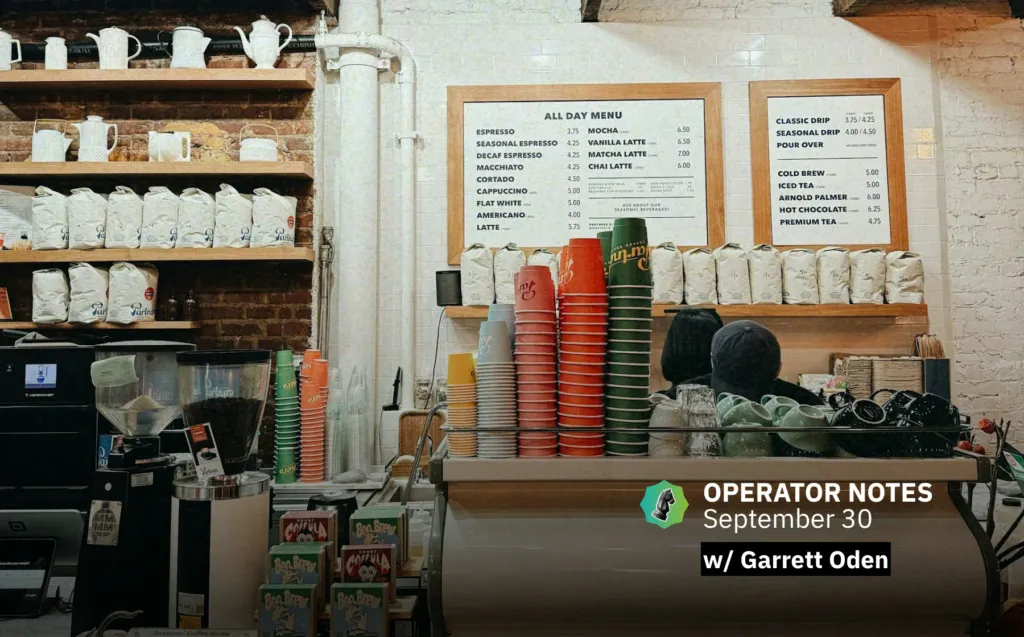
Whitesburg Baptist supplies free, ordinary coffee in adult Sunday school classes, while the two cafés—which pour Toomer’s coffee—sell brewed coffee and espresso drinks. Herald describes the move toward better coffee as a natural step. “People have Keurigs at home; they have personal espresso machines,” she says. “They’re use to a higher grade of coffee.”
The pattern echoes the broader specialty market, where companies often prefer clients who share their values; for churches, choosing a roaster with a religious orientation is a familiar instinct. Testimonials from church clients on Toomer’s sites consistently cite Sandy’s faith as a major draw, along with the company’s practice of giving twenty percent of profits—yes, twenty—to ministries. Herald, for her part, describes those donations as a bonus rather than a requirement; what first drew her in was free samples.
“This is what I always wanted: to spread the word of good coffee to a massive amount of people.”
In Vancouver, Washington, Phuong Tran and her Lava Java team recently took over the café at Crossroads Community Church. Tran is neither Christian nor a regular churchgoer; what satisfied the church’s requirement was her standing as a coffee professional and a US Barista Champion. She leases the space and runs it two days a week. The church counts 6,000 members, with roughly 3,000 in the building on Sundays. “It makes sense to me work there,” Tran says. “I looked at the numbers, I’m not going to get 3,000 people in seven days in downtown Portland.”
Sunday brings two services, and during the hour between them Tran sets up a cash-only, drip-only line. Two church volunteers pour six gallons of coffee in that hour, freeing her staff to pull espresso drinks from a pared-down menu that offers a single drink size.
Churchgoers have started turning up at her own café as well. “This is what I always wanted: to spread the word of good coffee to a massive amount of people,” she says.
Congregations and other faith organizations bring distinct difficulties as clients. Chief among them: they may resemble businesses, but they are not. Unlike most commercial clients, a church seldom has one person who makes the call. Pastors, staff members, deacons, and boards all need persuading. Toomer likens consulting on church cafés to herding cats. Win over the senior pastor, and the children’s minister may still refuse to part with her Veggie Tales video budget.
So if Sunday morning café traffic in your community seems thin, the explanation may not be a lack of coffee drinkers. Some of them are simply drinking something low-grade—and hoping for better beans.