Pour-Over Brewing Finds New Life in Specialty Cafés
Despite predictions of its demise, the manual pour-over method is being embraced by some cafés as a way to offer hospitality and variety, while others still swear by batch brew.
By Morgan Bailey4 min read
When G&B, the Los Angeles café from former US barista champions Kyle Glanville and Charles Babinski, opened in 2013, it made a deliberate choice: no pour overs. Instead, the café staked its reputation on a carefully calibrated batch brew that was promised to be as good as—if not better than—any by-the-cup option. At the time, the move seemed to signal a broader industry shift away from small-batch, handcrafted coffee toward streamlined efficiency.
Shops were grappling with economies of scale, and customers took notice as baristas "waved off the pour over cone," as Matt Buchanan wrote in The Awl in 2015. "What I wanted, the barista said, was the regular coffee, fresh out of the giant automatic drip machine." Eventually, mainstream outlets began asking whether the pour over "trend" had run its course, declaring that "the machines are back, and at least some of the country's top baristas are here for the revival."
At the time, I was an educator at Quills Coffee in Louisville and went along with the shift. We kept manual brew methods in our training program, but I helped Quills discontinue manual pour overs at its busiest café to streamline service.
Then in 2022, something curious started showing up in my Instagram feed. Cafés that had dropped pour overs were bringing them back. New cafés kept opening with alternative brew methods on the menu. Cafés that had always offered pour overs were stubbornly persisting—even thriving. It seemed the reports of the pour over's death had been greatly exaggerated.
Single-Serve Hospitality
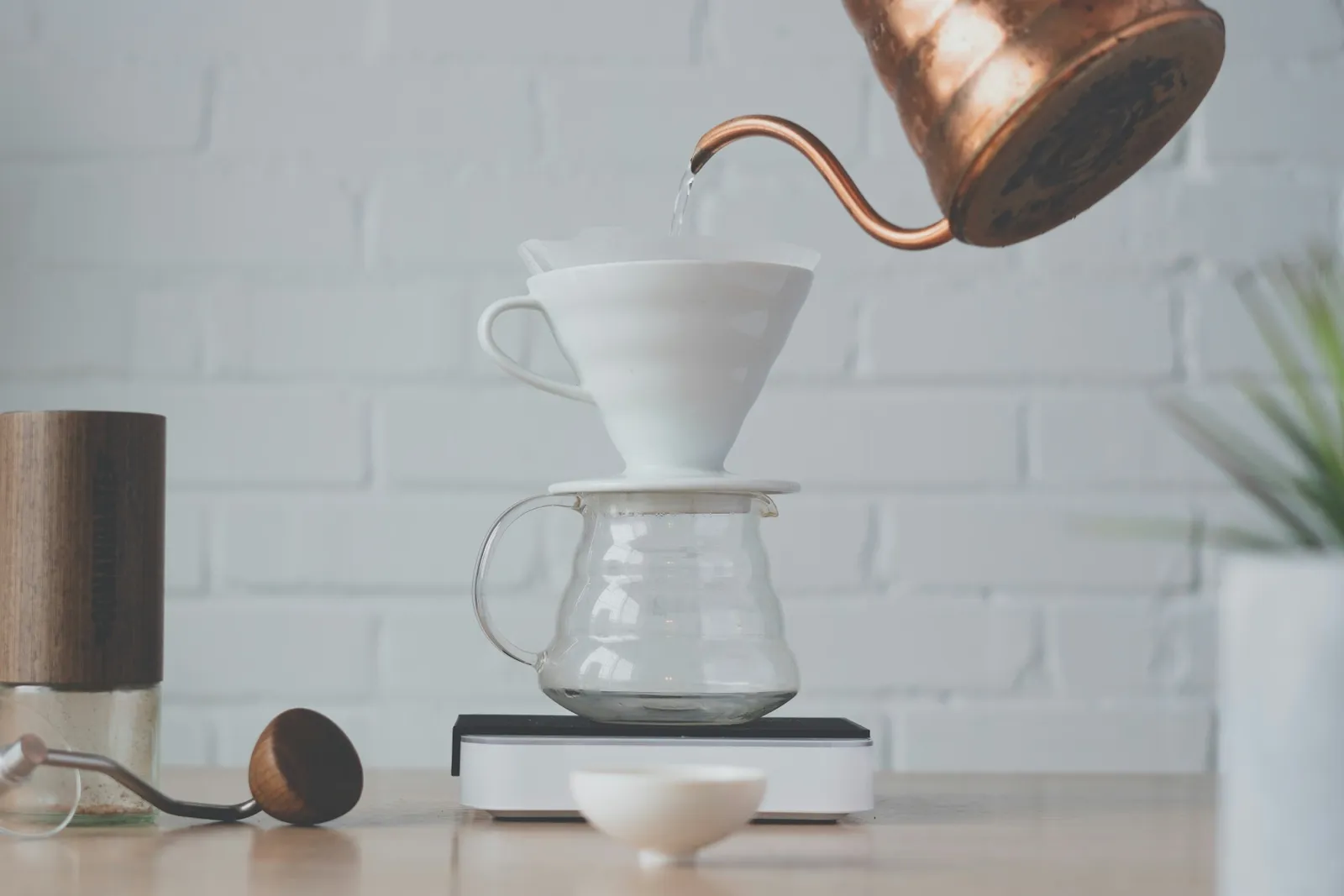
"My goal was to introduce Everett to specialty coffee. I felt like pour overs, specifically V60s, were a good way to do that," says Maxwell Mooney, owner and founder of Narrative Coffee in Everett, Washington. For Mooney, making a pour over visually set Narrative's coffee apart. It also served a practical purpose.
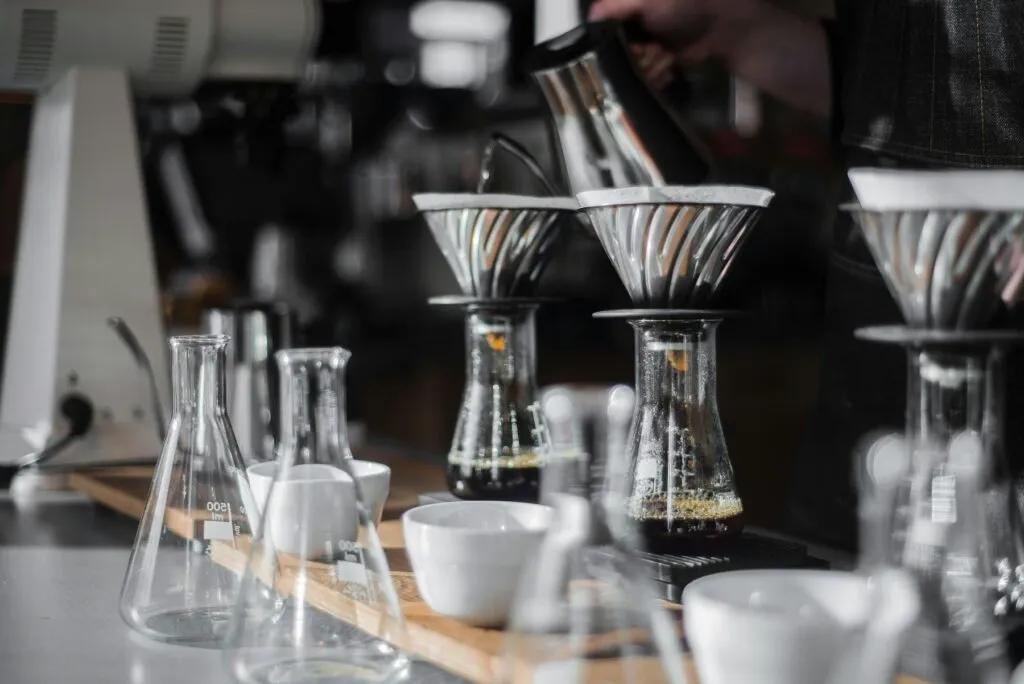
"It opened up options for coffee selection," Mooney says. "I wanted our menu to be adventurous. Every day someone could come in and try a new coffee." While few cafés could consider serving more than two coffees at a time on autodrip, pour overs allow Narrative to offer up to four different coffees at any given time.
Mooney knew the arguments against pour overs but chose a different path. "We find them to be delicious and manageable," he says.
Quills Coffee has introduced—and removed—pour overs multiple times over its 15-year history. Most recently, it discontinued them for a streamlined coffee service during the early days of the COVID-19 pandemic. But with new cafés opening in both Louisville and Indianapolis in 2022, the Quills team wanted to bring pour overs back to center stage.
"Pour overs are one of our favorite menu items because they are a time to intentionally practice quality and hospitality in a deeper, more intentional way," says Megan Lowry, Quills' director of operations.
Lowry sees pour over service as a way to create value for new and loyal customers. "For newer customers, a pourover presents an opportunity to intentionally talk through a single-origin coffee and better understand origin, tasting notes, and coffee as a craft," she says. "Pour overs take a few more minutes than a filter coffee pour, so for our regulars, that creates time for intentional conversation and building community."
Better Than Batch Brew?
Not everyone is convinced pour over is the superior brewing method, however.
For Jamie Cunningham, co-owner and hospitality director at Stay Golden in Nashville, Tenn., the superior efficiency of batch brewers allows his team to focus on taking care of customers. Stay Golden offers two batch brew options—a single-origin coffee and a blend—and no manual brew methods.
"We can make 1-2 gallons of coffee in the same amount of time it would take to rinse a filter for a pour over," says Cunningham. "For the most part, we are serving people going about their day. Efficiency matters."
Cunningham also rejects the idea that serving only batch brew compromises coffee quality. "We can produce really great coffee with a batch brewer. It can be executed perfectly down to the exact TDS (total dissolved solids, a measure of extraction) you're looking for," he says.
For Cunningham, focusing on autodrip is a way to keep staffing leaner and wages higher. "A lot of people aren't aware of the labor costs of a pour over," he says. "The way we pay our team, I don't feel like we can charge what we need to charge for a pour over."
But for Mooney, these issues can be solved with café design and training. "The architecture of both of our shops allow the host to make pour overs at the same time as taking orders," he says. "You have to have a training program that focuses on that."
At both of Narrative's cafés, the pour over station is set to the barista's right from the point of sale. This allows the barista to enter orders with their left hand while holding a kettle in their right.
Mooney even developed Narrative's pour-over recipe with this workflow in mind. "We stagger our brewing intro three pulses: the bloom, the first pour, and the second pour," says Mooney. "That builds in time for two pour overs to be done at the same time, or grab a pastry, refill kettles, and grind more doses."
For Lowry, the challenges of implementing pour overs across multiple locations are offset by the opportunity to offer customers a more diverse coffee menu. "We typically use pour over as a time to offer single origin coffees, limited releases, or other coffees that we can't offer on batch brew due to the higher price point of those coffees," she says.
For Mooney, pour over service is ultimately about providing customers with the best cup of coffee possible. "I don't know what it is, but the best V60s I've had are still better than the best batch brew I've had," he says.
Cover photo by Julien Labelle