Moving Past the Pastry: Why a Real Food Menu Can Transform Your Café
For café owners, offering more than a pastry case can turn a brief stop into a full-day destination—and may even be essential for survival in crowded markets.
By Blake Lee7 min read
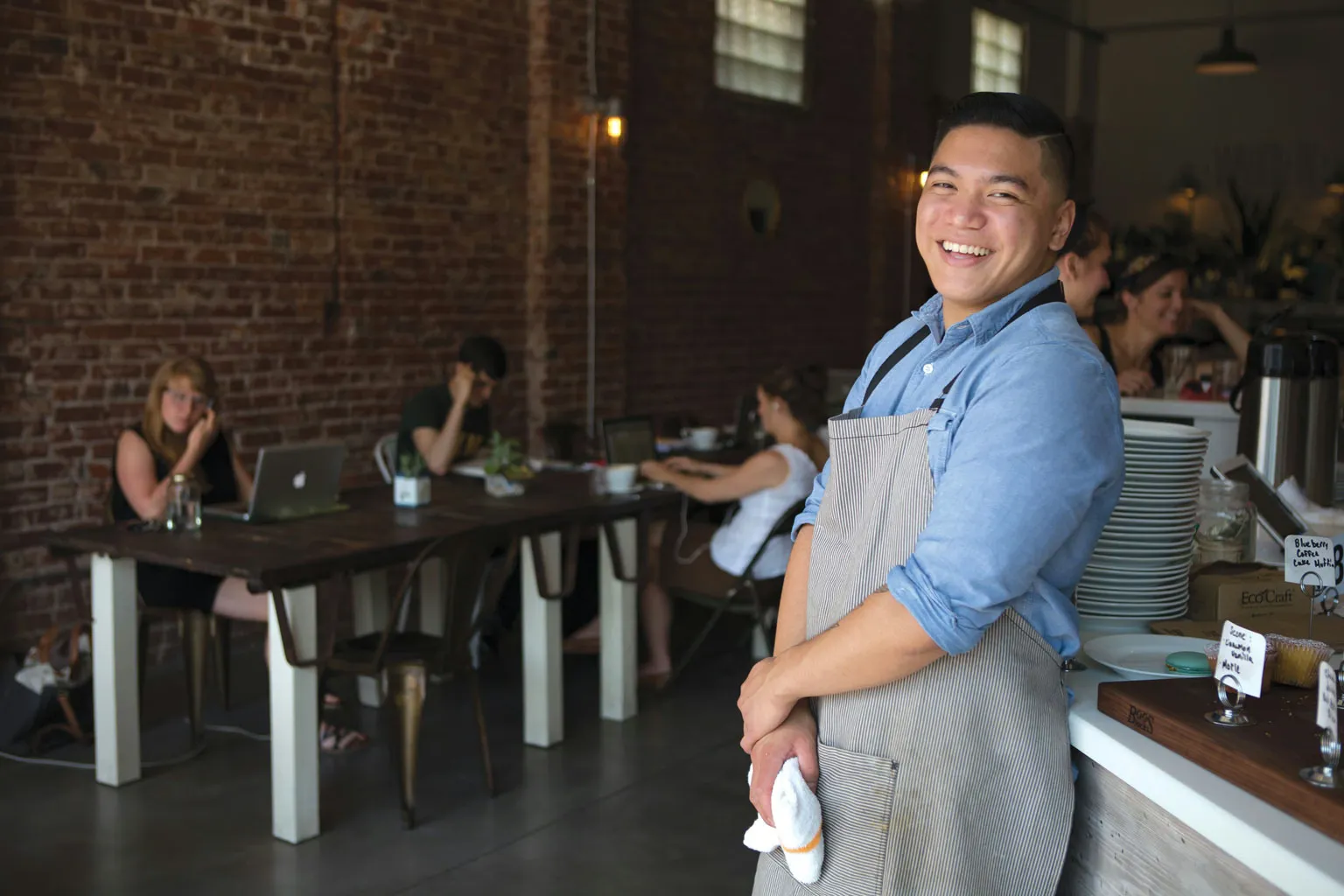
Nolan Hirte, who founded Proud Mary Coffee—a key player in Melbourne's influential coffee scene, with outposts in Austin and Portland—often visits coffeehouses when he travels in the US. He chooses places he's heard good things about, appreciates the drinks and design, and respects the baristas' skills. What he seldom does is eat. Typically, he has breakfast at his hotel, where the coffee may not be great, but he can get a full meal.
This is a situation he finds puzzling, the kind of confusion usually reserved for countries with deeper cultural divides than the US and Australia. Talking about the gap in the US, he keeps repeating, "I just don't get it." Then, with a businessman's eye for opportunity, he tells his interviewer in Oregon, "If no one does anything in Portland, I'm going to come there and do it myself."
When specialty coffee carved out its niche in the US food market, it adopted a model that treated food as an afterthought. Over time, more attention has gone to food, mainly fresher and better pastries, but the standard most cafés apply is that the food should fit in one hand.
If early US cafés took Italian coffee culture as their template—grab a drink and go—then this model makes sense. But American coffeehouses were never really Italian, and the appeal of the café as living room or third place doesn't align with that model. People now had a space to work or lounge for hours. Yet when hunger struck, there were two choices: leave or have another scone. Why haven't more coffee shops given hungry customers more than a pastry case?
Café Vibes
When Marina Michelson and her parents, Anya and Yasha, opened Paper or Plastik in Los Angeles in 2010, they aimed for the ideal of a neighborhood coffeehouse—a socially and intellectually lively anchor of the local community where neighbors would stay for hours.
They are a family of artists (Marina is an actor and filmmaker, Yasha a dancer, and Anya a designer), and this was their first café. They put deep care into their coffee program and knew they would offer a great drink menu. And they did, but like many first-time café owners, their vision of the café's ambiance collided with the reality of to-go orders, computer screens, and earbuds.
Worse than the disengagement, Marina says, were the dead times at lunch and in the evening. Their shop felt like a pitstop rather than a destination.
Within a week, they knew they needed to tweak their model. A few years later, it would be overhauled.
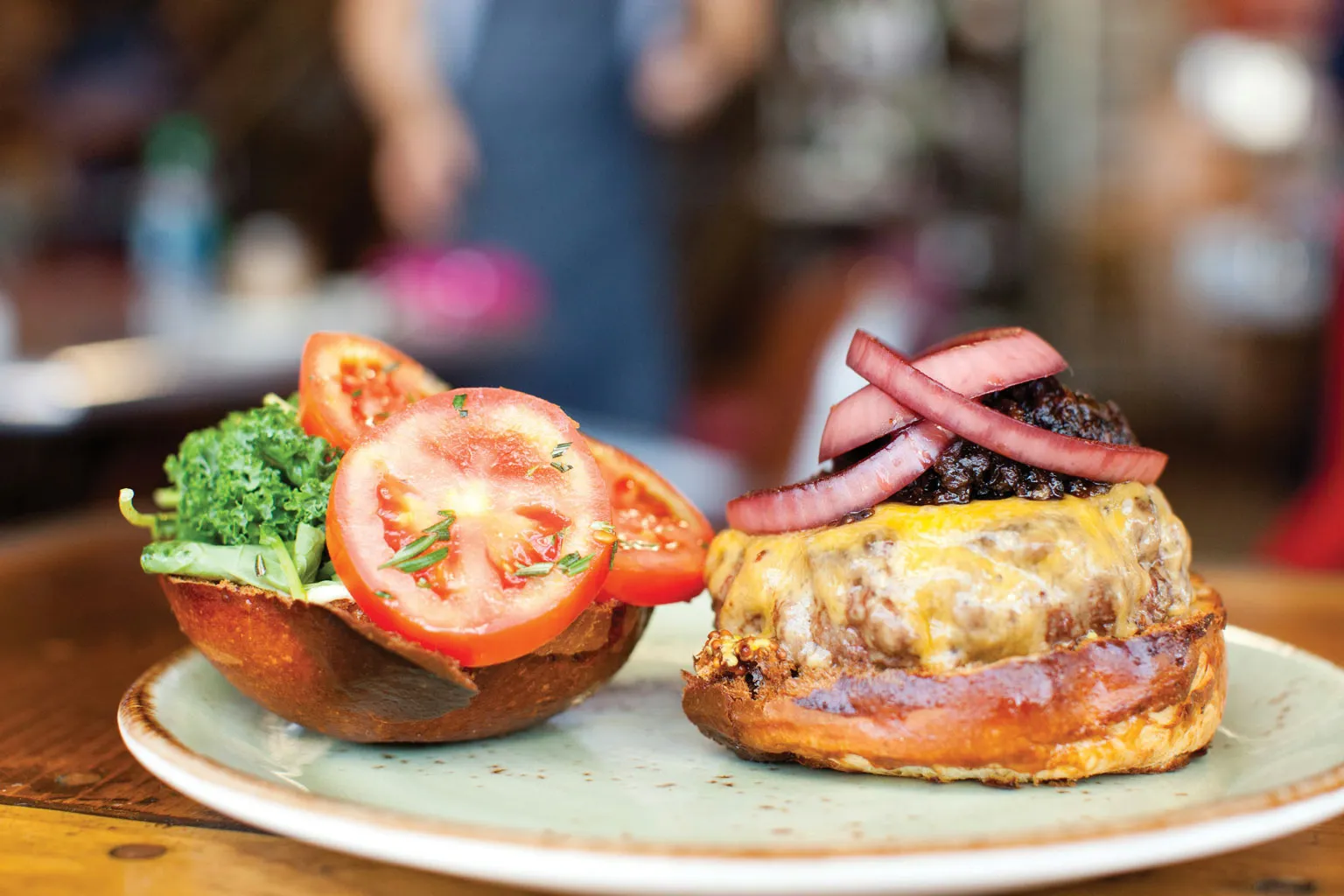
At the time, Paper or Plastik's neighborhood had few restaurants, so the Michelsons were confident that even a small food program could attract customers. They first contracted with catering companies to bring in simple meals like salads and single-serving lasagna. Their lack of control over the food never satisfied them, and after several years of catering and consulting with food experts, they decided to start their own food program.
"We wanted our food program to be of the same quality as our coffee program. We wanted food to represent us and our taste, just the way our coffee bar did," Marina says. "And we found that the only way we could do that was if we designed the menu ourselves."
They started small: food that could go out on the bar (sandwiches, savory pastries, packaged salads), but this also missed the mark. "We realized, with the packaged salads, it still wasn't creating the environment we wanted to create. People were eating out of take-out containers. So we grew."
By bringing food into their café, they hoped to infuse the space with the spirit and liveliness they had envisioned from the start—so they opened a full kitchen. Rather than grafting an unrelated business onto the existing one, they believed this would complete it.
The Gamechanger
Hirte of Proud Mary sees running a kitchen with a full menu as a profitable way to operate, perhaps the only way in competitive markets. His first café in Melbourne, Liar Liar, also had a solid food menu. "We had a cook, he wasn't necessarily a chef, but he put out some really good food," Hirte says. "And at the time, that was one of only three places in Melbourne you could go to get a really good breakfast. There wasn't much focus on that."
Melbourne's—and really Australia's—coffee culture grew at an explosive rate. As Hirte tells it, the café scene was expanding and improving quickly, and in the mid-2000s, several restaurateurs from high-end eateries opened cafés. The coffee was good—really good—but the food was a game changer.
"That raised the friggin' bar," says Hirte. "It pushed everyone. Then the best place in town wasn't just the place with good bacon and eggs and a few interesting dishes, like hotcakes or whatever else. It had a friggin' restaurant chef with loads of technique doing café food," Hirte says. "I had to push my chefs as hard as I could, to the point that, you know what, we have to get someone with some serious restaurant capacity as well."
Hirte didn't have food experience, but he trusted his palate and knew what he wanted from a meal. The menu now includes ricotta hotcakes, lamb ribs, and a pork belly sandwich.
Almost as quickly as it was created, Australians began exporting their version of the café. In London, a city filled with Australian-style shops, the kitchen staff is as essential as the baristas. But these are still very much coffee shops. The espresso machine remains at the forefront, and coffee expectations are as high as any sophisticated café in the US.
Why hasn't this taken hold in the US? Part of it may be the purist or specialization streak that runs through much of the food industry. Think about brew pubs. How many have genuinely great food? They exist, but you're more likely to get under-blended hummus than a seasonally inspired salad. If you've ever eaten at a restaurant with an expansive menu that tries to offer all things to all customers and executes it poorly, you understand the appeal of focus.
A Memorable Experience
Opening a kitchen, or even having a modest sandwich menu, means expanding the number of variables within a café. And because café customers don't expect food, they don't miss it when it's not there.
Then again, that could make its presence that much more unforgettable.
"I don't see that typical coffee shop model being profitable. Especially for a third-wave shop. It's the shrinking margins," says Gregory Ferrari, an owner of Queensberry Coffee (formerly known as Black Eye Coffee) in Denver. "At a certain point, there will be a price that customers aren't willing to support. Will people be willing to pay six dollars for a pour-over?"
When Ferrari and his business partners opened Queensberry, they built the space with the expectation that they would expand their food menu. Their neighborhood had good food, and they wanted to establish their coffee cred first. They made pastries from the start, but after a year they decided to open a kitchen, bringing in a young, local chef, Jordan Quidachay. The kitchen is spare, just an electric oven, hotplates, and a panini press that cooks eggs, bacon, and sandwiches (they went electric because it required fewer fire protection measures). Quidachay spends much of his time making sandwiches, but his menus include items like tamales and coffee-rubbed roast beef. Surprisingly, he makes the pastries and bread, too.
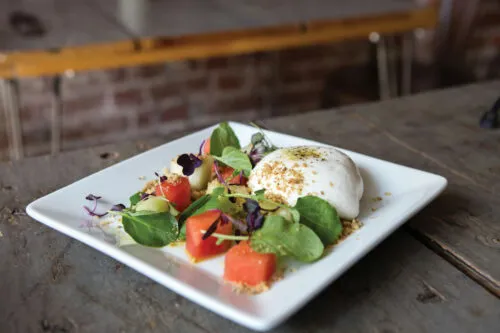
It took a while for the venture to get moving. "When I started, we were so slow," says Quidachay. Now they may need to hire a food runner to help get plates out to customers.
Ferrari says that having a person with food experience has been critical to their program. Anyone in the restaurant business will tell you that minding margins and food waste are vital to success. "If you just wing it, you could have a money pit. Something that should be making you money could be losing a lot of money," says Ferrari.
Space It Out
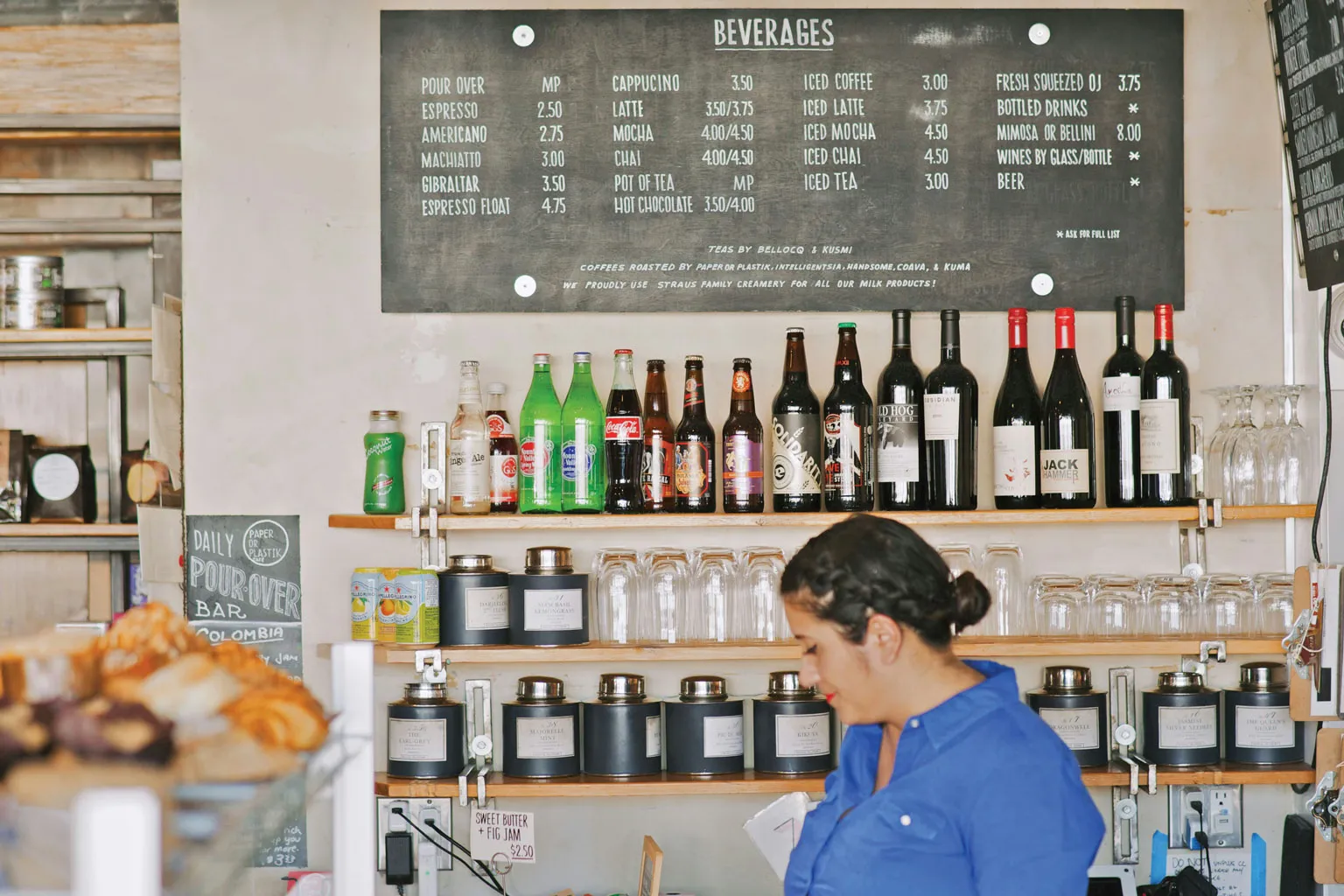
At Queensberry, food is ordered at the bar, and tickets for plate meals go to the kitchen while the baristas handle grab-and-go items, like tamales. That's close to the model Marina Michelson landed on at Paper or Plastik. Customers order at the U-shaped bar, baristas cover the drinks and small items while the kitchen staff handles the meals, with runners taking food to customers. A floor manager keeps traffic moving smoothly on busy shifts.
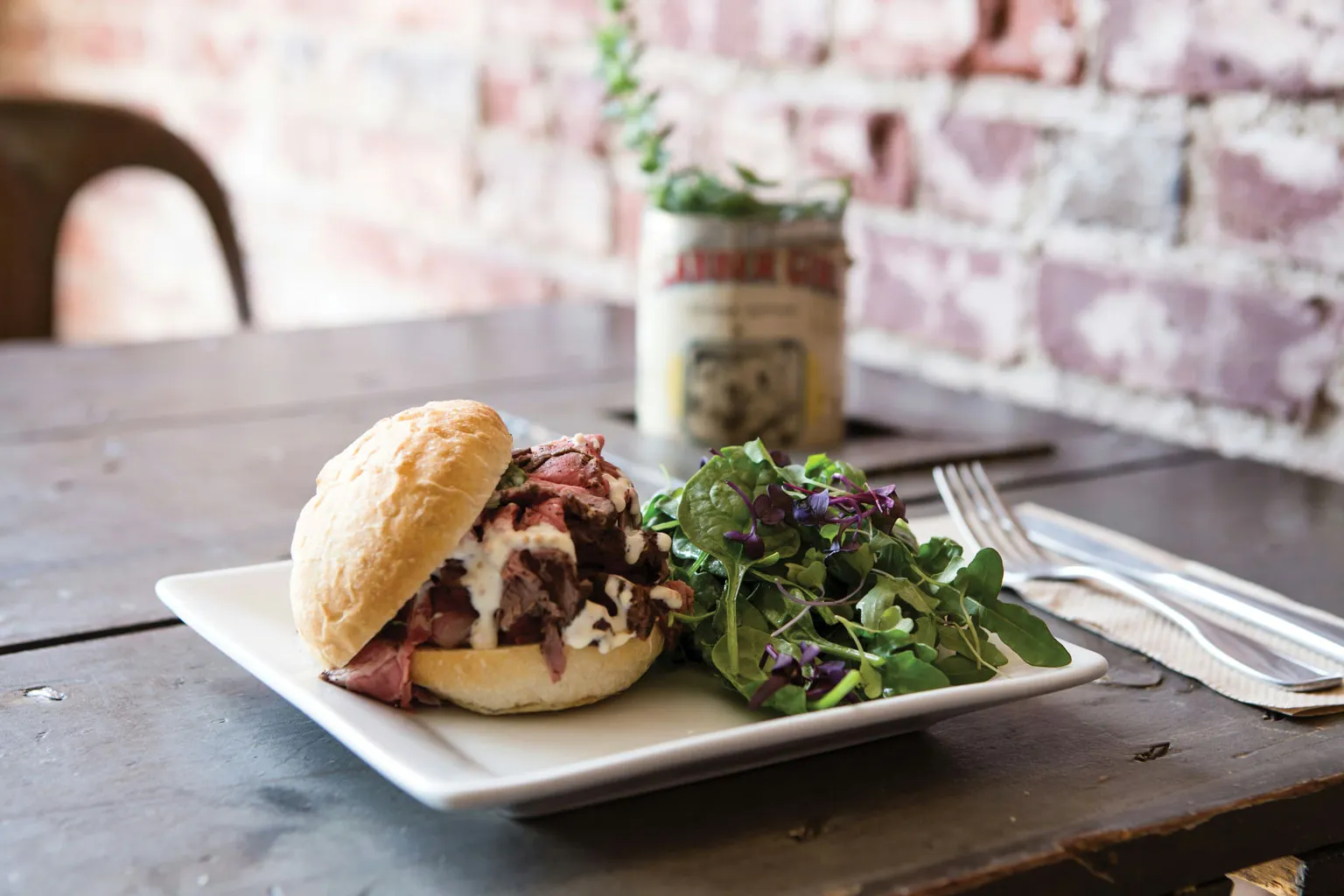
Paper or Plastik's menu, which shifts with the seasons, is overseen by Marina and her mother, who, while lacking professional cooking experience, know what they want. "I feel confident that the food we are putting out, representing us, derives from our sensibilities." For breakfast, they offer croissant french toast and a polenta bowl with chard, prosciutto, and an egg; for lunch, you can have a steak salad or a fried chicken sandwich with jalapeño slaw; and for dinner, roasted chicken or spring vegetable pasta.
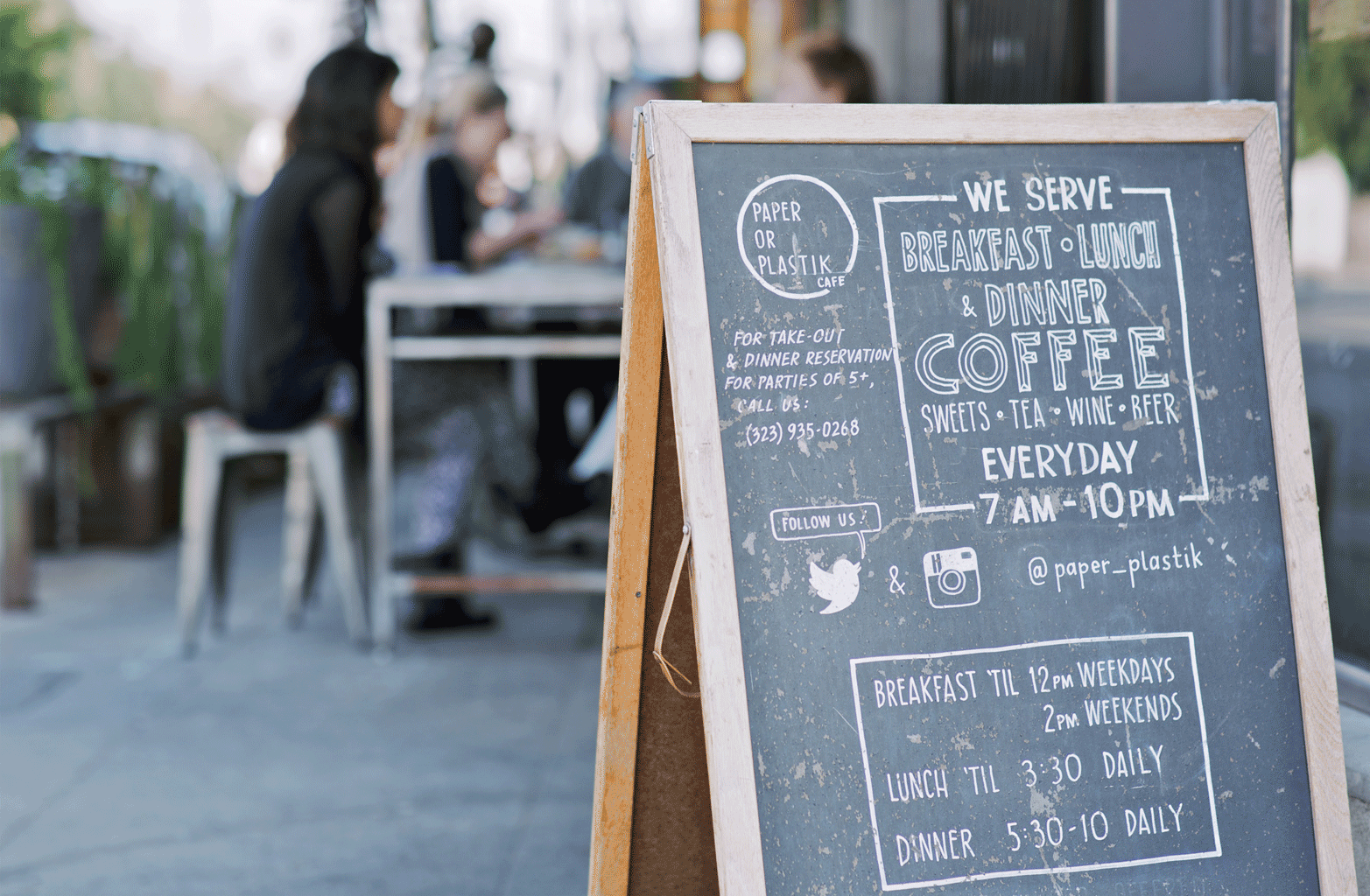
Getting to this point, where the café is hopping on weekend brunch and bringing in customers for evening meals and drinks, took those intermittent steps of hiring caterers and doing a small to-go menu (a liquor license didn't hurt either). "No one on our staff will say it was easy," says Marina. "When we went through the bigger changes, we explained them personally to the customers."
Adding food to a menu doesn't need to go to these lengths. Even a menu of sandwiches and soup might be more than you need if your shop serves a limited audience, like office workers on their breaks. But for café owners looking to set themselves apart from the competition, a great meal is a killer start.
Cover photo by Sara Ford Photography. This article was originally published on July 13, 2015 and has been updated to meet our current editorial standards.