Shuv Coffee's Pay-What-You-Can Model Makes Specialty Coffee More Reachable
An Indianapolis roaster lets customers decide what to pay for out-of-spec coffees, with a floor price and a donation channel for unsold bags.
By Quinn Hill5 min read
As inflation continues to squeeze budgets, coffee enthusiasts and industry workers alike are finding it harder to cover expenses. Yet coffee remains more than a caffeine delivery system—it is a daily ritual and a meaningful part of life for many.
That tension has given rise to sliding-scale coffee, a model gaining traction. But with coffee businesses often facing the same financial pressures as their customers, how can such programs be sustainable?
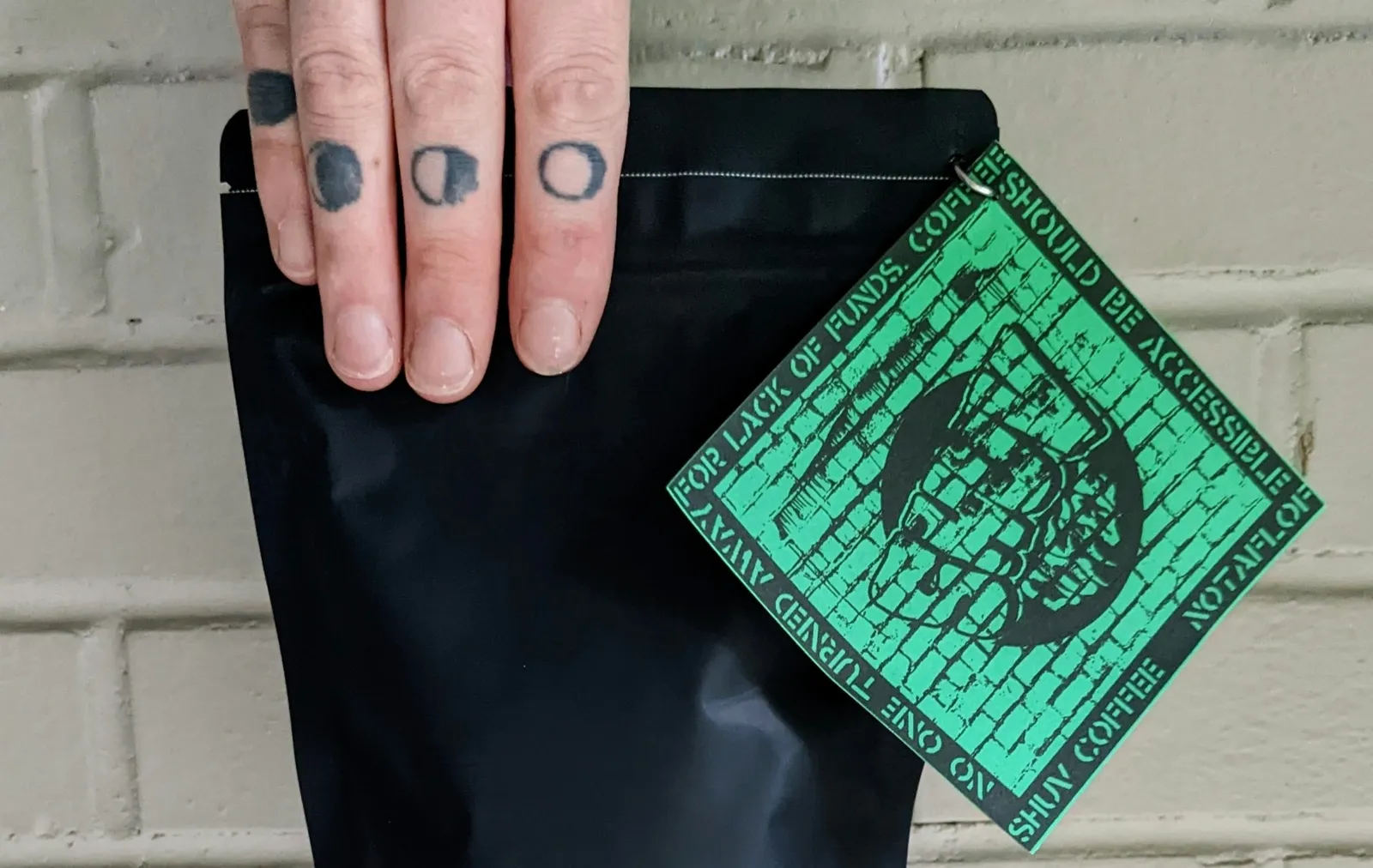
This approach is not unique to one company—Umeshiso, for instance, offers cupping spoons on a sliding scale. We spoke with Indianapolis-based roaster Shuv Coffee about its NOTAFLOF (No One Turned Away For Lack Of Funds) coffee initiative. The co-owners explained how they make the numbers work and how they hope to foster a more communal, revolutionary coffee culture.
The conversation below has been lightly edited for clarity and length.
Could you introduce yourselves?
Steven: I’m Steven Garcia, co-owner and head of roasting, production, and wholesale at Shuv Coffee.
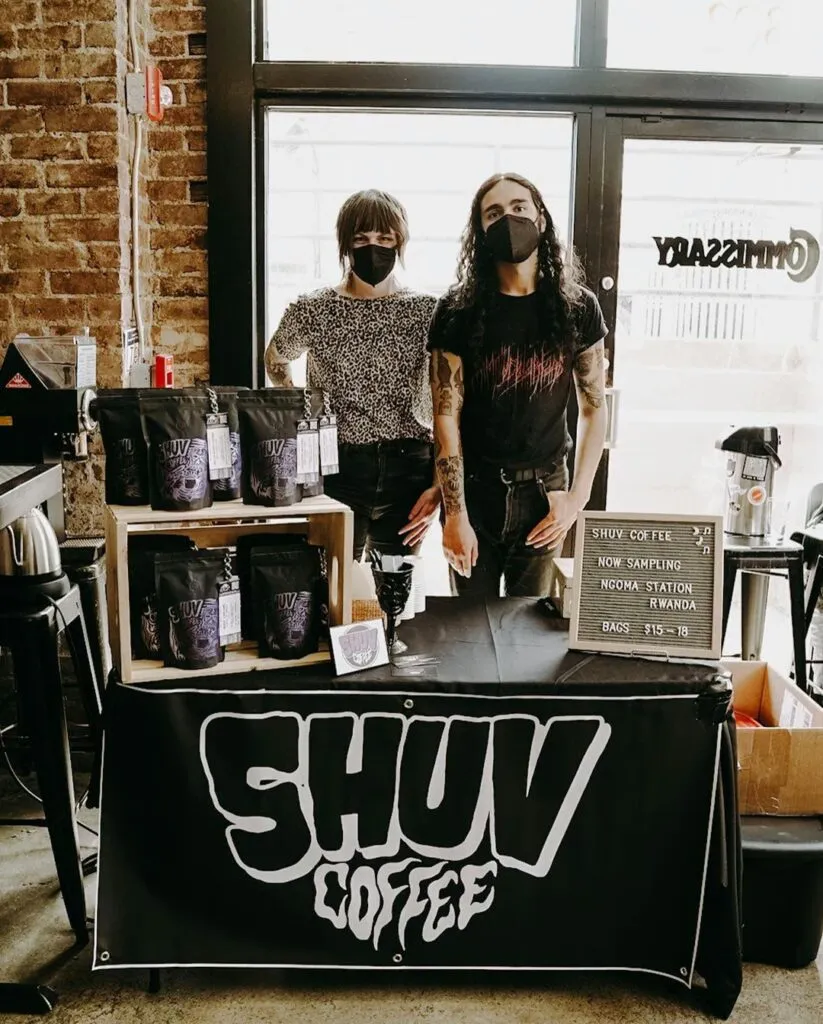
Emery: Hi, I’m Emery Conger, the other co-owner. I handle operations, quality control, and green coffee buying.
How did you meet and decide to launch Shuv?
Steven: We’ve each worked in coffee for nearly ten years, and many of those jobs overlapped. We’ve been close friends for a long time, and after years of working together for other companies, we said, “f*** it, let’s do this ourselves!”
We’re passionate about specialty coffee but also about DIY culture, and we wanted to build a company where we could express that love and bring our personal values into the business. For us, that means a coffee vision centered on producers and prioritizing accessible, equitable practices both at origin and in our local community.
Emery: One thing led to another, and we started Shuv to do something fun and different from our industry experience—to put our values first.
Where did the name Shuv come from?
Steven: The name comes from a skateboarding trick called the pop Shuvit, where you spin the board 180 degrees before landing. We tied that to our motto, “Revolutions in Coffee,” and ran with it. As a company, we aim to flip the script on what specialty coffee can represent and to spark a more holistic, inclusive conversation involving everyone in the chain, not just the coffee itself.
What inspired the sliding scale/NOTAFLOF program?
Emery: We drew inspiration from many sources, inside and outside coffee. Steve and I knew the NOTAFLOF concept from years of attending and playing punk and hardcore shows. You’d often see fliers around town listing the acronym alongside the show details. The principle was that no one would be turned away from a show because they couldn’t pay the cover charge.
We wanted to apply that same principle to our coffee at Shuv to uphold our company values, since cost can be a major barrier to accessing specialty coffee.
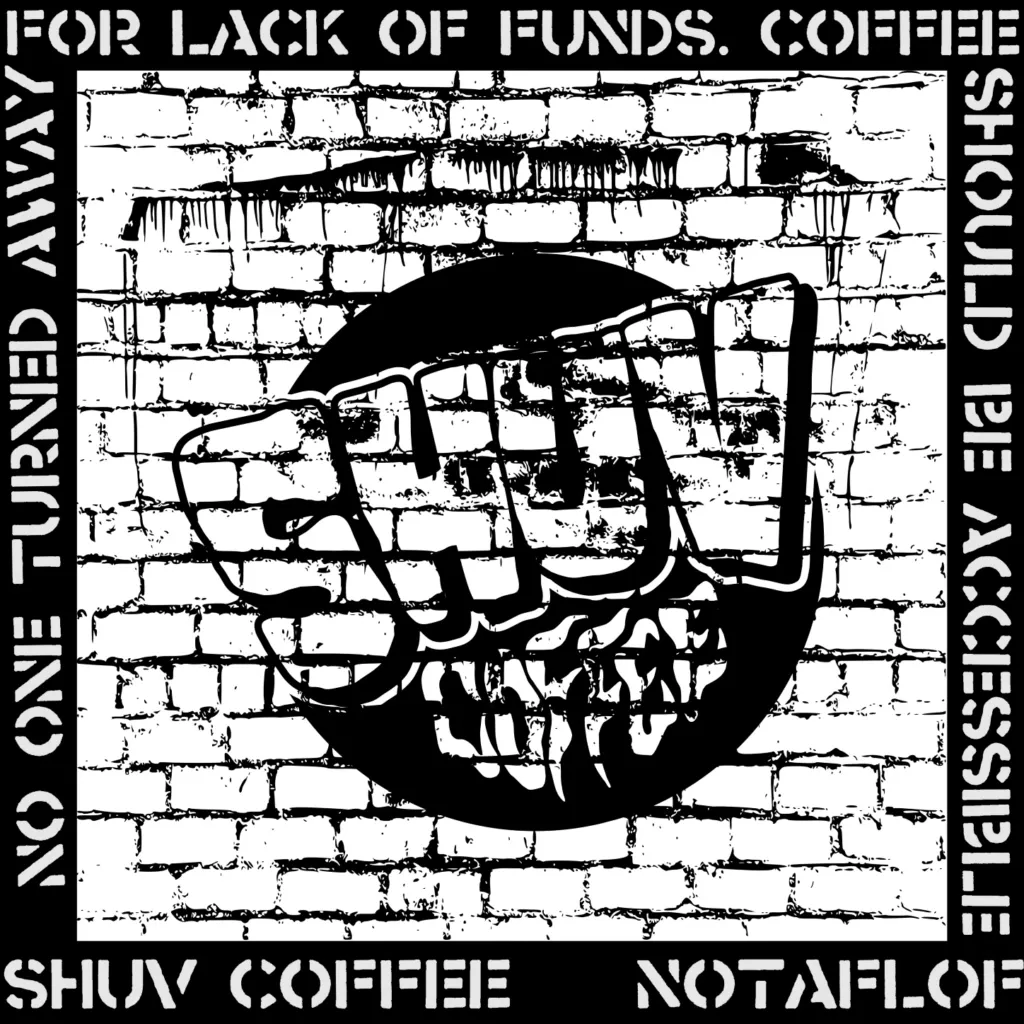
At the same time, we were inspired by coffee companies that sell “test roast” coffees at a discount. When we started discussing something similar, I thought back to NOTAFLOF and figured it would be cool to combine the two. I’m also a nerd-level Crass Records fan, so I took plenty of design liberties from their catalog when creating the label.
How does the program operate?
Steven: Basically, when we have coffee that doesn’t meet our quality control standards, it goes to NOTAFLOF. That could be a roast profile we want to tweak, a roast curve that deviated from its path, or a green coffee starting to age out—we set it aside for NOTAFLOF.
To keep costs down, the bags won’t have the chain, tickets, and screen print we normally use for retail, but we still label them for traceability. Each week we inventory our stock and list it on the website on a sliding scale. Our lowest price for NOTAFLOF is what we estimate our average production cost to be ($6).
Any bags left after a month are donated free to local food banks and mutual aid organizations around Indianapolis. If you’re reading this and that’s you, please get in touch! We’d love to include you the next time we have extras!
How do the costs work out?
Emery: The idea is that those who can afford it have the option to cover a bit more of the operational costs by paying up to $10. That’s what we initially planned to charge for test coffees before adding the sliding scale. But each person decides what price works best for them.
Another aspect is rethinking what counts as “waste” in coffee and how coffee can be repurposed to deliver the most value to everyone. Even if a coffee in a NOTAFLOF bag didn’t quite pass our QC standards, it’s still really good in our opinion, and many people worked hard to bring it to you. That’s worth sharing rather than discarding.
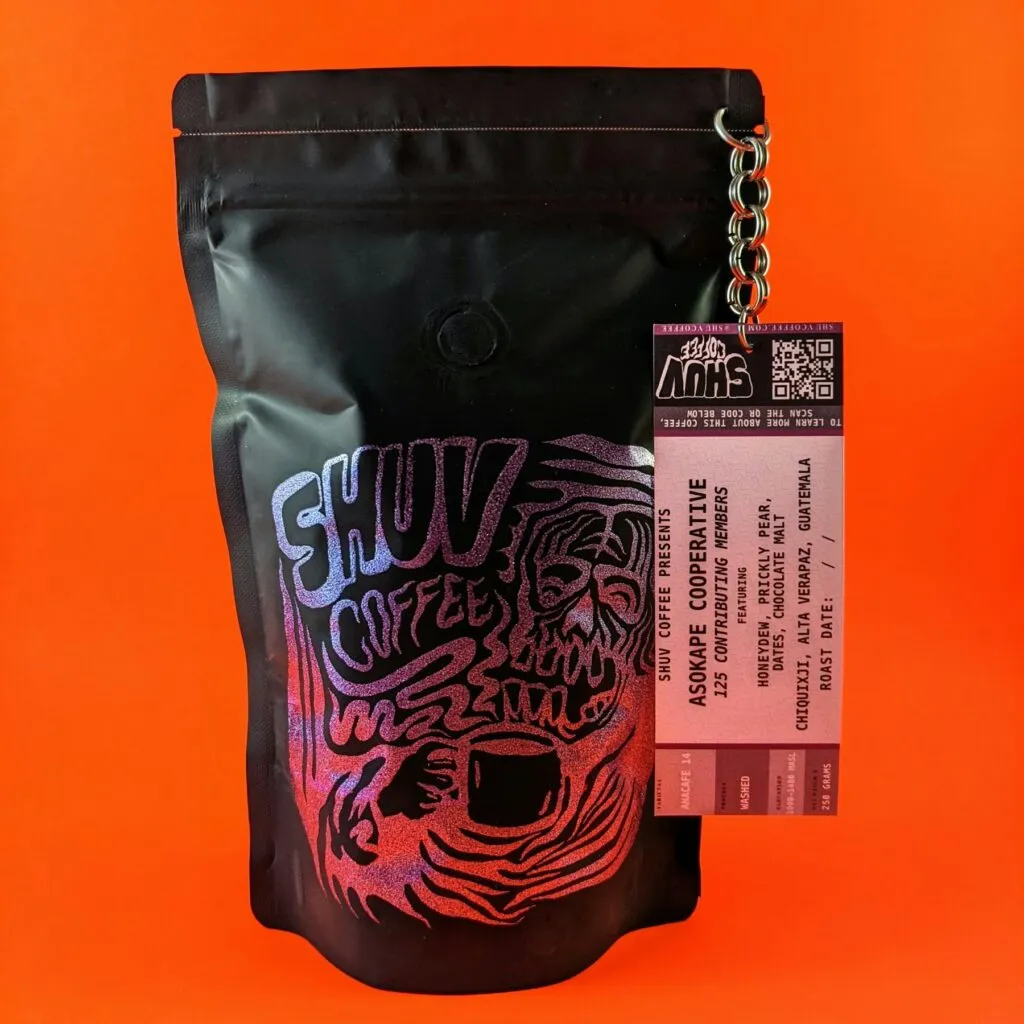
Steven: We see this as someone gaining something rather than as a business loss. Our branding, packaging, and design are a labor of love, but production materials aren’t cheap. A simplified packaging design for NOTAFLOF means we don’t have to factor as much into our cost of goods.
Do you know other coffee companies with similar programs?
Emery: Many companies and individuals in coffee do similar things, and we respect them greatly. Tim Wendelboe, The Barn Berlin, New Math Coffee from Chicago, and others were selling test roasts before we started, and there are also those offering sliding scale pricing on coffee.
One person who stands out is Umeko Motoyoshi of Umeshiso Coffee Supply. They sell cupping spoons on a sliding scale, and recently we came across Iluminar Coffee, which offers sliding scale pricing for its coffees. Another local Indianapolis company, Calvin Fletcher’s Coffee, recently rolled out a tiered pricing scale on one of their limited edition coffees so a wider range of people can afford it—that’s the kind of thing we love to see!
Anything else you’d like to add?
Emery: We’d love to see programs like this adopted more widely across the specialty coffee industry and a general shift away from exclusivity toward mutual aid. If you’re interested in implementing something similar and have questions, please contact us! Thanks for giving us the time and space to talk about NOTAFLOF.