Cxffeeblack and COMOCO Cotton Team Up for T-Shirt Backed by All-Black Cotton Supply Chain
Cxffeeblack, the Memphis coffee and lifestyle brand, is collaborating with COMOCO Cotton on a limited-edition t-shirt that spotlights Black ownership, cultural restoration, and sustainable innovation.
By Harper Parker4 min read
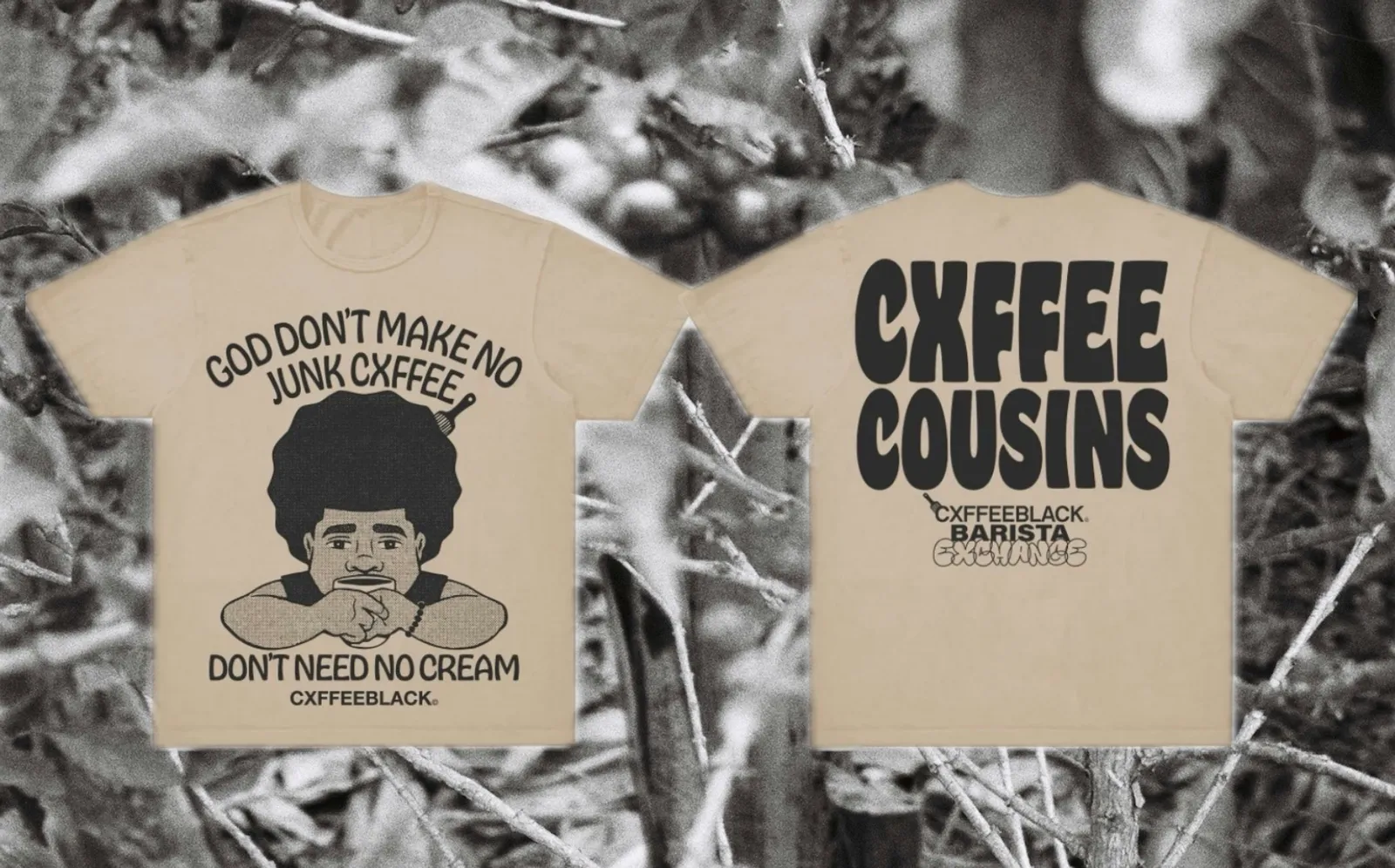
Memphis-based coffee and lifestyle brand Cxffeeblack has revealed a partnership with COMOCO Cotton to produce an exclusive t-shirt that emphasizes “Black ownership, cultural restoration, and sustainable innovation.” The announcement came on Tuesday.
The collaboration unites two businesses that prioritize working with Black suppliers at every stage of the supply chain, aiming to build economic equity in communities where value has historically been extracted and turned into a commodity.
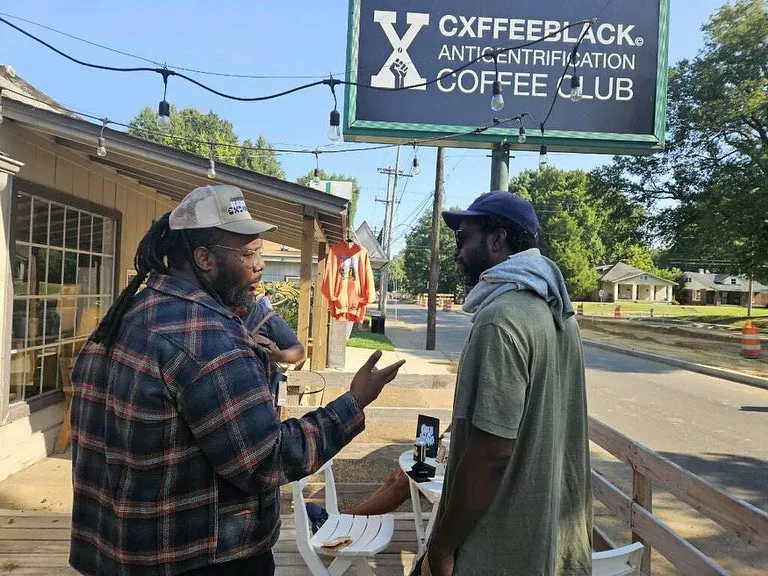
Jones (left) and Satterfield outside of the Anti-Gentrification Cxffee Club in Memphis.
Bartholomew Jones, co-founder of Cxffeeblack, explained the initiative’s purpose in an interview: “The goal is to spread awareness about the importance of creating Black ownership in traditional industries that are neocolonial in nature and have a lot of trauma attached to them. It is using ownership, creativity, and artistry to reclaim and reimagine our own dignity.”
COMOCO Cotton’s mission is to establish a completely Black-owned cotton supply chain. According to its website, the company produces t-shirts using “100% Certified Black-grown cotton.” The site also points to the deep-rooted inequalities in agriculture and textiles, particularly their historical connection to enslaved labor: “Black farmers represent less than 2% of the 3.4 million farmers in the U.S., and 96% of U.S. agricultural land ownership is white-owned,” it states.
Founded in 2019 by Jones and his wife, Renata Henderson, Cxffeeblack has been building an all-Black coffee supply chain. Beyond sourcing and selling coffee, the couple operates a Memphis coffee hub called the Anti-Gentrification Cxffee Club, launched a barista exchange program linking Black American and African baristas, and produced an award-winning documentary, “Cxffeeblack to Africa,” which chronicles the first phase of that exchange program.
A press release about the partnership notes: “Coffee and cotton, long tied to Black labor and exploitation, carry deep cultural significance as symbols of resilience and creativity. Now, these industries are being reimagined through a groundbreaking collaboration between Cxffeeblack and COMOCO Cotton.”
Jones recalled meeting COMOCO Cotton founder Stephen Satterfield when Satterfield and his family visited Memphis and stopped by the Anti-Gentrification Cxffee Club. Jones said he and Satterfield—founder of Whetstone Media and host of the Netflix documentary “High on the Hog”—connected over Cxffeeblack’s supply chain work.
In a LinkedIn post, Satterfield wrote: “Reclamation has been at the center of my work for nearly two decades. I feel like its just beginning as I begin to align this work in the textile sector.”
Jones added: “How do we actually provide generational wealth and liberation? We have to start owning land. We have to start owning a supply chain. This is big work in and of itself to push forward.”
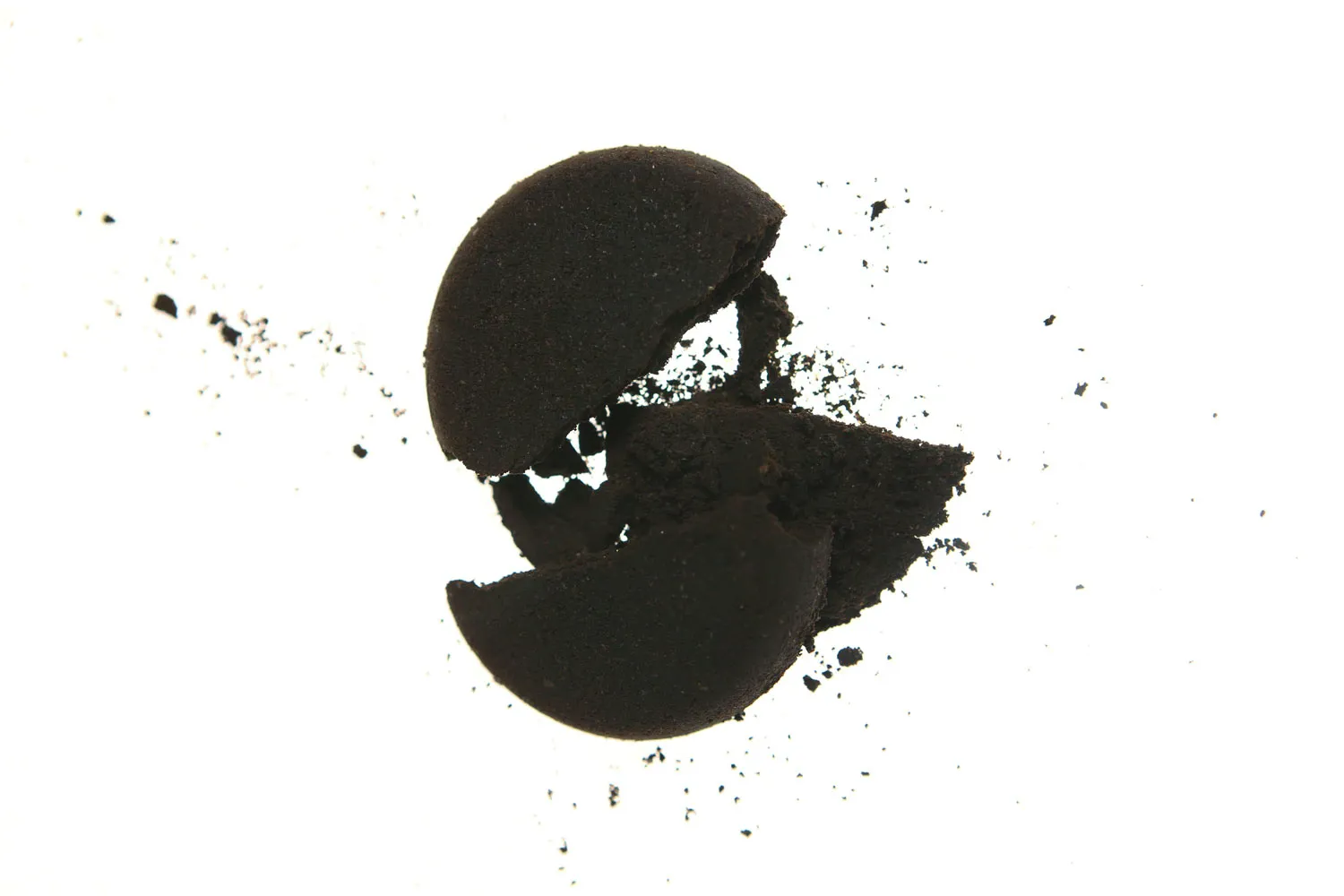
For this collaboration, Cxffeeblack’s signature coffee blend, Guji Mane, will be used to dye the t-shirts. The front of the shirt will read, “God Don’t Make No Junk Cxffee, Don’t Need More Cream,” a play on a phrase Jones says appeared on a shirt his grandmother gave him and which now serves as a “declaration of self-worth and cultural pride.”
The press release explains: “By using Guji Mane coffee to naturally dye the cotton, this collaboration reframes coffee not as a gentrified luxury but as a sacred commodity of African ingenuity. Similarly, cotton—once a symbol of slavery and sharecropping—becomes a material of pride, ethically sourced from Black farmers.”
The t-shirt launch coincides with Cxffeeblack’s ongoing Revenue Share Community Investment Round: 30 shirts will be allocated to new investors, and the remaining 30 will be reserved for previous contributors who increase their investment.
Reclaiming the supply chain
Jones described Cxffeeblack’s model—centering Black producers from start to finish—as having emerged “organically,” though implementing these ideas took years of effort.
He sees a growing need to form partnerships outside “a system where someone can simply turn the faucet off/on politically,” particularly as brands fall short or scale back their diversity, equity, and inclusion policies.
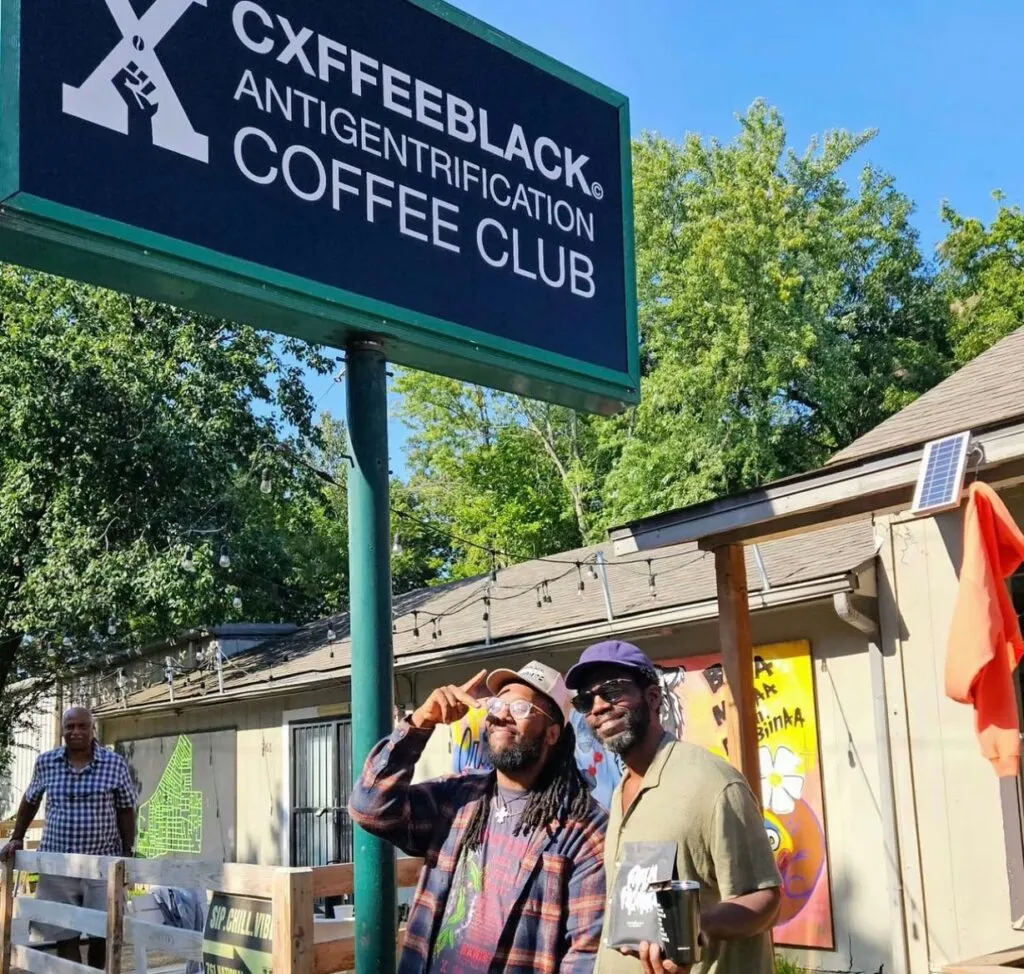
Jones asked, “How do we actually provide generational wealth and liberation? We have to start owning land. We have to start owning a supply chain.”
Jones noted that Black creativity and culture often underpin many businesses, yet the people creating that culture rarely own the means of production. Satterfield said in the press release that this is a chance to invest “in a future where Black ownership is not the exception—it’s the standard.”
Jones elaborated: “If we’re building our liberation models off of supply chains, off of land, off of crops and processes and factories that are owned by people who historically benefited from our oppression, then, at some point, those people can just decide no longer to do business with us. It’s like, well, how do we begin to find people who do want to do business with us and center the basis of what we produce in those communities?”
According to Jones, much has led up to this point, and he views the collaboration as a template for how he wants to approach business going forward. For instance, he is exploring working with an all-Black supply chain of cocoa growers in Trinidad.
“What we’ve seen is years and years of looking at family histories, looking at shared trauma, looking at solutions across multiple industries, whether it’s food or coffee or chocolate or cotton, and then deciding, ‘Okay, now we’re going to be very specific — intentional — about launching this product as a symbolic representation of what we do,’ and then begin to transition all of our business to these kinds of models and supply chains,” he said.
He also asks: “How do we begin to reclaim our rights to these crops, to the fruit they can produce — not just literally, but also economically?”
Pre-orders for the t-shirt are available here, and more information about Cxffeeblack’s equity campaign can be found here.