Coffee Trade Memories: Voices from the Roastery Floor
Long-standing members of the coffee trade recall the publication's scrappy origins and share how the sector has—and hasn't—changed over a quarter century.
By Morgan Hall6 min read
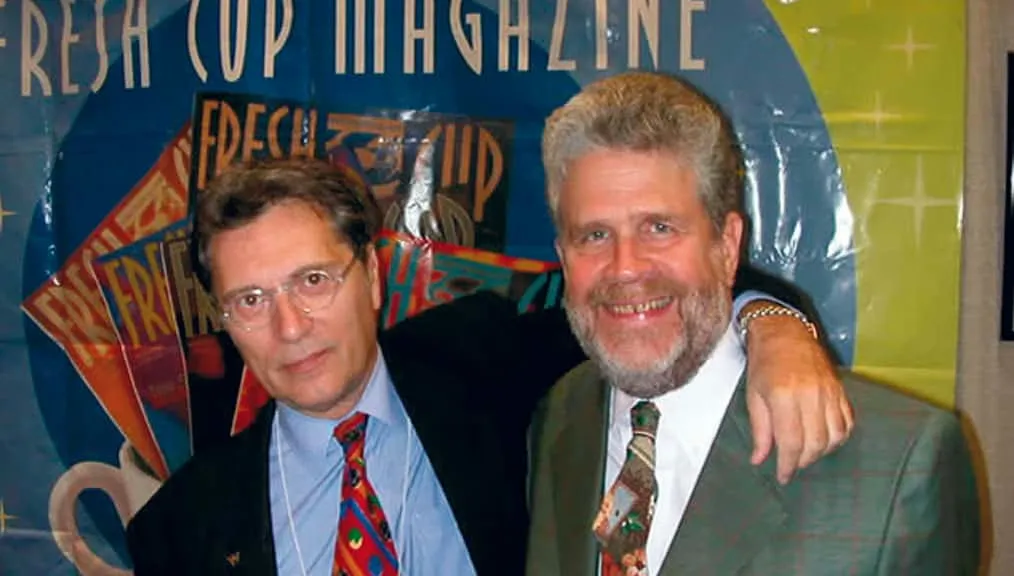
Recollections from the Coffee Trade
Conversations about the coffee trade’s formative years inevitably turn to Ward Barbee and his larger-than-life behavior. We gathered memories from several longtime associates.
Bruce Milletto, Bellissimo Coffee Advisors/Water Avenue Coffee
Out of nowhere, I received a call from Ward Barbee, a man I had never met. He had just released the first issue of the publication and wanted to meet the next week. He proposed that I write and photograph for his new magazine on an exclusive basis. I accepted, and that decision set everything in motion. Our first meeting took place in the small basement of Jan’s house, where he was putting the magazine together. That was the start of a long and wonderful friendship. The escapades I shared with Ward span many years; nearly all of them are far too colorful to print!
Don Jensen, Bridgetown Coffee
It feels like only yesterday that Ward approached me with his concept for a monthly coffee magazine. My wife and I believed it was an excellent and sorely needed idea, so we told him we would support him. After a few bottles of wine and plenty of coffee, we settled on the name and registered it nationally.
Mark Crawford, Modbar
What a journey! Ward Barbee launched that unconventional magazine in the same month we started Caffeine Machines in northwest Portland—our locations were only about four blocks apart. Ward would drop by to exchange ideas and always brought fascinating news. Who could have predicted that this marked the birth of an entire industry?
Sherri Johns, Alliance for Coffee Excellence/Cup of Excellence
Ward Barbee, the legendary “Coffee Carny” (a term I use with the utmost respect), knew how to put on a show. He hosted barista competitions at NASCORE back when virtually no one used the title “barista.” Ward would haul the publication around in a small wheelie cart and place copies on exhibitors’ stands, sometimes without their knowledge. All of this happened before the SCAA barista competitions; Ward shared a vision of coffee as performance, combining brewing skill with taste.
Larry Winkler, Torani
For the past twenty-five years, our partnership with the publication has given us not only a way to stay connected to our growing customer base but also to the global specialty coffee and tea community. In an industry that never stops evolving, it has remained a steady source of valuable information that keeps us well-informed about new trends shaping our business decisions and those of our customers. In a relationship-driven industry, we are proud to have been a partner from the start.
Jon Whiteside, Java Jacket, and Phil Huggard, Neighbors Coffee
Jon and Phil each recounted meeting Ward at the 1992 Fancy Food Show.
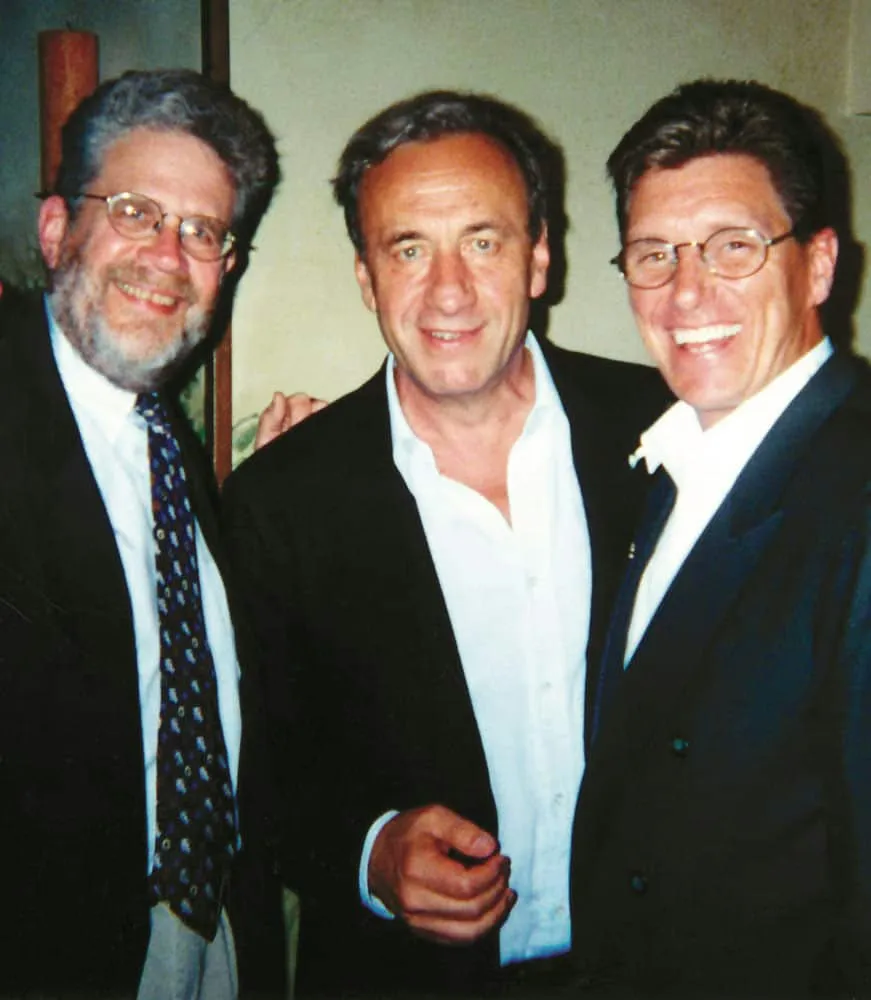
Jon: I find it hard to believe that twenty-five years have passed since a very opinionated, obnoxious visionary entered my life. It was the summer of 1992 at the Fancy Food Show in New York City. We were setting up our booth when a skinny man with gray hair and a beard walked up. He was wearing a Hawaiian shirt, cargo shorts, and topsiders. I thought to myself, “Who is this fashion disaster?” He introduced himself as Ward Barbee, publisher of the new coffee industry publication.
Phil: After we finished setting up for the show, Steve Neighbors, Fred Neighbors, Jon Whiteside, and I were having a drink at a New York City bar called Barrymore’s. Suddenly this fellow appeared with a large stogie and started a conversation. He asked what we were doing there from Oklahoma, and we explained that we were in town for a trade show and that we sold gourmet coffee. Ward said what a coincidence—he had just started a coffee magazine called the publication out of Portland. After several cocktails, we invited him to join us for dinner, and the rest is history.
Perspectives from Industry Veterans
The coffee industry has undergone dramatic transformation over the past twenty-five years in many respects. In other ways, things have remained much the same. We spoke with several veterans to hear their perspectives.
JosÉ A. Gaviña and Leonor Gaviña-Valls, Gaviña Coffee: The Challenges of Growing with an Industry
José: One challenge in retail is competition from large multinational coffee roasters and well-known consumer brands that have deeper pockets to secure distribution. We were among the first roasters to introduce whole bean coffee into supermarkets in Los Angeles.
Leonor: Evolving with the times and staying ahead of trends is important. We started with espresso at a time when few in our market knew what it was. Then we introduced brewed coffee. After the frost in Brazil in the 1970s, we developed a line of specialty coffees to be sold to gourmet shops that sold coffee by the pound. We were one of the first on the West Coast to use a one-way valve on our bags, vacuum pack, and flush with nitrogen. We continue to bring innovation to our brands, and we study all trends in the market. Some are a better fit with our values and traditions than others.
Molly Laverty, Farmer Brothers, Sustainability Group: The Evolving Role of Sustainability in the Coffee Industry
There is more focus on what is in our food, how people are treated, and what conditions are like for the lives of coffee producers. It used to be that we had to push information to a customer and try to get them interested. Now, every new business request we see asks at least one thing about the sustainability aspect of a coffee, whether it concerns where the coffee comes from, how far back it can be traced, or our support of local and community efforts as a company or within our supply chains. I see that coming not just from the specialty sector but from across the coffee industry.
Jan Anderson, Premium Quality Consulting: Being a Pioneer
In the mid-eighties, we started a small business selling Italian coffee to restaurants and hotels in New York City. In the early days, most of our sales calls consisted of explaining how Italians liked to drink their coffee, often spelling out the words “espresso” and “cappuccino,” and then giving a technical description of the espresso extraction process so they understood that we knew what we were talking about.
Our first espresso machine technician was my husband and partner. When it was time to hire a second technician, I decided to place an ad in the “help wanted” section of the New York Times. That night when I boarded the train, I took a seat next to a young couple huddled over the paper. The man suddenly laughed, “Look at this!” She joined in, reading aloud the passage that had so delighted him, “‘Wanted. Espresso machine technician!’ What in the world is that?”
The couple left the train at the next stop, and it changed how I saw our work and my internal dialogue. We were pioneers!
Dan McCloskey, Premium Quality Consulting: Ushering in a New Generation of Coffee
I represent the last generation of coffee’s second wave. I didn’t know it at the time, but it’s clear to me now that I witnessed the incremental change of coffee from second to third wave from the inside.
I entered the business at the peak of the second wave, in Chicago in 1994. I was lucky to connect with an entrepreneur named Elaine Apollo, who had a distribution company that sold Illy coffee. By the mid- to late-nineties, Elaine had established an impressive portfolio for Illy. She had been part of the group that introduced Italian espresso to the upscale restaurant business. It was an exciting, interesting time to be in coffee.
I remember meeting Doug Zell at an event in 1996 or 1997; I was blind to the shift he represented. I think I served him an espresso and he said something like “I want Intelligentsia to be the Illy of the US.” At the time, I remember thinking in a condescending way, “Huh, that guy has some nerve. The Italians wrote the book on coffee, and have been doing it for generations. What’s this dude going to do?”
What I failed to understand is that he was doing something more than copying a thing from Italy. As we can see now, he and other pioneers were inventing an American coffee form. They created something different from what had come from Europe.
I suppose it might be an embarrassing story—the second-wave sales guy not seeing the cool thing coming towards him until it’s run him over—but I don’t think I’d have it any other way. I’m thankful for the experience I had, and for the perspective that change brings to my work now.