Looking Back at the First Fully Online Re:co Symposium
The specialty coffee community gathered remotely for a two-day virtual Re:co Symposium in July 2020, featuring recorded talks, real-time Q&A, chat-room discussions, and optional sensory kits, while addressing industry challenges, equity, and consumer trends.
By Morgan Hall7 min read
In a conversation with us, Peter Giuliano, chief research officer of the Specialty Coffee Association (SCA), described Re:co Symposium as “a place where current and future leaders come together to talk about the state and future of the coffee.”
Originally, that gathering was to take place in Portland, Oregon, alongside the 2020 Specialty Coffee Expo and Re:co Symposium—until a global pandemic forced a change of plans.
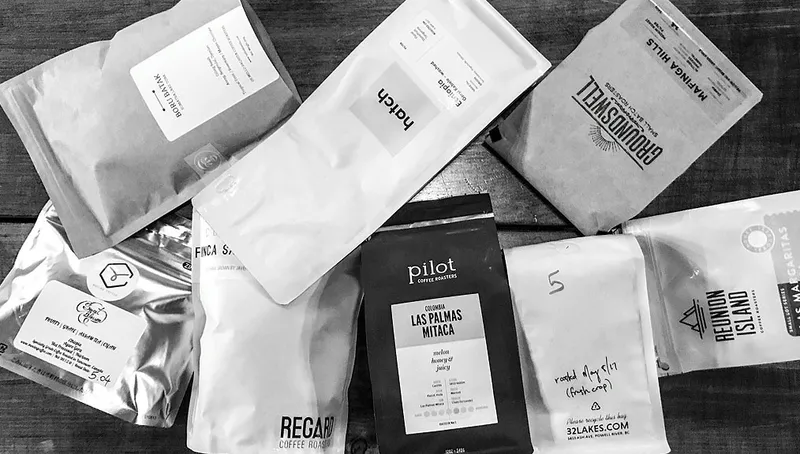
Instead, on Thursday, July 16, and Friday, July 17, the coffee community connected remotely for the first-ever virtual Re:co Symposium. Over the course of the two days, participants viewed pre-recorded presentations, joined live Q&A sessions with the speakers, and interacted in chat rooms moderated by Re:co Fellows. Those who purchased the optional “Home Experience Kit” could further explore curated coffees and sensory activities.
The State & Future of the Coffee Industry
Following a welcome from Giuliano, the symposium opened with “The State and Future of the Coffee Industry,” a series of talks by experts from academia, business, and the beverage sector aimed at illuminating some of today’s most pressing challenges and what might lie ahead.
Laura Alfaro, a professor of business administration at Harvard, began the segment by focusing on healthcare and leadership—both of which, she argued, need to be strengthened across the board to be effective going forward. She also pointed to the need for a reevaluation of the global supply chain that existed even before COVID-19, calling for greater internet access, grant funding, and cooperation between the public and private sectors.

“What is the world we will inherit after the pandemic?” she asked. “The countries that will be most successful will be the ones that embrace cooperation.”
SCA CEO Yannis Apostolopoulos spoke next, highlighting how consumer habits have shifted because of the coronavirus—from foodservice and “institutional” (office) consumption toward at-home consumption, a trend that will continue to grow the retail market. Once a vaccine is available and people feel safe socializing again, he said, customers will return.
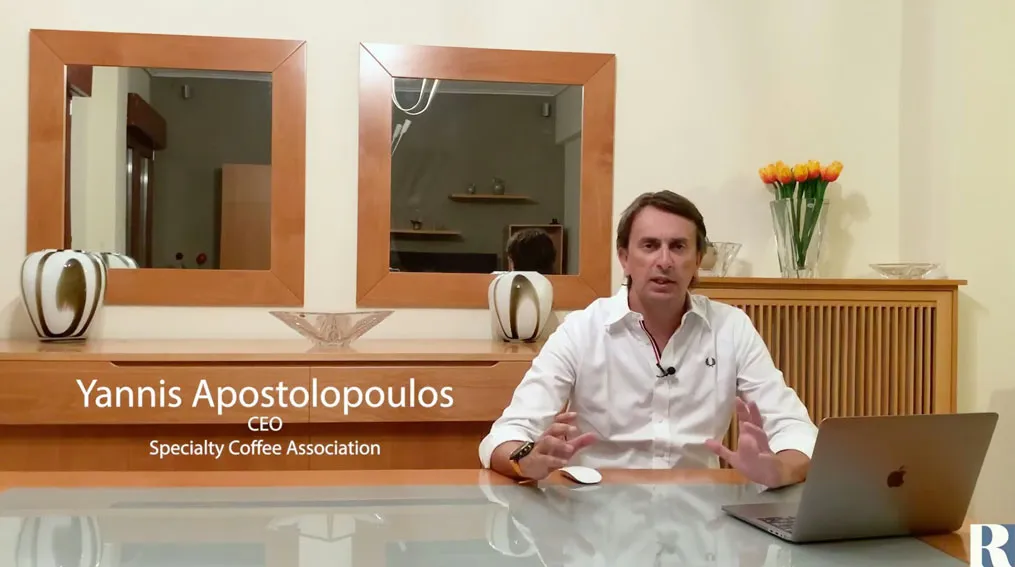
“Specialty coffee, at the end of the day, isn’t the coffee in the cup,” he says. “It’s the whole experience around the coffee in the cup.”
The session also included Jim Watson, senior beverage analyst at Rabobank, who examined how the coffee industry might look to craft beer—with its focus on distribution channels such as grocery stores—or wine, which leans more direct-to-consumer, as inspiration for growth in retail. Albert Scalla, senior vice president of trading at StoneX, called for addressing the volatility between supply and demand and for standardizing consumer data reporting.
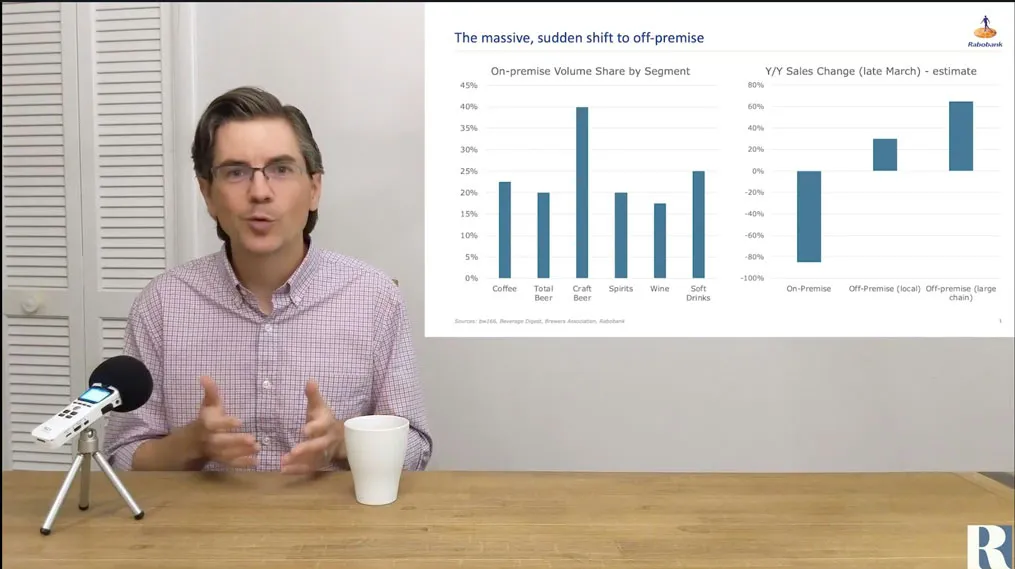
Jim Watson
Offering a different and refreshing perspective, Jan Anderson of Premium Quality Consulting shared interviews with industry leaders from around the world in her pre-recorded video. Voices including Keba Konte (Red Bay Coffee), Jeanine Niyonzima-Aroian (JNP Coffee), and George Howell (George Howell Coffee) created a captivating dialogue about the innovative nature of cafés, the importance of café location in this new era, and the essential support of producers—particularly women smallholder farmers—to make real impact and ensure coffee’s survival.
Pathways Between Farm & Consumer
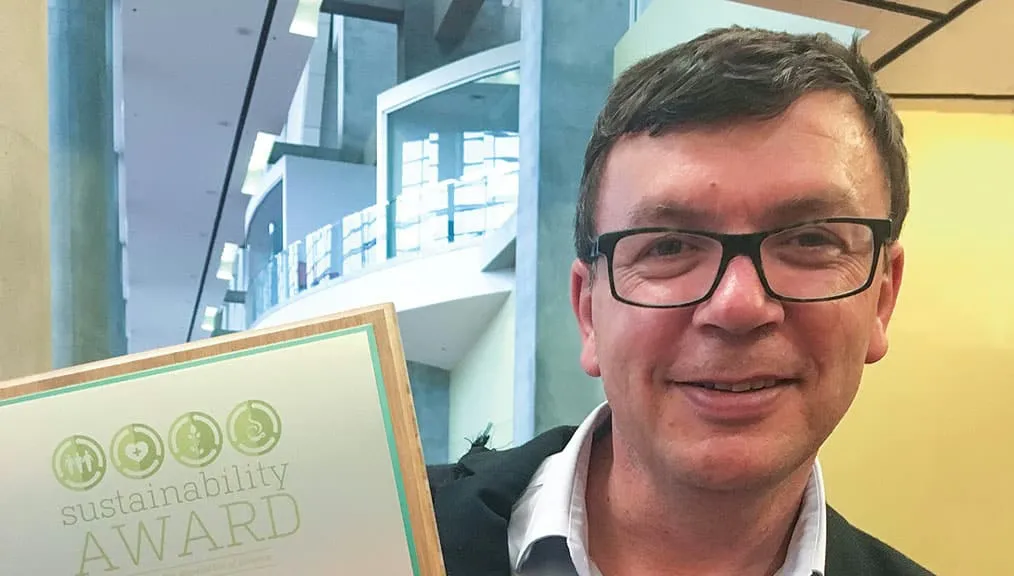
After the SCA Sustainability Awards, hosted by Kim Elena Ionescu, the symposium moved into its next session, “Pathways Between Farm and Consumer: Mapping Specialty Coffee.” Featuring Kyle Murphy, senior policy manager at MIT; Rocco Macchiavello, professor at the London School of Economics; René Leon-Gomez of PROMECAFE; and living wage expert Michelle Bhattacharyya, the afternoon raised questions about how to further build connections and resiliency throughout the supply chain, with poverty, cost of production, and blockchain recurring talking points.
Leon-Gomez (notably the only speaker to record his talk in Spanish) brought up the “perfect storm” in coffee production: coffee rust, the cost crisis, and COVID-19. Though producers have weathered many storms over the years, COVID is perhaps the biggest catalyst in illuminating the cracks in the supply chain, especially at its base.
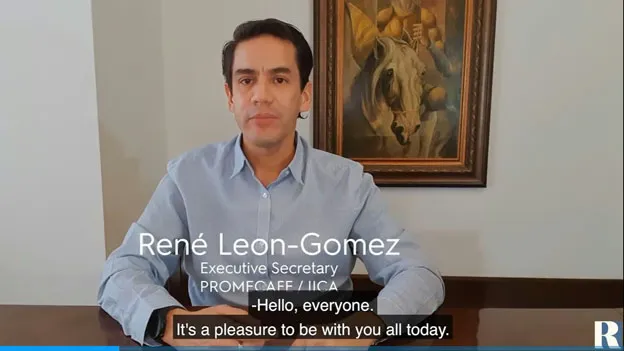
“How much longer can the pillars hold before collapsing?” he asked.
If these issues at origin are not swiftly addressed, he said, the “vicious cycle of poverty” will only increase. The way forward is to make sure producers have a say in policy and access to tools and education, which will help to achieve social, environmental, and economic sustainability.
Michelle Bhattacharyya is the CEO of On-Up LLC, connecting supply chain and internal employee living wage and living income strategy and action and creating shared value for business, consumers, workers, and communities. It was this last concept, of community, that she thread throughout her talk. From farmworkers to baristas, community plays an important role in driving a healthy, supportive, and sustainable world. In order to create not only a more stable, but thriving, industry, Bhattacharyya encouraged people to first map out their own supply chain and then start assessing the costs it would take today to ensure a living wage.

Michelle Bhattacharyya
Following her talk, she took to the discussion rooms, where she was asked about the rise of wage transparency worksheets and whether they were effective in working toward living wages.
“I think they are huge advocacy and organizing tools,” she responded. “I use them in trying to highlight shortfalls to living wage and think that attacking this issue as a group is most likely to bring change. Transparency is really key, but information needs to be driven to action. That’s why we need to work to build a community that bolsters one another one step at a time.”
An Urgent Need for Progress
In a season marked by protests against police brutality and racial injustice, perhaps no session was more resonant than Friday morning’s “Race, Specialty Coffee, and the Urgent Need for Progress,” hosted by SCA’s Mansi Chokshi.
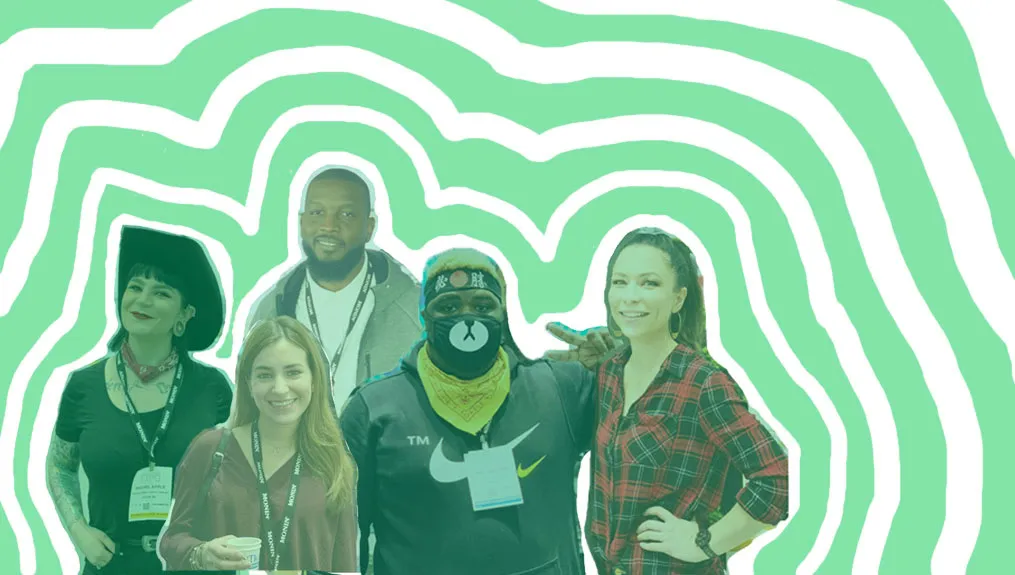
While leaders like Michelle Johnson, Tymika Lawrence, and Jenn Chen (who were featured in the session’s opening video montage) have long spoken out about racism in the industry, it wasn’t until recently that the world of coffee finally began to face its true reckoning.
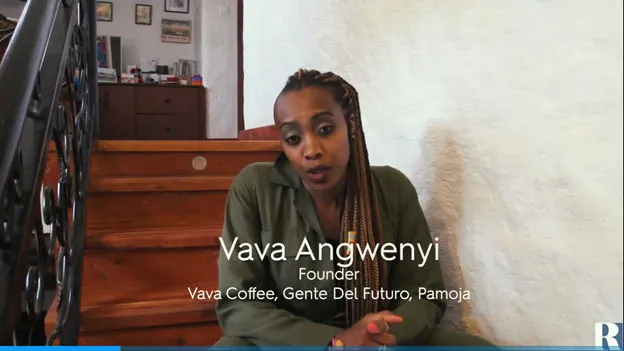
“Welcome to my rumble,” opened Vava Angwenyi, of B Corp-certified Kenyan coffee company Vava Coffee.
A rumble, she acknowledged, is a way of saying, “Let’s have a conversation, even when it’s tough,” setting the tone and pace of the session, which has since garnered much praise and attention across social media.
As she laid out the historical context and complexities surrounding race, power, and privilege within coffee, Angwenyi invited continued dialogue on finding solutions to promoting responsibility and accountability for a more just and equitable industry.
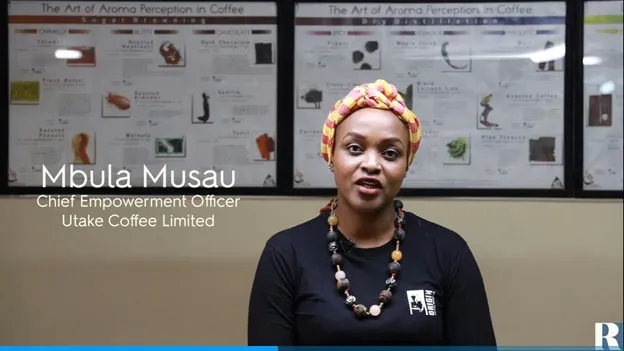
Both Angwenyi and proceeding speaker Mbula Musau, founder of Kenya’s Utake Coffee, called for more power to the producers, with Musau highlighting that while most producers can roast, not all roasters can produce. By placing more value on producing and encouraging more roasting at the origin level, she said, we’ll see more empowerment across the supply chain.
Getchusomegear’s Chris McAuley and Caravela Coffee’s Cydni Patterson brought viewers into their yard for an informal—but no less powerful—chat about the importance of inclusion and access, their choice of location and format for their video symbolic of such topics. Watching these two converse on empowering baristas through better training, creating healthier work environments by investing in your staff and your community, and, of course, dismantling racism, on top of the incredible reception seen both in the discussion rooms and on Twitter, was an encouraging reminder that while we have a lot of work to do, we have the resources to get started.
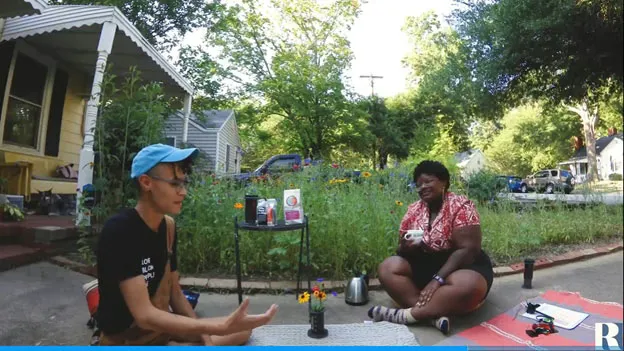
Chris McAuley (left) and Cydni Patterson.
“You don’t have an option to ignore this conversation anymore,” said Chokshi as she wrapped up the morning session. “The real change feels closer than ever. You just need to show up and have courage.”
The Changing Consumer Experience of Specialty Coffee
The rest of the day, peppered with breaks where participants either headed to the discussion room to engage with speakers or the virtual experience hall for sensory evaluations, focused on the topic of the changing consumer experience, tying it back to what was introduced at the start of the symposium: we must find a way to address the needs of consumers in a post-COVID world.
We heard from Ilja Croijmans, a postdoctoral researcher out of Utrecht University; UC Davis professor of sensory science Jean-Xavier Guinard; and Austin Henley, senior marketing manager at R.J. Reynolds Tobacco Company, each introducing, respectively, concepts of more accessibility and standardization surrounding the language of sensory evaluation, consumer-driven product optimization and innovation, and strengthening relationships with consumers and communities through support and inclusivity.
A guided sensory experience, utilizing sound, touch, and taste, led by Brazilian research scientist Fabiana Carvalho was followed by the last talk of the symposium, by UC Davis Coffee Center’s William Ristenpart, who highlighted that while wine earns $68 billion total U.S. sales to coffee’s $88 billion, wine has nearly four times as many scientific research articles than coffee, signaling the need for more coffee research if we want our industry to move forward in a more informed, sustainable manner.
Continuing Access
Before participants dispersed, Peter Giuliano came back on to thank everyone for their time and for making this year the most diverse audience in Re:co’s 12-year history—perhaps most largely in part due to Getchusomegear and Glitter Cat organizing funds for 100 registrants, as well as no transportation/lodging cost barriers.
Another positive about the virtual experience this year was the ability to go at one’s pace, being able to watch the videos, digest the information, and participate in the discussion rooms in more meaningful, convenient, and less overwhelming ways.
That’s not to say this event was without faults. Apart from the technical difficulties that come with any event of this scale, virtual or not, lack of both accessibility and representation continue to be crucial missteps. Would this year have been as diverse an audience if not for Getchu and Glitter Cat? Will BIPOC voices continue to be heard solely during seminars on race? As the industry grapples with its difficult past and its uncertain future, we must call on our leaders and leading bodies to be the changemakers and drive progress forward. This year’s Re:co Symposium was an admirable start.
Head to the #Reco2020 thread on Twitter to read more insight and discussion, and watch the SCA space for the video recordings.