Rethinking Who Can Take Part in Coffee Trade Shows
Trade shows offer camaraderie and learning, yet cost, distance, and exclusionary practices keep many would-be participants away. Organizers and industry members are weighing how to widen access.
By Morgan Wood8 min read
A Personal Entry Point
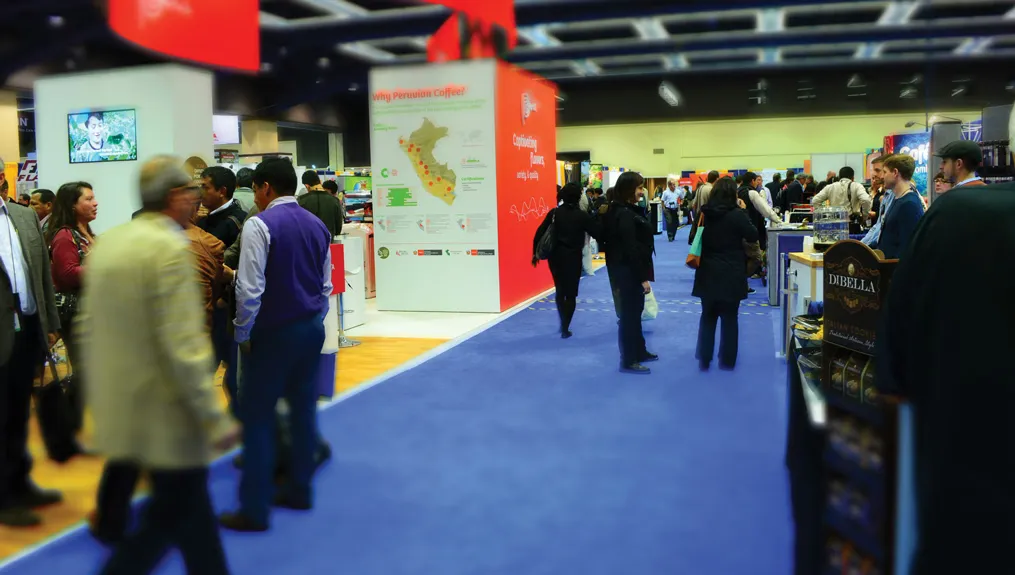
Coffee Fest Seattle in 2010 was my introduction to trade shows. At the time I lived in Portland, Oregon, and had just become deeply enamored with coffee while working at the Starbucks in Pioneer Courthouse Square.
Discovering that an event called “Coffee Fest” existed was astonishing to me, and learning soon afterward about the Annual SCAA (as it was then known) Expo lifted my excitement even further.
Part of what makes trade shows so valuable is the community and camaraderie they foster across the wider industry. Having spent a decade attending, volunteering, competing, judging, and teaching at these gatherings, I have formed a good number of friendships with people I see only at trade shows. I also value the classes that come with them; whether I am sitting in a lecture or teaching one myself, I admire the appetite for learning and growth that the coffee industry displays.
Then there are the connections with vendors presenting new products, the chance to taste coffees or try steaming pitchers that have not yet reached the market, and the broader feeling of belonging to something larger than oneself. It may sound trite, but trade shows have given a sense of legitimacy to my time building a career in coffee. After connecting with hundreds of others who have also made coffee their life, I sense that I am not alone in these feelings.
Trade Shows Are Hard for Everyone
For all their benefits, however, a hard edge seems to lie just beneath the surface of the enthusiasm and fanfare: trade shows are hard for everyone, but they are harder for certain groups of people.
Attendees
In 2019, the United States alone had over 35,000 coffee shops of various types. Whether a small business, a franchise, or owned by a large parent company (e.g. Starbucks), most of these shops are unlikely to pay for staff members to attend a local trade show. Only a fraction of the coffee industry consists of companies able to—and regularly willing to—cover their team members' attendance; most trade show attendees pay their own way, a cost that can be a serious obstacle.
The price of the trade show itself, however, pales in comparison to another challenge: proximity. By their nature, these events take place far from where many attendees actually live and work. Travel, food, and lodging can quickly tip the scale from “doable” to “impossible” for people hoping to attend trade shows, as well as for the numerous volunteers, instructors, and judges who must cover expenses incurred by traveling. Volunteer teachers, in particular, have to pay thousands of dollars on classes—on top of their annual membership fee—in order to be allowed to teach in the first place, creating a high barrier to entry and in turn narrowing the scope of educational topics.
Besides the “where” of an event, the “when” matters, too. Take, for instance, the fact that one of our industry's largest trade shows has twice been held in Boston the same weekend as the Boston Marathon, making accommodations nearly impossible to find and adding hundreds of dollars to the total cost of the trade show.
Vendors
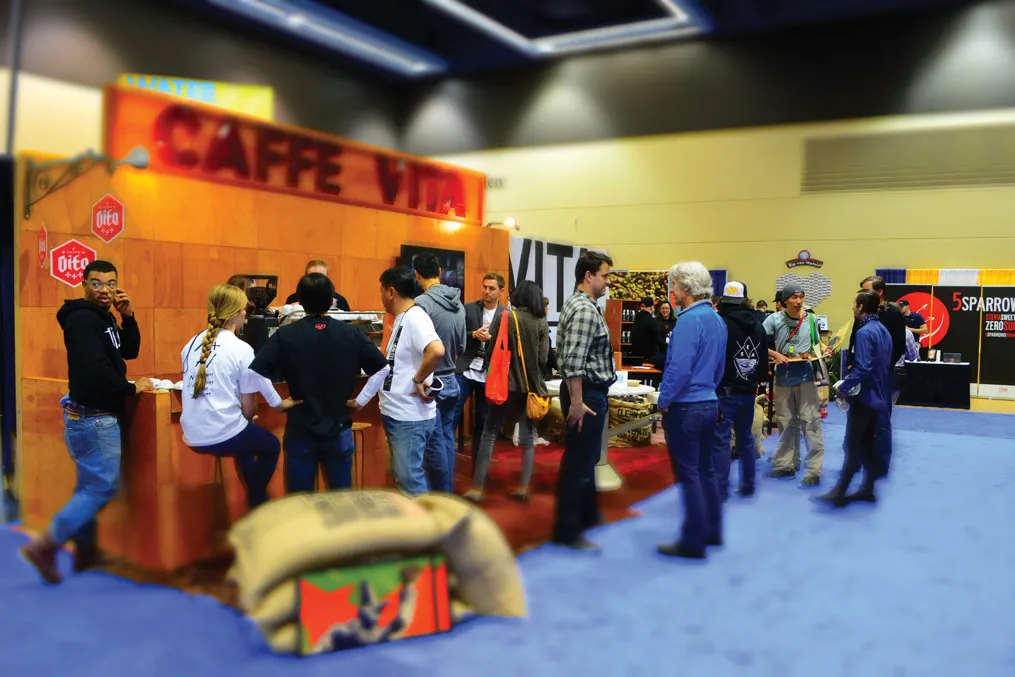
The question of how productive these shows are bears mentioning, and not just for attendees, but for vendors as well. Booth rentals range in the tens of thousands of dollars. Drayage fees, the union-dictated cost of moving materials within the convention center, can be $20,000 one-way, shares one industry insider.
When confirming these numbers with Nathanael May of Pacific Foods, he says, “Yes. And depending on who is doing it, it can be a monstrous number. The weight of the booth matters A LOT.”
If the move-in or move-out day is a holiday, drayage fees become time-and-a-half—that's $30,000 to move materials out of the convention center. Says another insider of such fees, “They vary hugely for opaque reasons.”
The question for participants in the classrooms and vendors on the show floors quickly becomes: Is this worth it?
Trade Shows Are Harder for Some
Although the aforementioned challenges are widespread and valid for many, there are additional barriers for certain groups of people. For anyone who has been “other-ized,” trade show accessibility can be much more difficult.
People with Disabilities
Awareness and sensitivity to physical disabilities is largely an area governed by the Americans with Disabilities Act (ADA) of 1990. Convention centers and trade show organizers are required by law to meet certain requirements so that people with physical disabilities can access all areas of the show. What many overlook are the challenges faced by people with intellectual and developmental disabilities (IDD).
“Specialty coffee has a tendency to build barriers for people with developmental disabilities,” says Tristan LeFever, head roaster at Happy Cup Coffee, a roasting operation in Portland, Oregon, that specializes in creating jobs for adults with disabilities.
Although LeFever has attended trade shows over the years, Happy Cup has never sent a group of employees to a trade show for fear that they would be “other-ized” by the coffee community at the event in the same way they are at coffee shops around town. LeFever and the team at Happy Cup hope to change that this year with SCA being in Portland; they're even working with their importing partners to discuss the opportunity of some of their staff with disabilities giving a talk at Re:co Symposium in the future. This, among other efforts, feeds into their mission to teach “self-advocacy,” the ability to stand up for one's own needs, to their staff.
Other Challenges
Beyond disabilities, there are many ways in which a person can feel excluded from trade shows, as Erica Escalante, owner of The Arrow Coffeehouse, experienced at last year's Expo. As a new mother still nursing her little one, she says she felt unwelcome at every level, even though her baby was in a carrier and not in danger of running around the show floor or getting hurt. The breastfeeding options were few and far between, and, at one point, a security guard barred her entrance to the barista competition even though she had the expressed permission of the SCA Event Coordinators. (Fortunately, she had one of their cell phone numbers and was able to call in order to obtain entry.)
Owner of the iconoclast Deadstock Coffee in Portland, Oregon, Ian Williams is admittedly not a coffee person. A former Nike employee, Williams opened Deadstock with the goal of creating a space for sneaker-heads to connect; coffee is the means to create that culture. Williams recalls his first time at a trade show and the challenges he faced in being taken seriously as an entrepreneur.
“The classes that were there were extremely helpful,” he says. “But then [you] start to walk that trade show floor and nobody believes you, at least nobody believed me, and it was quite uncomfortable…and this is the same for all trade shows.”
Williams learned from his earlier days walking the floor at sneaker trade shows that this kind of treatment is par for the course, regardless of the industry.
“The bigger companies who have the 50×50 booth don't want to say anything to you,” he says. “I was already kind of used to that, so when I went into the coffee side I was like, 'Man, I didn't think it was gonna be like this, but it is, and I'm used to it.'”
In digging deeper, Williams says that the dismissal was sometimes an issue of being a small business owner and not being taken seriously by large vendors, while at other times, it was an issue of racial discrimination. His experiences notwithstanding, Williams still holds onto this sage advice: “I learned early, early in life, if you want something, there's usually a way to get it.”
Trade Show Organizers
Lest we assume those organizing the trade shows themselves are the cause of all these woes, I spoke with the coordinators behind Coffee Fest and SCA Expo to learn about the challenges they face in addressing accessibility.
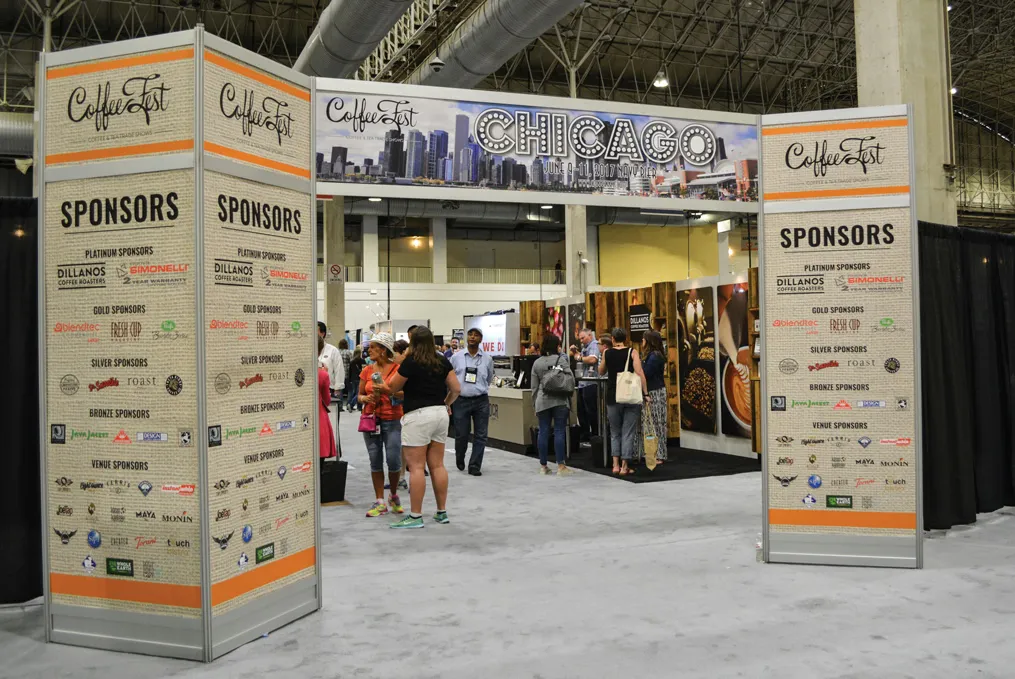
Coffee Fest's Erika Lowery and Renee Wulf affirm that accessibility in every sense is one of their top priorities, from the number of wheelchairs that will be provided by the convention center, to language translator options, to venue regulations they cannot control that might make a particular group of people feel excluded or less than. Specifically, Lowery elaborates, Coffee Fest looks at which cities attendees are asking the show to be held in, population of surrounding cities within driving distance, coffee shops per capita, ease of booking direct flights, and cost of lodging per night. To make matters more complicated, points out Wulf, many of the arrangements are being made up to five years in advance. There have been instances when accessibility options and availability of resources [like wheelchairs or nursing pods] have changed since the arrangements were made.
Alex Bernson, Event Marketing Director for SCA, also states that accessibility at every level is of paramount importance. Part of the tension, Bernson notes, is that the SCA is “a community organization and we have to take all members into consideration.” That means looking at the cost to the vendors, to the attendees, and to the SCA itself.
“Every stakeholder in the specialty coffee chain is part of our community: barista, roaster, technician, grower, NGO, exhibitor, sponsor, competitor, allied member, you name it!” adds Cindy Cohn, Chief Exhibitions Officer.
It is no surprise that, with such a broad scope of accessibility, innumerable challenges arise. With respect to those challenges that affect everyone (price, proximity, and productivity), the SCA is working to address those as well.
“We do know that attending a trade show costs money, and different groups within our community have varying resources available,” says Cohn. “We try to offer a number of options to help, including volunteering, which can translate into a free badge. There are also discounted group tickets available for NGO and producer groups. Our Sponsorship teams [are] also currently seeking sponsors for a new Expo scholarship to help more people attend the events.”
Takeaways
Although the challenges regarding accessibility at tradeshows are many, raising awareness is often the first step. Realization that many cannot afford to attend has led to volunteer opportunities and scholarships. Proximity issues have given birth to hosting more shows in varied locations, so travel is not the barrier it was in the past.
Still, there is much to be done.
“We periodically survey attendees at our events, and so are also proactively looking at what's important to them,” says Cohn. Notably missing from the survey process, however, are those who chose not to attend, for whatever reason.
In discussing this issue with several industry veterans, ideas abounded: tiered pricing structures for those who cannot afford admission; exploring non-convention center venues when possible to cut costs; lodging accommodations for volunteer instructors and judges; and simply being thoughtful and aware of how a rule, system, or structure might be perceived by someone with a different background than oneself.
Trade shows can have immense value, which is precisely why they need to be made as accessible as possible. Somewhere, somebody promulgated the idea that we cannot love something and point out its flaws at the same time. That's a false dichotomy; to love something and desire it to endure is inseparable from wanting it to be better and more accessible to everyone. It's not either/or, it's both/and.
I love trade shows and, without diminishing the tremendous benefits they've added to my life and to the lives of so many others, I think they can and will continue to get even better.