Copenhagen Show Highlights Five Standout Espresso Artifacts
From a Bialetti moka pot to a Faema E61, these pieces trace espresso equipment’s design evolution at a Danish cultural institute.
By Avery Gray3 min read
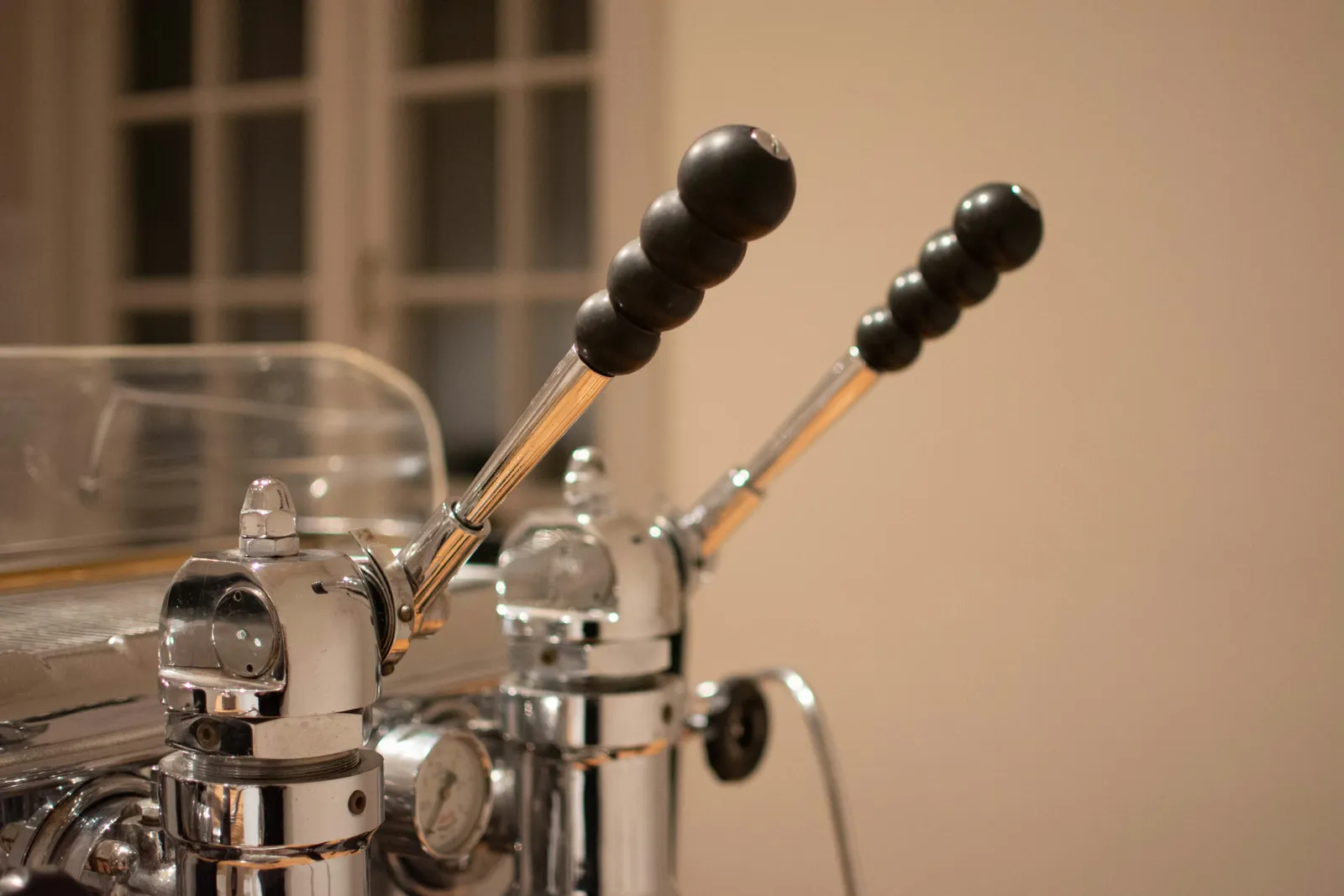
Italy’s place at the heart of espresso culture is well established: Angelo Moriondo built the first espresso machine in Turin in 1884, and the northwestern city remains a hub for many prominent coffee equipment makers. Today’s machines bear little resemblance to Moriondo’s prototype, and an exhibition titled “Italian Passion: The Art of Espresso” is tracing how coffee equipment has changed over time.
The show, on view through March 31st, 2023, at the Istituto Italiano di Cultura di Copenhagen, brings together “45 pieces, ranging from machines for domestic use to coffee shop equipment and coffee cup sets,” according to a press release. “The collection includes historical pieces, some of them unique and unobtainable, selected by Curator Elisabetta Pisu for their ability to exemplify the change of production and consumption habits over time, and provide insight into the social significance of an action that the world and the collective imagination inextricably associate to the lifestyle and rituals of our daily life.”
Although a trip to Copenhagen to see the exhibit in person wasn’t possible, a preview of selected pieces was available, among them “the very first moka machine, created by Bialetti” and “artwork that blends architecture and design by Aldo Rossi, who transformed a coffee set into a square,” along with other one-of-a-kind objects. Together, the collection shows how far espresso machines have come and how coffee equipment can serve as a canvas for innovative design and creative expression.
Below are five pieces that nearly prompted a ticket purchase to Denmark for a firsthand look.
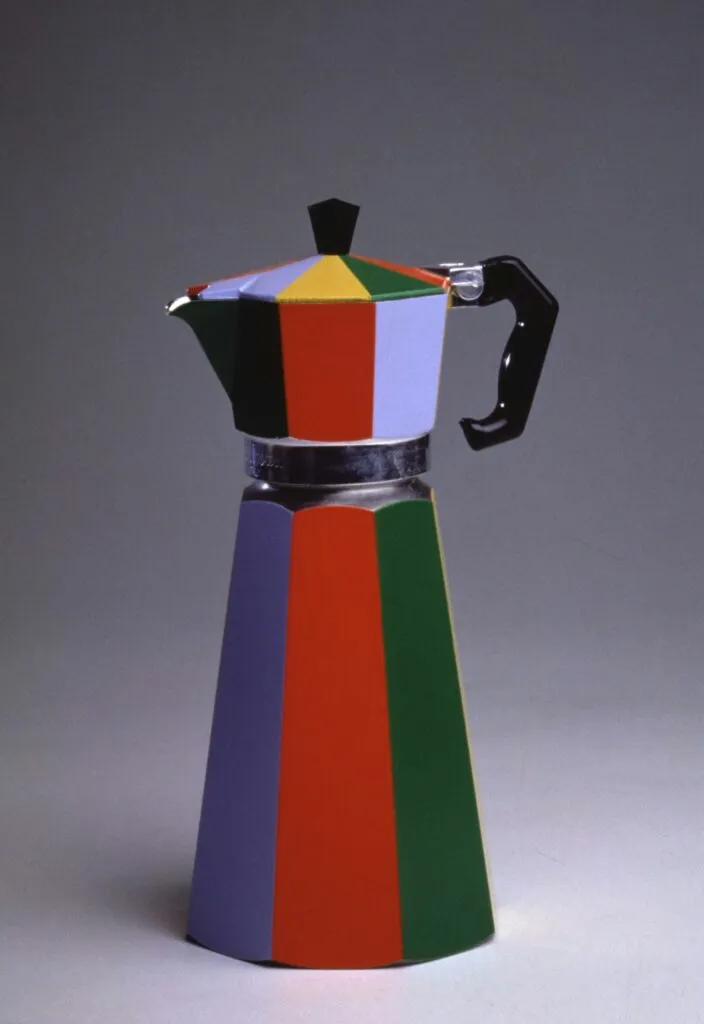
Oggetto Banale: Caffettiera (Banal Object: Coffee Maker)
Who wouldn’t want to brew coffee with this striking moka pot? Shown at the Venice Biennale in 1980, the piece “overturns the typical proportions of an Italian moka pot by elongating the height of the boiler and introducing a coloured insert on each side.”
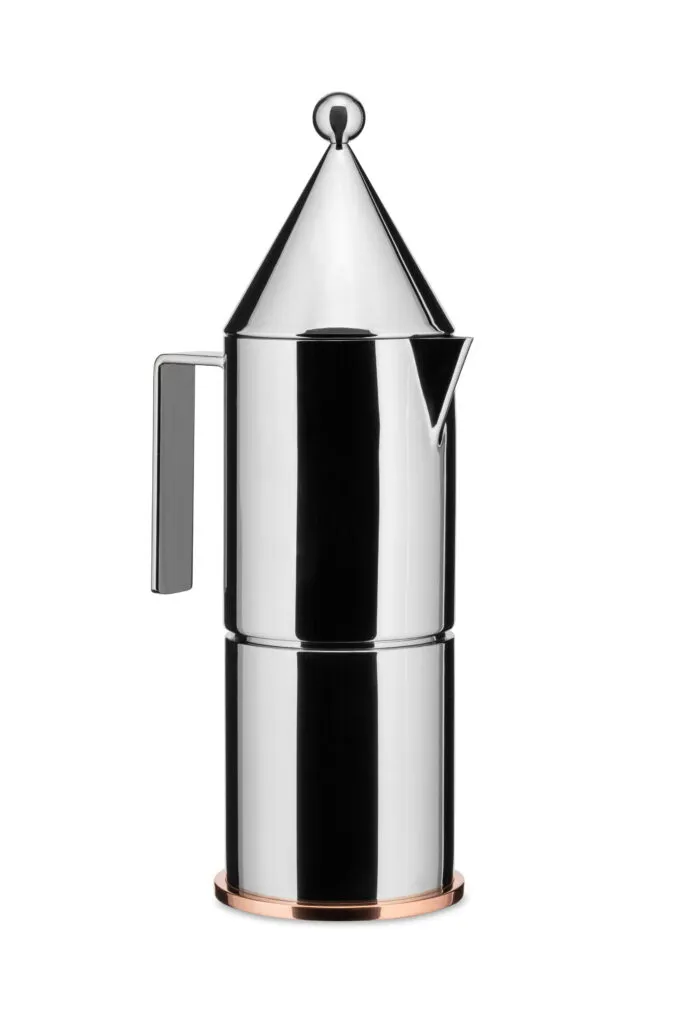
Espresso Coffee Maker, La Conica (The Conic/Laconic), Aldo Rossi
Alessi, an Italian design firm, is known for reimagining standard coffee tools with bold, design-forward touches. The company has several pieces in the exhibition, and choosing a favorite was difficult.
Aldo Rossi, a celebrated Italian architect, created many coffee tools with Alessi, starting with a moka pot variation in 1984. The curators describe it this way: “La Conica presents a dry architectural structure, committed to elegance and balance, resulting from the perfect combination of the thin lines of the handle and the cylindrical, conical, and spherical shape of the coffee-pot body.”
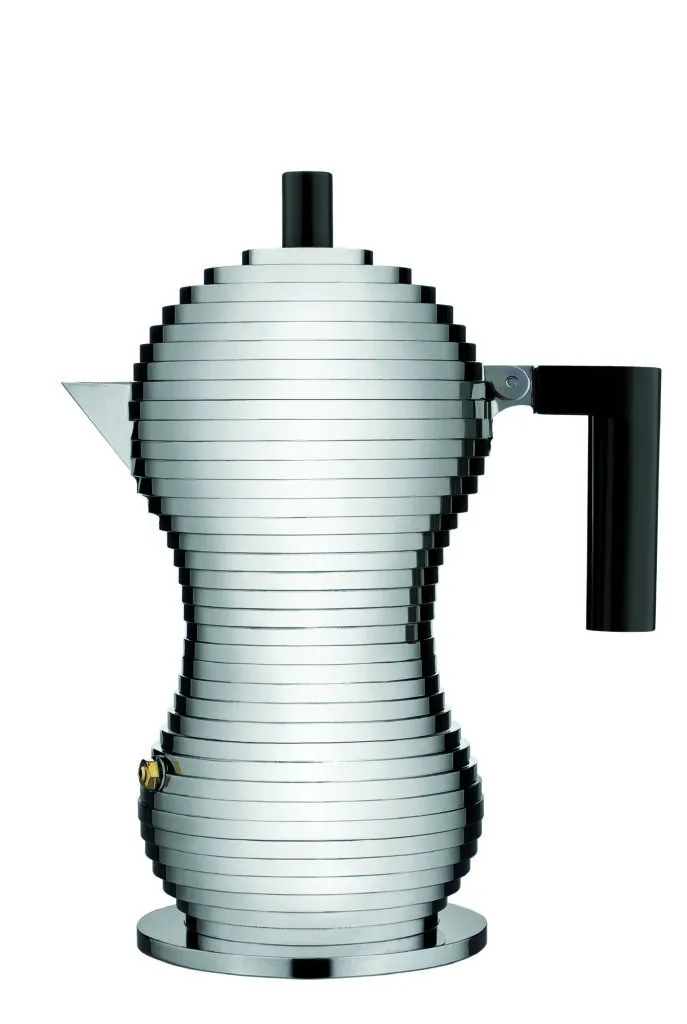
Espresso Coffee Maker Pulcina (Hatchling), Michele De Lucchi
Narrowing the selection to a single Alessi design proved impossible. This moka pot, made in 2015, merges “the technology developed by illycaffe and Alessi’s design experience.” Its resemblance to a baby bird is intentional: “Made in aluminum, it sets itself apart because of its unusual, stepped aesthetic. The spout is well pronounced, and its … V-shape, recalling the beak of a hatchling, is outlined so as to guarantee perfect pouring.”
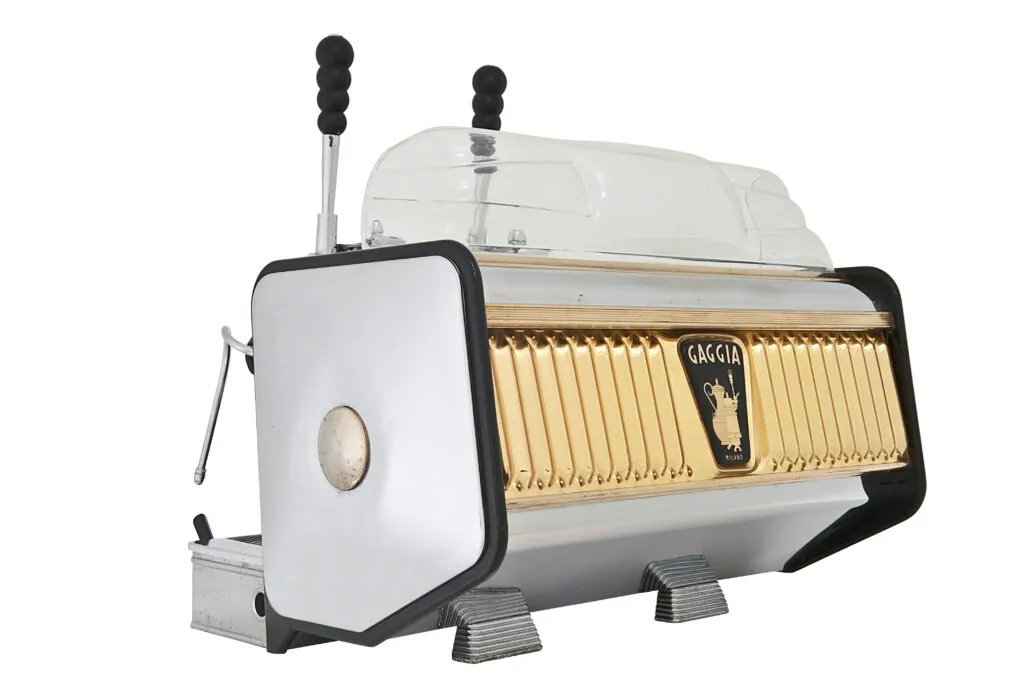
Modello America, Gaggia, Milano, 1958
Espresso culture gained global popularity around the 1950s, and Gaggia turned out this machine—the America—in large numbers during the second half of that decade. “The design of this machine is characterized by an elegant, tasteful style, the result of a company strategy aimed at reducing the cost of materials and speeding up the mounting/dismantling time needed for maintenance.” Owners could further personalize their machines by customizing the plexiglass.
Courtesy of MUMAC.
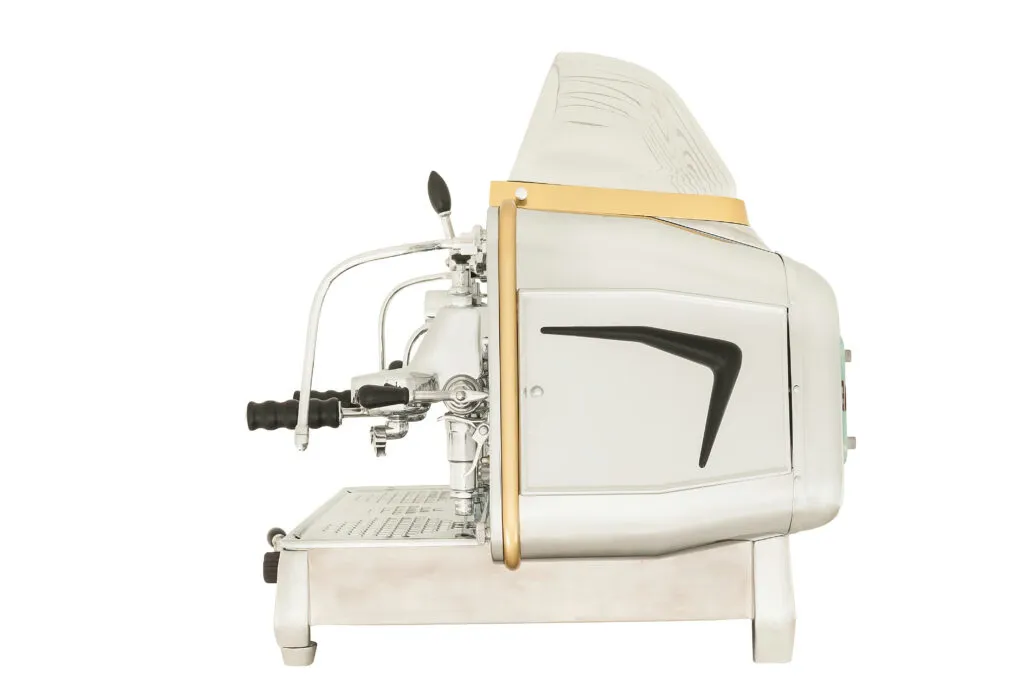
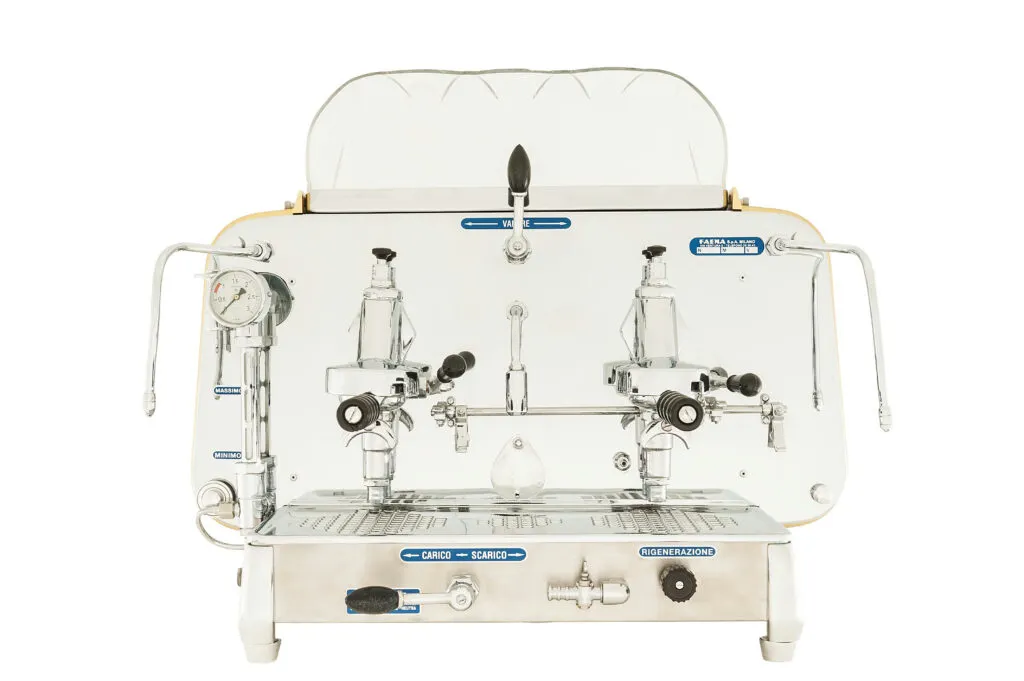
Modello E-61, Faema, Milano, 1961 (Restored Model)
The Faema E61 marked a turning point in espresso technology. It provided the template for most modern machines—Faema repositioned the water boiler horizontally rather than vertically inside the machine, and it is why nine bars of pressure is considered the “standard” for espresso extraction today, among other innovations.
As for the name, the press release explains: “Produced in 1961, the famous E61 model takes its name – ‘E’ – from the solar eclipse of 1961. This machine was the final outcome of various patents, and the result of the evolution of a series of models previously produced by Faema.”
These designs and more can be seen through the 31st at the Istituto Italiano di Cultura di Copenhagen; admission is free.
Cover photo by Gaia Micatovich