Dialing In the Grind: Why Coffee Demands Precision and How Training Delivers It
A look at why grind accuracy matters more than many brewers expect, how espresso standards define the target, and a hands-on field test for getting close—plus a cautionary tale about the perils of fear-based grinder policies.
By Alex Carter4 min read
I take my coffee without sugar, though there are moments I wish it behaved more like the stuff. Pull out a bag of sugar for a recipe and you can measure with confidence—each crystal is the size it ought to be. Ask for powdered sugar and no one pauses to wonder whether the powder is powdery enough.
Coffee offers no such reassurance. Nailing the "right" grind is, for virtually anyone, an exercise in inconsistency. The phrase "drip grind" covers a wide spread of particle sizes, running from relatively coarse all the way to fairly fine. "Espresso grind" is commonly understood to mean a very fine setting, yet it is so exacting that the industry built a whole category of grinders devoted to tiny, precise adjustments for dialing in. And beyond all that, grind accuracy carries real weight in whether coffee brews well. Black coffee can come out perfectly enjoyable across a certain range of grind sizes; espresso, by contrast, genuinely needs to be right.
So what is the solution? Training, as it so often is. Espresso extraction in particular gives us a way to learn what to watch for and how to adjust in order to land on a highly accurate grind.
We cannot simply look the other way and trust that accuracy will take care of itself. Customers—whatever their level of taste sensitivity—notice when a shot is off. They may not be able to name the problem, but they register that something is not right. The shot is too weak (the grind ran too coarse), too strong (the grind ran too fine), or it is just right. Hitting that just-right point matters.
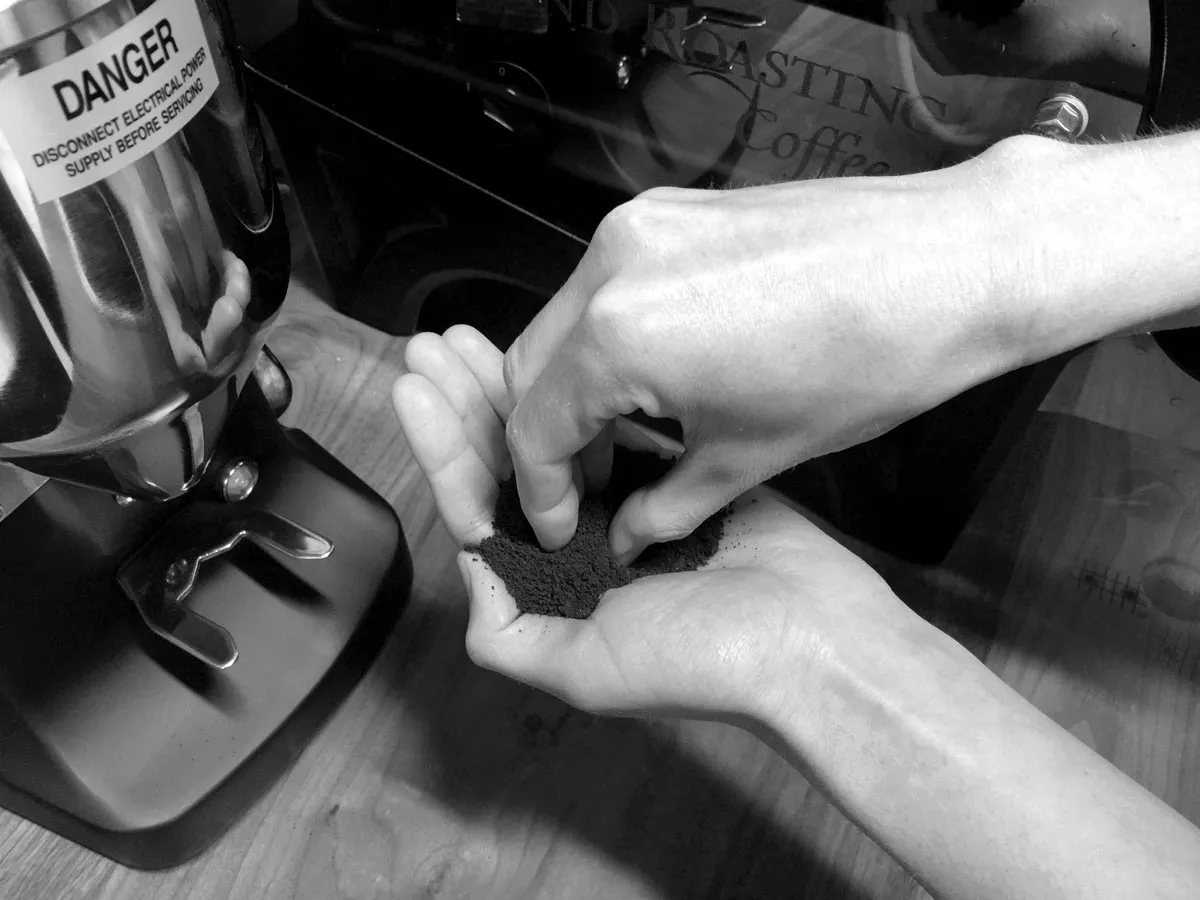
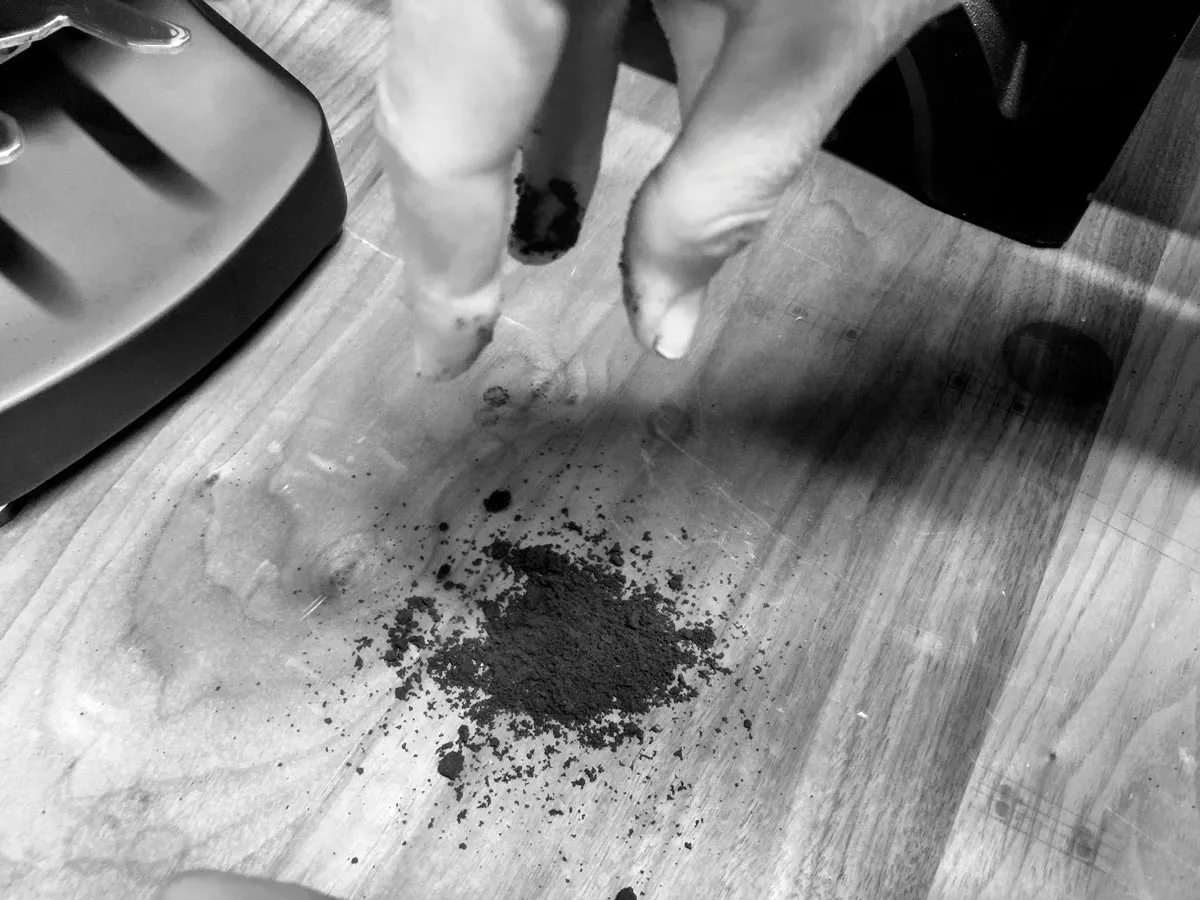
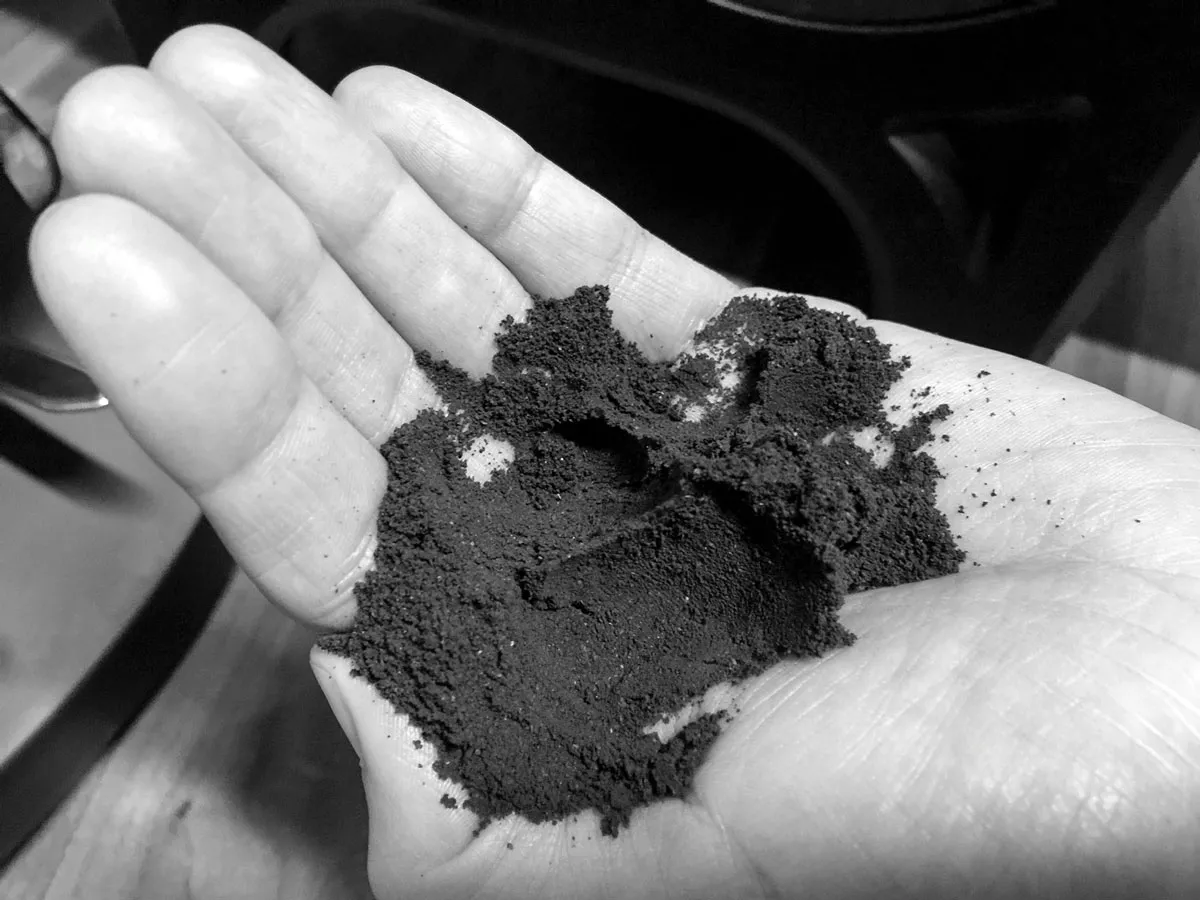
A trick for checking the grind size.
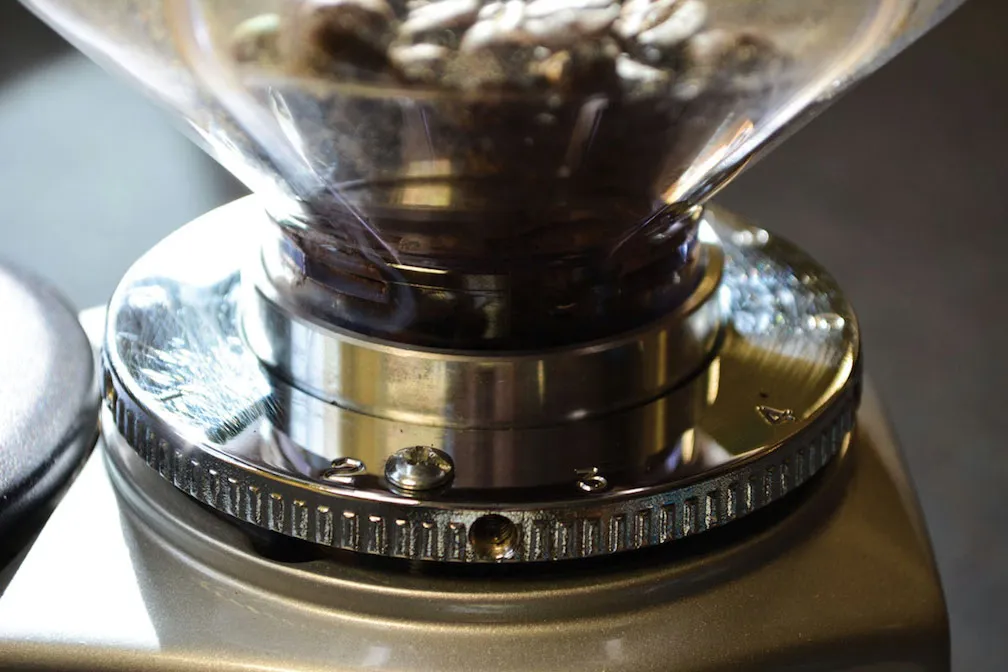
One training visit stands out in my memory. It involved a café that took real pride in its espresso. You can imagine my surprise, then, when I spotted duct tape wrapped around the adjustment collar of their espresso grinder, with a note attached: "DO NOT CHANGE THE GRIND—IT WILL BREAK THE ESPRESSO MACHINE!" The manager explained: "We had a kid who changed the grind once and it was too fine. Broke the whole machine. We had to stop serving espresso and call maintenance."
"We had a kid who changed the grind once" opens a sentence that tends to end with nobody touching the grind ever again. Experiences that harmed customers' visits can be hard to move past. Yet with proper training and a working knowledge of the equipment, we can give baristas the confidence to create flavor experiences for customers that go beyond anything they have had before.
Talking sensibly about grinding requires a shared understanding of what espresso actually is. The Specialty Coffee Association of America offers a definition of the liquid we love:
"Espresso is a 25–35 mL (50–70 mL for a double) beverage prepared from 7–9 grams (14–18 grams for a double) of coffee through which clean water of 195–205 F has been forced at 9–10 atmospheres of pressure and where the grind of coffee is such that the brew time is 20–30 seconds."
The closing clause—". . .where the grind of coffee is such that the brew time is 20–30 seconds"—deserves our attention. Every grind adjustment we make for espresso aims at that target: a shot running twenty to thirty seconds that tastes thoroughly delicious. Dose and tamp also shape the outcome, of course, but neither can be applied to coffee that has not been ground.
In every training class I teach, I pass along a simple trick I picked up for landing in the general neighborhood of a proper espresso grind. More tweaking and adjusting may follow, but it gives you a solid starting point.
Start by switching on the espresso grinder, grinding some coffee, and dosing a small mound of it into your hand. Then press your thumb, index, and middle fingers together around the mound and squeeze. Release. Did the coffee roughly hold the shape your fingers pressed it into? If yes, good—it is approximately fine enough. If it crumbled back into a loose pile, it is likely too coarse and needs a finer setting.
When the coffee does stick together, the next step is simple. Lift the little compressed clump and drop it from twelve to eighteen inches onto the counter. If it separates back into individual particles, excellent—the grind is approximately in the right range. Fill a portafilter and pull a shot. If the clump stays stuck together, the grind is probably a touch too fine and should be set coarser. Make every adjustment deliberately and in small increments; on espresso grinders, a slight turn of the collar produces large shifts in extraction.
Next month, we will pick up the discussion of precisely what those adjustments do and how to make them over the course of a day, so that each customer receives perfectly dialed-in espresso every time.