Bridging the Gap Between Coffee's Supply Chain and the Cup
A conference keynote asks how specialty coffee can turn complex origin information into something customers can actually taste—and why that matters for producers.
By Reese Hayes6 min read
A Difficult Story to Tell
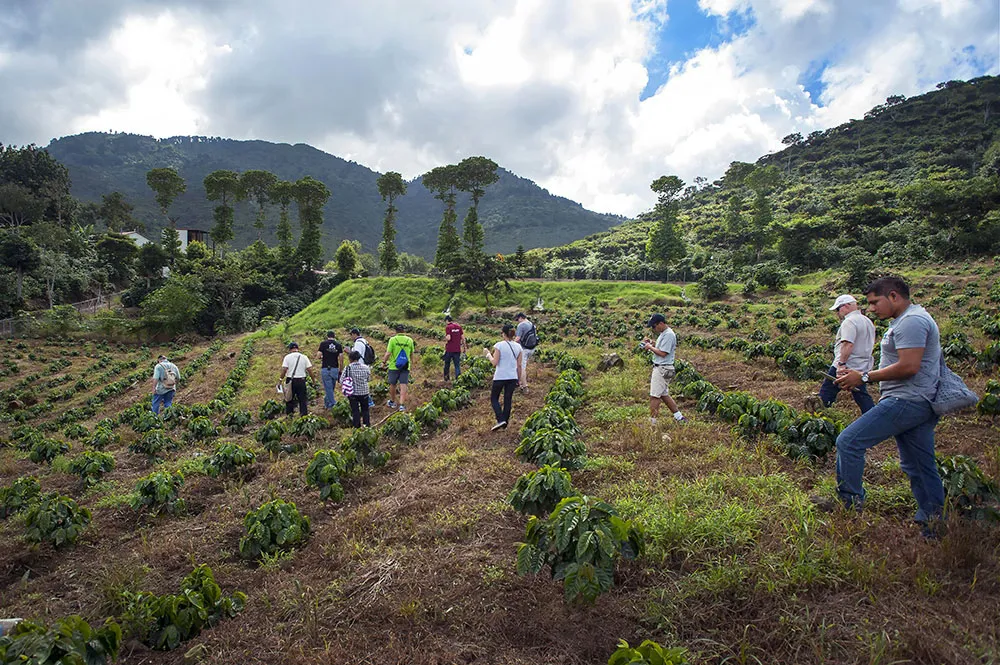
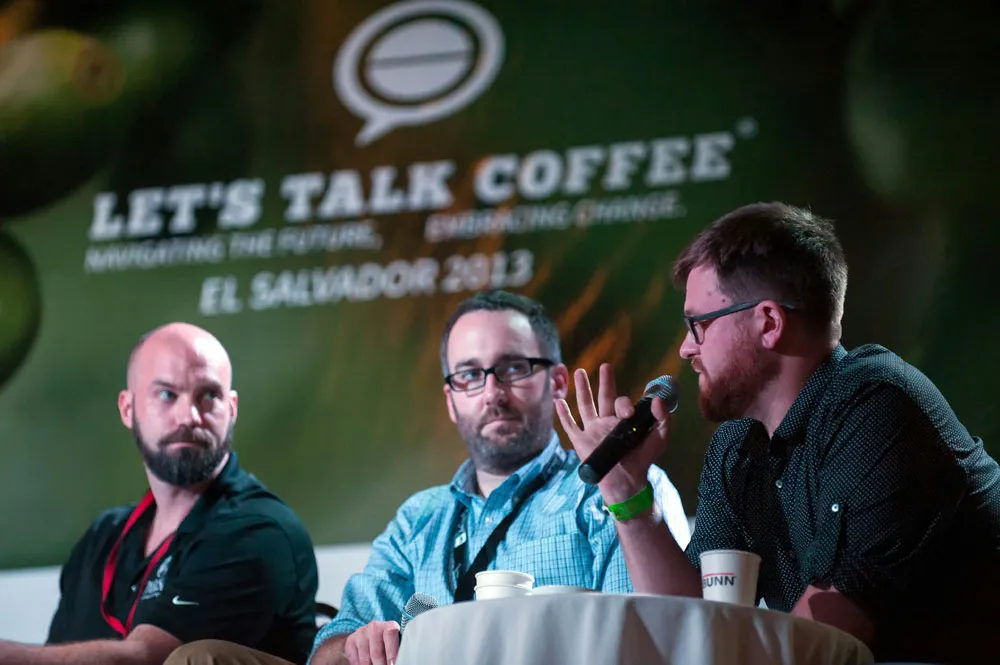
Speaking to a crowded hall at the 11th annual Let's Talk Coffee conference, held in October in Salinitas, El Salvador, Oliver Strand laid out the obstacles roasters and retailers run into when they try to explain coffee to their customers. He asked what a reasonably well-educated shopper actually needs to know in order to grasp what a particular coffee will taste like. Is it the region where it was grown? The producer's name? The roast date? The elevation? A certification such as fair trade or organic?
Wine offers a comparison. Give a moderately informed wine buyer the grape variety, the winemaker and the vintage, and that person can form a rough but serviceable prediction of how the bottle will taste. Coffee has no such shorthand. So how, Strand asked, can a roaster put a reliable sensory expectation onto a bag of coffee?
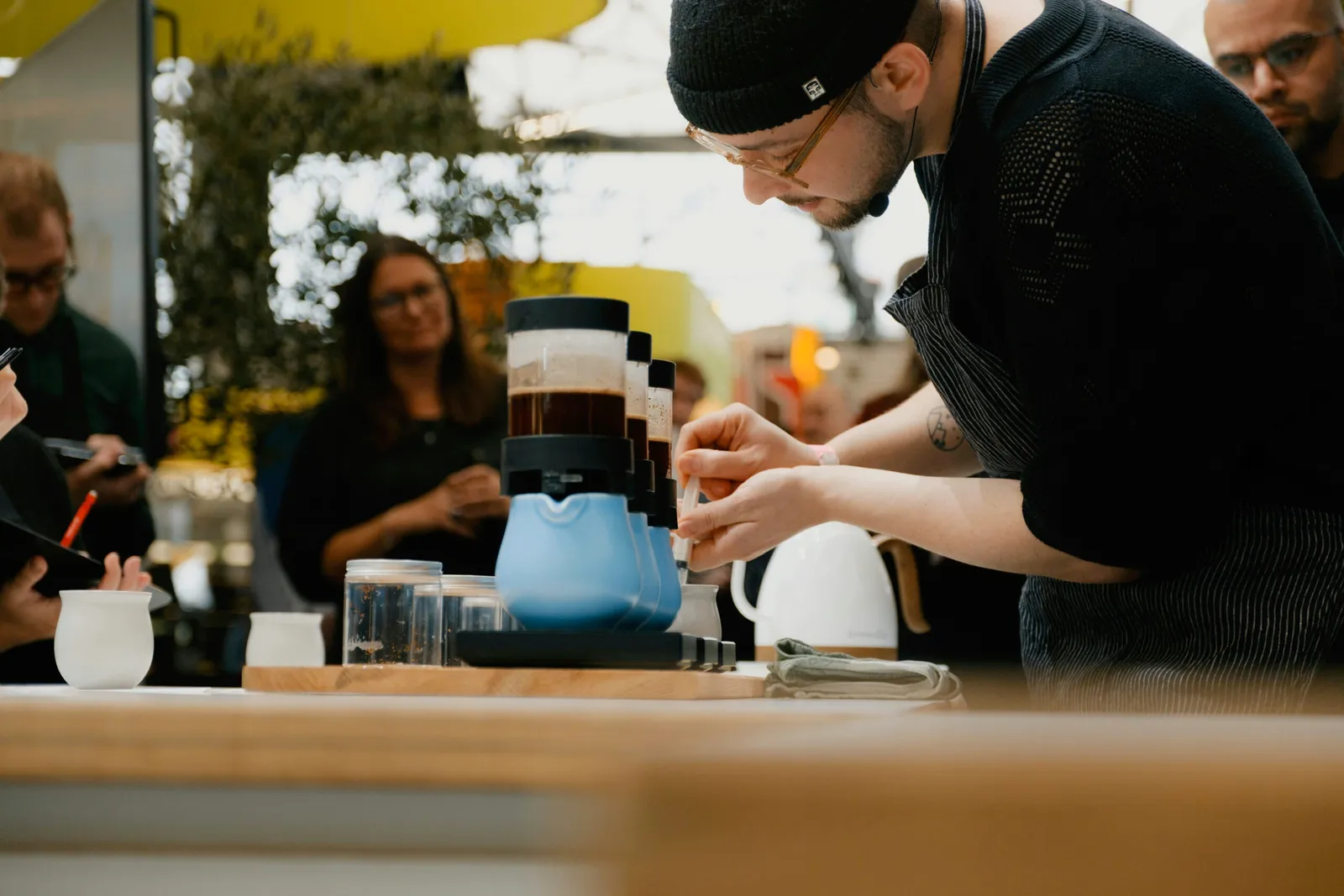
(Top photo: Bryan Clifton.)
His argument was that details which do not point directly toward a specific flavor expectation are not especially useful. Certifications, elevation and roast date matter to particular segments of buyers, but as flavor descriptors—body, taste, character—they accomplish relatively little.
What the Gathering Is For
Let's Talk Coffee is the yearly conference organized by Sustainable Harvest Coffee Importers, drawing together partners from across the company's global supply chain. Those who attend come from every corner of coffee production: farmers and mill operators, academics, NGO staff, roasters and baristas. The goals are to build relationships, mark successes, take an honest look at strengths and weaknesses, and deepen transparency. The exchange happens through informal networking, scheduled one-on-one meetings and a lecture series featuring some of the industry's sharpest thinkers.
The event generally concentrates on the supply chain rather than the end drinker, which made Strand's talk—titled "Killing the Conversation"—a fitting opener. At its core he was asking how specialty coffee links an extraordinarily complicated chain of participants to the person holding the cup. That question set the tone for more than 400 attendees heading into sessions about strengthening relationships throughout coffee: between agronomists and cooperatives, between farmers and commodity markets, and between specialty coffee and a broader community committed to sustainability.
Borrowing a Page from Wine
Coffee is a complicated business. How do you construct a narrative that connects with customers without burying them in that complexity? Strand drew the parallel with wine and walked through its labeling history. Wine production, he noted, has hundreds of years behind it, yet it was not until the 1970s that winemakers settled on the formula of variety, vintner and production year. That formula emerged gradually, over a long stretch in which consumers learned about wine and about what those three details imply for the senses. Specialty coffee, Strand said, must likewise educate its customers so that comparable descriptive methods can take hold. Others might counter that this is risky ground: coffee drinkers often simply want something that tastes good and fits their personal rituals and memories, and they are not necessarily seeking an education.
Farm to Table, in Coffee
Both positions surfaced during the panel "Farm to Table: Connecting Consumers to Origin." Restaurants, farmers markets and specialty grocery stores across the United States already have a vigorous farm-to-table movement. In coffee, roasters have been building a link to producers through marketing rich in photography and storytelling, through promotion of direct trade, through steadily improving cup quality, and through the range of flavors, tastes and experiences found in the cup itself. On that panel, Ted Satchura described how his company, Equator Coffee, gives customers a vivid sensory experience backed by effective marketing and storytelling. The upshot is that roasters and retailers can engage and inform consumers at a pace the consumers choose, rather than imposing a curriculum and an agenda.
Price Peterson, owner of Hacienda La Esmeralda in Panama, brought a producer's viewpoint to the farm-to-table discussion. Beyond the farm's now-famous association with the gesha variety, Hacienda La Esmeralda was an early user of the "open auction" format, in which the producer sells particular coffee lots through an online auction. That approach shortens the supply chain, putting roasters in direct contact with producers and simplifying the story behind a given coffee. For Hacienda La Esmeralda, the auction format has helped build a strong brand—one nearly every specialty roaster recognizes and many sophisticated coffee consumers know.
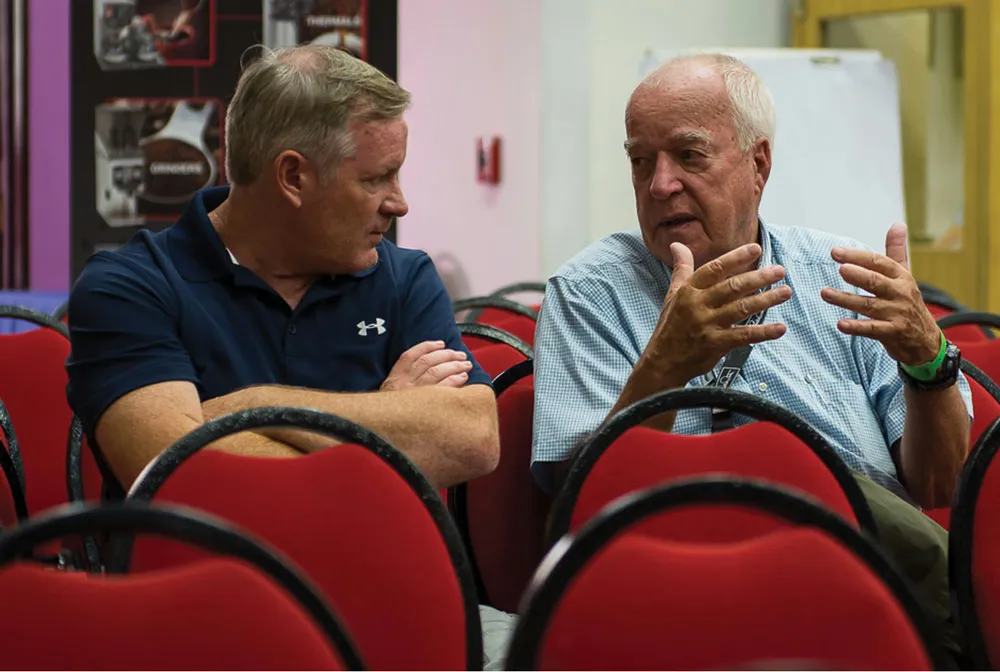
Price Peterson of Hacienda La Esmeralda (right) was an early adopter of the "open auction" model, in which the producer sells specific lots via online auction.
The model separates the value of particular high-quality coffees from the volatile C market and lets roasters attach a genuine market value to specific lots. It also forges an immediate financial link between roaster and producer, echoing the established farm-to-table connection found in localized supply chains, such as the relationship between a restaurant chef and a nearby farm.
Rethinking How Coffee Is Valued
Peterson's view on separating specialty coffee from the C market fed into the broader conversation driving the conference. David Griswold, Sustainable Harvest's president, opened the event by declaring the coffee industry broken, pointing to the C market's ties to mutual funds and macroeconomics rather than to concrete questions of supply and demand. Griswold went on to list other pressures the industry faces, from the unsustainable prices farmers receive for their crop to the reasons younger people are not entering farming.
Other sessions at the conference covered food security for coffee producers, the effects of climate change, access to finance and credit, and how coffee professionals in emerging markets can reach SCAA's accredited trainings. But the larger question implied by Strand's keynote was how coffee professionals in consuming countries affect these issues—and, more immediately, why consumers in those countries should care.
Sustainable Harvest's pioneering direct-trade "relationship coffee" model works best when those relationships run in both directions. When roasters are genuinely engaged with the farmers and cooperatives behind their coffee—and with others along the chain—they are better positioned to pass those stories on to customers. Once consumers understand these issues and feel a connection to producers, it becomes easier to raise prices and consumer expectations. Stephen Vick of Blue Bottle Coffee put it plainly: Blue Bottle's customers trust the company and are open to unusual coffee flavors and experiences. He offered the example that, on the company's recommendation, those customers would be willing to try an exceptionally high-quality robusta, despite robusta's less-than-stellar reputation for quality.
Roasters fortunate enough to have a trusting customer base can engage that group with special high-price, high-quality lots. Peterson's Hacienda La Esmeralda is a leading case: customers at cafés run by roasters who buy La Esmeralda regularly pay close to $10 for a single cup, and they purchase whole-bean coffee at prices above $100 per pound. These are extreme examples, but they show what is possible when the transparency and relationships developed at the conference function at their best. Roasters who engage with producers, understand the distinctive problems their suppliers face and communicate those challenges to customers are often able to charge more than market price for a cup.
Meetings That Build Trust
Alongside presentations and panels, the conference arranges facilitated one-on-one meetings between roasters and producers. These sessions give producers a format for telling their stories and raising concerns with roasters, who can in turn relay those stories to customers and explain their own business model and expectations to producers. In that setting, the two sides work on a relationship more involved than that of a simple buyer and seller.
The stories, narratives and meaningful relationships cultivated at the conference carry over into a richer experience for roasters' customers. Those relationships matter to coffee's success now more than ever. The C market is a fundamentally flawed way to value coffee. The conference provides a setting for discussion among all players in the supply chain, and through that discussion the true value of each participant gets defined. It also gives this group of leaders a place to actively pursue solutions to the pressures bearing down on the industry.
Strand was right to stress the importance of conveying a sensory expectation through packaging. Quality and taste shaped many of the conversations throughout the event. And while plenty of presentations and discussions dealt with supplier issues, innovative technology and agronomic realities, Strand pointed his audience toward the consumer. Delicious coffee is what builds loyal customers. With that loyalty, roasters have a chance to convey the full range of challenges facing the supply chain—and in doing so, to create the most powerful vehicle for change available.