The Home Barista Boom: How Coffee Shops and Roasters Can Embrace a New Wave of Enthusiasts
As more coffee lovers set up espresso stations at home, how can the specialty coffee industry make them feel welcome? From social media stars to virtual trainers, insiders share how education and inclusivity can bring home baristas into the fold.
By Casey Adams6 min read
From Office Espresso to Latte Art Dreams
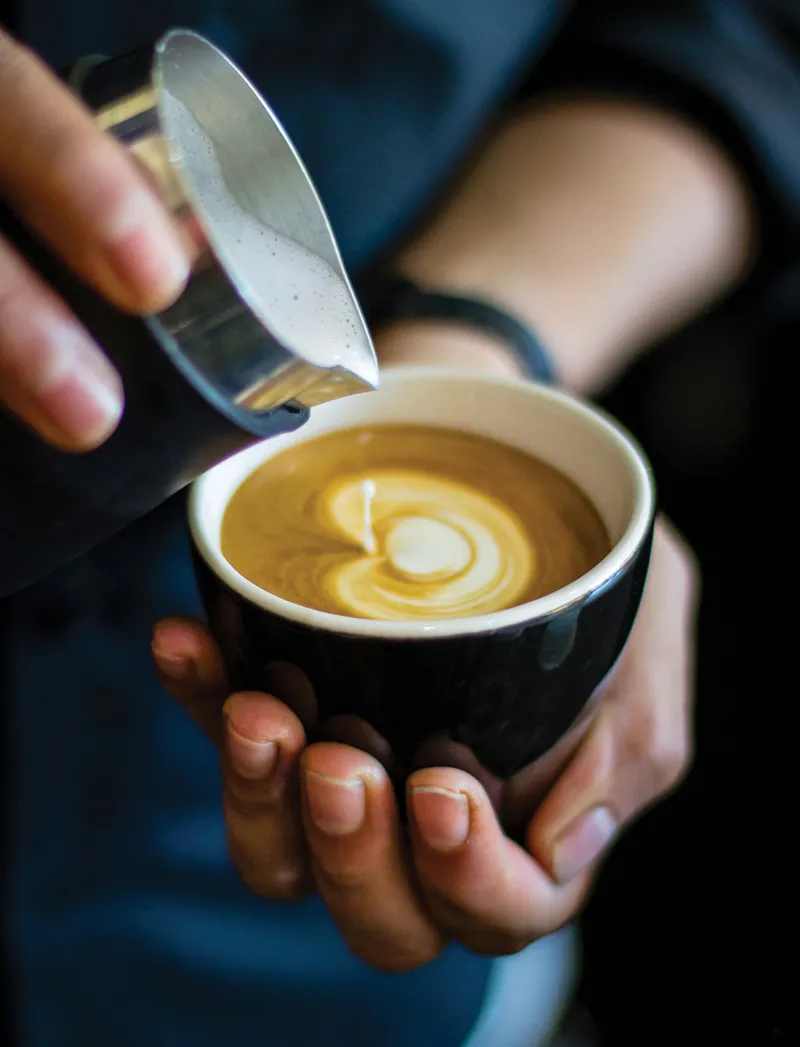
Kauser Inamdar’s first encounter with a latte art competition—a bracket-style showdown where baristas pour intricate designs—left a lasting impression. She wasn’t a barista and had no plans to change careers; she was a software engineer who had only steamed milk a few times on the office machine. Yet the event sparked something in her.
“I couldn’t even pour a heart yet, but I knew I wanted to be up there; I wanted to pour,” she recalled.
After that competition, Inamdar took a few latte art classes at cafes in San Jose and practiced pouring at work whenever she could. When the pandemic arrived in 2020, she bought a Breville Barista Express for her home and launched an Instagram account to document her progress.
“It was so exciting to see the progress,” she said. “I know some of my pours are always going to suck, but once in a while, I get this golden pour, and it’s like, wow. I did that.”
Her Instagram posts caught the eye of Frankfurt-based coffee professional Annabell, who reached out and offered free virtual latte art coaching.
“She’s the one who really helped me get this far,” Inamdar said. “Without her, I wouldn’t have a grasp on fundamentals, which are so important.”
Inamdar is part of a growing community of passionate home baristas eager to refine their skills and join the specialty coffee world. According to the National Coffee Association, 84% of coffee drinkers brew at home—up 4% from pre-pandemic levels—and the trend shows no signs of slowing. One recent consumer report projects that the global market for home machines will grow at a rate of 5.90% from 2023 to 2030.
But who exactly is the home barista? How do they think about coffee? And how can coffee shops and roasters warmly welcome this enthusiastic community?
Making Coffee Approachable
Ethan Rode films his cappuccino routine with his iPhone strapped to his head: he tosses his Fellow Atmos canister in the air, catches it with flair, depresses the valve, and carefully measures exactly 18 grams of beans on an Acaia Lunar scale. He twists the lid back on, spritzes the beans with water to reduce static, and funnels them into a single-dose Timemore grinder.
“A lot of the comments I get are like, ‘I didn’t realize this was this whole world of people who rake their coffee beans with little acupuncture needles and then tamp it down and use a puck screen and have all these little tools.’”
ethan rode
The video of Rode’s home coffee routine runs four minutes and 18 seconds, with Rode narrating every detail of preparing the perfect cappuccino at home. At the time of writing, the video has 18.9 million views on TikTok.
“A lot of the comments I get are like, ‘I didn’t realize this was this whole world of people who rake their coffee beans with little acupuncture needles and then tamp it down and use a puck screen and have all these little tools,’” he said.
Like Inamdar, Rode is a home barista, and his interest in coffee was fueled by creating content for social media. He makes coffee videos for his 1.7 million TikTok followers, covering topics from elaborate puck preparation to pairing foods with Nespresso pods.
He aims to reach curious beginners—people who might frequent their local Starbucks but are interested in learning more about specialty coffee. By offering a wide variety of engaging content, he lowers the barrier to entry.
“I think there’s this elitist view where you must have coffee a certain way to be in the specialty coffee niche, but I don’t really believe in that,” he said.
Broadening the coffee lens and including the frappuccino drinkers of the world is crucial to expanding coffee’s customer base, he added. “I’m a firm believer that coffee can be anything you want it to be,” said Rode. “It can be as simple as you want it to be, and it can be as extra as you want it to be.”
Improving Education
Once new home baristas start to explore the vast world of coffee, they might quickly feel overwhelmed by the information, tools, and science available online. At least, that’s how it is for many of Dani Bordiniuc’s students.
Before coffee, Bordiniuc had a successful career as a corporate data analyst. He and his wife would spend vacation days traveling to European cities with vibrant specialty cafe scenes, sampling various roasters and menus. His passion for coffee far outweighed his feelings for consumer data analytics; eventually, he left corporate life and dove head-first into the service industry.
“I think more often than not, it’s on us, the professionals working in the industry, to really simplify things and make it as easy as possible for them to understand so they can apply those things to their home setup.”
Dani Bordiniuc
He went through a transition period, reading many coffee books, attending industry events and tastings, and interviewing roasters to glean as much knowledge as possible about his new profession. When COVID-19 hit, Bordiniuc started having very interesting conversations with customers at the cafe—people were looking into getting an espresso setup at home as their favorite cafes closed or had limited service hours.
“We found ourselves in a position as baristas where we actually had the opportunity to educate our customers and help them,” he said. He soon started hosting home barista workshops with customers from the cafe as a side hustle. Then, after a few months, Bordiniuc started an online barista training business called Brewing with Dani.
He leads virtual one-on-one workshops with people worldwide, all of whom share his passionate curiosity about coffee, but many don’t know what they don’t know. “I’ve met an amazing mix of people from all walks of life, and when you get the chance to talk to these people, you quickly understand the lack of knowledge and education out there,” he said.
In his experience, many home baristas learn about coffee through online platforms, perhaps watching hours of tutorials on YouTube. However, they still come up short, often because they lack the fundamentals, like understanding brew ratios and grind size. Now, he creates educational content to eliminate friction and make the learning process as easy as possible for his target audience.
It’s important to strike a delicate balance between too much and not enough information, he said. “I think more often than not, it’s on us, the professionals working in the industry,” said Bordiniuc, “to really simplify things and make it as easy as possible for them to understand so they can apply those things to their home setup.”
No Lines in the Sand
To fully embrace home baristas into the specialty coffee community, it’s important to celebrate their passion rather than draw lines based on professional distinctions.
Inamdar reminded me several times during our interview that she’s by no means a coffee professional. Yet, it was the supportive guidance of industry veterans that helped her realize her goal of advancing in a latte art competition.
Annabell and Jhoselin, the trainer who taught bi-quarterly latte art classes at her corporate office, saw her potential. Instead of casting her out, they welcomed her with open arms and even encouraged her to compete at last year’s San Francisco Coffee Fest throwdown.
“I poured the funkiest heart, and I was shaking like crazy,” she said. “But I felt so supported. That’s what I appreciate about the community—people are looking out for me.”
Investing in home espresso machines and learning more about brewing at home hasn’t stopped these baristas from frequenting their local coffee shops for inspiration. But the bar has certainly been raised.
“I poured the funkiest heart, and I was shaking like crazy. But I felt so supported. That’s what I appreciate about the community—people are looking out for me.”
Kauser Inamdar
“I’m such a snob when it comes to traveling now,” she said. “My espresso is way better than it was six months ago, so my standards are different for cafes.”
As the home barista community grows, the coffee community inherently grows with it. As an industry, it’s essential to welcome home brewers into our events and competitions and to celebrate their diversity, curiosity, and passion for coffee.