Brewing the Future: A Designer's Take on Coffee's Climate-Altered Taste
Sarah Ali's Brew_Lab project, developed with climate scientists and NASA, simulates the flavors of coffee from three futures—Brazil 2027, Sierra Leone 2080, and Mars 2126—using custom scents to explore how climate change might transform our daily cup.
By Jordan Mitchell3 min read
When Climate Change Comes for Coffee
Droughts, floods, and heat waves have become more frequent in recent years—a trend that poses serious risks for coffee. Research indicates that climate change could reduce both the amount and the quality of coffee produced. Yet these projections can feel abstract. What if you could actually taste what the future holds for your morning brew?
Industrial designer Sarah Ali has created a project called Brew_Lab in collaboration with climate researchers and experts from NASA. As reported by Jamie Richards for TechRadar, the initiative aims to recreate the flavors of coffee from three speculative futures: Brazil in 2027, Sierra Leone in 2080, and Mars in 2126.
Ali developed Brew_Lab—part engineering endeavor, part artistic installation—as part of her postgraduate work in Material Futures at the University of the Arts London. Drawing on climate projections and research, she crafted what she terms “edible scents” for each scenario, which she then added to ordinary coffee to modify its flavor.
To produce these scents, she collaborated with Scentible, an Australian company that creates sensory development kits for the coffee sector. In a video produced by the company, Ali explains: “80% of taste is smell, so I decided to build a machine that outputs smells to alter coffee flavors to a future one.” She designed a self-operated “coffee vending machine” that users can adjust to release aromas from their chosen future.
Earthly Futures: Brazil and Sierra Leone
Two of the scents correspond to possible futures on Earth. The first is based on Brazilian coffee around 2027, which Richards notes “is used to emphasize the frailty of the Arabica bean.” Studies suggest that by 2050, half or more of the land currently suitable for growing arabica could become unsuitable, and 60% of wild arabica species face extinction risk. The near-future scent reduces sugar and acidity while increasing bitterness to highlight the impact of higher temperatures on arabica.
The second scent predicts how coffee grown in Sierra Leone in 2080 might taste. For this, Ali drew on data from Dr Aaron Davis’ research on stenophylla, a wild coffee species that botanists at the U.K.’s Royal Botanical Society have studied for its climate resilience. Although the taste profile of the 2080 scent isn’t specified, stenophylla has been described as similar to arabica, with Davis reporting notes of chocolate, caramel, and jasmine.
Mars: The Extreme Scenario
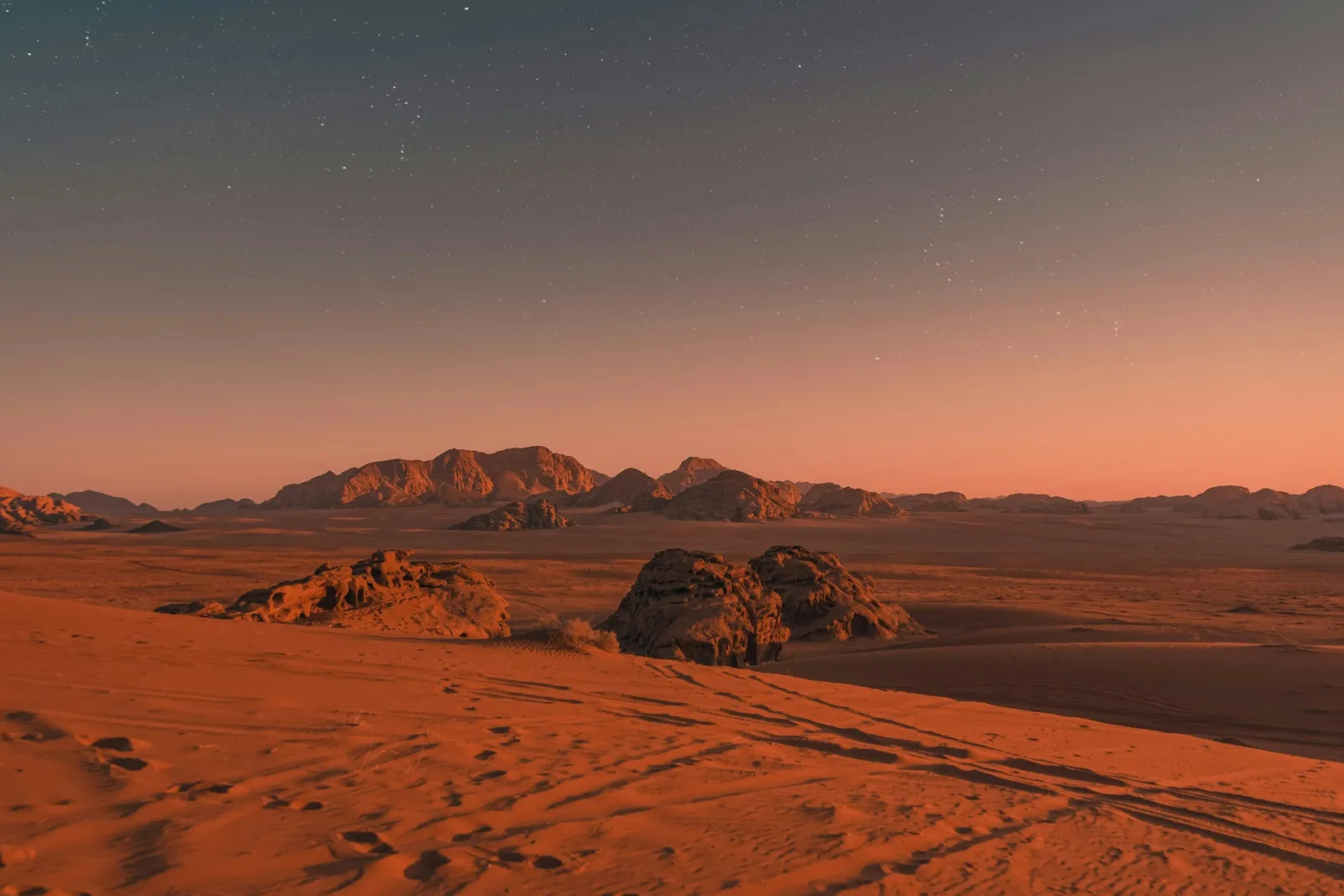
For the potentially Mars-grown drink, Ali used NASA research that examined the feasibility of agriculture on the red planet. She selected the hardy species Coffea racemosa because of its exceptional tolerance to drought and heat. Ali also considered how Mars’ lower gravity might affect taste—reduced gravity can dull sensory perception. The Mars scent was “designed to taste engineered,” Ali says in the video, and she artificially boosted its intensity to offset the dulling effect of low gravity.
“I thought of Mars because it’s a very extreme scenario”, Ali told TechRadar, “and the extreme scenarios allow us to really understand what’s happening. How do we think about things differently, to avoid that future or prepare for it.”
A Flavor Profile That Evolves with Data
The project’s description on the Material Futures website states that the flavor profiles are designed to change “in real time” in response to new climate data from Ali’s research partners. “Its constant variation reflects the industry’s volatility, offering a sensory glimpse into the impact of our daily consumption.”
Photo by Daniele Colucci on Unsplash