When Rain Fails: How Drought and a Warming Climate Are Reshaping Coffee Farming
From parched farms in India to unpredictable flowering in Peru, drought is stressing coffee plants, cutting yields, and altering bean quality. Producers are adapting with irrigation, agroforestry, and generational knowledge, but the challenges are mounting across the value chain.
By Dakota Foster6 min read
Climate change stands as one of the most serious challenges facing the planet today, and coffee is especially exposed to its effects. Even small shifts in temperature can influence production—from the timing of cherry ripening to the flavors that emerge after roasting and brewing. A 2015 study projected that climate change could eliminate 55% of robusta plants and 56% of arabica plants by 2050.
Coffee cultivation depends heavily on seasonal rhythms and predictable weather, making it highly sensitive to climate change. In recent years, drought has been a particularly severe blow. Dry spells create major difficulties for coffee producers and can sharply reduce yields, especially in areas where water is already scarce and irrigation systems are not in place.
Farmers absorb the most immediate consequences of drought, but the effects ripple throughout the value chain—from price volatility to diminished cup quality. Every year, coffee-growing regions contend with extreme weather, and without significant intervention and industry focus, the dry conditions intensified by climate change could keep devastating farms.
Little Rain and Extreme Heat in India
India experienced a severe and punishing summer this year, with an intense heatwave leading to thousands of heatstroke cases and serious water shortages. Most coffee-growing areas across the country went through stretches with little to no rainfall, and combined with unusually high temperatures, coffee cherries did not bloom as expected.
“This year in April, we only had 6 centimeters of rain,” says Mayur Karanth, a coffee producer at the Rampal Estate in India. “Unfortunately, we struggled to provide adequate irrigation in time to compensate.”
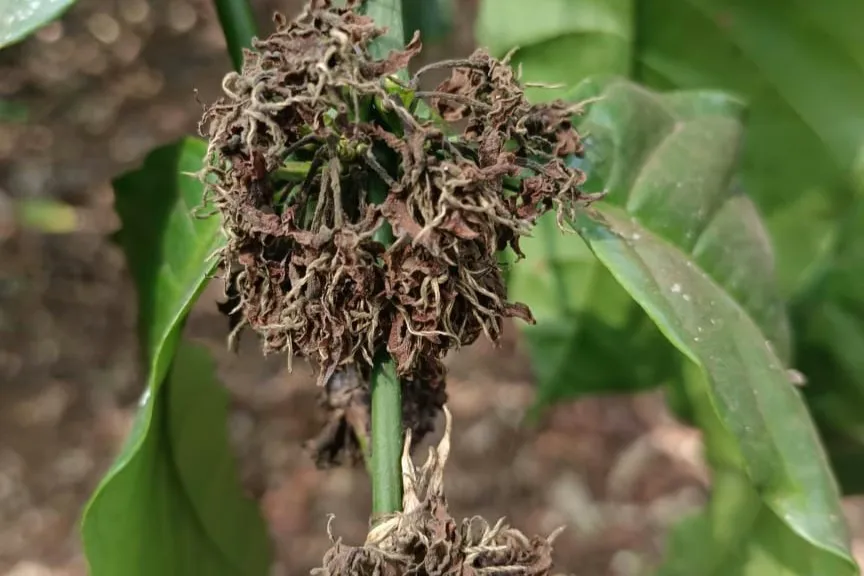
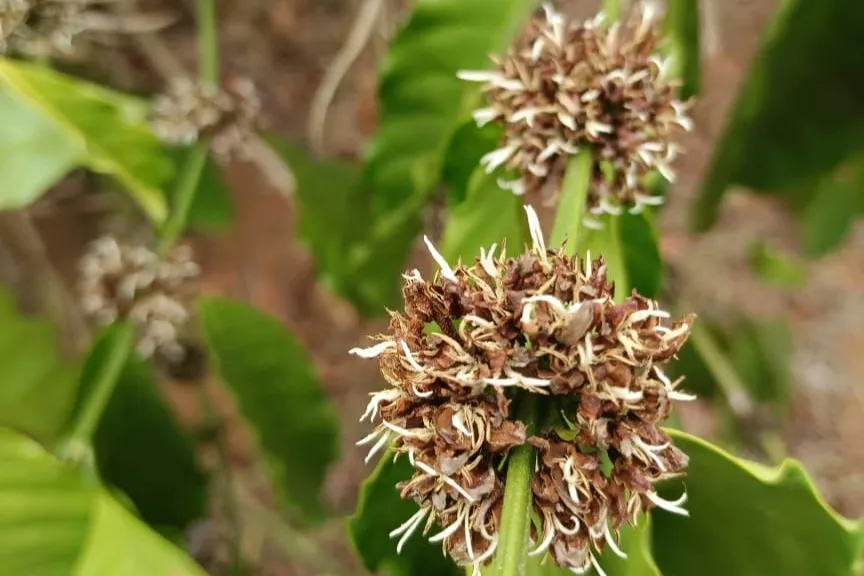
Dried coffee blossoms at Balanoor Plantations in India.
Karanth describes how the lack of water devastated the farm. “When plants go without sufficient water for as little as five days, they begin to shed their flowers. We are estimating close to 40% loss in our overall coffee yield in the upcoming harvest at the end of the year,” he says.
Coffee plants typically require two periods of rain to flower and set fruit (known as backing): an initial rainy spell triggers blooming, and backing showers occur about 20 to 25 days after flowering. When rain is insufficient or absent, coffee blossoms may fail to develop properly or form incorrectly.
Rohan Kuriyan, a coffee producer at Balanoor Plantations in India, was alarmed by the scorching season. “At a time when our usual temperatures would be about 30 to 33 degrees Celsius (between 86 to 91 degrees Fahrenheit), this year, it was 39 to 40 °C (102 to 104 °F). While it may not seem like much, it is severe for coffee,” he says.
Drought worsened the problems on Kuriyan’s farm. “For coffee, you need rainfall at particular times for blossom and backing. But we got scattered spells of very little rain and then nothing, so the initial spikes (flower buds) came out but couldn’t progress further,” he says.
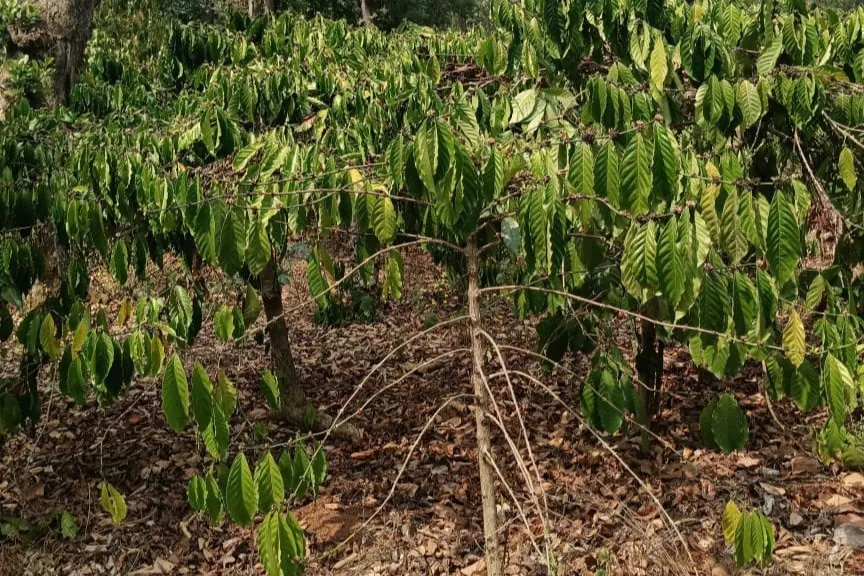
Coffee leaves wilt without water at Balanoor Plantations.
Both Kuriyan and Karanth farm in the Chikmagalur region of the Western Ghats in Southern India, which endured one of its driest summers on record. Rivers dried up, and securing water for daily use became difficult for many residents.
As a fallback, producers often resort to manual watering, which raises costs but offers protection against dry spells. Irrigation can be a substantial financial burden: pumping water from groundwater reserves, nearby water bodies, or ponds and reservoirs built on the land requires heavy-duty pumps, considerable fuel, and extensive infrastructure. Yet water was so scarce that authorities banned irrigation.
The ban affected all coffee growers, but farmers at lower altitudes who mainly cultivate robusta were hit especially hard. Robusta has shallower roots than arabica and generally requires more water, so the dry season kept robusta plants from getting the moisture they needed.
A Worldwide Challenge
Irregular and untimely rainfall patterns, along with rising temperatures, are not confined to India. Shifting climate patterns are affecting coffee growers around the globe.
“The weather has become very unpredictable,” says Dreyde Delgado, a coffee producer in Peru. “This year, we had 10-15 days of sun, then two to three days of rain, then sun again. This resulted in multiple flowering stages.”
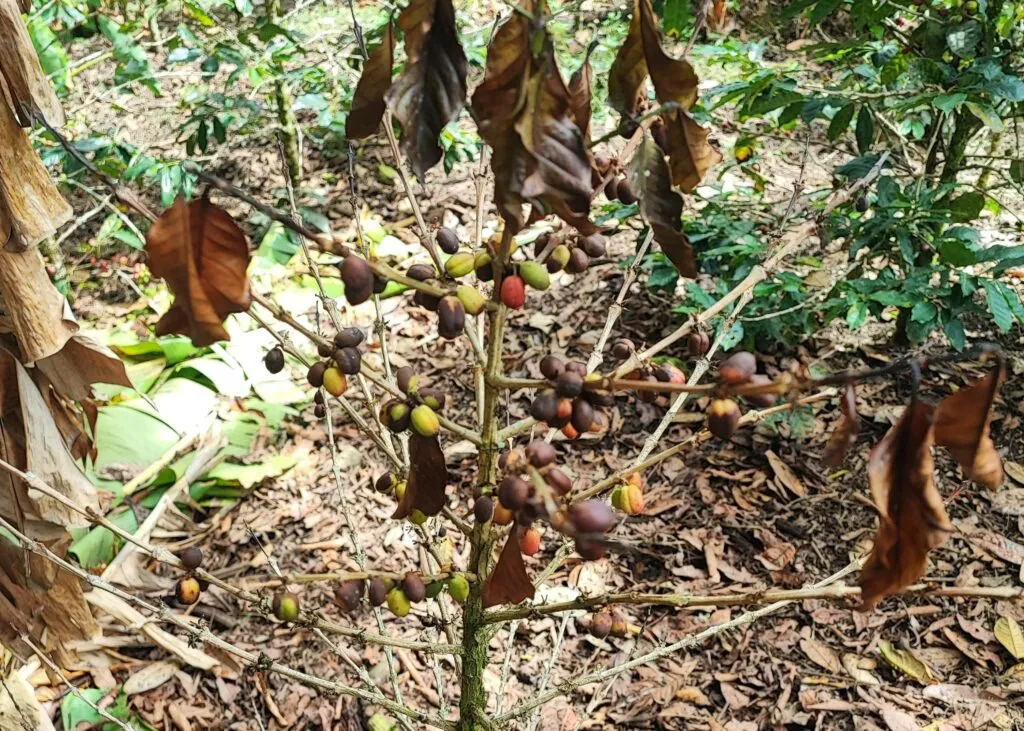
A coffee plant withers without water at a coffee farm in Peru.
Flowering is the first step in the development of coffee cherries—it sets off the cycle of cherry formation, and it is crucial that flowering happens at roughly the same time; otherwise, cherries will ripen at very different times. “We normally see two flowering stages on the farm; now we have experienced four stages on some of the farms. The effect is greater in the lower zones (800 to 1400 meters above sea level),” Delgado says.
Rain is essential for initiating the flowering cycle, and drought can postpone it. “Dry periods are becoming longer; sometimes we go even three or four months without rain.”
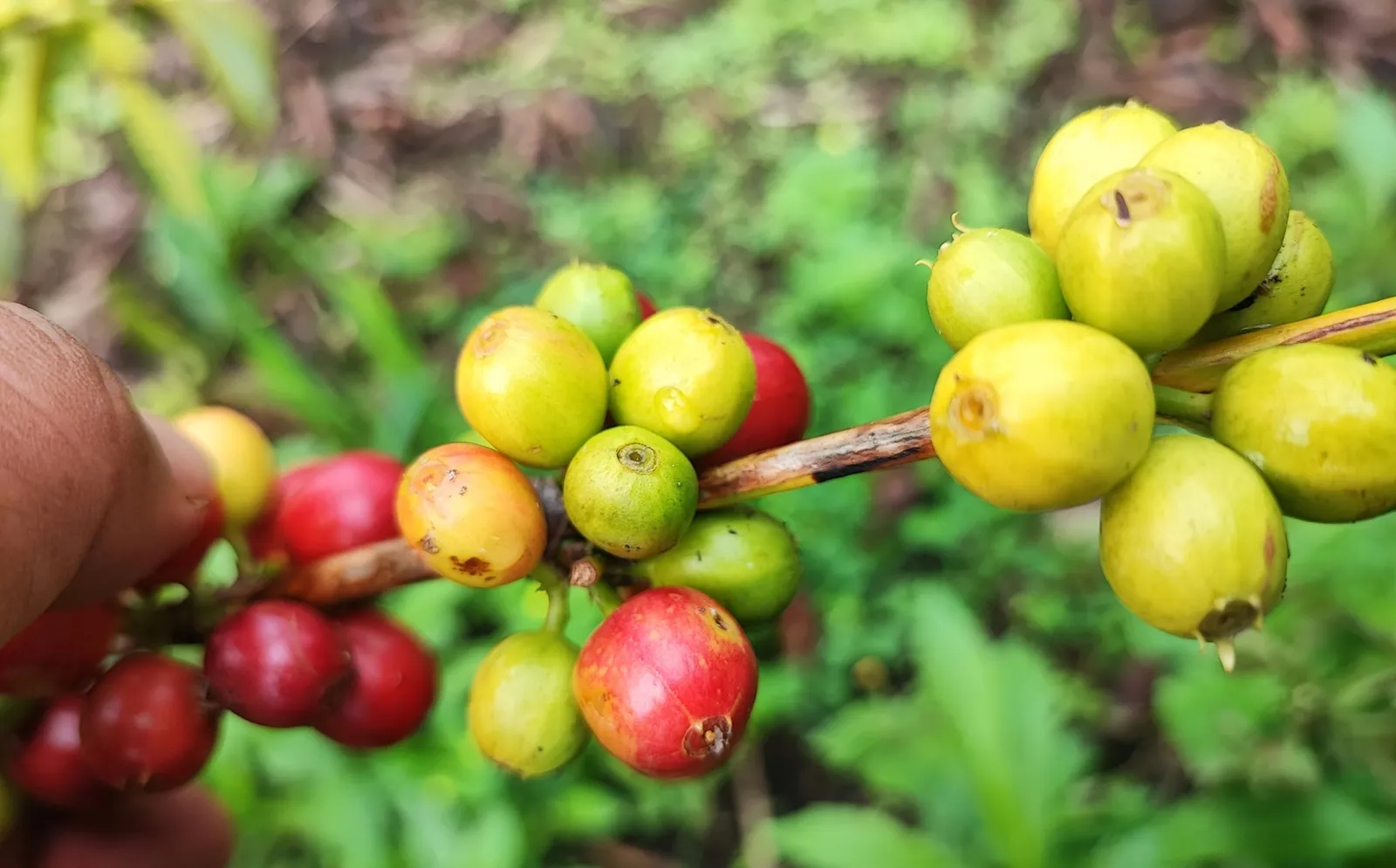
Coffee plants struggle when exposed to extreme weather. “When the dry period becomes too long, the coffee plant will get stressed,” Delgado says. “As a survival strategy, the plant starts to speed up its maturation. The cherries will ripen sooner than when they should. These cherries are smaller, have less mucilage, the pulp sticks to the parchment, and tend to dry out before the cherry is even picked.”
Drought affects the physical structure of coffee cherries, and the scarcity of rain also influences bean flavor. In response to drought and heat stress, coffee plants activate adaptation mechanisms that trigger biochemical changes, reducing hemicellulose and pectin in cell walls; this can, in turn, alter the cup profile of the resulting beans.
“We find that in periods of low rainfall, the cherries have very little mucilage, and there is very little sweetness. This leads to a lesser development of flavor characteristics in the beans; sometimes they even turn out completely flat in flavor,” Kuriyan says.
However, excessive rain can also change flavor. “In contrast, in periods of excessive rain, we find the mucilage to be very watered down and diluted, which again affects the flavor characteristics of the beans,” Kuriyan says.
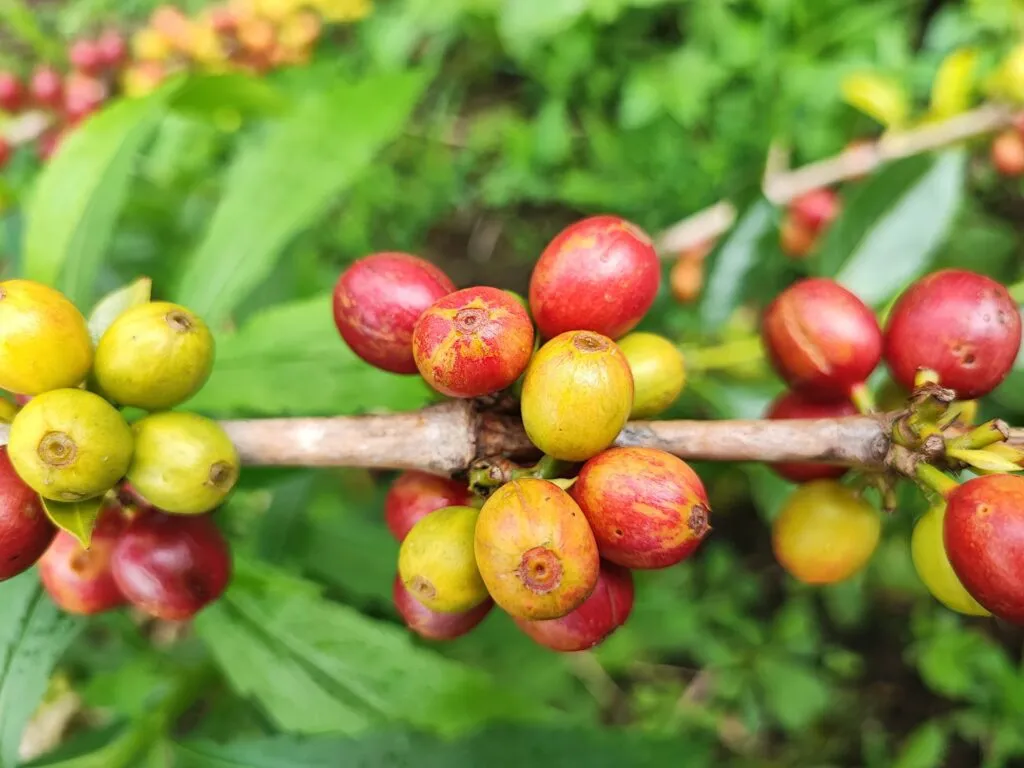
Coffee cherries under stress can compromise the formation of their cellular structure.
Drought also takes a significant toll on soil health. Soil normally contains microbes that form symbiotic relationships with coffee plants, and moisture is needed for them to thrive. “Nurturing this microbial ecosystem is essential for healthy coffee production,” Karanth says. “Dryness causes cracking in the soil, which could damage the delicate root hairs of the coffee plant, worsening the drought stress.”
Heat and lack of rain also leave coffee plants more susceptible to diseases such as coffee leaf rust (roya) and pests like the coffee berry borer and the white stem borer, while reducing the effectiveness of natural enemies of pests, such as certain fungi. “The plants are already weak due to the dry conditions and the heat stress, making them much more vulnerable to pests,” Delgado says.
“The incidence of pests has already gone up,” Kuriyan says. “The infestations per acre of the white stem borer have risen significantly. With each infestation we find, we have to cut and burn the plants. That adds up to our losses.”
Paths Forward
Coffee farming is an endeavor that spans generations. Many producers have data from those who farmed before them, and this information could be key to planning for the future and responding to drought.
“My dad has the rainfall records, expense records, and thorough data of yield per block, work logs, fertilizer, and input logs, and so much more from the past 50 years,” Karanth says. “Comparing this yearly data, we find areas of improvement and opportunities for course correction. Traditional wisdom often helps answer many current questions.”
Agroforestry may offer an effective defense against climate events. Shade-grown coffee can help regulate air temperature around the plants while also helping the soil retain more moisture. With the right trees, nutrients can be replenished in the soil, supporting the microbes that keep plants healthy.
Kuriyan says he is working to conserve more water on the farm and investing in tanks and dams to prepare for further drought. “But the producers alone can only do so much,” he says. “It needs to be a collective action and not just something forced on the farmers who do the work and are the ones who then face irrigation bans when water becomes scarce.”
Drought affects everyone in the coffee value chain and often extends beyond a single poor harvest. Climate change is causing more dry spells, leading to water scarcity and higher temperatures, and affecting both quality and production yields. At present, however, farmers are bearing the brunt of drought’s effects, and without innovations and solutions that address these issues, growing coffee will become increasingly unsustainable.