How Clutch Coffee Bar Turns the Drive-Thru Into a Relationship Hub
A Carolinas coffee chain is betting that speedy service and genuine barista connections can coexist at the pickup window, reshaping what customers expect from a drive-thru.
By Cameron Evans8 min read
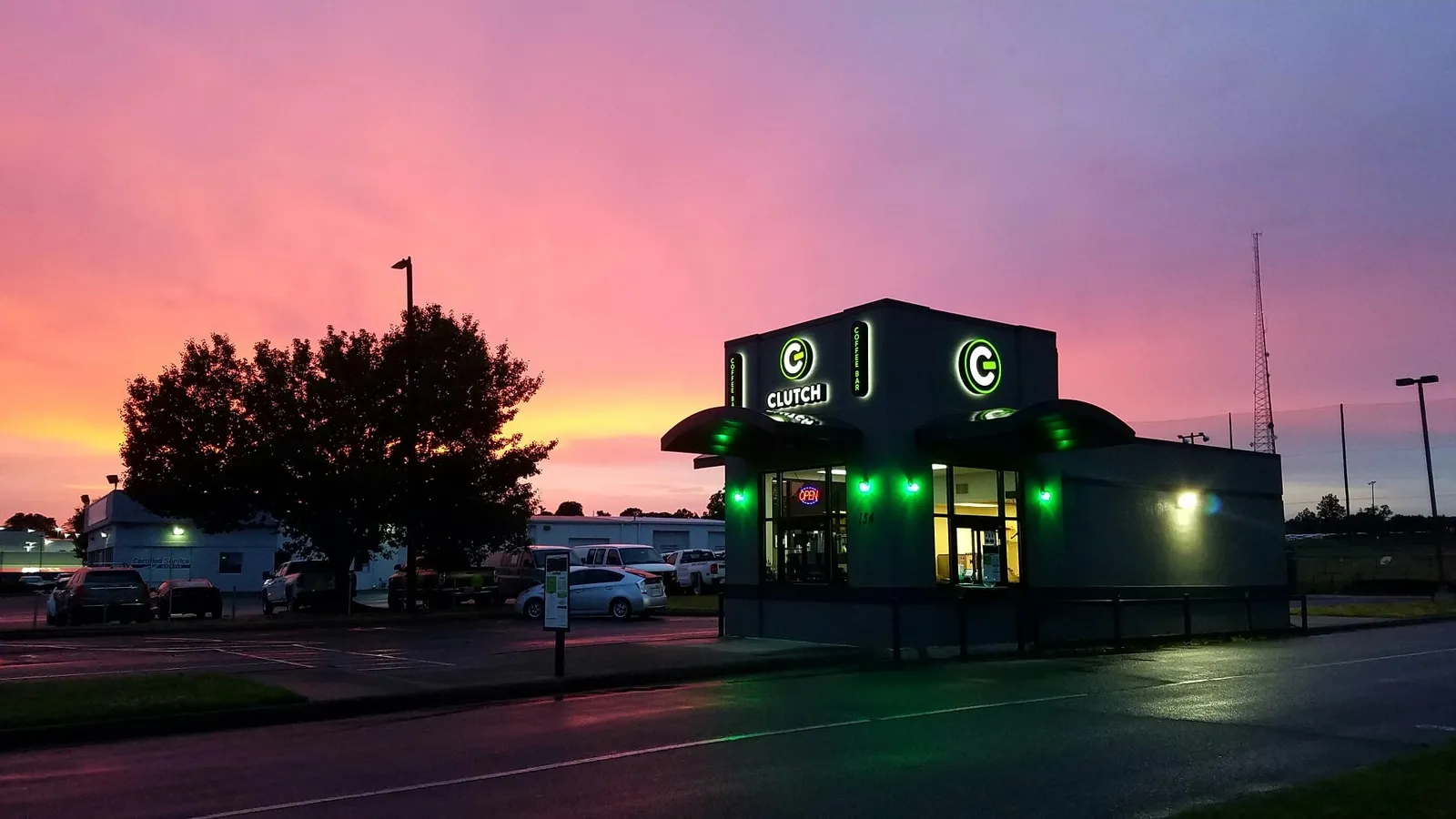
Drive-thru lanes often bring to mind hurried exchanges and impersonal service. Yet some coffee companies, such as Clutch Coffee Bar, are flipping that script—using the drive-thru as a setting for lively, welcoming, and swift interactions.
As a child in New England, I accompanied my family on daily stops at a Dunkin’ Donuts en route to school. We would park, head inside, and find a medium French vanilla coffee with skim milk and two Splenda already sitting on the counter for my mother. The staff had her order memorized.
That routine changed once a different coffee shop—this one with a drive-thru—opened nearer our house. With two young children to manage alongside her job, the closer option was clearly a practical relief for my mom; who wouldn’t choose the nearer shop when juggling little kids?
Still, I missed the feeling of entering our usual Dunkin’. Employees would sometimes slip an extra donut or two into the bag for my sister and me, and eating that sugary treat just before school was a seven-year-old’s fantasy. Instead, our morning custom gave way to quick, impersonal exchanges and a few indistinct words spoken through a speaker.
My drive-thru recollections are likely shared by many. As more restaurants added drive-thru windows—often associated with fast-food giants and speed—customer service took a back seat. When a line of cars wraps around the building, fast transactions, automation, and efficiency take priority. Customers, like my family on the way to school, grew accustomed to distant employees who were—understandably—more focused on completing orders and moving cars along. But drive-thrus are making a comeback, and some coffee businesses, Clutch Coffee Bar among them, are reclaiming the drive-thru experience and elevating it in fresh ways.
Next Window, Please
A clown deserves credit for the drive-thru restaurant. Not Ronald—Jack.
Jack in the Box, originally called Topsy’s Drive-In, was the first to popularize a drive-thru model built around a two-way intercom ordering system—the setup you probably recognize: you tell your order to a seemingly invisible person in a box, drive a short distance, and somehow that person has your order ready.
As the National Museum of American History notes (it displays an early Jack in the Box intercom menu board from the 1960s), “Founder Robert O. Peterson credits the idea for his burger place with ideas borrowed from other recently opened California burger chains. He noticed that after McDonald’s got rid of carhops their profits soared, and at In-N-Out Burger, a very limited menu seemed to work well. Peterson incorporated both of these ideas (no carhops, limited menu), and focused on developing the model of customers driving up, placing their orders, and then driving away.” The menu board showed a limited selection and featured a menacing clown—the restaurant’s logo—staring at customers.
Topsy’s Drive-In, in San Diego, set off a wave of drive-thru-style restaurants. As the concept spread across the state—aided by chains like In-N-Out (often credited with first implementing a drive-thru model with an intercom system in 1948)—so did the public’s appetite for convenient drive-thru meals. By the 1970s, drive-thrus had become standard at fast-food restaurants including Burger King, McDonald’s, and Wendy’s.
So when did coffee enter the picture?
While iconic carts like Seattle’s Espresso Vivace helped spark the grab-and-go coffee movement in the late 1980s, coffee did not enter the drive-thru realm until 1990, when Jim Roberts opened Motor Moka in Portland, Oregon. Motor Moka claims to be the world’s first drive-thru coffee shop, repurposing what appears to have been a former fast-food restaurant. The drive-thru coffee concept expanded to several Portland-area locations—but Roberts recognized that patrons would miss out on the coffee shop experience. So Motor Moka launched a dedicated radio station and poetry magazine to replicate the coffeehouse experience for on-the-go customers.
Although initially resistant, Starbucks launched its first drive-thru location in 1994 in Southern California. Starbucks’ initial hesitation proved unwarranted: the concept was quickly adopted and incorporated into many future sites. According to an August 2022 earnings call, nearly two-thirds of Starbucks orders are placed via drive-thru, mobile app, or delivery services. 90% of all new Starbucks locations include drive-thrus.
What happens with drive-thru is that we’ve become accustomed to an experience which is very transactional. The window opens, they take your money, the window closes, their back turns, and they’ll bring your drink back later. That window never closes for us. We are focused on that relationship the entire time.
Darren spicer
During the ’90s, another coffee giant quickly gained traction with their drive-thru concept: Dutch Bros. What began as a coffee cart concept throughout Grants Pass, Oregon, transformed into a drive-thru success. “When we figured out drive-thru was going to be a niche for us, it was a game changer,” Travis Boersma, CEO of Dutch Bros. Coffee, told Guy Raz on an episode of the “How I Built This” podcast. Today, Dutch Bros. Coffee is on track to have 800 drive-thru locations by the end of 2023.
The success of drive-thrus isn’t slowing down anytime soon. The global COVID-19 pandemic spurred drive-thru’s popularity: drive-thru sales across America increased by 20% from February 2020 to February 2022.
One-Minute Wins
For many restaurants, the drive-thru experience optimizes convenience. You drive up to a menu board with an intercom, loudly state your order (and hope the cashier heard you correctly), and drive around the building to pay and pick up your order. Before you know it, you have your food and drinks in hand.
But drive-thru experiences can feel rushed and hollow, which is something Darren Spicer wanted to tackle at Clutch Coffee Bar, a Carolinas-based coffee company he co-founded in 2018. “What happens with drive-thru is that we’ve become accustomed to an experience which is very transactional. The window opens, they take your money, the window closes, their back turns, and they’ll bring your drink back later,” he says. “That window never closes for us. We are focused on that relationship the entire time.”
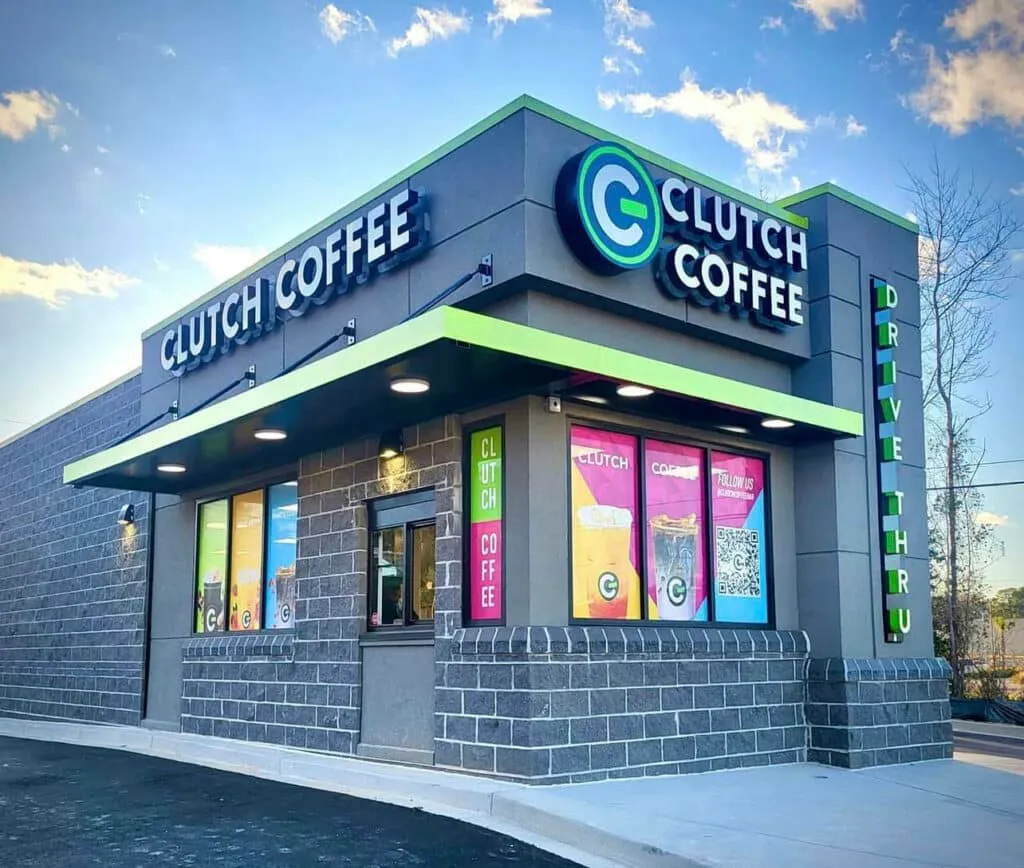
A typical drive-thru visit at Clutch begins as soon as you enter the lane. Upbeat music plays on outdoor speakers, and instead of yelling your order into an intercom, a barista meets you at your car to chat, take your order, and collect payment. Once you reach the drive-thru window, another barista greets you with your drinks brewed and ready.
The model is reminiscent of Chick-fil-A’s drive-thru process, and Clutch has gone all-in on driving through. If you want to park and stretch your legs, you can order at a walk-up window—but there’s no indoor space open to patrons.
We have to nail it all. The speed, the drink, and the service has to be exceptional, above any other place you’re going to go to … We want to make sure the baristas are creating those ‘one minute win’ interactions with customers versus transactions.
Morgan Holtz
Ordering coffee is often a hurried process—drive-thru or not—and the Clutch team attempts to maximize employees’ limited time with patrons. “We have to nail it all,” says Morgan Holtz, Clutch’s senior director of growth. “The speed, the drink, and the service has to be exceptional, above any other place you’re going to go to … We want to make sure the baristas are creating those ‘one minute win’ interactions with customers versus transactions.”
But patrons don’t go to a coffee drive-thru for friendly banter; they go to get their coffee quickly. Spicer says that Clutch aims to have a one-minute turnaround time between customers at the window. “Imagine you have a steady line of cars, and car #1 leaves the pick-up window. Our goal is for it to take one minute or less between car #1 leaving the window and car #2 leaving that window,” says Spicer. “We have to be optimized on speed because, at the end of the day, our customers’ most valuable thing is time, and we want to make sure we get them caffeinated and on their way.”
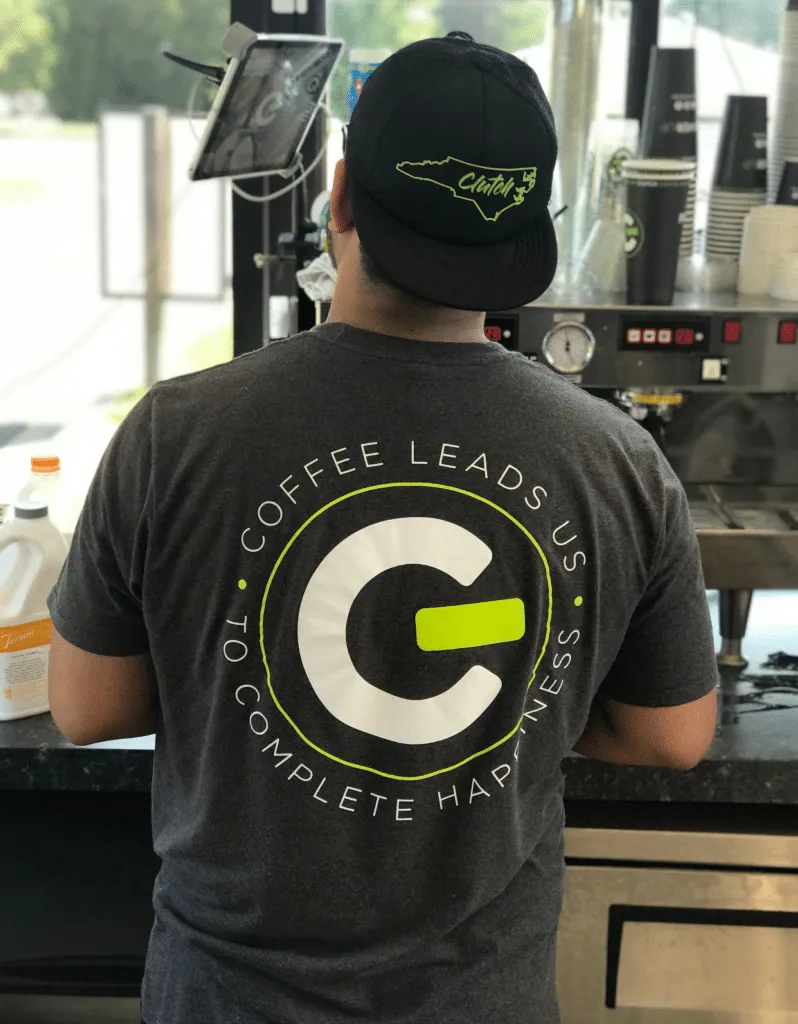
Every element of the drive-thru experience is designed to optimize speed. Employees are assigned to designated positions, from “runners” who take orders in the drive-thru lanes to the baristas brewing espresso and steaming milks for beverages. Part of that speediness also comes from flexibility: Holtz says every Clutch employee is trained across all positions. “One day, a barista might be scheduled on the espresso machine pulling shots; one day, they’ll be scheduled on the milk position. One day, they’ll be on the window, and another as a runner.”
Driving Growth
For Clutch, a key element to success is knowing your audience and what your audience wants. Spicer says that much of Clutch Coffee Bar’s customer base skews young, which aligns with current consumer trends. According to a report from the NPD Group, younger audiences are much more likely to seek out “quick service restaurants, particularly fast casual, that balance value and focused menu.”
“The other shift that’s interesting with a younger demographic,” says Spicer, “is a shift from traditional hot coffee to almost exclusively ice and frozen coffee.” Clutch’s menu reflects changing coffee preferences—many of its coffee drinks can be made hot, cold, or frozen, and its online menu features pictures almost entirely of cold beverages, including smoothies, shakes, iced teas, and juices. And this isn’t just something Spicer is noticing with his customers: cold coffee already dominates, and its market share is expected to grow at an annual rate of 22.7% from 2023 to 2028.
Clutch believes deeply in its drive-thru model, so much so that the company is on track to expand to 30 coffee chains in the Carolinas by 2025 (they currently have eight locations, with one on track to open in Lexington, South Carolina, in October 2023). “We definitely want to continue to grow and really try to be that Carolina-born coffee brand,” Spicer says.
While Spicer estimates the company will be well on track to exceed 30 stores in 2025, he reiterates the success of Clutch is due to the face-to-face relationships baristas make with customers. “We really try to make sure that we become a part of any community we go into.”
Holtz echoes Spicer’s sentiment. “What sets Clutch apart is the relationships baristas build with all the customers that come through … Getting to know the customers’ names, their story, and being able to look down the lineup of cars and say, ‘There’s Billy driving up, let’s get his drinks made and ready.’”