A Minneapolis Café Where Antique Design Meets Specialty Coffee
Inside a North Loop coffee bar that blends vintage decor with a farm-to-cup approach, from carefully sourced beans to Italian porcelain cups.
By Alex White3 min read
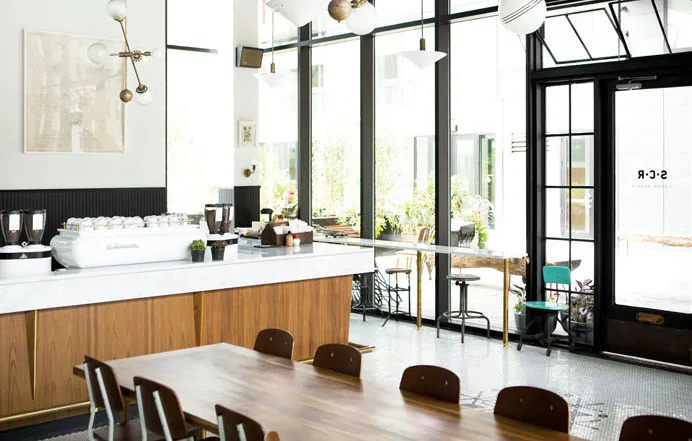
A Vintage Aesthetic in Minneapolis’s North Loop
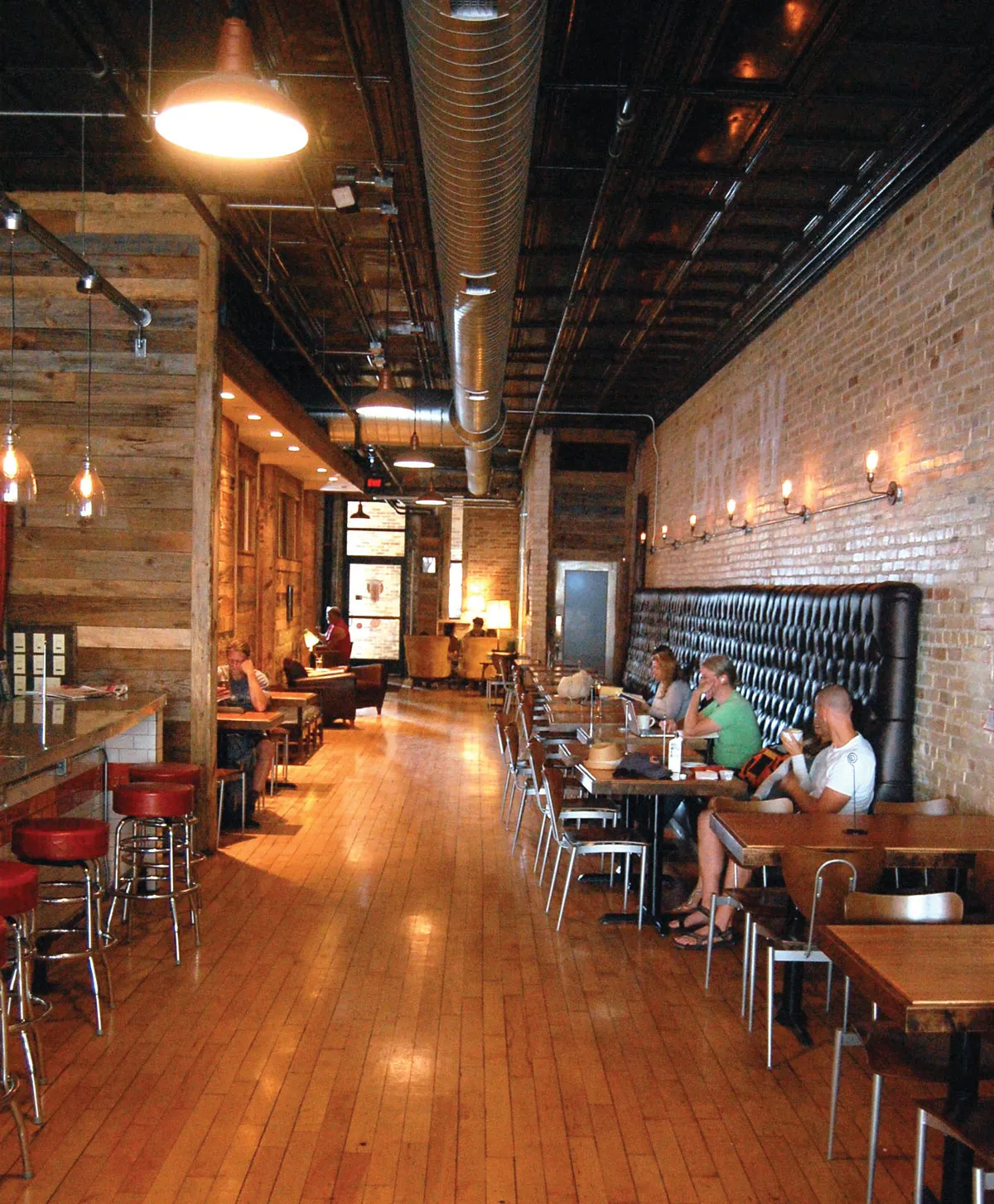
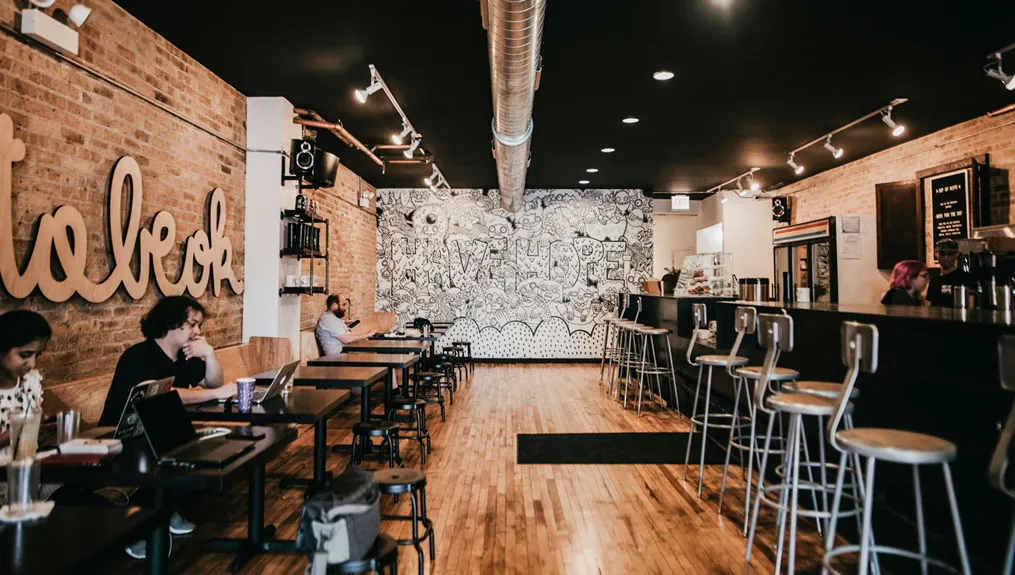
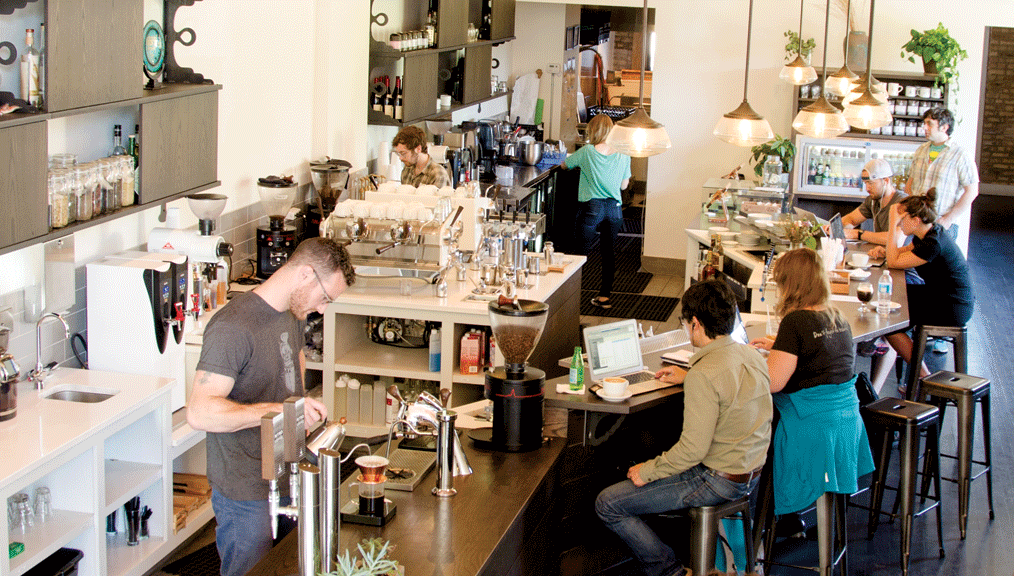
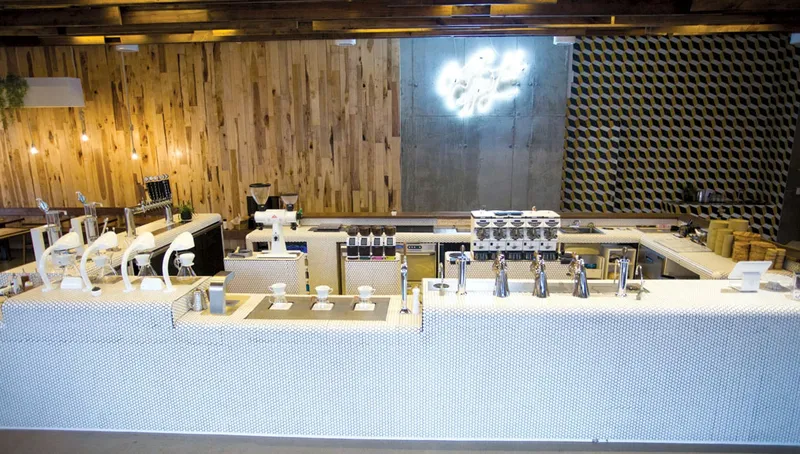
Step inside the newest café from Spyhouse Coffee Roasters, located in Minneapolis’s North Loop design district, and it’s clear why the place has drawn crowds since opening day. The interior offers a nostalgic blend: art deco touches, turn-of-the-century accents, and a dash of mid-century modern. Antique light fixtures suspended from a black tin ceiling illuminate schoolhouse chairs, while vintage stools sit on custom tile inlaid with the Spyhouse logo. Behind a marble counter—edged with a brass footrest—the coffee bar is framed by an antique mirror that also serves as the menu, reflecting the lively room.
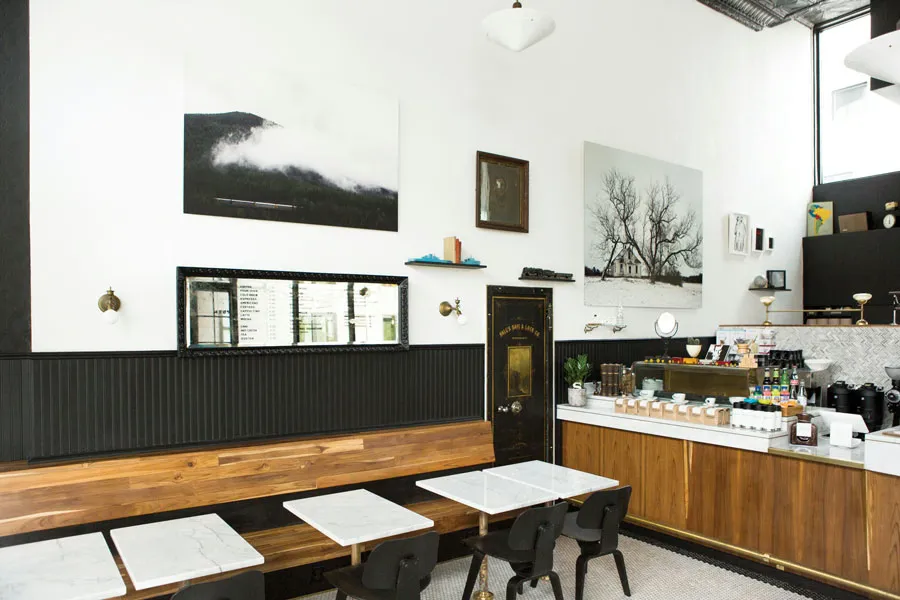
A year before the café opened, however, the space was simply an empty cinder block room in a newly constructed building. “With each space, I get to try out new design elements I’m interested in,” owner Christian Johnson says of his four Spyhouse locations. An avid antiques collector and design enthusiast, Johnson highlights details like the chevron pattern in the wooden ceiling frame, a rounded exit sign glowing near the entrance, and an old door set into a wall, stamped with “Hall Safe & Locks,” salvaged from a safe in the site’s original building. His enthusiasm for design and detail extends throughout the business.
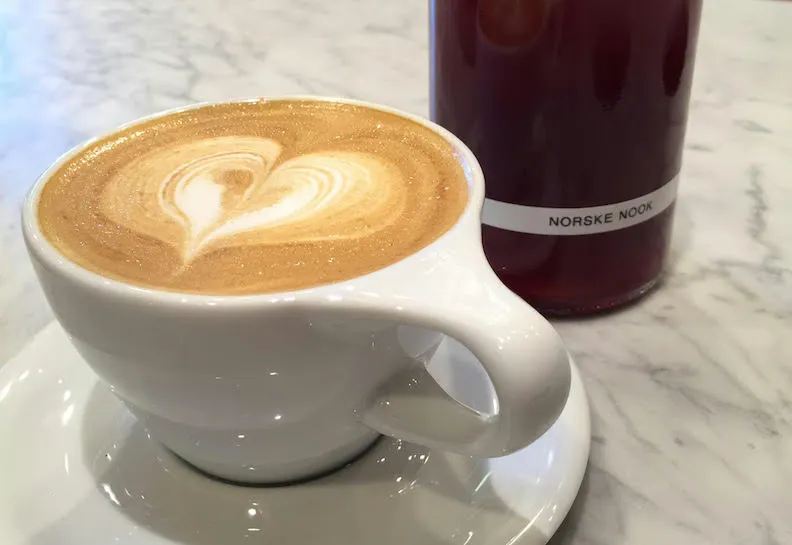
That curation becomes apparent in small touches: espresso drinks are served in Italian porcelain cups printed with a silhouette of Minnesota, and the tables have special flanges to keep them steady. The experience is thoughtfully orchestrated—and that’s a good thing, especially when you consider the coffee.
From Farm to Cup
Spyhouse began its farm-to-cup operation in 2013, opening a roasting facility and café in a refurbished factory in the Northeast Minneapolis arts district. “We wanted more control over our coffee,” Johnson says. He and his team built relationships with farmers in Costa Rica, Guatemala, Kenya, Ethiopia, Brazil, and Colombia, and they visit cooperatives in multiple countries each year.
“It’s exciting to see the whole progression, how the farmers become our partners,” Johnson says.
Spyhouse keeps a focused selection of seven to eight coffees available at any time. Their careful flavor evaluation and sourcing earned a Good Food Award this year for their Ethiopian Suke Quto, a washed coffee with pineapple and jasmine notes. It was grown by Testaye Bekele, whose practices are helping to restore land damaged by fire and deforestation.
Beans are roasted at the central facility and café in a refurbished Probat UG— “super sturdy, hardcore, kick-ass machines,” Johnson says with appreciation. At the coffee bar, the roasted beans are ground in a Mahlkönig EK 43 for filter or a Mahlkönig K30 Twin for espresso. Filter coffee is brewed in Fetco batch brewers or Kalita Waves for pour-overs. Espresso shots are pulled on a three-group La Marzocco FB70, its chrome finish complementing the bar’s design. “I don’t think it gets better than a Fetco drip and an espresso demi ten minutes after it’s brewed,” Johnson says.
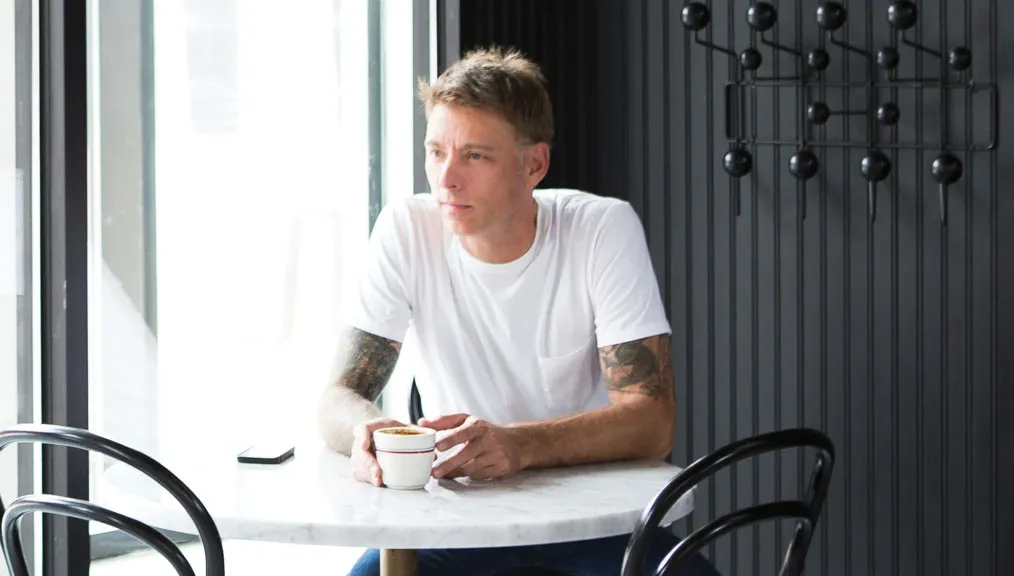
Owner Christian Johnson.
A Detail-Driven Brand Since 2000
That focus on detail has defined Spyhouse since 2000, when Johnson opened the first café on Nicollet Avenue with seven dollars in his pocket, a bank loan, and barista experience from local café Caffetto.
“I’m completely independently owned. No investors, just old-school SBA loans,” he says. “It’s all about attention to detail and quality throughout the whole scope of the coffee experience.” Johnson considers every aspect of his shops, emphasizing “the water, the equipment, barista training, latte art, sourcing, roasting, brewing, and design.” Every business decision receives the same care.
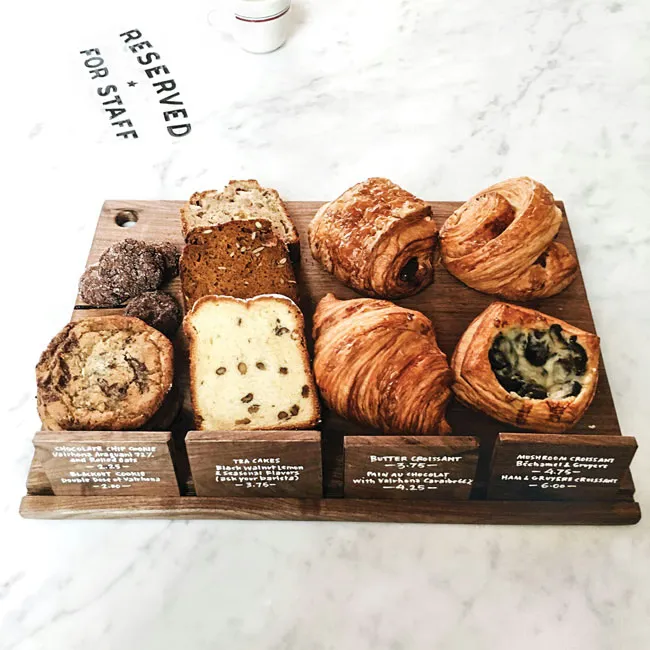
For example, the food menu is limited to pastries out of respect for local sandwich shop C. McGee’s Deli, which has operated since the 1980s. Yet “just pastries” hardly captures the unique treats from Black Walnut Bakery—such as mushroom croissants with béchamel and flaky kouign-amann—baked by Sarah Botcher, a veteran of Tartine in San Francisco and Butcher and the Boar in Minneapolis. Bottled drinks come from Core beverage, a distributor based in the Twin Cities metro. Each product emphasizes local, handmade talent.
Asked what’s next for Spyhouse, Johnson says he’s content for the moment but is considering expanding the wholesale operation and perhaps opening a shop across the river in St. Paul.
He then rises to point out the stools by the window—all different—and tells the story of where he found each one. When asked what defines Spyhouse, he answers without hesitation: “One is design and the other is coffee.” Sipping a velvety single-origin at the marble bar while perched on an antique stool, that sounds about right.