Café Quality Upgrade: Lessons from a Two-Year Transformation
A coffee business owner shares how he rebuilt his café program by focusing on people, questioning every detail, and investing heavily in training.
By Jordan Walker4 min read

A Belief in Change
I firmly believe in change, and I try to run Summit Coffee accordingly. In 2014, convincing myself and my partners that our coffee program needed a major overhaul was relatively easy—as I explained in the first part of this case study. Getting our staff to embrace a fundamental shift in how we operate our cafés was more of a challenge.
According to Tom Rath’s StrengthsFinder analysis, my primary leadership strength is as an activator. That’s a simple way of saying I believe a business is judged not by what we say or think but by what we accomplish. I also knew, however, that our coffee shop had grown into a coffee business, and retraining a staff of thirty-six couldn’t—and definitely shouldn’t—happen overnight.
Now, twenty-four months later, on the other side of this transformation, I’ve learned and relearned that to activate a staff to change, you are only as good as the people around you. Step one is, and always will be, finding and empowering those people.
Hiring Outside the Box
In February 2014, I recruited Evan Pollitt—the first employee I ever hired. I knew Evan as a regular customer: a mustached man with an obvious knowledge of coffee and an even more obvious appreciation for craft. He had no professional coffee experience before joining us, but I knew we needed to think—and hire—outside the box to steer in a new direction.
Evan shared my newfound passion that being good wasn’t good enough. While we were sourcing great coffee, our brewing and preparation fell short. So, despite being the newest employee, Evan immersed himself in SCAA reading materials, Counter Culture Coffee trainings, and catalog cuppings.
When our previous director of coffee left that June, we made a choice: reward ingenuity and foster a culture of improvement by naming Evan as his replacement, and work together to bring about the necessary transition at Summit Coffee. Let’s invest in building a leadership team. Let’s make careers out of coffee—not only for Evan, myself, and my brother Tim, but also for Andrew Kelleher and Lilly Wilson, two exceptionally bright Davidson College graduates who could partner to remake a coffee business.
We believe in action, in the process, in putting ourselves out there on the blind road to excellence.
The “Why” Phase
My two-year-old daughter is in the “why” phase, and I love it because it reminds me of us in 2014, midway through step two: question everything.
Why do we use a timer grinder instead of a scale for batch brewing? Why do we grind coffee at that setting? Is our coffee brewed at the proper ratio? Why do we intentionally over-extract espresso for blender drinks? Why do we have twenty-four syrup options? Why does our twelve-ounce latte have only one shot? Why do we have a twenty-ounce cappuccino?
In hindsight, the little changes we’ve made in two years are staggering. But we believe in action, in the process, in putting ourselves out there on the blind road to excellence. Yes, how we extract espresso for a frappe matters because it shows we care about everything we sell. And if we don’t care about it, we shouldn’t sell it.
The Cost of Training
As most shop owners realize, training an employee properly is expensive. It’s spending money on non-revenue-generating work—not just the trainee but also the trainer. It’s effort and energy. And it’s coffee and milk. So much coffee and milk were harmed during the remaking of Summit Coffee. This is step three.
Throughout this process, we’ve spent tens of thousands of dollars just on training. Yes, let’s send eight employees two hours away for an all-day espresso class. Let’s buy better scales, better grinders, and more grinders. Let’s buy a La Marzocco espresso machine just for staff education, because training while trying to serve isn’t a healthy recipe. Let’s take one Counter Culture coffee at a time and, gram by gram, figure it out.
With thirty-six employees, it takes time.
Patience as a Guiding Principle
At our leadership team meeting this January, we each chose a word to guide us professionally in 2016. I chose patience. I hate inactivity. I hate indecision. But how can you guide a staff this large to forget and then relearn everything about coffee without some patience? You can’t. Step four.
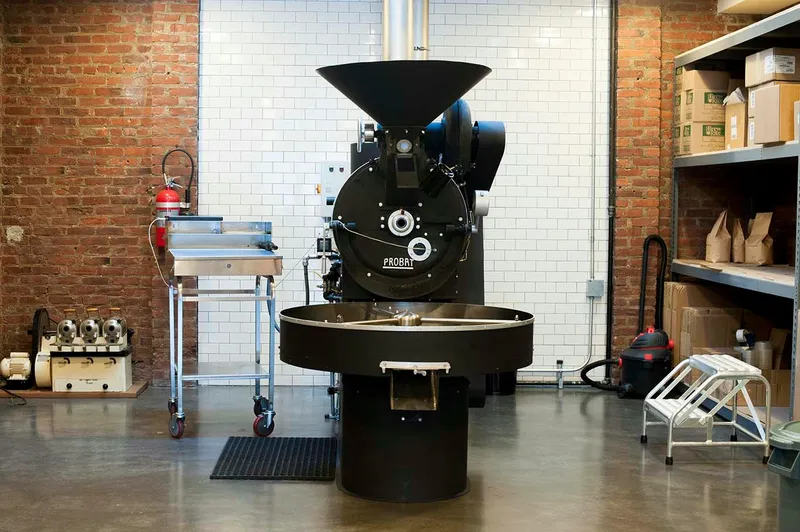
When we decided in early 2015 to open a roasting segment of our business, we did so because we wanted to be more intimate with the coffee process. That brings an inherently deeper care for what coffees you source, how they’re roasted, and ultimately how they’re prepared for the customer. And that requires a deeper investment in each person who works for Summit Coffee.
First All-Staff Cupping
At our first all-staff cupping, when we debuted our new catalog to the entire staff (we made a cold turkey swap to our own roasted coffee), one team member described a Guatemalan as “breakfast cereal.” Another could only find the word “bold” for our darkest roast, and a third said, “I don’t really like coffee.” Holy expletive, I thought, we have miles to go before I sleep.
Rome, as they say, was not built in a day. Nor is a coffee business. And, eleven months after that first cupping, our staff has been entirely retrained. It’s been exhausting and exhilarating, trying to uncover a passion for craft in each of us. It’s taken a whole lot of patience, a whole lot of money, a whole lot of questions, and a whole lot of great people.
Next month, I’ll share how our customers responded to the change.