Building a Safer Café: 5 Practical Policies for Staff and Guests
A safe and productive café relies on clear, actionable policies—not just good intentions. From anti-harassment rules and service guidelines to emergency protocols, these five measures help ensure everyone knows how to respond when challenges arise.
By Robin Ross9 min read

Coffee has long served as a catalyst for community, bringing people together across backgrounds to collaborate and connect. Honoring that legacy means creating spaces that are safe for everyone—both those behind the counter and those in front of it.
Safety and productivity don’t stem from good intentions alone; they require robust systems that guarantee everyone knows what to do when problems occur, protecting themselves, their colleagues, and their customers. Below are five steps to help you create a safer, more productive café environment.
1. Adopt a Detailed Harassment Policy
A thorough, specific harassment policy is essential for enabling service staff—particularly those from marginalized groups—to protect themselves from verbal and physical harassment.
“You never know what will happen, so having clear ground rules and procedures is key,” says Jess Steffy, co-owner of Square One Coffee Roasters in Lancaster, Pennsylvania.
Steffy’s company initially operated without a written harassment policy and later developed one in collaboration with staff. She now views it as a cornerstone of their company culture.
“As we’ve become more intentional about this, our customer base has become much more diverse,” she says. “I’ve also found that making sure my staff knows their bosses will back them up in situations with difficult customers has been very important to how safe and supported they feel.”
For maximum effectiveness, the policy should define harassment and outline safe steps baristas can take. Offering multiple options matters: one barista might feel comfortable asking a customer to leave, while another might prefer using a signal to alert a manager and remove themselves from the situation.
When drafting a harassment policy, include procedures for addressing and reporting harassment from customers, coworkers, and managers alike.
As Ian Hamilton, employee experience director for Go Get Em Tiger Coffee in Los Angeles, puts it, “A lot of times when harassment problems become endemic in workplaces, it’s not because harassment policies don’t exist; it’s because they’re unequally applied. Some companies may find it easy to enact their zero-tolerance policy when trying to fire the dishwasher for harassment, but less so when it’s a manager they really like.”

GGET’s employee experience director, Ian Hamilton.
To counter these biases and dilemmas, ensure the policy covers internal conflict and harassment and lays out clear procedures even—or especially—when the offender holds a position of power.
Hamilton and Kyle Glanville, co-owner of GGET, both stress that written or verbal policies alone are insufficient; companies need both a strong, specific written policy and an ongoing, active conversation about harassment to prevent it as much as possible. When harassment does occur, owners and managers must address it fairly.
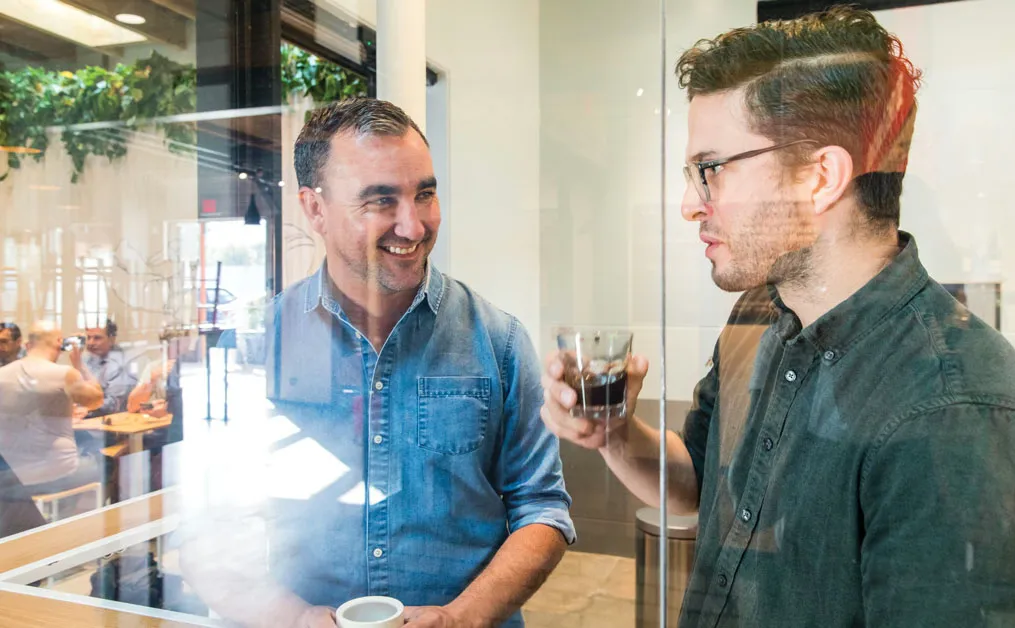
GGET’s co-founders Kyle Glanville (left) and Charles Babinksi.
2. Establish a Service Policy
Beyond defining harassment and how to handle it, a service policy that outlines your café’s service style and what good service looks like is valuable. It aligns everyone on service expectations and protects staff from retaliatory customer complaints and burnout.
“A service policy outlines expectations for services offered to customers, responsibilities of staff members, what to do when something comes up that is not specifically outlined,” says Morgan Russell, a seasoned coffee professional in the process of opening a coffee shop in Philadelphia. “When I open my shop, I want my staff to feel safe and in control of the space. The best way I have found to do that is to make sure expectations are clear and communication is open.”
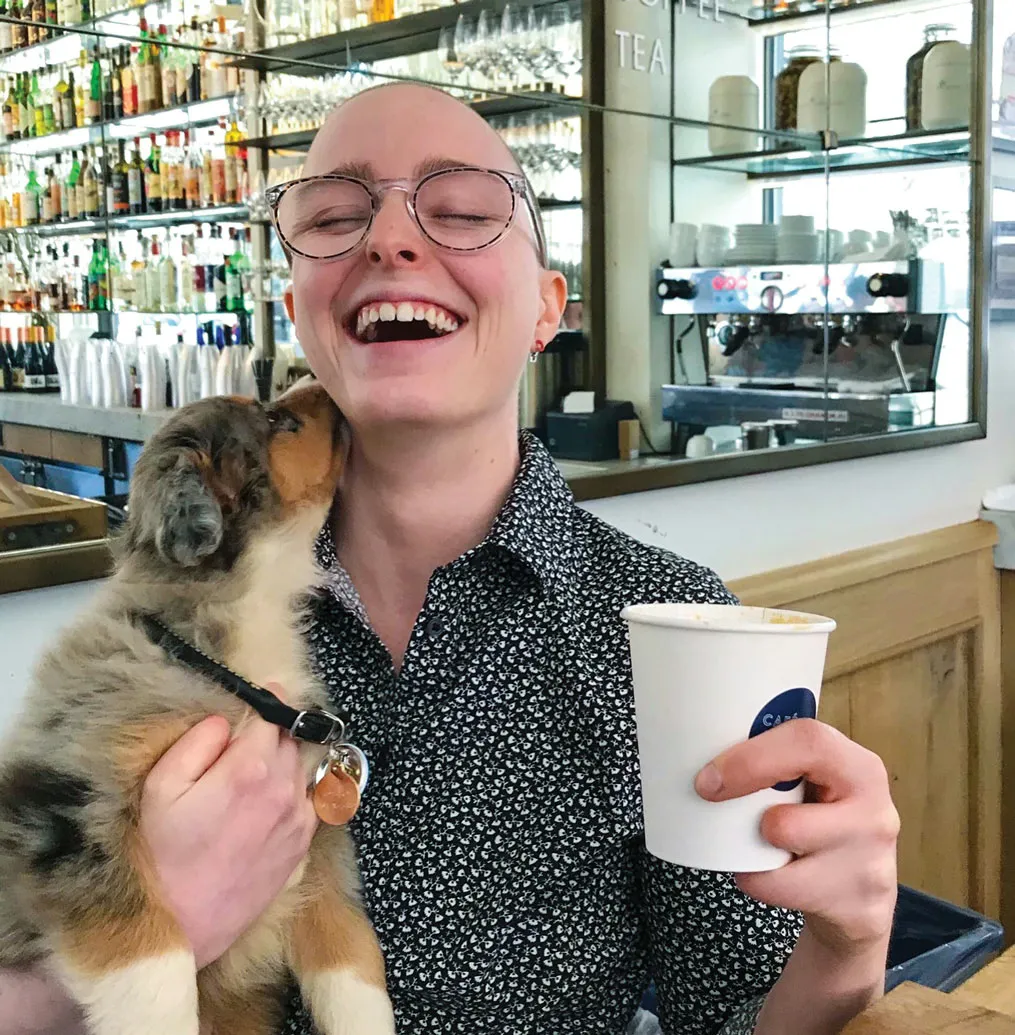
Morgan Russell, a coffee professional in the Philadelphia area.
For instance, if you believe the customer is always right, state that in your policy—but if there are limits (and there usually are), spell them out. If you don’t want your café serving off-menu drinks, outline that and give baristas an official line to explain why to customers. Putting expectations in writing also helps ensure they’re realistic and legally enforceable.
To define service standards collaboratively, Steffy and the Square One team launched a customer service class for all staff.
“It’s essentially a roundtable discussion on not only customer service, but our company’s culture, values, and goals when it comes to our cafés,” Steffy says.
At GGET, the general service style is to say “yes,” which makes the harassment policy even more critical.
“When you’re encouraged to treat every customer positively and find a way to say yes to every request, it can be incredibly jarring when you come up against a customer who is not engaging in good faith,” Glanville says. “The other side of saying yes whenever possible is that our employees know that they have all the latitude they need to handle tough situations, whether they’re asking another coworker to swap out with them, telling a customer they need to leave, or even calling security.”
3. Use Signage to Set Expectations
While setting clear standards for baristas is straightforward, communicating standards to guests is harder. Signage is one effective tool.
A good starting point is a sign stating that harassment of any kind is not tolerated, but you can also specify what constitutes unwelcome conduct.
Alchemy Collective in Berkeley, California, displays a sign reading: “Alchemy Collective asks that you use gender neutral pronouns such as ‘they/them’ to refer to our staff, unless you know their pronouns personally.” Since most worker-owners at the Collective are transgender and/or gender-nonbinary, the sign helps prevent staff from being misgendered by customers.
“From personal experience as a trans-femme, being misgendered by mostly well-meaning customers can be emotionally exhausting and negatively impacts my ability to give good customer service,” says worker-owner Shante Robinson. “The sign also encourages customers to think about gender constructs in ways they might not have otherwise. In the past six months since we’ve had the pronoun sign up, I’ve had the opportunity to talk to several regular customers about non-binary gender identities, in a respectful and consensual manner.”
For Alchemy, the signage not only prevents unintentional harm but also fosters a culture where being transgender is the norm, encouraging cisgender customers to step outside their usual space and enter one where thinking about gender is inherently safe. Other cafés can similarly use signage meaningful to their staff to support a safe and productive company culture.
4. Educate Management and Staff on Labor Law Basics
To create the safest possible experience for management and staff, learn basic labor laws and share that knowledge as widely as possible. Managers often violate labor laws simply because they don’t know them.
Learning basic labor laws clarifies what constitutes harassment and discrimination at federal and state levels, which regulations govern pay and scheduling, and how certain activities are protected under collective bargaining laws—even if you may not like them. For example, if an employee is injured at work, everyone involved should understand the implications and appropriate next steps. Or if two employees discuss their salaries and a manager overhears and disapproves, that manager needs to know—for the company’s liability—that although they may not want the conversation, the employees’ right to have it is protected by law.
GGET does not yet have formal HR trainings for staff, but Hamilton wants to implement them as soon as possible. Currently, he meets with every new manager to review labor law basics and works to maintain a close relationship with open communication. Beyond that, “all managers are coached through any sticky situation,” he says. “They know that if they have a problem, I’m here for them.” He has guided people through filing workers’ comp claims, promotions, and terminations. He is also working on publishing a common HR issues binder for managers that will be kept in the shops.

GGET: Barista Mannie at the Larchmont location.
“I don’t think there are really any downsides to people knowing their rights,” Glanville says. “In fact, Ian is the first person encouraging people to take full advantage of their rights. Transparency is how you get the best from people.”
Part of Hamilton’s value in the HR role comes from his prior experience as a barista and manager in the company—other workers know he has their best interests at heart and will share inside HR information when issues arise.
“When you hide things, you set yourself up for failure,” he says. “You lose trust of employees and also open yourself up to worse when they do find out. Don’t be shitty in the first place and then you have nothing to hide.”
Educating everyone at all levels not only creates the safest possible space but also helps management avoid legal vulnerability.
Steffy is contracting a local company for advanced HR and management training for Square One.
“To date, we’ve done team-building workshops for managers and staff, and we’ve begun an ongoing series of mindfulness and implicit bias trainings,” she says. “I absolutely think it’s a benefit to any company to invest in its people, especially its key leadership.”
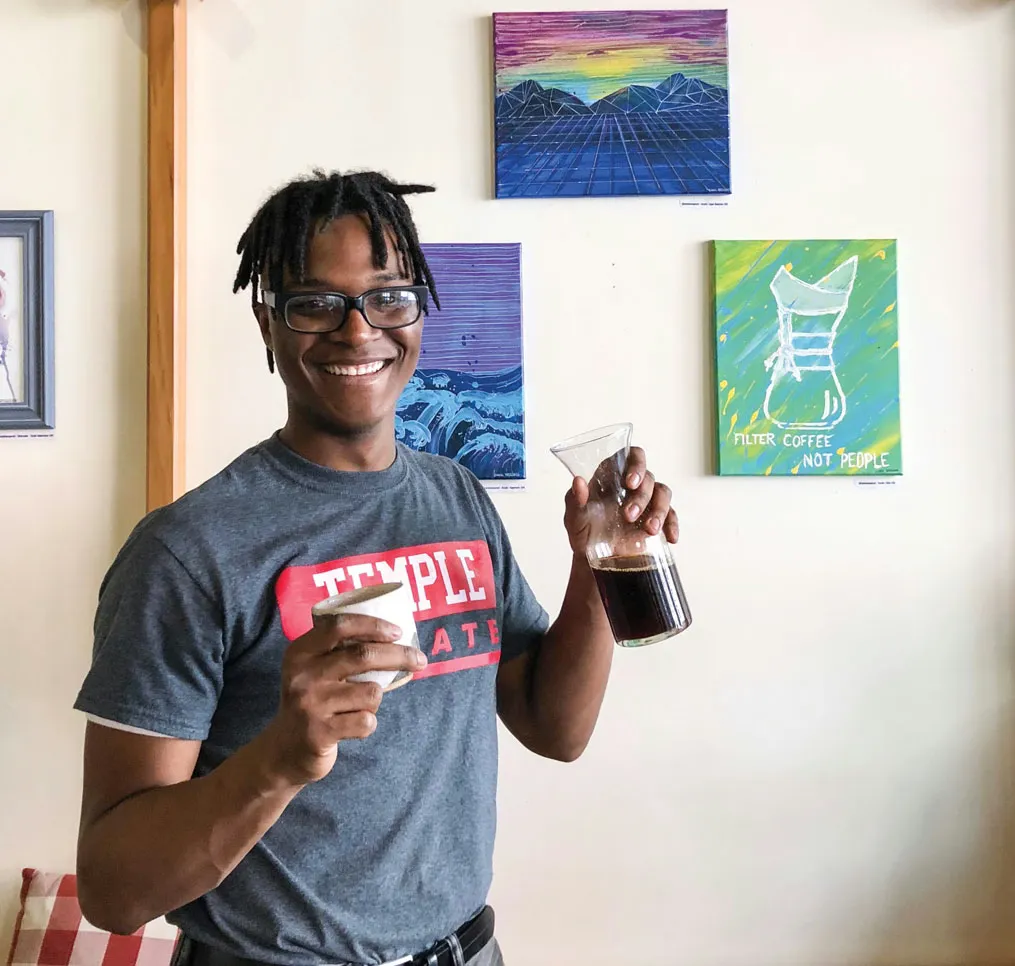
SQ1: Kareem makes a mean pourover.
Since baristas are often promoted to management without leadership training, she wants to address that within her own sphere.
“Managing people is a special skill that requires some level of coaching and additional training,” she says.
5. Develop Emergency Procedural Guidelines
The policies above guide employees through many day-to-day challenges, but written procedures for emergencies are also essential. These should cover several areas:
- Natural disasters: During a hurricane or snowstorm, when should employees stay home instead of coming in? Do employees know the escape plan for an earthquake or fire? Does everyone know what to do in case of an active shooter?
- Medical emergencies: Is there someone on every shift who knows CPR? Does anyone know what to do if a guest chokes, has a seizure, or otherwise collapses?
- Mental health crises: Does your staff know what to do if a stranger has a mental health crisis in the café? Specific instructions are important—not just calling 911, which can escalate the situation and put people involved (including staff) in danger.
- Non-emergency criminal disruptions: Does your staff know what to do when someone steals the tip jar? What if someone has been asked to leave and won’t? Again, staff need options other than calling the police when the situation isn’t truly an emergency, but they also must not put themselves in harm’s way.
Hamilton and GGET are working with a safety consultancy firm to create store-specific emergency plans. They have become all too familiar with handling workers’ compensation claims recently, but plan to analyze other coverage gaps and fill them.
Steffy and the Square One team have emergency protocols in place, including a list of situations where staff should call 911, another list for non-emergency numbers, and a set of situations where they’d call the manager or owners.
“We also have some staff with special medical needs, and their emergency protocols are posted (with their permission/insistence) and reviewed with new staff,” she says. Additionally, they have a local bike patrol available and on-call in their neighborhood to walk staff home if they feel threatened or unsafe.
“Despite never working in a place with formal emergency protocols, I’ve repeatedly had to use the first aid training and conflict resolution experience I gained working in schools,” says Russell, who is working to ensure their coffee shop provides baristas with those tools. “I’ve worked at three coffee shops where the panic button wasn’t actually attached to anything, and where the response to questions about emergency protocols was, ‘We’ve never had that happen’ or ‘That hasn’t been a problem for us.’ Emergencies are the highest-stakes moments that employees have the least experience with. Clear protocols enable employees to react quickly, confidently, and competently, while a lack of protocols can make a situation much worse.”
Review, Discuss, Train, and Practice
These tools can provide a comprehensive safety net for staff and management, but each is only as effective as its implementation. The keys to success are employee review and training: before finalizing any policy, ask willing staff to review and suggest additions or changes. Once policies are in place, ensure all staff are briefed and know exactly what to do. Even better, share them with potential hires during interviews to confirm alignment with your company.
Human interactions are unpredictable, but preparedness goes a long way toward keeping everyone who works in and visits your café safe, protected, and happy. By intentionally addressing often-unspoken standards, putting them in writing, and communicating them, you can better ensure they hold up in reality and make your café an even better place.