Coffee Dialing in a Post-Pandemic World: How Cafés Reworked Tasting Protocols
The pandemic forced cafés to rethink dialing in, balancing safety with quality. Baristas adopted new tools and routines, and some found their coffee actually improved.
By Taylor Hill6 min read
COVID-19 brought two major challenges for coffee tasting into sharp relief:
- The risk of transmitting infectious disease through shared tasting;
- The possibility that baristas might have to dial in (industry jargon for setting up and determining coffee recipes) using only numbers and pre-set ratios if their senses of taste and smell were compromised.
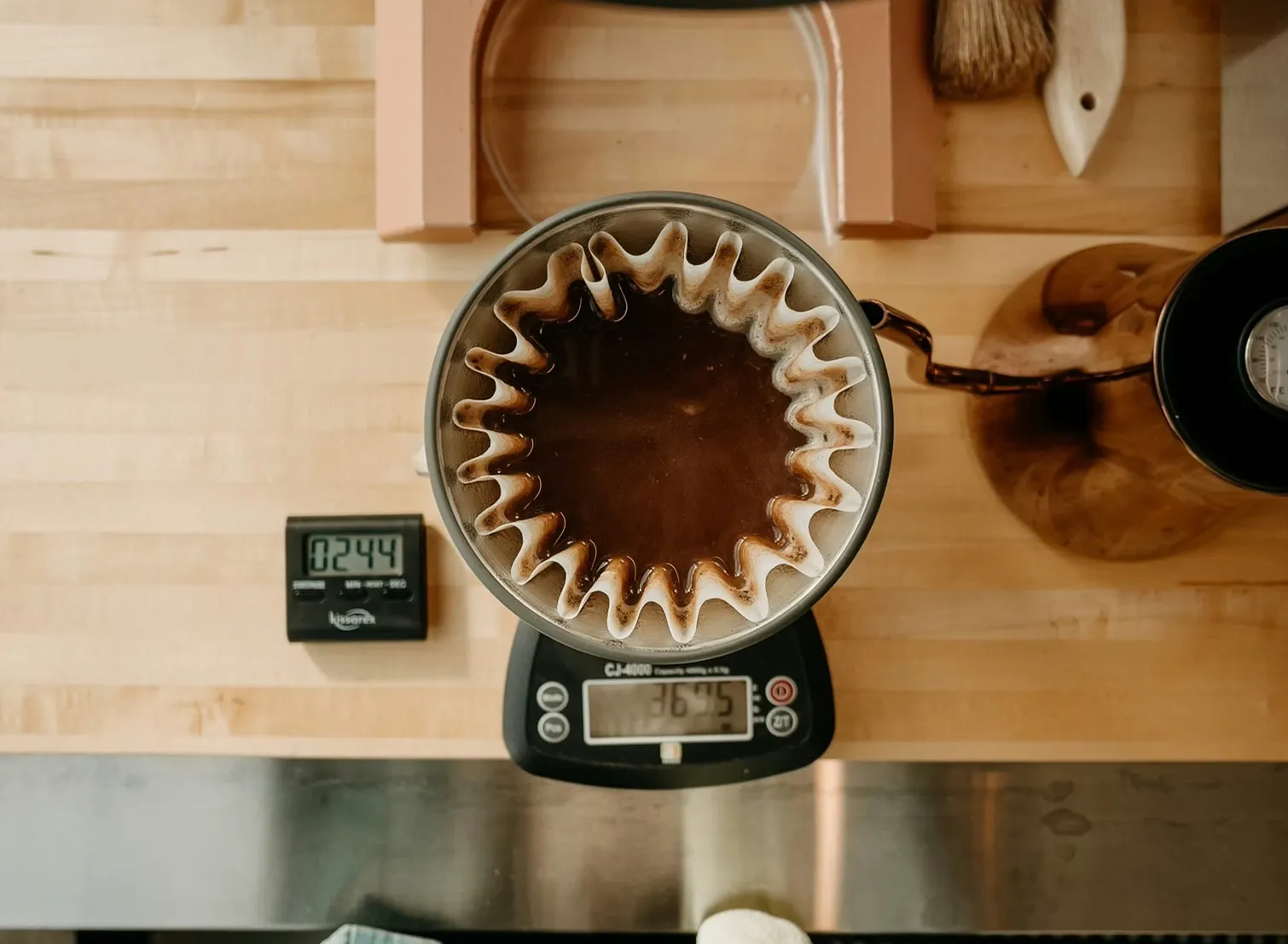
For coffee to reach its best flavor, baristas continuously track its taste and brewing parameters. Recipes often need daily—sometimes hourly—adjustments to keep coffee tasting its best.
Before early 2020, baristas had long treated these two challenges less as active threats and more as occasional parts of the job. How did baristas and cafés respond when COVID created obstacles for dialing in? And how have the solutions developed during the pandemic been carried into today’s workplaces? Fortunately, many coffee professionals devised creative tasting protocols that don’t rely solely on sipping espresso and sharing flavor notes while passing germs around the café.
Sanitary Tasting Leads to Healthier Shifts
In the early days of the pandemic, many cafés realized that social distancing guidelines and indoor masking made it much harder to dial in throughout the day. Stepping off the floor to taste coffee during a rush isn’t always feasible, so tasting espresso and coffee became an opening or pre-rush task.
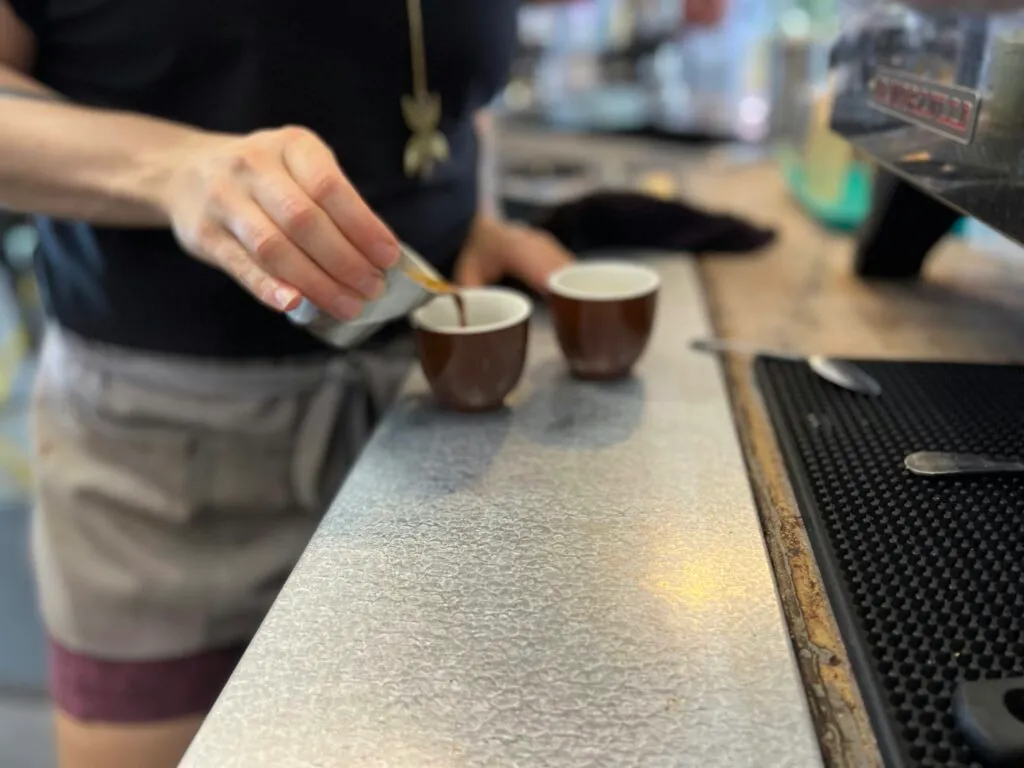
“In the early, pre-vaccine days, we would take turns stepping outside or into the back of the shop to taste, but this only really worked first thing in the morning before the rush started,” says Sam Sobolewski, a coffee veteran of 18 years and co-owner and café manager of Bartavelle Coffee & Wine Bar in Berkeley, Calif. “At the time, it was clear that tasting and adjusting as often as we had in the before times wasn’t practical with masks and trying to keep some distance between stations.”
Alyssa Noble has worked in coffee for seven years and was a barista and communications specialist for Cocoa Cinnamon & Little Waves Coffee Roasters in Durham, NC. Her company shifted to a takeout-only model that gave more space in the mornings to safely set the day’s espresso and coffee recipes. “That change, combined with lower café traffic in the early mornings, gave us a good amount of time to dial in our espresso, pourover, and batch brew options daily,” she says. “Because of that, I feel like our coffees were tasting extra good during the early pandemic.”
At Roots Coffeehouse in Fort Worth, TX, Alissa Probst says her cafe initially scraped porcelain and for-here mugs and cups. “During the early pandemic, we continued to dial in by tasting but started using disposable cups more,” she says.
COVID prevention requires a layered approach. Although no solution is perfect, everyone interviewed found simple solutions that helped staff safer and supported making the best coffee possible.
Not Always Easy
Cafes made considerable shifts in how they approached dialing in to help ensure workers’ health was as protected as possible. But those changes weren’t necessarily convenient or easy. “Having to walk across the room to sneak a sip of coffee wasn’t conducive to trying a broad range of parameters,” says Sobolewski, noting that it was difficult to take in all the flavors of a cup of coffee or a shot of espresso in a rush. “I’m sure some people are better at tasting behind a mask than I am, but I find it very difficult to tell what’s going on without being able to smell.”
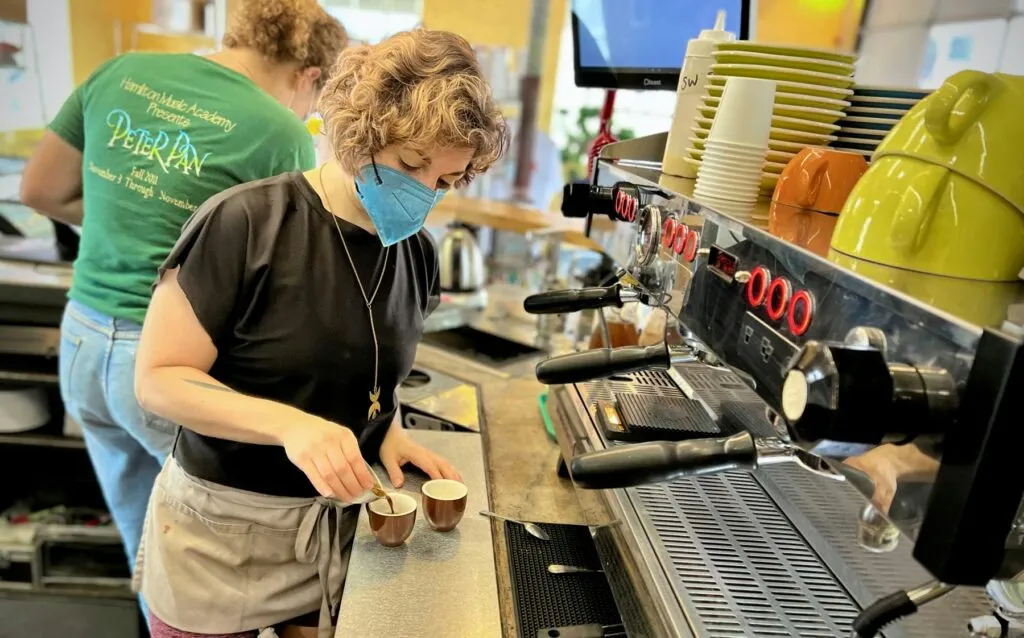
Dialing in a coffee is a process without a fixed timeline. A coffee could be perfect on the first brew and not need any adjustment, or it could take more than ten tries to create a good recipe.
Imagine this process drawn out in a busy cafe like Sobolewski’s. You—the barista—realize that your espresso is brewing too slowly; you can no longer serve it. You grab the unservable shot and sprint across the cafe. Reaching the door, you step outside, tear down your mask, taste the espresso, run back inside, and try a new recipe. This new recipe could fix the issue, or it could not. If not, a drawn-out adjustment process will quickly become unsustainable.
Some COVID safety protocols also took away the communal aspect of dialing in. “Pre-pandemic, we used to taste the espresso together as a team fairly often,” Probst says. “It was sad not to be able to do that anymore. “I miss being able to taste things as a group and decide what we like or dislike about a coffee—basically, dialing in together. I don’t know if or when that will be back, but I hope it’s not too far away.”
Dialing In Sans Tasting
The move toward sanitary tasting protocols pushed cafés to think creatively. How could baristas maintain coffee quality without actively tasting after a recipe was set?
Coffee and espresso recipes fluctuate throughout the day, but Probst, who has worked in coffee for over eight years, says other senses and technology can help. “Naturally, with trying to minimize COVID spread, we did have to rely more on the smell and texture of espresso to keep it dialed in throughout the day,” she says. “Our refractometer has been a key tool for us over the past three years, but I used it more in 2021 than ever before.” Refractometers measure total dissolved solids and allow baristas to assess their brews quantitatively instead of using their senses alone.
Disease prevention wasn’t the only reason baristas weren’t always able to taste their coffee. “After some of us lost our sense of smell and taste for a short time after having COVID, it was nice to have a backup tool to help decipher whether or not a coffee was within the extraction range we were looking for,” Probst adds.
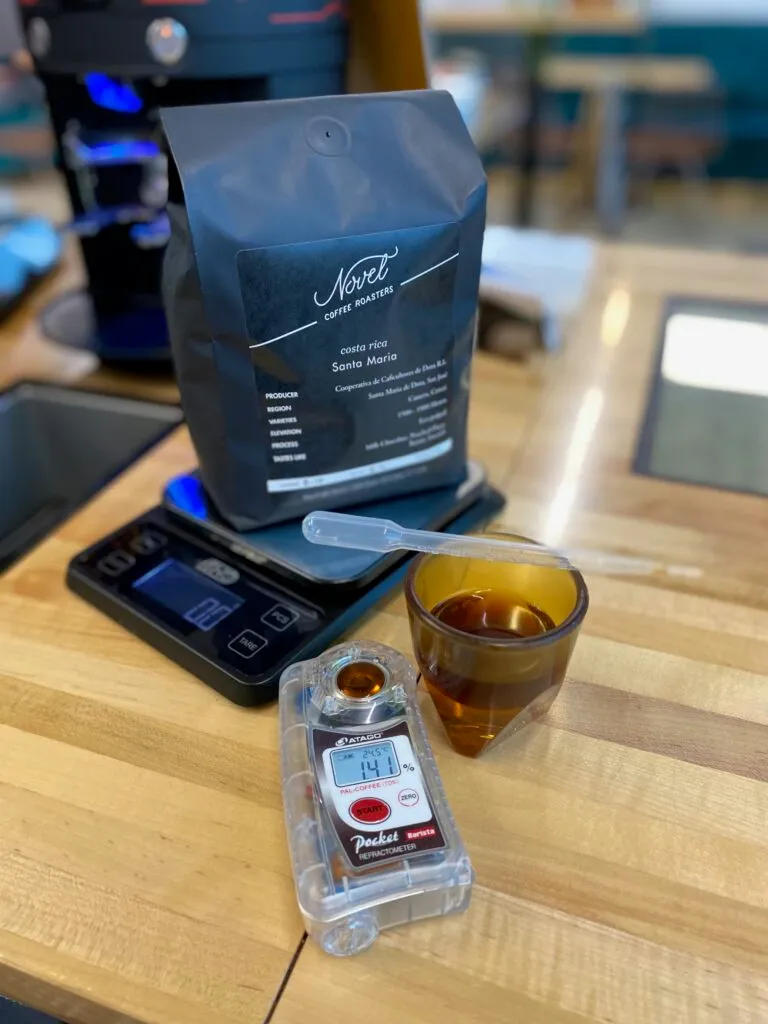
Maintaining espresso quality through visual texture, total dissolved solids (TDS) measurements (gathered using refractometers), and the occasional off-floor or masked mid-rush sip aren’t the only ways cafés responded to the tasting challenges COVID presented.
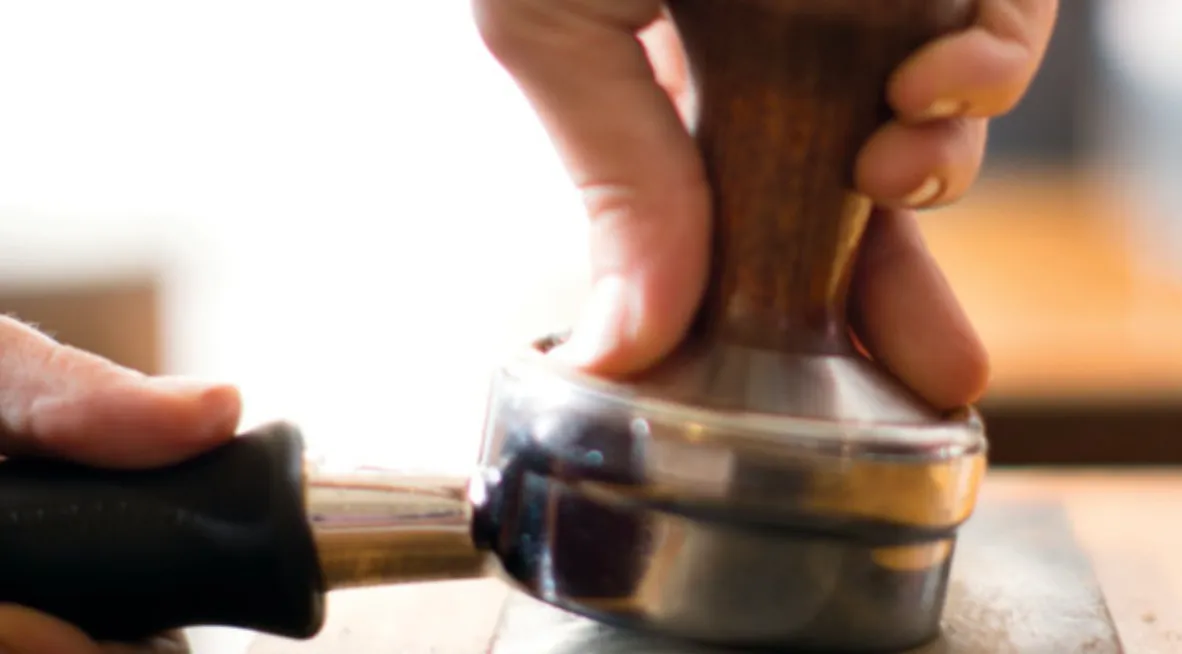
“We invested in a couple of fancy tools to help us put out more consistent drinks with less time spent dialing in,” Sobolewski says. “The first, perhaps most impactful, was a PUQpress [an automatic espresso tamper], which made it possible for the baristas to switch on-bar fluidly without making grind adjustments. This greatly reduced the amount of tasting necessary at shift change or anytime we switched [positions] on bar.”
The second purchase was a Linea PB espresso machine with integrated scales, which they bought to reduce waste and improve bar flow. “It also had the added benefit of producing fewer outlier shots that needed tasting for quality control purposes,” Sobolewski says.
Tools designed to help streamline and improve espresso preparation can also lengthen the time between quality control checks by ensuring consistency shot-to-shot. Aside from helping to prevent disease transmission, tools that increase recipe stability save baristas time and focus that would otherwise be directed at maintaining coffee quality.
Where Are We Now?
As we move through the third year of a world with COVID-19, cafés have found a way to blend pre-vaccine COVID prevention practices of the early pandemic with the more relaxed marketplace we find ourselves in now.
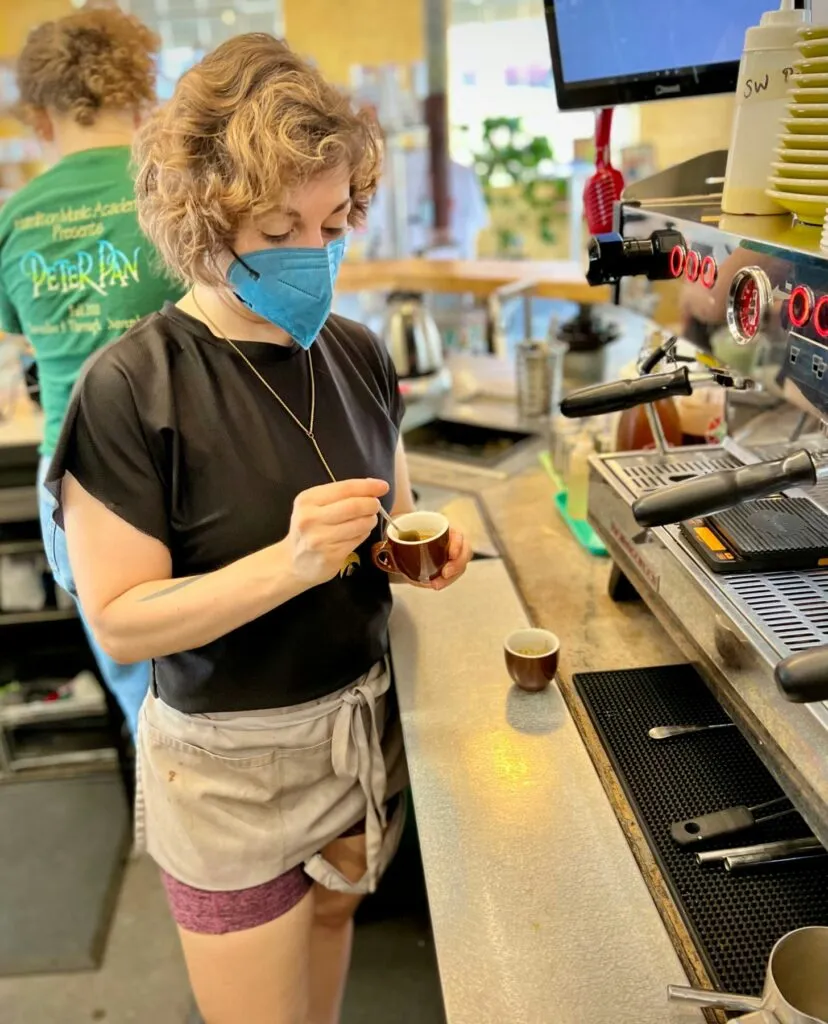
“We still generally give one another space when tasting coffees behind the bar,” Noble says. “We are still all masking at work, which is a practice that I’m happy has continued. I definitely miss the extra time to dial in in the morning.”
Sobolewski agrees: “I think we’ve all learned some good practices around bar hygiene, but I can also say that I’ve missed the social aspect of drinking coffee in cafés—it’s the main reason we do what we do!” He’s looking forward to casually drinking coffee behind the bar in the future.
Probst says that the experience has been an opportunity to develop her espresso skills. “Relying more on the aroma and body of the espresso was helpful in the long run, to push us not to focus solely on taste. All of these factors are key to making a killer espresso.”
The early pandemic presented many challenges, and coffee quality could have easily fallen by the wayside in the face of more pressing issues. And yet, baristas and cafés all over continued to rise to the occasion in pursuit of creating beautiful coffee experiences.
Cover photo by Dawson Turner