The Strategy Behind Coffee Bag Design: Balancing Information and Branding
How roasters choose which details to feature on packaging, from origin and process to roast level, and how those choices affect production and customer connection.
By Jordan Evans6 min read
Beyond Eye-Catching Labels
It's tempting to assume that designing a coffee bag is simple—just splash on bright colors and bold text to grab attention. But the true worth of a thoughtfully designed bag extends far past its looks. For many coffee drinkers, the bag is their first encounter with a roaster, and every element—tasting notes, partner-farmer details, and more—communicates the brand's philosophy and narrative.
Clearly, design alone doesn't make a coffee bag stand out to shoppers. Roasters must also weigh how much information to put on the packaging. With facts ranging from elevation and region to processing method and varietal, how can roasters determine what buyers actually need to select a coffee they'll enjoy?
Design Choices That Affect Production
For Olympia Coffee Roasting Co. in Washington State, the question of what to include on its bags gained urgency when the company redesigned its packaging in 2023. Co-owner Sam Schroeder explains that they refresh their packaging every few years as the business evolves.
"Every company goes through an evolution over time, and having our brand reflect who we are right now is part of that process," Schroeder says of Olympia, which has been roasting since 2005. "We periodically rebrand different elements to better reflect the company we are today."
Olympia's team knows from experience that the details on a bag—from origin to roast profile—tell the story of the coffee inside and help customers choose one they'll love. But they also recognize that bag design must fit the company's operational capabilities.
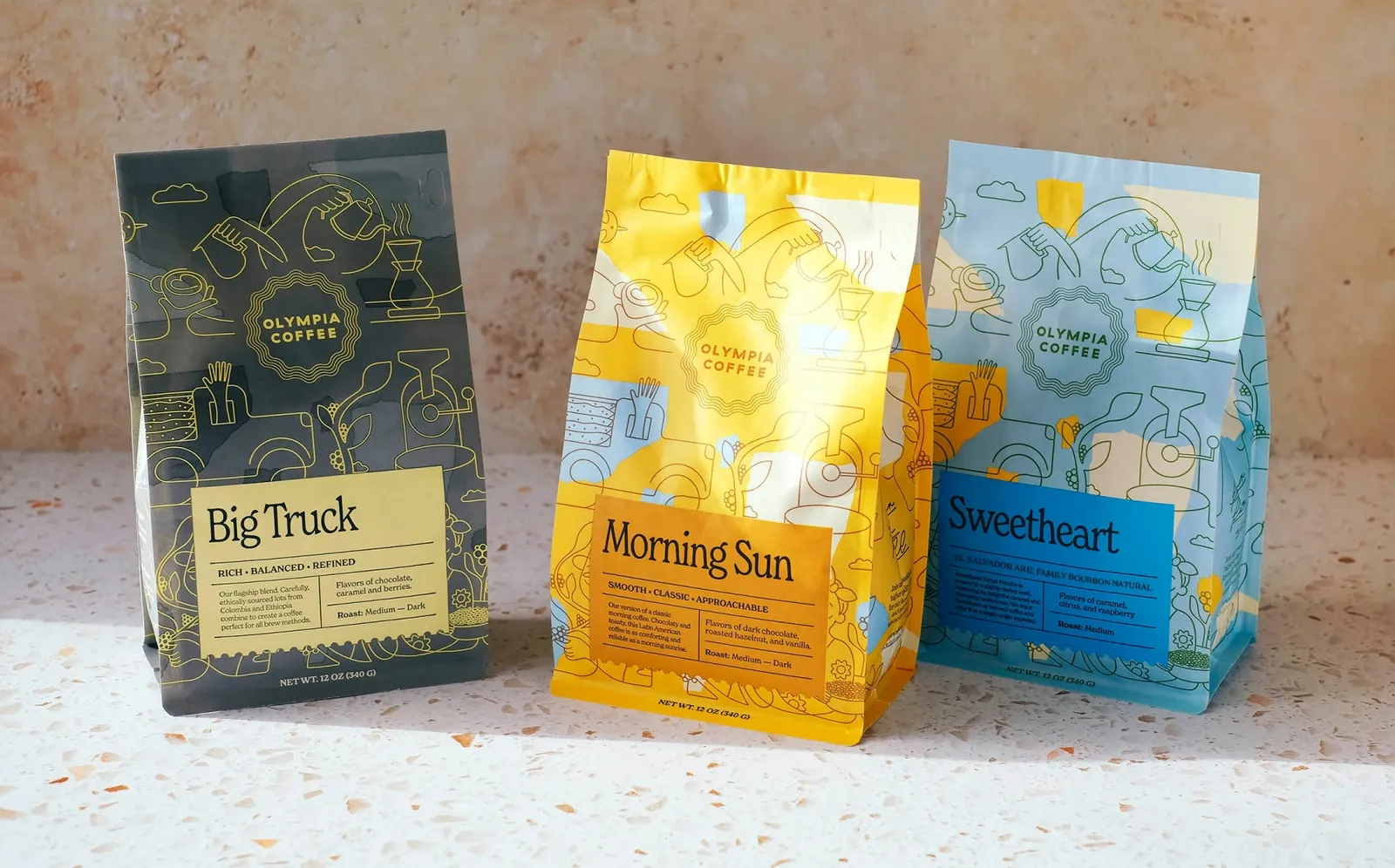
Before the redesign, Olympia's bags had labels on both the front and back, each packed with specific details about the beans. The recent update consolidated that information onto a single front label. According to Schroeder, the change was driven by a need to streamline a labor-intensive part of production: applying labels by hand.
"There was a lot of manual work in prepping our bags," he says. "You're taking off a sticker, applying the front label to the bag, switching it over and doing it for the back labels." Each bag also received a hand-applied date stamp showing the roast day.
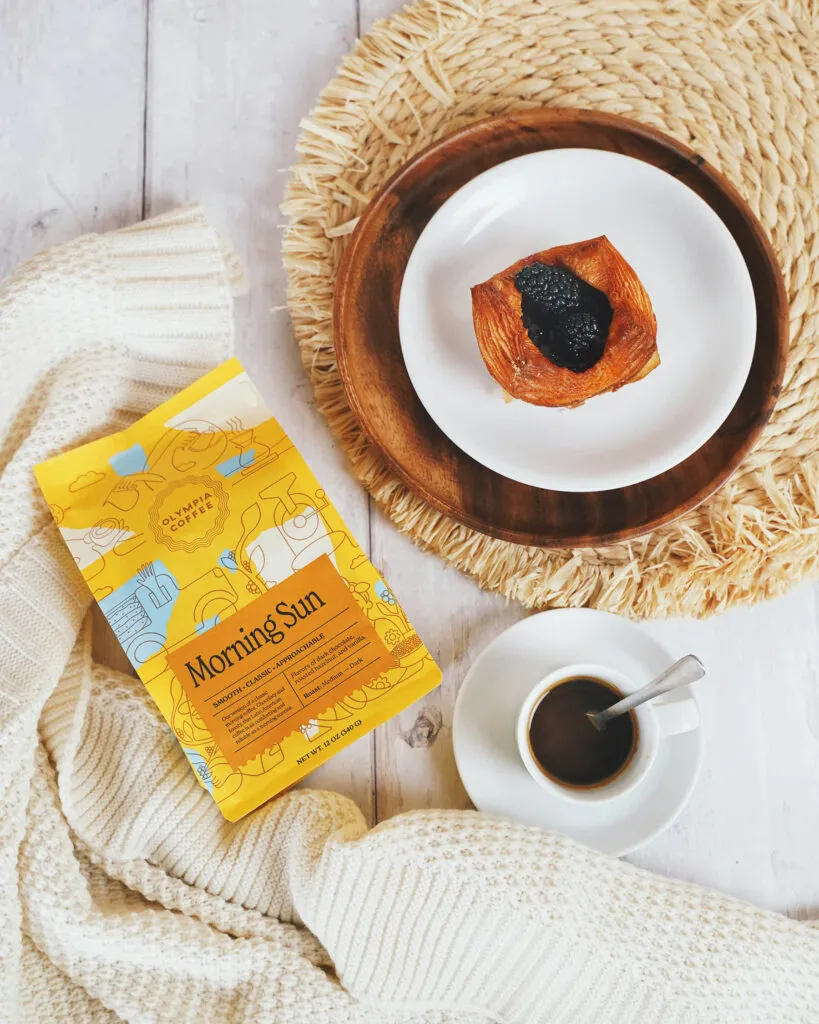
As roast volumes grew, packaging and production became a bottleneck in the roastery. In response, Olympia simplified its packaging by separating house blends from one-off single-origin releases. Both types carry the company story on the back, while the front label provides key coffee details, but only single-origin front labels are still applied by hand.
Schroeder says they also stopped stamping bags by hand. Instead, they use a band sealer that seals the bags to protect them from oxygen and automatically prints the roast date as bags move through the machine. "We still include the roast date on every bag, but we don't have to physically do that ourselves," he says.
Striking the Right Balance
For many coffee lovers, knowing a coffee's country of origin is just the beginning. Roasters must strike a balance between giving enough context to engage customers and overwhelming them with detail.
Maciej Kasperowicz of Trade Coffee, a coffee subscription service, says there are no hard-and-fast rules for every roaster, and the appropriate level of detail depends on the audience. "For single origins, naming the country is a bare minimum," he says. "But for those offering premium coffees, it makes sense to have the region and farm on the bag."
Schroeder agrees that the level of detail should mirror a company's values. "It depends on the kind of company you want to be and what's important to you," he says. For Olympia, details matter because it sources distinct varieties from specific partner farms.
"It's important that coffee is not anonymous. We want to get as specific as possible with the elements that communicate what the flavor is to the coffee," Schroeder adds, noting that factors like elevation and processing method can help informed customers set expectations about flavor.
While single-origin coffees may benefit from detailed information on the bag, blends present a trickier challenge. Since they combine multiple coffees, listing detailed origin information without overwhelming the customer is harder.
Price can serve as a useful guideline for how much detail to include. Schroeder points to a coffee Olympia previously sourced from producer Milton Monroy—an anaerobically processed gesha from Colombia, not currently on the menu—as an example where more information helps show what sets it apart. "This is expensive coffee," he says. "If we just put 'Colombian coffee' on the bag, what makes it different?"
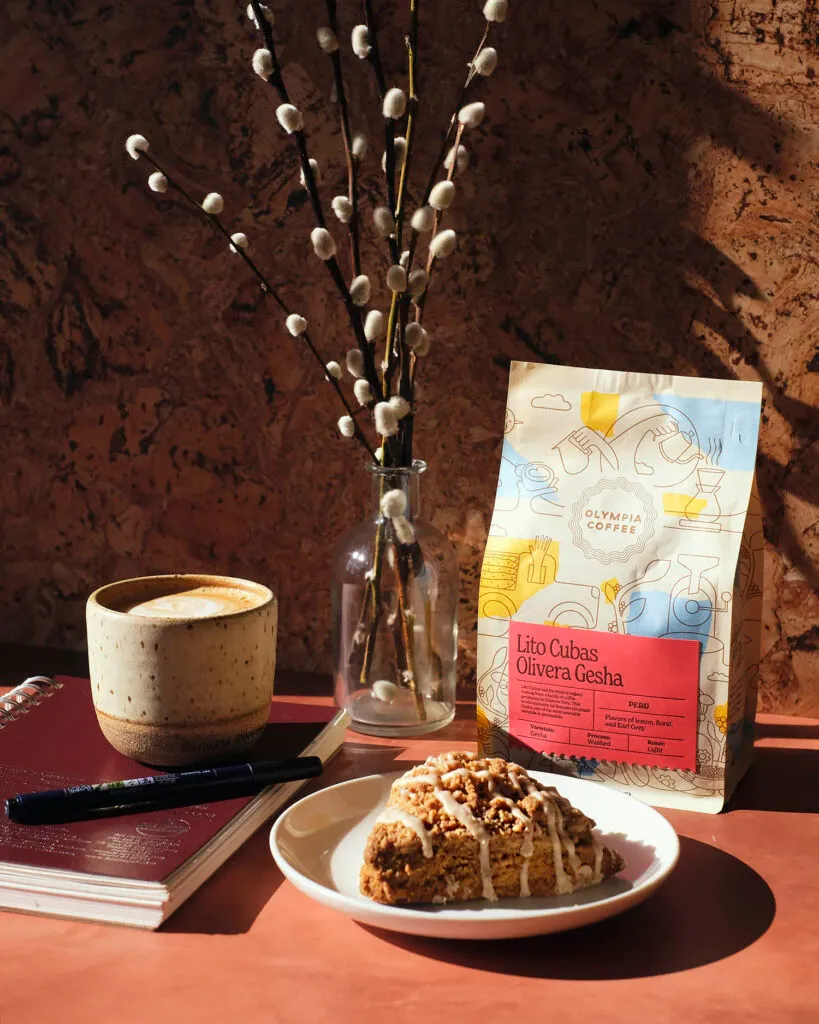
Schroeder notes that Olympia often carries several coffees from the same country at once, and getting specific by naming the producer or region can also show customers they're getting a coffee with a distinct character and story. "Milton Monroy is a specific farmer who is famous for high quality," he says. "When we have a specific farmer, we might put that upfront or use the producer group as the name of the coffee."
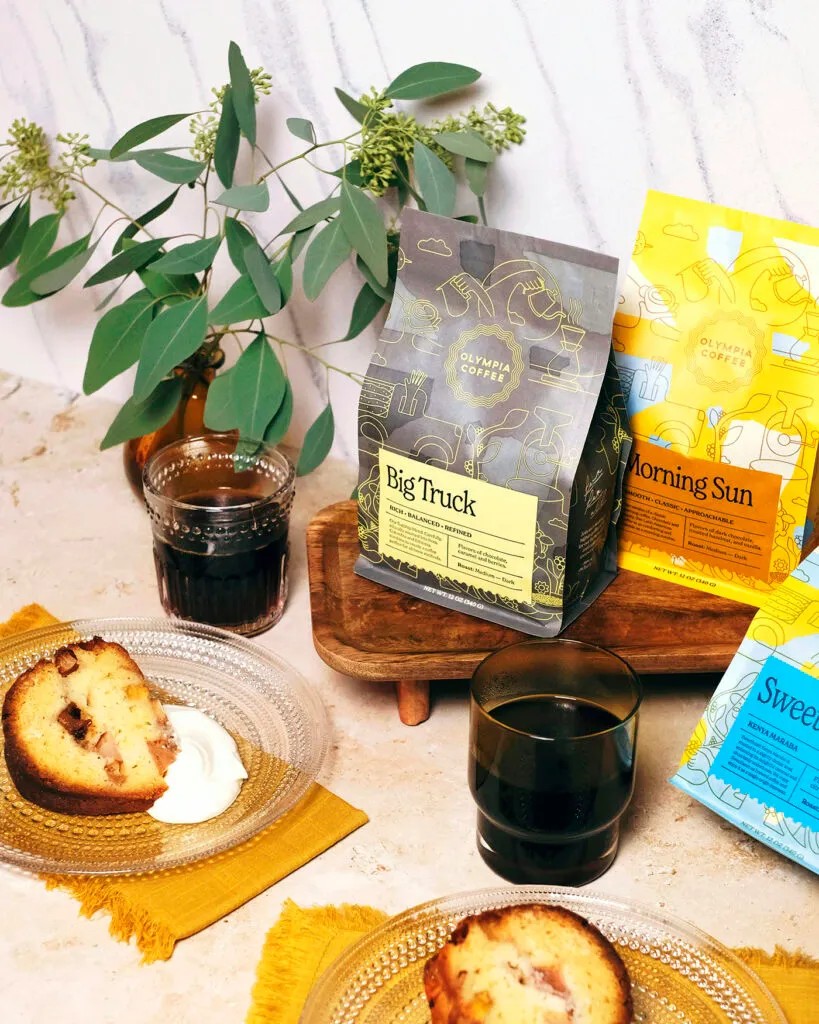
By contrast, for blends like Olympia's Morning Sun, the essentials—tasting notes, roast level, and a brief description—are front and center. It's labeled simply as Latin American coffee, without specifics on countries of origin or producers. Single-origin bags, on the other hand, necessarily go deeper, including details like country, producer, farm name, elevation, varietal, and process.
Kasperowicz believes that while listing a coffee's variety (such as bourbon or typica) isn't a major buying factor, some customers value details about specific varieties and elevation. "If you're selling a gesha, you have to put that somewhere," he says of the highly prized—and often expensive—varietal.
Even if some of these facts aren't decisive for customers, they can still signal that a roaster cares about details. "Some customers may not be shopping specifically by elevation, but they appreciate seeing 'this is a roaster who is happy to give me all these details,'" Kasperowicz says.
For Olympia, it all comes down to communicating the qualities that contribute to flavor. "Not everyone knows what a washed process or natural processed coffee tastes like, or what the difference is," Schroeder says. "But if you do, it gives you a lot of information about what that coffee might taste like."
Making Room for What Matters
Beyond technical production specs, many roasters include tasting or flavor notes on their bags. Some notes are specific, like "caramel" or "s'mores," while others are broader, such as "bright" or "juicy." But are these notes essential?
Kasperowicz finds tasting notes useful for customers but says hyper-specific labels often function more as branding elements—the flavor descriptions speaking to the story a roaster tells about themselves and the coffees they source. He says they're "not necessarily an advantage unless they build the vibe you're aiming for."
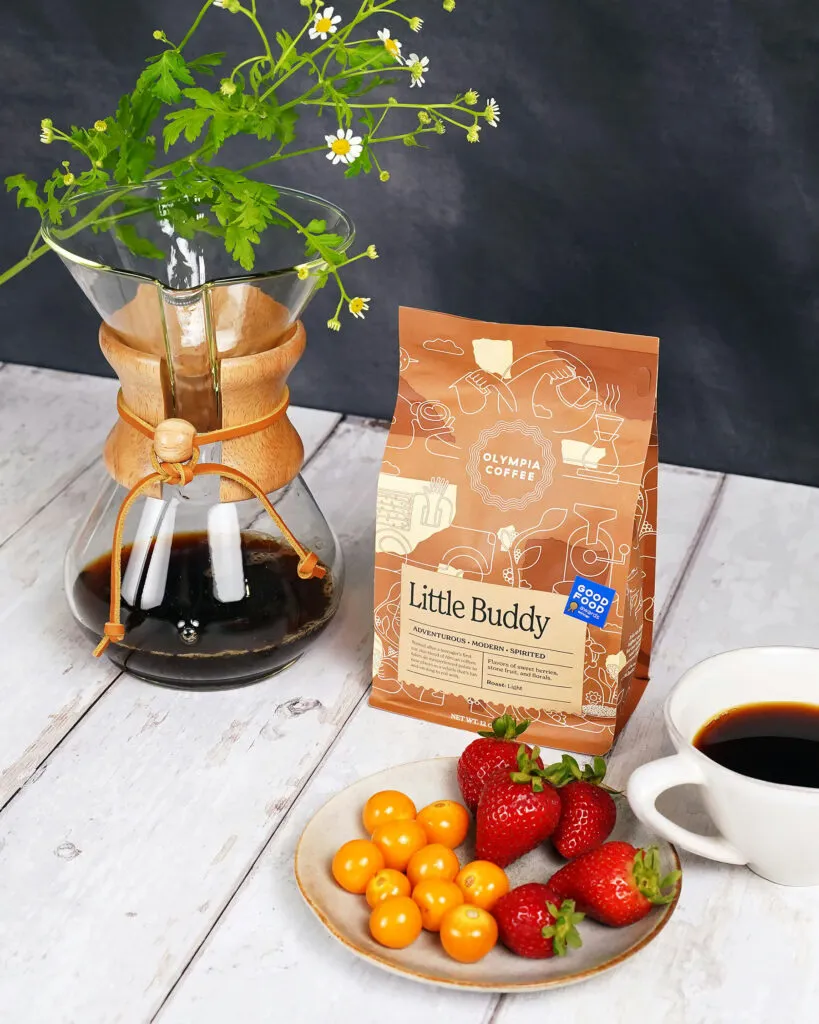
When Olympia redesigned its bags, it added the coffee's roast level—something it had omitted for years but brought back due to frequent customer questions. "It is a huge contributor to the flavor of the coffee," Schroeder says. "If you ask most people what kind of coffee they like, they'll usually start with roast level, even before country of origin, variety, or process."
When deciding what to put on coffee packaging, roasters should also consider whether their customers mainly shop online or in person.
Kasperowicz points out that the amount of detail on packaging matters more for in-store customers, who rely on the bag for information. For online shoppers, bag details may be less critical since they can find more on the website. "There are a lot of different ways to communicate that information," he says.
For the Olympia team, simplifying bag labels has pushed them to be more concise. Once filled with details about origins, producers, and trade programs, the packaging now highlights only the essentials. To provide a deeper look, Olympia is expanding its website, adding in-depth content like videos that go beyond what a label can hold.
It's a key point to remember: roasters who want to ensure customers have access to information aren't limited to packaging as a medium for sharing their story. "We want to share more of that information for people who want to reach farther," Schroeder says of Olympia's website. As long as roasters keep their audience in mind across all platforms and align that need with their own production capabilities, they're sure to connect with customers.