Beyond the Bag: How Baristas Build Careers Through Structured Learning
Skepticism about barista training persists, but certifications and camps offer a path to professional credibility.
By Taylor Hill4 min read
“Ha, there’s actually a camp for baristas? You’re not serious. What do you guys do, sing ‘Kumbaya’ and drink espresso?”
That was how a conversation with a friend began when I mentioned professional development for baristas. His reaction to my joining the Barista Guild of America (BGA) was hardly encouraging.
“Nice one. Did you also join the Royal Order of Blacksmiths or some other noble organization for pretend professions?”
Similar exchanges have occurred repeatedly in the years since I became a BGA member. I’m enthusiastic about the educational opportunities available to baristas, so I bring up the certifications, camps, classes, and workshops that underpin professional growth whenever I can. The reactions no longer surprise me, but they still bother me. Why is it so odd that baristas would want to educate themselves, sharpen their skills, and deepen their knowledge of their craft?
And why does it seem strange to other baristas that such opportunities even exist?
What I tend to forget in those discouraged moments is that I, too, was once surprised to discover there was more to coffee than the basics. For years, I simply thought coffee was brown and tasted good.
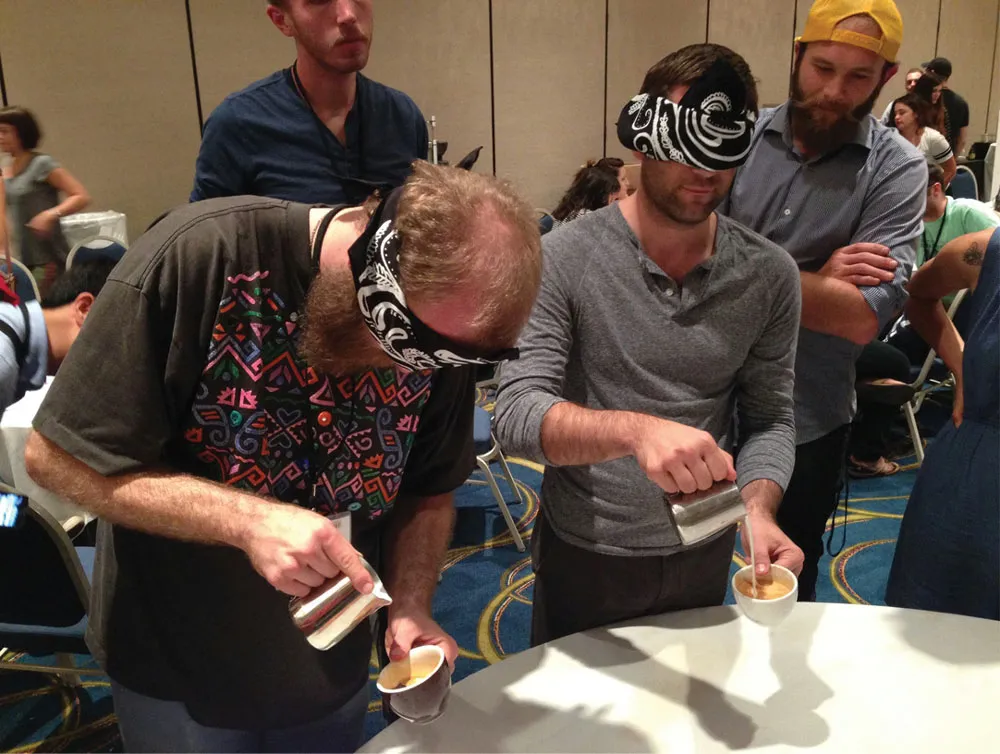
Blind pour.
When I began my coffee career in 2001, I believed everything worth knowing could be found on the side of a bag: roast level, country of origin, basic brewing instructions. What else was there? In fact, even as I advanced through the industry and expanded my knowledge, I genuinely believed at each stage that I had reached the bottom of available information.
“Ah, coffees are processed differently sometimes. Interesting! I wonder if that affects the flavor.”
“Wait. Coffees don’t have to be roasted longer to taste better?”
It wasn’t until 2009 that I truly grasped how much there was to learn—and how little of it I knew. At that point in my career, humility finally overcame hubris, and my real coffee education began.
Professional development for baristas looks much like it does in any other field. People take classes that are both theoretical (customer service) and practical (grinding, dosing, tamping, and extracting) to raise their ability to meet job expectations with excellence. The range of training options available to baristas today is staggering. There are the necessary basic courses—introductions to espresso, cupping, and brewing—but also a wealth of advanced classes covering everything from latte art to working more efficiently (and effectively) on bar. Instructors are subject matter experts with experience in the coffee industry and in coffee shops, doing exactly what they teach.
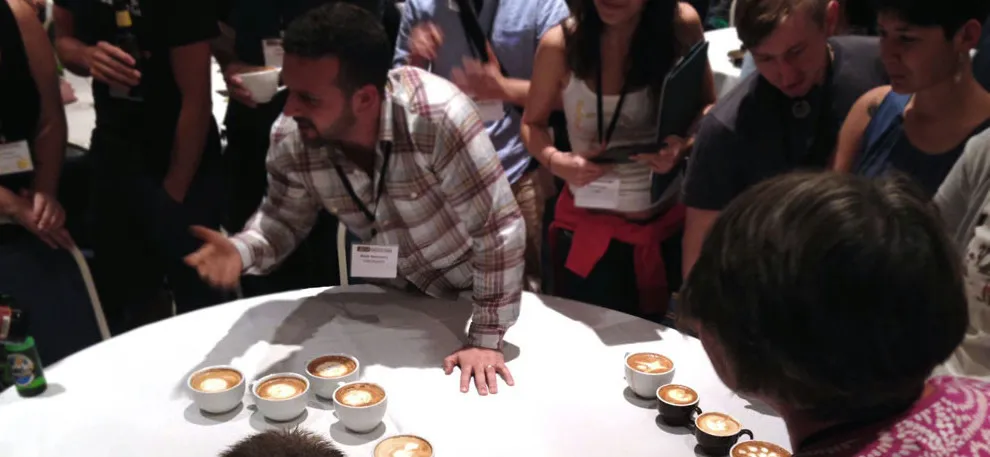
The value of taking these classes together became clearest in 2010, when the BGA launched Camp Pull-A-Shot, a retreat for baristas from across the country that functions as a three-day crucible designed to produce passionate, well-trained coffee professionals. That first year was so successful that a second annual camp was added in 2011.
Today it is simply called Barista Camp, and its focus has broadened slightly to include a wider range of classes, some of which were historically offered mainly to Roasters Guild members. There is still room for evolution. As more baristas progress through their personal development and encounter material that demands greater commitment, the name Barista Camp represents the activities less and less. If we want our professional development to be taken seriously by those outside the industry, giving it a name with more gravitas might be a step in the right direction.
But whatever it is called, this camp is incredibly valuable—and not only for new baristas. For trainers, taking the entry-level classes is a great way to see others teach the material you present every day. You’ll pick up new terminology, fresh analogies, and different ways to say familiar things. For experienced baristas, there are courses that will melt your face off. Espresso Exploration, a Level 3 class, is a mind-altering experience that will change your perspective on espresso extraction forever.
Equipment manufacturers also see value in elevating the barista profession. Companies such as La Marzocco, Nuova Simonelli, Wilbur Curtis, and Bunn all send representatives and equipment to camp to help teach and share expertise on the machines baristas already use. Do you have a question about why your steam wand is acting funny? Ask it! Are you thinking about adding a hot water tower to your back counter? Try different options to see what fits you best. It’s all available.
All of this development culminates in official certifications that tell the coffee industry you know what you’re doing. Whether you have a rudimentary knowledge of coffee and espresso basics at Level 1 or a grasp of more advanced techniques and methods at Level 2 and 3, certification is a giant step toward having a common language that everyone in the coffee industry speaks. When I hire a person who is a Certified Level 1 barista, I know that when I order a cappuccino, he or she will make a proper, delicious drink. That confidence is empowering.
A chance for growth I know that people outside the coffee industry may laugh at the idea of a Barista Guild or a Barista Retreat. I mean, I’d probably laugh if I heard there was a Butchers Guild or a Cheese Monger Retreat. But within our community of baristas, I hope there is excitement about the possibilities presented by growth within our profession. There are people who have made it their career to give all of us the opportunity to improve. How can we not take advantage of that?