Rachel Apple on Opening Doors in Coffee: Mentorship, Hands-On Learning, and the Courage to Ask
Coffee consultant and Cup of Excellence head judge Rachel J. Apple talks about her path from a frustrated barista to a knowledge-sharing educator, why tactile roasting skill can't be replaced by online shortcuts, and how newcomers can find mentors by simply speaking up.
By Robin Ross6 min read
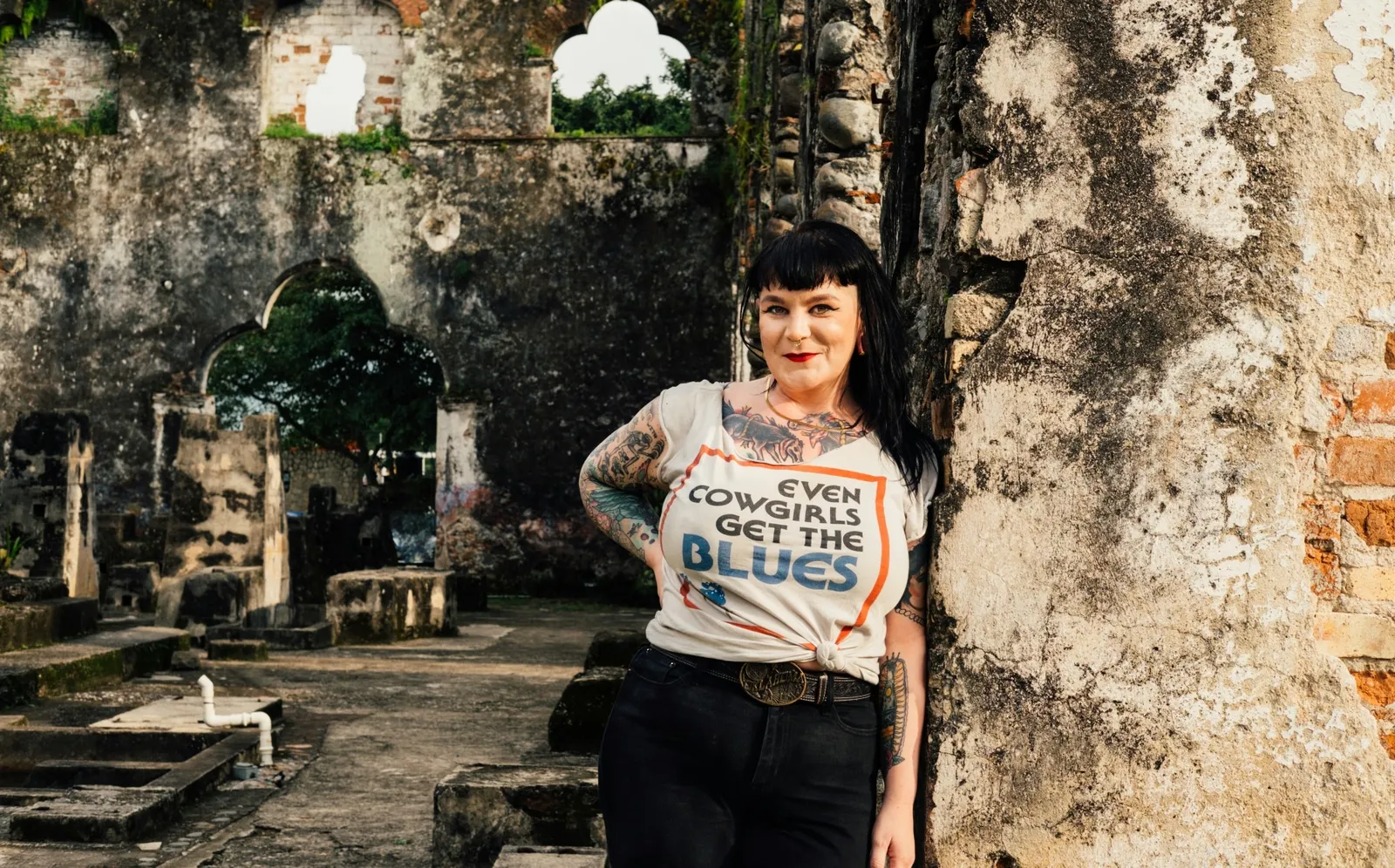
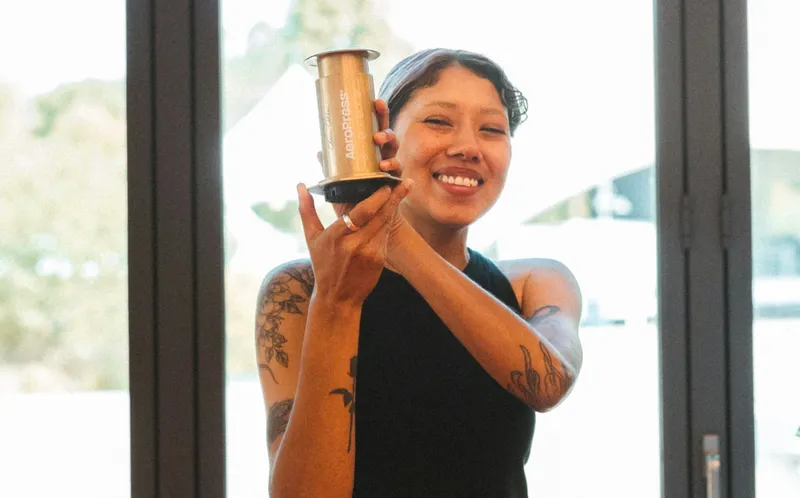
Rachel J. Apple works as a coffee consultant, helping businesses develop sourcing, green-coffee importing, and roasting operations. What drives her is a commitment to spreading knowledge—and her wish to widen access to coffee education goes back many years.
In the early stage of her career, while working as a barista, Apple depended on a worn-out copy of “The Professional Barista’s Handbook: An Expert Guide to Preparing Espresso, Coffee, and Tea” for insight into the shots she was pulling and the espresso she was tasting. At the time, it was among the few books on coffee science in circulation, and she recalls its tone as stern and challenging. “Even then, I wondered, ‘Why is this author mad at me for reading this book?’” she says. That frustration stayed with her through the roughly two decades she has since spent in coffee, shaping her resolve to share what she knows and to make room for others.
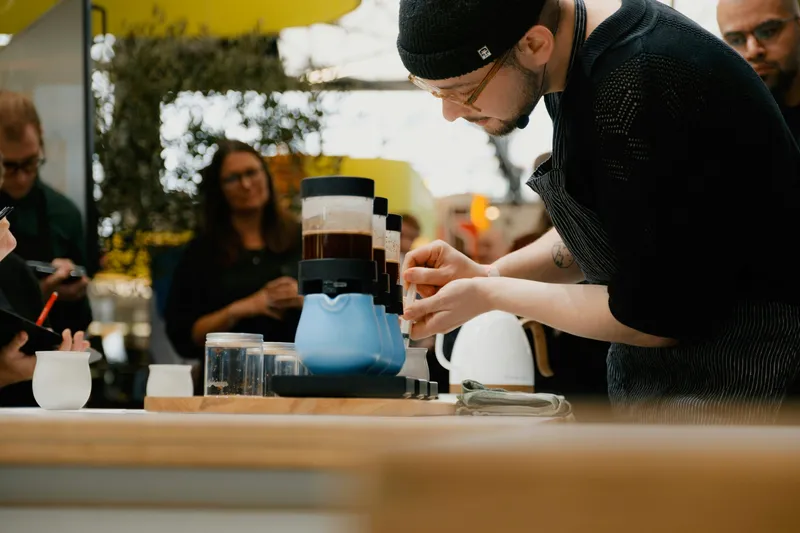
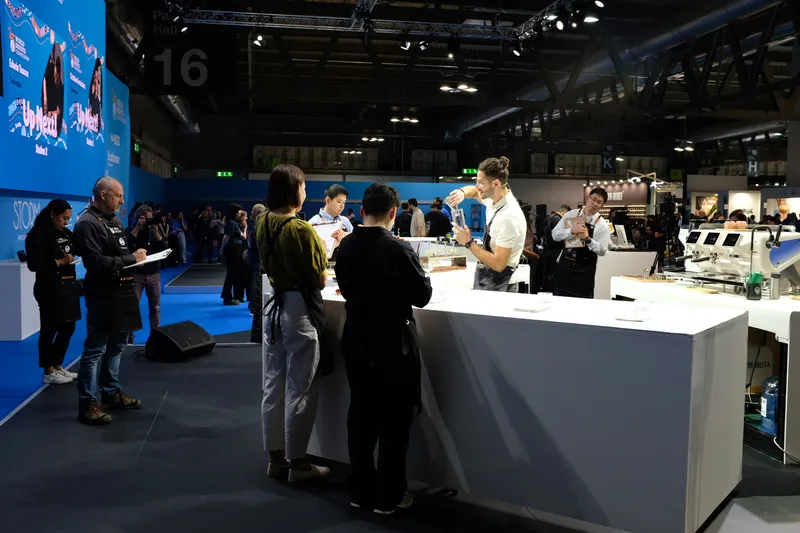
Based in Boston, Apple has consulted for companies including Cometeer, George Howell Coffee, and CropConex. She also serves as a head judge for the Cup of Excellence, a global competition and auction that highlights coffee quality and links farmers with roasters. Teaching is another part of her work—she leads classes and workshops, among them a recent virtual series on roasting operations run with fellow consultant Sandra Loofbourow.
Apple has not forgotten how it felt to be a new barista hunting for ways to learn more about coffee. Even with resources like YouTube and TikTok available now, solid education can still be difficult to find, and she treats it as part of her job to make information easier to reach and less intimidating. She is also accustomed to being the only woman in the roastery or the cupping room, and she works to open space for others in an industry that can still come across as closed off.
Her core belief is that everyone deserves a seat at the table. In a recent conversation, she discussed her early years in the field, why knowledge passed between generations matters, and how newer baristas can build careers, find mentors, and use information to move the coffee industry forward.
Why does sharing knowledge matter so much to you?
Much of what I do is teaching and helping people reach things that used to be hard to reach. I know there is far more available now than when we started in coffee, but when I was a barista, educational resources felt so gatekeep-y. It felt like, and sometimes still does, that you have to be the coolest one in the shop to be the barista.
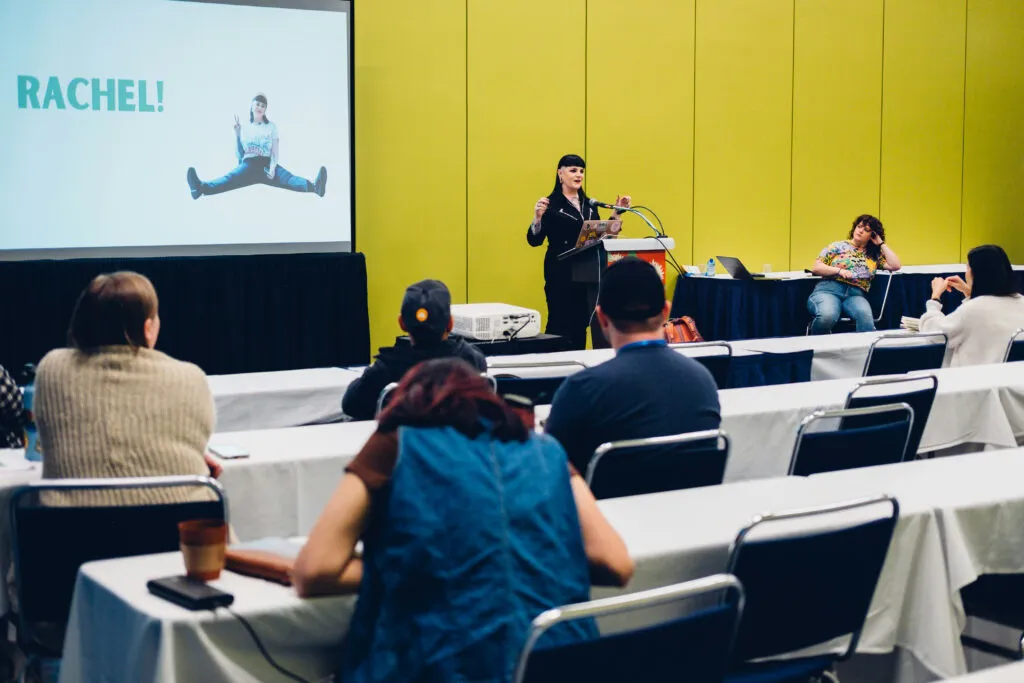
So my whole outlook and approach to coffee is to be a welcoming committee. I joke that everything I’ve learned up to this point, I begged, borrowed, and stole. I don’t want that to be the case for the next generation of coffee people.
I’m an auntie’s age at this point. I love watching young folks and coffee people find themselves in coffee, but I also think it’s challenging to ask for knowledge. I think it’s even harder to ask for knowledge when you’re in your 30s, 40s, and 50s and you find yourself in this industry. We’re such a trust-driven and relationship-driven industry that when someone is new, it can feel really intimidating.
How has access to coffee knowledge shifted during your career?
I’ve watched a generational shift, since we now have people who grew up with the internet fully part of their lives. Learning tools are abundant, and that creates shortcuts to these heuristics. There’s a surface-level knowledge of something that doesn’t come through a study of it or a doing of it, and I think it’s so great that we have collective knowledge that we can share.
But some things have to be learned inside your body, through doing. How do you learn roasting? It’s repetition. You put real time in front of a machine, and you learn that machine, and you learn how to roast on that machine.
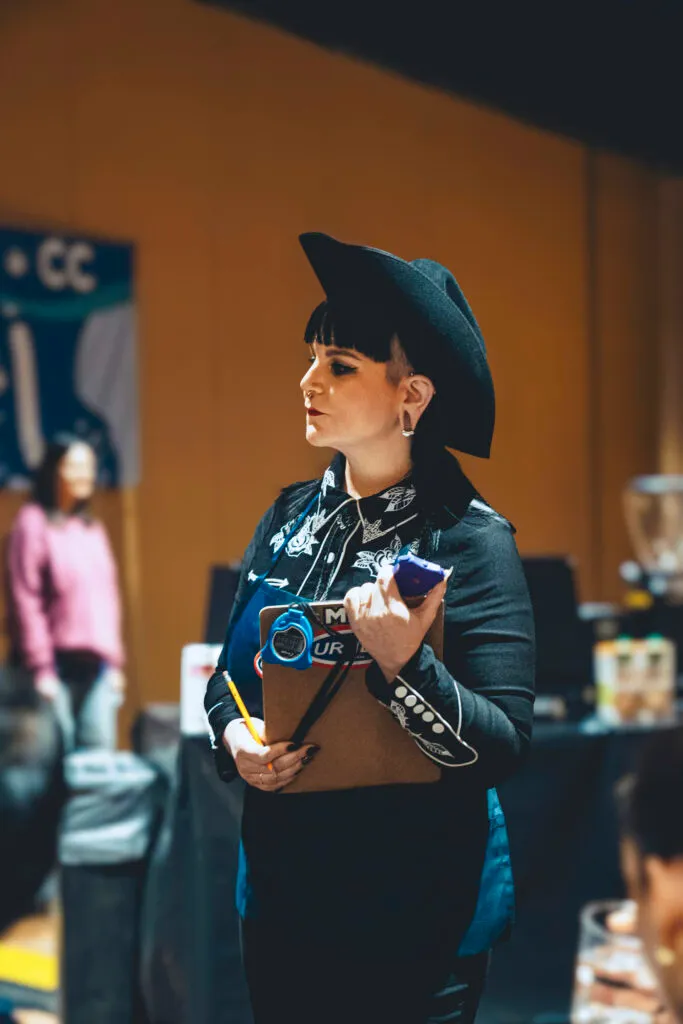
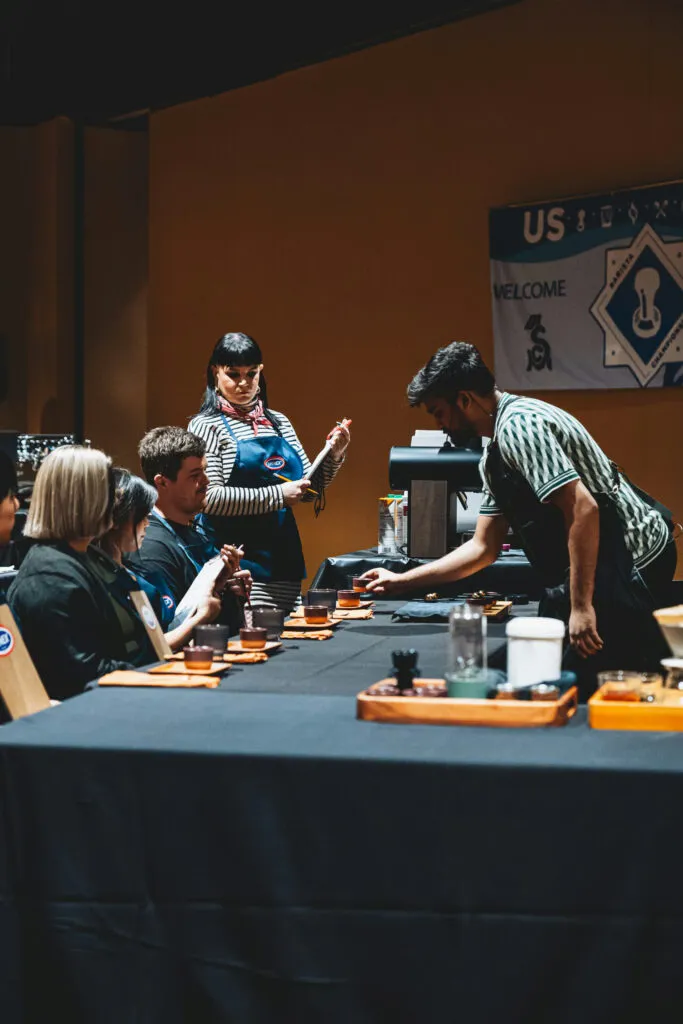
At one job, I worked on the same roaster for six years, and I knew that roaster so well. I knew the smells and the sounds and the clunks, and when it was time for certain maintenance based on the interaction, and when exactly I needed to drop a roast. Sometimes I ask, with so much available online, what knowledge has been lost? I think, with so much information online, that tactile learning sometimes gets overlooked.
What would you tell someone trying to learn more about coffee?
Sometimes you simply have to be in a room and do the thing—whatever the thing is—and listen to people who have been in that room longer than you have.
When I was younger, I didn’t listen to others—at least not with the same patience and enthusiasm that I had for being heard. We all love coffee, and we want to prove that we are good at it in one way or another. But when you jump over someone who’s trying to show you something new, whether they’re on a stage giving a talk or they’re standing with you next to the machine, you shut down the flow and transfer of information.
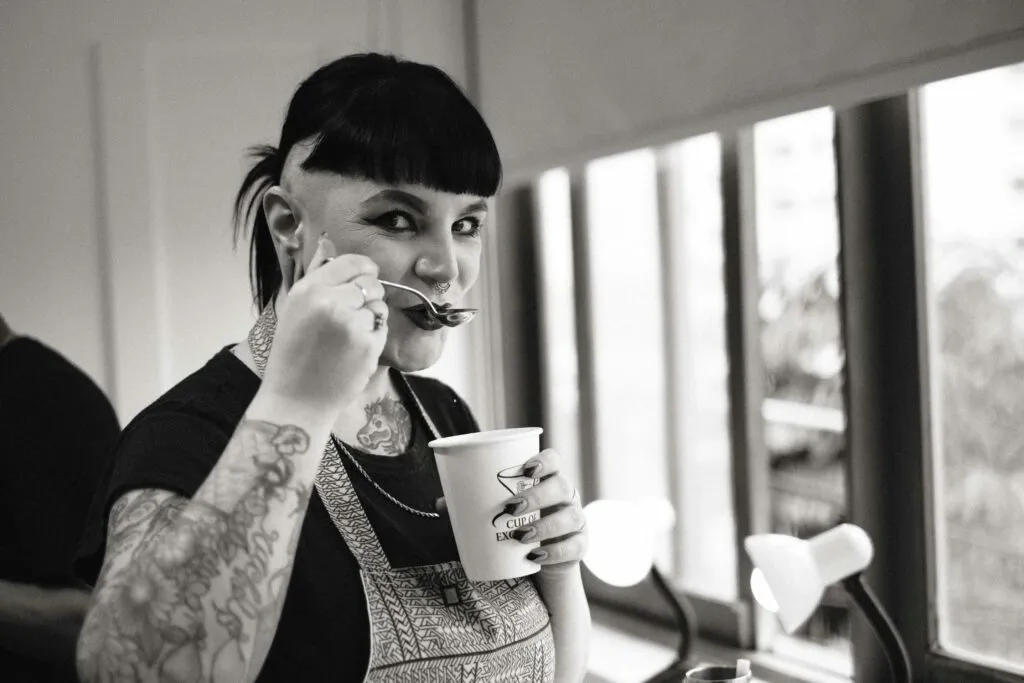
And sometimes, if you have a really good, patient teacher, you can jump all over them, but eventually they’ll stop trying to teach you. We have to be open to hearing different perspectives and learning new techniques.
For instance, I’ve been trying to teach younger baristas to look after their bodies. Not everybody has a PUQpress that automatically tamps for you, and my body will never recover from 10 years of tamping. Let me help you with your arm placement and proper form and save your body from what my body had to go through.
What do you suggest to people looking for mentors?
Mentorship is something I care about deeply. If you see someone you respect, tell them so and ask them to be your mentor. Still, I understand that asking can feel very vulnerable.
Offering mentorship is tricky too. There are ways to announce, “I’m offering this to the world,” and many people do that on social media. But I also think there’s a whisper network of people who would gladly take part in mentorship yet may not even see themselves in that role.
A good mentoring relationship, I believe, requires mutual respect. Without that, it becomes paid ministry. You can hire someone to coach you and advise you, but genuine mentorship grows out of long-term investment that is relationship-based in some form.
Everyone has limited resources, so the task is finding the match that fits your goals. Competition bodies are excellent entry points for connection and learning. They give you access to people who don’t always keep open doors or have the time to take on one-on-one mentoring. What you get instead are concentrated weekends of training and repetition, which is a powerful tool. You put in the reps of networking, even in these structured settings, alongside like-minded enthusiasts who are all there for the same reason.
Being around people like that inspires you through what they do. My skill set involves tasting, and that didn’t come from coffee. It came from a line of women I grew up around working in the kitchen. My mom would go to a restaurant called Cafe 501 in Edmond, Oklahoma, and order a spinach, pear, blue cheese, and walnut salad. We would taste the dressing—her favorite in the whole world—and she would reverse-engineer it until we could make it at home.
Still, I didn’t consciously connect that understanding of taste with coffee until seven or eight years into my career. I always wanted to dream up new things and try new flavors, and strong mentors guided me as I did.
When you’re looking for a mentor, ask yourself, “Who do I look up to?” Also broaden your idea of what a mentor is or which skills might be worth learning. Who do you admire, and can you spend more time learning from them? Often the key to mentorship and learning is buying a ticket to a workshop or walking up to someone at a party and saying hello. For the most part, people are kind and warm. But you have to take the scary step of asking.
This interview has been lightly edited for clarity.