Mountain Province Coffee: A Push for Quality on the Slopes of Bontoc
A government-backed training effort in the northern Philippines aims to lift local arabica toward specialty standards, even as steep terrain and scarce resources keep most beans close to home.
By Sam Morgan8 min read
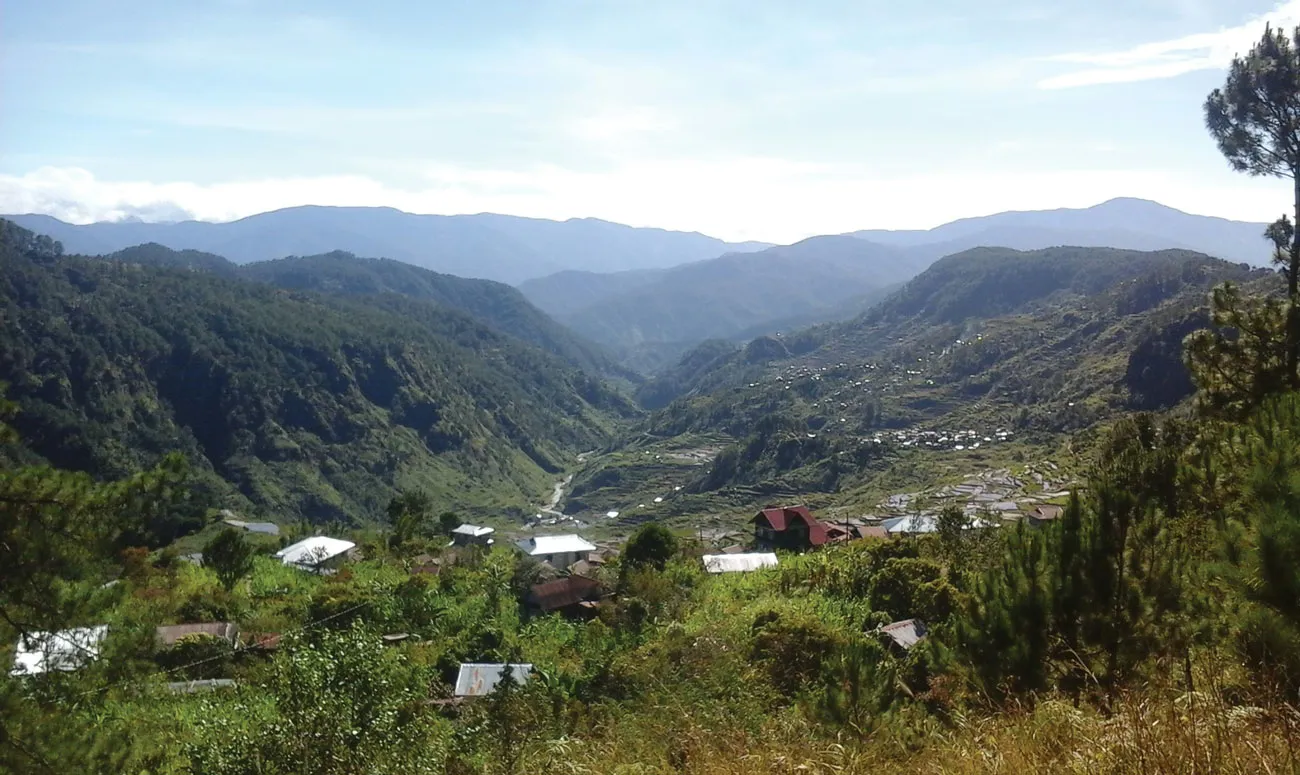
A Trail That Explains the Industry
Halfway along a mountain path barely a foot wide, crawling on hands and knees, I understood why growers in these highlands head home before dark. A single misstep could send a person tumbling into a vast valley of rice terraces. That is not a thought worth dwelling on at the edge of a cliff, so I kept moving—one knee, then one hand—while my guide, a wiry woman of seventy who stood five feet tall, waited for me to scramble toward the coffee plots hanging off the mountainsides of the northern Philippines.
The journey began with an e-mail from my friend Maria Susanna Edilo, known as Susan. She ranks among the leading coffee professionals in the Philippines, and lifting the country's coffee is her calling—whether through her Philippine Barista and Coffee Academy or through consulting work with government agencies. She wrote to me about an initiative of the Department of Trade and Industry. As Susan described it, the program was trying to make coffee farmers in Mountain Province, a landlocked part of Luzon, more competitive by giving them education aimed at improving their coffee.
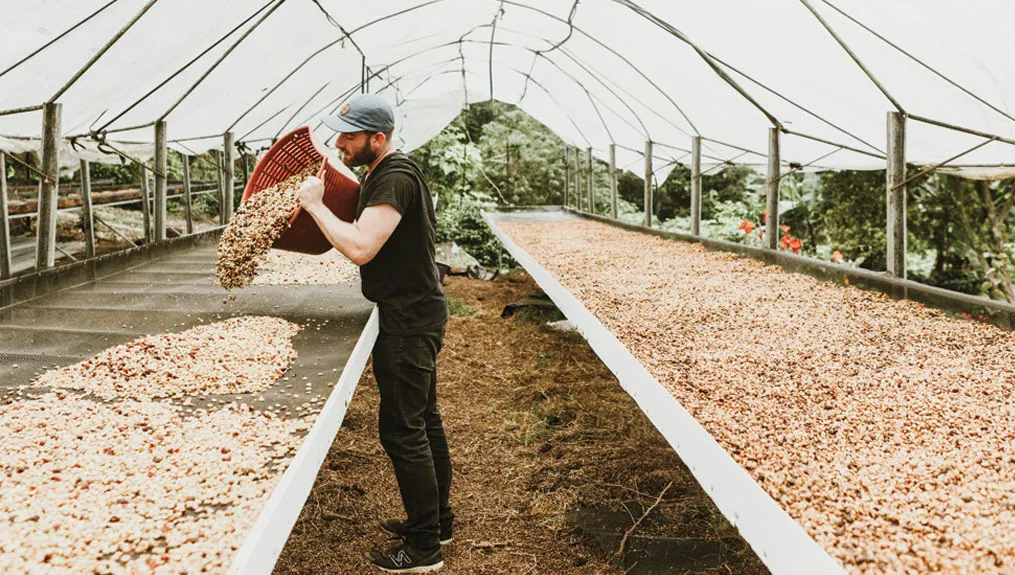
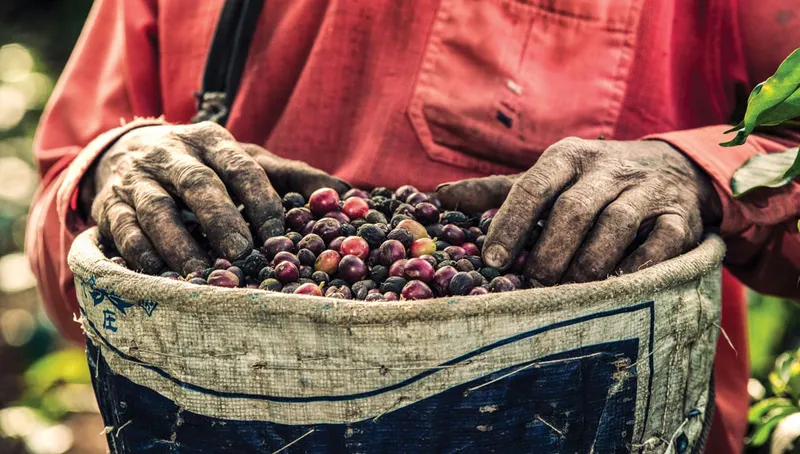
The Philippines was once a major global producer, and excellent beans can still be found here, though rarely. Some of the finest coffee grows on southern islands contested by the government and separatist Islamist groups, which makes exporting difficult and at times dangerous. Elsewhere in the country, quality has eroded. Coffee farming arrived with the Spanish centuries ago, but it began to stumble in the nineties under pressure from cheap imports and underfunded development efforts. More recently, a typhoon damaged many farms in Mountain Province. The province probably trails regions that produce single-origin and micro-lot coffee by five to ten years. Few farms use drying beds or follow sound harvesting and processing practices. The beans stay in the province or go to local brokers and eventually become instant coffee. Knowledge that young farmers might bring in drains away as farm kids depart for big cities or jobs abroad.
Meanwhile, I have seen specialty coffee shops spring up across the country. Young owners have third-wave expertise and want to brew excellent Filipino beans, yet they are stuck with middling Italian imports or low-grade local arabica.
A Personal Stake in Filipino Coffee
I share Susan's sense of duty to the Filipino coffee industry. The country is my second home. My affection for the Philippines started twenty-four years ago, when I was a young US Air Force airman in a K-9 unit assigned to Clark Air Base, just outside Angeles City. That bond deepened when I married my wife, Madel Kerlin, who was born and raised in Lipa City, where the Spanish first planted coffee in the country. I had told Susan before that I wanted to help at her academy and with other projects. When she described the Mountain Province effort, I said I was all in.
A month later my wife and I landed in Manila at midnight after a twenty-hour trip from Indianapolis. Later that jet-lagged morning I rode a bus for two hours across sprawling Metro Manila, home to some fourteen million people, to Susan's excellent coffee school. Susan studied at the American Barista and Coffee School in Portland and brought its model home. The link shows in her staff's knowledge and the school's enviable equipment. I felt at home immediately with the staff and students, and we launched straight into talk of siphon pots, Chemex, V60s, and plenty of other gear. I gave Susan and the academy one of my World War II-era Cory siphon pots as a thank-you gift, along with coffees I had brought from my office at Julian Coffee Roasters.
Hidden under the roast's dark profile were some dark chocolate and cherry notes with medium acidity.
When the training there ended, my day was just beginning. Susan and I headed to the bus station for the 260-mile, twelve-hour ride to Bontoc. My wife was meant to meet us there. When Susan and I arrived, I could not find her anywhere in the crowd milling around the terminal. Then the bus started to pull away. Like something from a movie, my wife emerged from the crush of people, dashed toward us, and jumped aboard just in time.
We traveled north through the night. Sunrise revealed the countryside's beauty, and the outlines of mountains slowly came into view. We drove into fog that appears only at higher elevations—the kind you pass into and out of as the road climbs and dips.
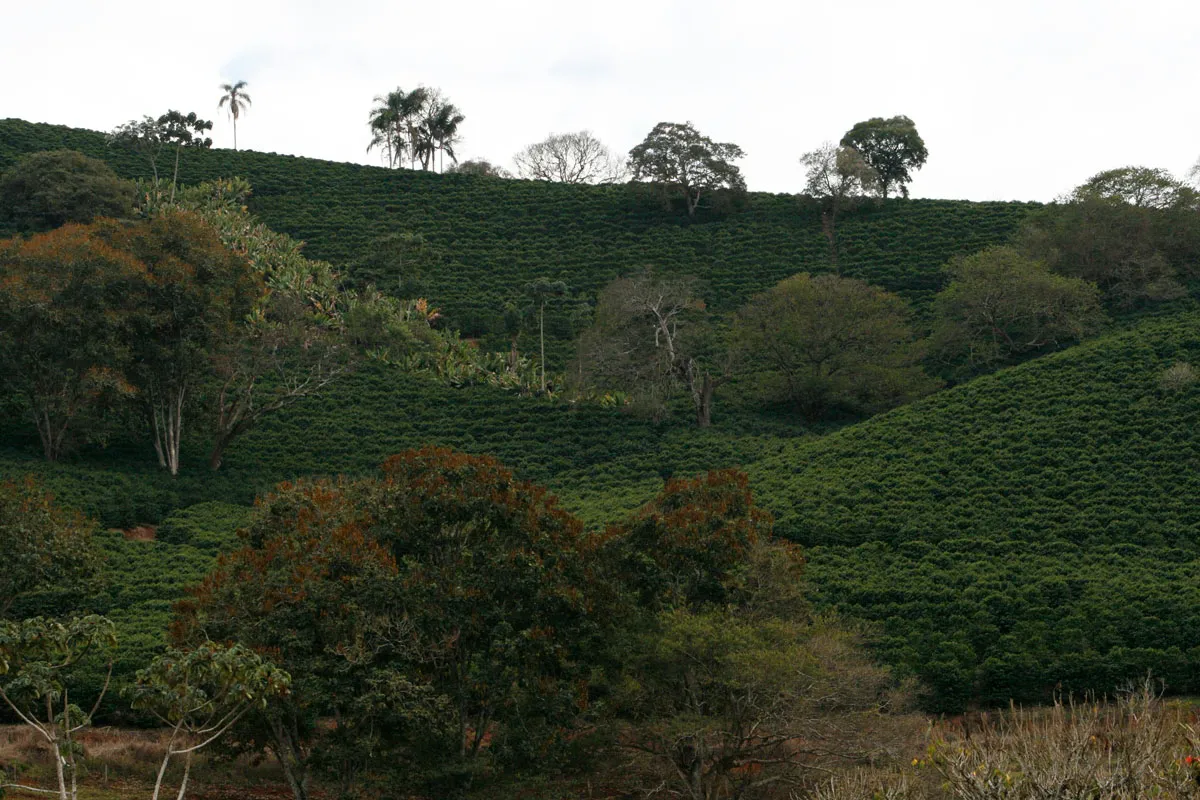
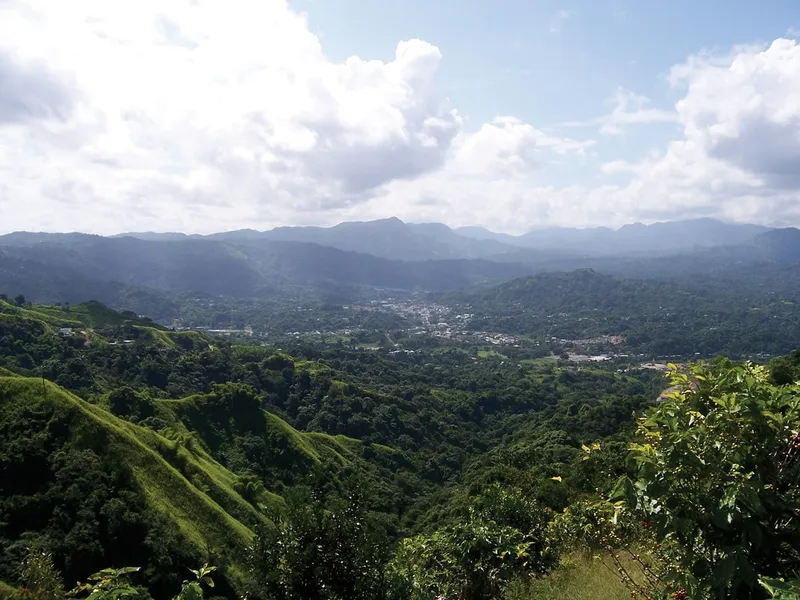
We came down into Bontoc, the regional capital, a small but busy town of 24,000 people named after the first tribe to settle the area. The town sits on both sides of a bowl within an otherwise narrow river valley, with a bridge linking the two halves. Bontoc's roads are paved and lit, but outside town and off the highway the infrastructure deteriorates quickly. Rice paddies terrace up the mountains all around, with small patches of forest left on the steepest cliff faces. College degrees are common; well-paying jobs are not. It is not unusual for a bus driver to hold a college degree, and most residents work in services or agriculture.
Goldfish Café and the Farmers Who Gather There
Besides the Department of Trade and Industry and Susan, my trip was sponsored by a local coffeehouse. The funky, orange-toned Goldfish Café belongs to Gemma Ngelangel. Gemma is of Bontoc, and photos of Bontoc in traditional dress and sweeping mountain views decorate the café. It is her first café and the only one within six hours with a commercial espresso machine. She serves a full espresso menu built on local coffees. Third-wave coffee pioneers do not come much more hardcore than Gemma.
After breakfast and a hotel check-in, we set out on our first farm tour. A thirty-minute drive took us to the town of Sagada and the coffee farm of Goad Sibayan, a big, muscular man. The farm, one of several he owned, held about 100 coffee shrubs, all arabica and a mix of bourbon, mundo novo, and typica. His land lies in a valley shadowed by a cliff famous for the coffins hanging from it—an ancient burial practice that continues today. While we visited, a group of inspectors arrived to certify his farm under the government-sponsored program. Goad also owns a roaster he uses to process beans for many farmers. Another farmer told me the roaster is dysfunctional, producing an extremely dark roast.
The next day at Goldfish Café, nearly thirty farmers gathered for a seminar on better harvesting practices. Three quarters of them were women. Richard Abellon, a Filipino coffee expert, discussed the importance of proper and timely harvesting and processing, and what would be needed to compete with cheap coffee imports. After a delicious local lunch of sweet-and-sour fish and rice, Susan and I began our presentation on brewing methods, aiming to show the farmers different ways their crop might be used.
Outside Goldfish Café, people in Mountain Province either drink instant coffee or make coffee by putting grounds into a sauce pot with sugar and water and boiling it. They call it three-in-one coffee. Many people reuse the same grounds two or three times a day, simply adding more water. Susan brewed with a V60, and I made several local coffees with a Chemex and a siphon pot. Like Goad's coffee, these were roasted very dark and were low in quality, yet they showed some positive traits. Hidden under the roast's dark profile were some dark chocolate and cherry notes with medium acidity. The siphon, naturally, was a big hit, but the farmers who brought their own beans wanted them brewed in the Chemex or V60. They loved it.
Up the Mountain to the Terraces
The next day we drove back to Sagada, then another twenty minutes down an unpaved road. We reached a small village overlooking a beautiful valley. We left our vehicle, and a coffee farmer named Manang Nely led us up the 2,300-foot ascent on the footpath I would soon be crawling along. She made it look like a Sunday stroll. That pathway—or more precisely, the drop beside it—is one more reason so little of the coffee grown in this corner of the Philippines ever leaves the area.
Nearly halfway up the mountain we reached a small, rustic cabin owned by Manang Nely's brother-in-law, Manong Joseph. He is one of the few male coffee farmers in the area. He made us three-in-one coffee from beans he had roasted in a tin can over an open fire. We drank the sweet brew on his front porch, looking out over the broad valley. We finished our coffee, thanked Manong Joseph, and kept climbing.
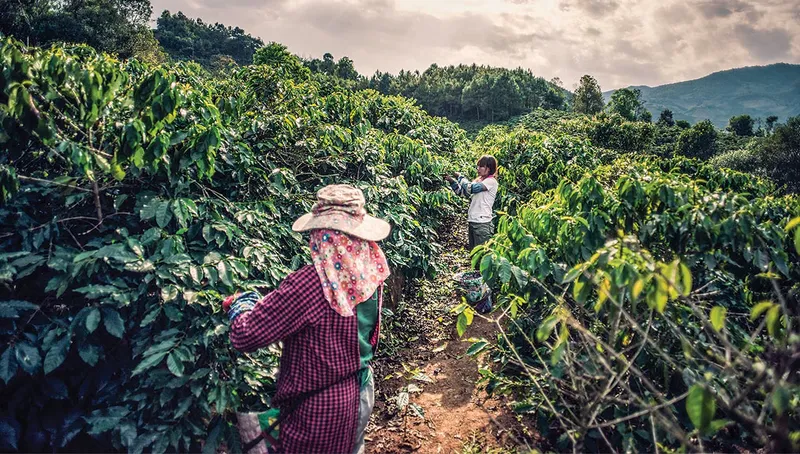
After two hours we reached the first farm, which held 900 coffee shrubs along with pineapple plants and fruit trees nestled among conifers. When we arrived, two women were digging a new terrace for coffee. They were building it by loosening the dirt with three-foot pry bars and sifting out rocks by hand. Then they stacked the rocks into a wall that formed the plot's outer edge. The last step was making mud bricks to reinforce the rock wall. Some terraces measured forty feet long by twenty feet deep; others were smaller than a single bed. Farmers plant shade trees first and put in the coffee shrubs a year later. Usually they harvest their first crop within three years of planting.
Manang Nely showed us through her home. Spartan does not begin to describe it. Bontoc is not wealthy, but most modern conveniences are available there. When I asked about running water, she pointed to the mountain stream near the house—the same stream used to irrigate their farms. I am convinced the government program will produce better-quality coffee and a better quality of life for these farmers. Many have received pulping machines from the government, and they are eager to learn better farming techniques.
Heading Home
On our last day in Bontoc we met one final time at Goldfish Café for lunch before boarding our bus to Manila. We were sad to leave. We had come to love Mountain Province. We rolled out of town past deep green mountain streams. The beautiful rice terraces slid by as we climbed the road out of our newfound mountain paradise.