Rebuilding Puerto Rico's Coffee Identity from the Ground Up
A new university program aims to revive the island's coffee heritage by teaching sustainable production and connecting quality beans to markets.
By Jordan Scott6 min read
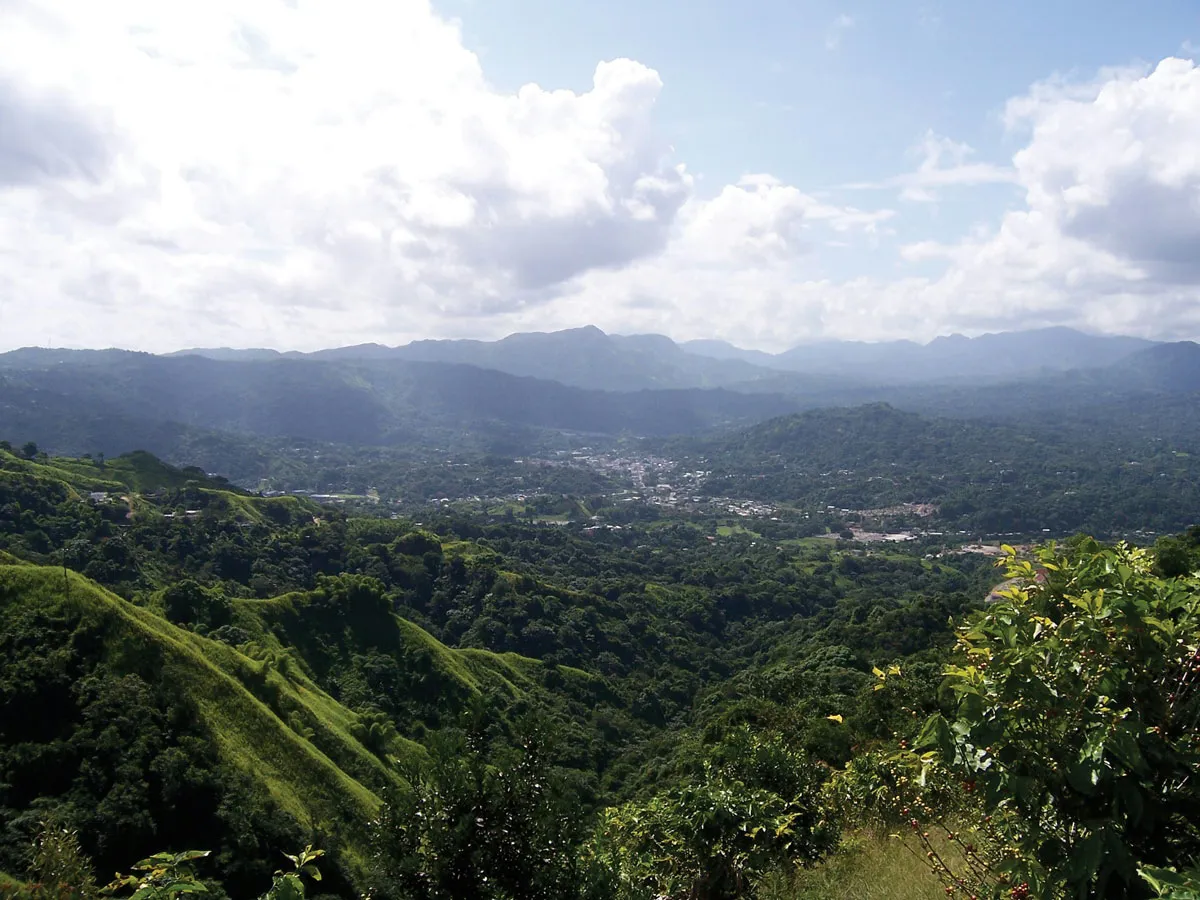
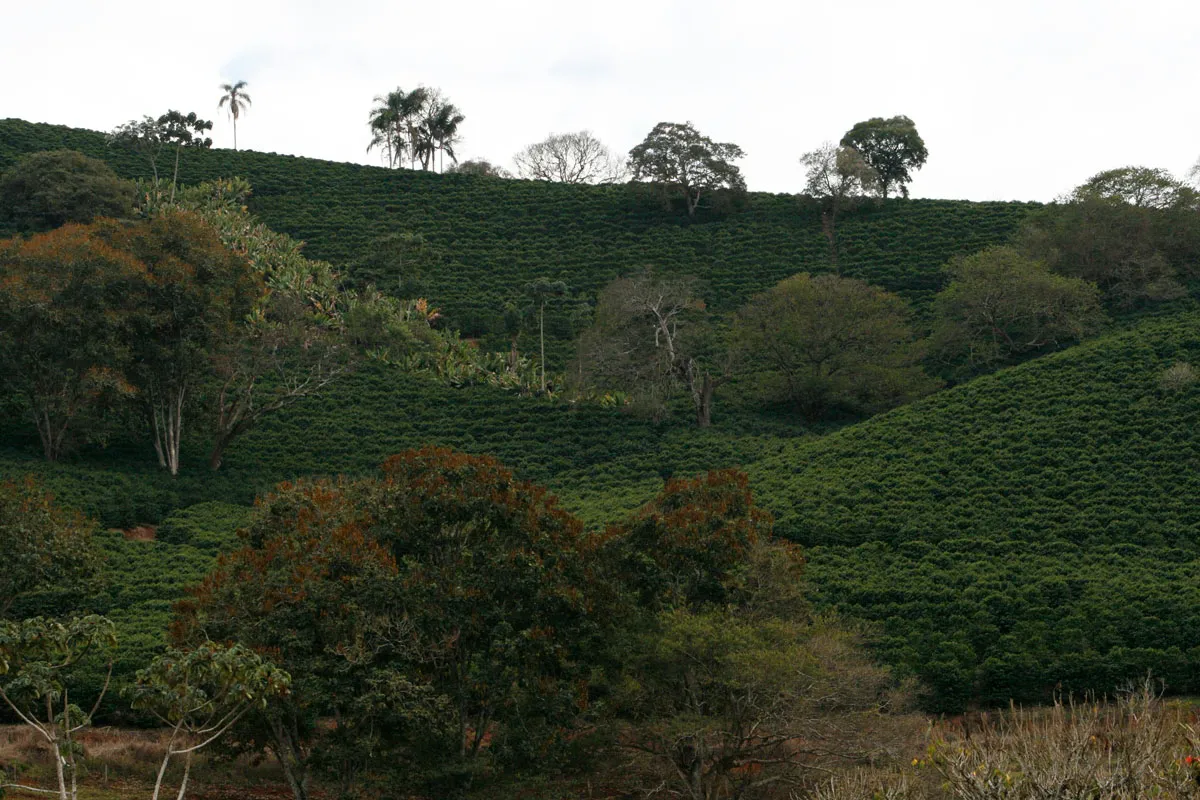
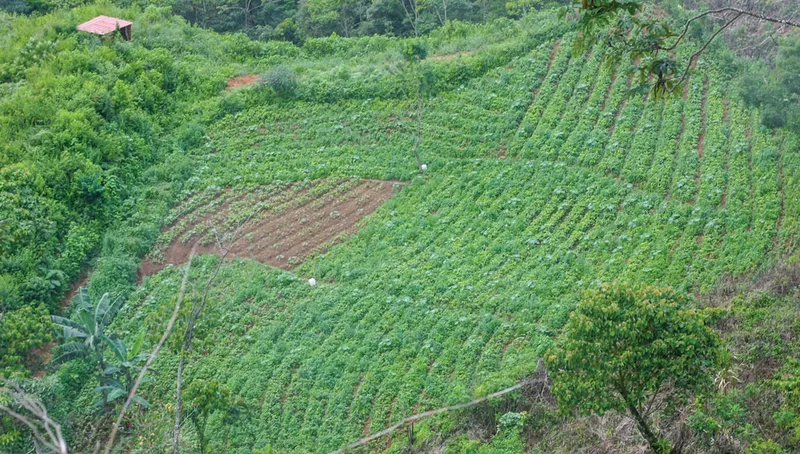
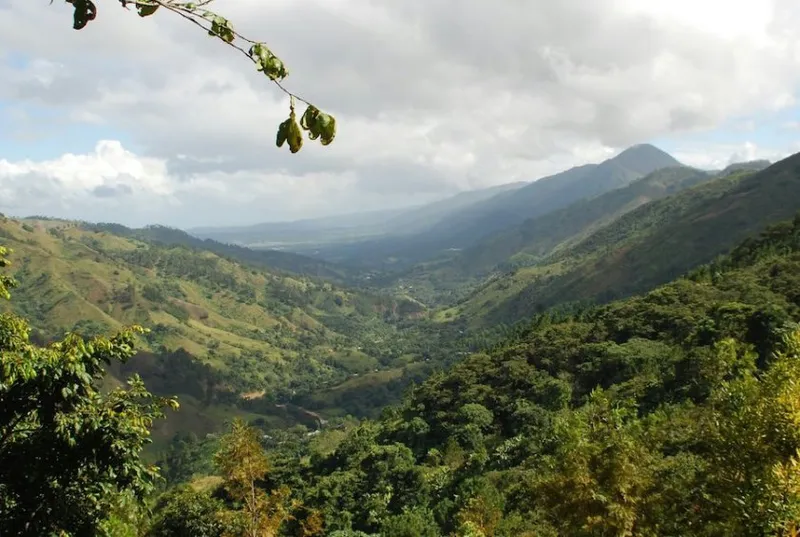
On a damp, overcast winter day at the University of Puerto Rico at Utuado, fog drifted across the surrounding green hills. "Winter" is a loose concept there—while much of North America was in the grip of a polar vortex, people here were still wearing shorts, even in the mountains. Utuado sits in the heart of coffee country along the island's central mountain range. The campus itself was once a coffee farm. Just past the parking lot, rows of low green shrubs grew among taller trees. No bigger than a backyard garden, the plot is actually a young organic coffee farm. The shrubs are a hybrid of the Arabica varieties maragogipe and caturra that local lore credits to the university's founder. The plants won't bear fruit for a while, but the farm is part of an effort to bring coffee production back to the campus—and perhaps to restore Puerto Rico to its former coffee glory.
The four "farmers" tending this garden are actually professors, all women by chance, who run a new program called Café CORMO, a kind of coffee university. While the professors do research—the field is full of experiments with shade trees and organic pesticides and herbicides—what sets Café CORMO apart from a typical agricultural program is its coffee lab. The lab is part of Café CORMO's dual mission: educating students and reaching out to the broader coffee community.
Since 1990, Puerto Rico's coffee production has fallen by sixty-three percent.
Dr. Yaniria Sanchez De Leon, a soil scientist and biologist, says Café CORMO will eventually cover all stages of coffee production. De Leon, the most vocal member of the group, is enthusiastic when discussing the program's goals and achievements. As part of the initial plan, the team has established the organic coffee farm, created a coffee nursery to cultivate the university's varietal, and opened the new coffee lab. Once the coffee plants start fruiting, they will develop all the processing steps, from picking coffee cherries to roasting.
"We would like, longer term, to produce a coffee, harvest this coffee, and process it and have a brand," De Leon says. "The idea is not to compete with farmers but to have a complete model for coffee. Anyone who visits here or studies with us can see the entire process from bean to the final product."
Café CORMO and its projects represent a major investment of energy and money in teaching coffee production to a country with hundreds of years of coffee-growing history. Although Puerto Rico produces more coffee than the United States' other coffee region, Hawaii, that region's coffee is known and desired the world over and is widely available. American roasters and brokers may know about Puerto Rican coffee, but they rarely import it because of its poor reputation. It wasn't always this way. Coffee was once a valuable export for Puerto Rico, with large markets in both the United States and Europe. In recent years, however, production has declined drastically and growers have been leaving the business. How did things get like this? How has a product once described, even if self-servingly, "as the coffee of popes and kings" fallen so far?
The story of coffee in Puerto Rico begins like most coffee stories in this part of the world, with the Spanish (or maybe the Corsicans; there's a certain amount of legend to any good genesis story). Regardless of who introduced it, by the 1700s Arabica was an established crop in Puerto Rico. Coffee, along with tobacco and sugar, produced much of the island's wealth, which was funneled to rich landowners. The Spanish operated a near-feudal system, and while the majority of workers were not slaves, they were not quite free either. When control of Puerto Rico passed to the United States following the Spanish-American War in the late nineteenth century, corporations replaced the Spanish masters as lords of the plantations. Eventually, Puerto Rico obtained commonwealth status and began a modernization program. As the territory grew economically, regular Puerto Ricans became more educated and affluent, and agricultural work became stigmatized. Economic development of the island increased, and Puerto Rican coffee started its long decline.
Even though coffee production has fallen off, coffee remains as much a flavor of Puerto Rico as rum and piragua (shaved ice) in tropical flavors of coconut, tamarind, and passion fruit. Coffee is served any time of the day. Although guidebooks will talk about how Puerto Ricans love to drink cortados (an even split of milk and espresso), coffee is typically served more like a café con leche. Black coffee takes the menacing name café puya. In Spanish, the word puya means the point of a lance; the name likely derives from the perception that coffee without any milk or sugar is bitter. The cultural perception of bitter coffee is ironic because, as Alfredo Rodriguez, a local grower and instructor at Café CORMO, says, "Central American coffees are called mild. Caribbean coffees are called milder."
"First you educate, then you increase quality, and then you look for your market."
Carlos Flores Ortega is an authority on Puerto Rican coffee and the former Undersecretary of Agriculture. Now he works as an associate professor at the University of Puerto Rico at Mayaguez, running its coffee agricultural extension and the coffee commodities program. "Coffee in Puerto Rico is a medium acid, highly flavored Caribbean coffee that produces a unique and pleasant aroma," Ortega says.
Puerto Ricans prefer to drink local coffee, but current production cannot meet the demand. According to Ortega, thirty million pounds of coffee are consumed annually in Puerto Rico. That's an impressive rate of consumption for a territory of 3.6 million people. But according to Puerto Rican Department of Agriculture statistics, the island produced only 10.5 million pounds of those green beans between 2009 and 2010. That wasn't an off year, but rather part of a trend. Production has declined sharply in the last twenty years, falling by sixty-three percent since 1990. As the decline accelerates, coffee farms are abandoned outright, and the fear is that once gone, they will not return.
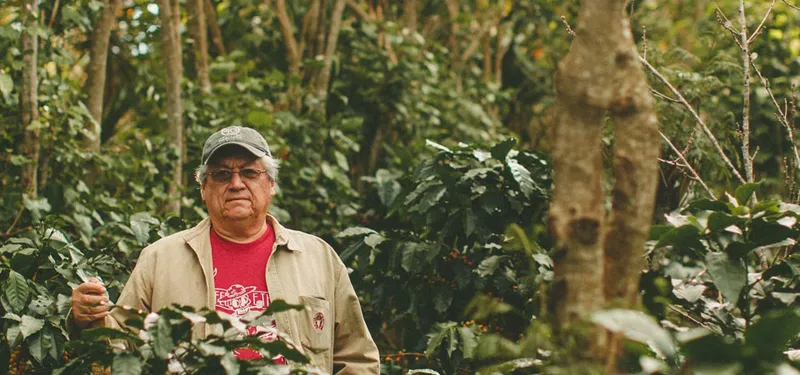
Alfredo Rodriguez runs Café CORMO's coffee lab. Rodriguez, who looks more like an accountant than a coffee farmer, got seriously involved in coffee relatively late in life. He spent a career developing software for the banking industry until 1996, when, almost on a whim, he purchased a coffee farm near the mountain town of Maricao. The farm, once known as Hacienda Adelphia, had produced coffee for at least 100 years before falling into disuse. By 2003, his company, Offeecay, was roasting and distributing coffee locally, and he became a certified grader and instructor in SCAA and SCAE standards. The next goal is to get the Café CORMO lab certified as an SCAA teaching laboratory.
That would be just another hurdle bested by Rodriguez, who is one of Puerto Rico's most successful exporters. Certifications alone present many obstacles, but the challenges don't end there. Even though unemployment sits around fifteen percent, there aren't enough coffee workers for the island's current crop, let alone for expansion. Adding to the growers' list of problems, the Puerto Rican government sets the price of coffee for the local market. This should provide growers an incentive to export their coffee, but only those few with high enough quality can find buyers. Offeecay has customers in Europe and Asia. For Ortega, the former undersecretary, there's no separating the education and training of someone like Rodriguez from his success. "First you educate, then you increase quality, and then you look for your market," says Ortega.
Coffee remains as much a flavor of Puerto Rico as rum and piragua.
At the university, De Leon wants to see education go well beyond growing good beans. She wants to see those beans grown the right way. "We also want to consider the environmental value of managing coffee in a sustainable way, that added-value component," De Leon says. The Puerto Rican government has given incentives to farmers to plant shade trees, but there was no follow-up, no explanation of how those shade trees wouldn't just be good for the environment but good for the coffee. That's a missed opportunity, says De Leon, and it doesn't lead to sold coffee. While organic coffee and sustainability have some resonance with consumers, if the beans are poor, then no organic certification will make a roaster buy them. There are plenty of great coffees produced with the same sustainable care on the market. De Leon and Café CORMO want to bridge that divide between good ideas and great beans.
That's a big reason for the test coffee plantation at the university. It can show that quality coffee can be grown in Puerto Rico, and that it can be grown the right way.